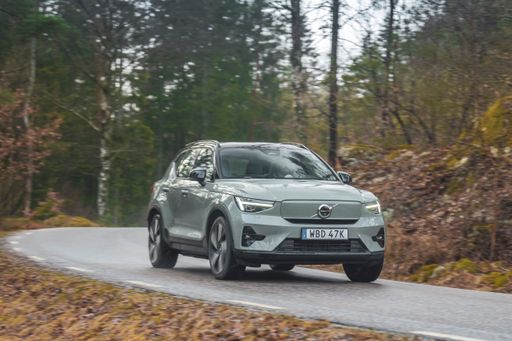
@ Volvo Cars
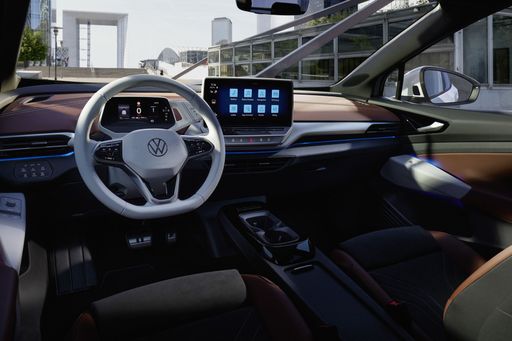
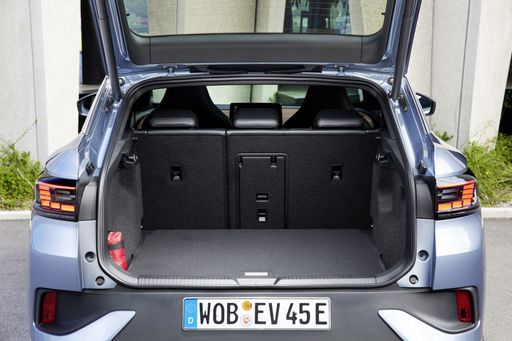
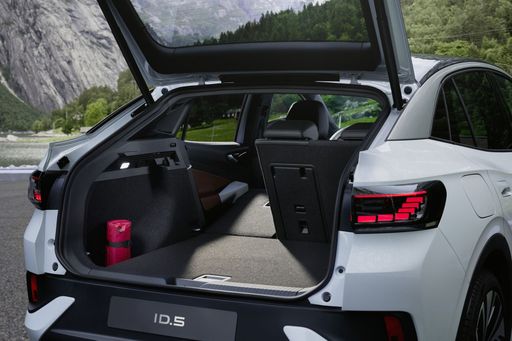
@ Volkswagen AG / VW Media
VS

Volvo EX40 vs VW ID.5 – Which car suits you better?

Both models have their strengths – but which one suits you more?
Compare performance, efficiency, price and space directly: Volvo EX40 or VW ID.5?

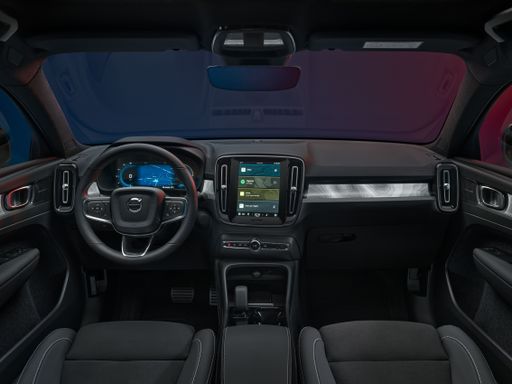
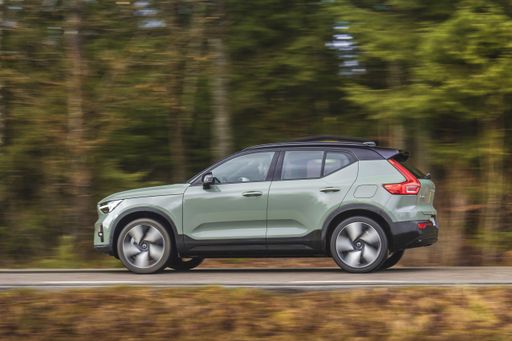
EX40 @ Volvo Cars

The Battle of the Compact Electric SUVs: Volvo EX40 vs. VW ID.5

In the burgeoning world of electric vehicles, compact SUVs are gaining popularity for offering the perfect balance of size, efficiency, and practicality. Among the leading contenders in this category are the Volvo EX40 and the VW ID.5. Both vehicles encapsulate the pinnacle of modern automotive innovation and design, providing zero-emission driving experiences with ample interior space and engaging technology. This article delves into the technical intricacies and standout features of each model to determine which of these electric SUVs has the edge.
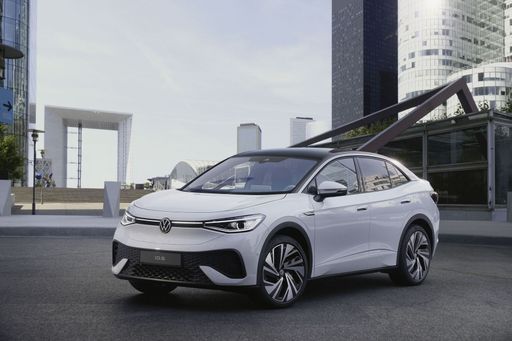
ID.5 @ Volkswagen AG / VW Media

Performance and Power: A Closer Look Under the Hood

The Volvo EX40, built with versatility in mind, offers a range of powertrains. With outputs ranging from 238 to 408 horsepower, the EX40 can accelerate from 0 to 100 km/h in an impressive 4.6 seconds in its top trim, thanks to its high torque capacity of 670 Nm. Equipped with both rear-wheel drive and all-wheel drive options, it suits various driving preferences, ensuring robust performance across different terrains.

The VW ID.5 is no slouch either. It comes equipped with several power options, the most powerful delivering up to 340 horsepower. Acceleration varies, with a 0 to 100 km/h time as quick as 5.4 seconds, driven by a torque of up to 679 Nm. This SUV is engineered with both efficiency and agility in mind, offering a choice between rear-wheel and all-wheel drive configurations.

EX40 @ Volvo Cars

Efficiency and Range: Pushing the Limits

When comparing efficiency, the Volvo EX40 boasts a consumption range between 16.6 and 17.6 kWh/100km, with its highest electric range stretching up to 576 km on a single charge. This makes it an ideal choice for long-distance travel while maintaining a low environmental footprint.

The VW ID.5, in contrast, offers slightly better efficiency, with consumption rates as low as 15.6 kWh/100km. Its electric range peaks at 563 km, enough to compete closely with the EX40. The ID.5 is designed to optimize every kilowatt, ideal for drivers seeking to maximize their driving range without sacrificing comfort.

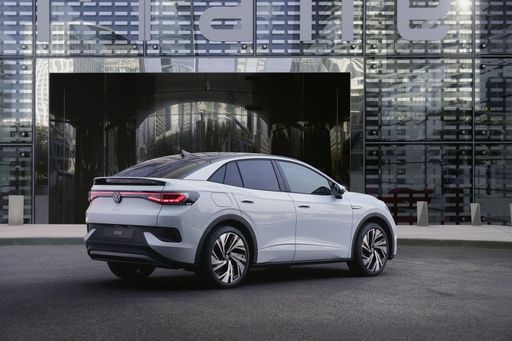
ID.5 @ Volkswagen AG / VW Media

Design and Dimensions: Style Meets Practicality

The Volvo EX40 measures 4,440 mm in length, 1,863 mm in width, and 1,647 mm in height. It champions a sleek, modern aesthetic synonymous with Volvo's design philosophy, combining sharp lines and a commanding stance with practical dimensions. With a trunk capacity of 410 liters, it favors a compact yet efficient storage solution best suited for urban adventurers.

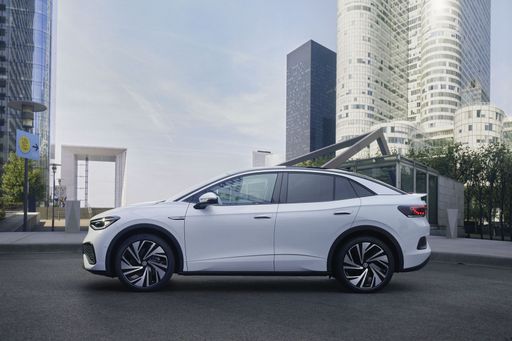
Meanwhile, the VW ID.5 portrays a slightly larger footprint at 4,599 mm in length, offering a bit more cargo space with a 549-liter trunk capacity. Its design is a blend of futuristic elements and traditional SUV attributes, ensuring it stands out both in the driveway and on the road.

EX40 @ Volvo Cars

Technological Innovations: A Leap into the Future

Both vehicles are adorned with state-of-the-art technology, emphasizing connectivity and safety. The Volvo EX40 features an intuitive infotainment system and advanced driver assistance technologies, making it a technologically forward-looking option catering to safety-conscious drivers.

The VW ID.5 also brings a suite of innovative technologies, from its predictive eco-assist features to a range of digital cockpit options designed to make every journey interactive and efficient. Its focus on driver-centric technology aims to provide both a seamless and engaging driving experience.

ID.5 @ Volkswagen AG / VW Media

The Verdict: Which Electric SUV Reigns Supreme?

Deciding between the Volvo EX40 and VW ID.5 ultimately depends on the driver's priorities. If speed and sleek Scandinavian design are your preferences, the EX40 might be your go-to. However, if slightly superior efficiency and additional cargo space are higher on your list, the ID.5 should deserve a closer look. Both models deliver compelling options in the quickly evolving electric SUV market, promising a cleaner, more electrifying future for drivers worldwide.

Here’s where it gets real: The technical differences in detail

Costs and Efficiency:

Price and efficiency are key factors when choosing a car – and this is often where the real differences emerge.

VW ID.5 has a to a small extent advantage in terms of price – it starts at 36800 £, while the Volvo EX40 costs 42800 £. That’s a price difference of around 6017 £.

In terms of energy consumption, the advantage goes to the VW ID.5: with 15.70 kWh per 100 km, it’s minimal more efficient than the Volvo EX40 with 16.60 kWh. That’s a difference of about 0.90 kWh.

As for range, the Volvo EX40 performs hardly perceptible better – achieving up to 576 km, about 17 km more than the VW ID.5.

Engine and Performance:

Under the bonnet, it becomes clear which model is tuned for sportiness and which one takes the lead when you hit the accelerator.

When it comes to engine power, the Volvo EX40 has a distinct edge – offering 442 HP compared to 340 HP. That’s roughly 102 HP more horsepower.

In acceleration from 0 to 100 km/h, the Volvo EX40 is slightly quicker – completing the sprint in 4.60 s, while the VW ID.5 takes 5.40 s. That’s about 0.80 s faster.

There’s no difference in top speed – both reach 180 km/h.

There’s also a difference in torque: VW ID.5 pulls barely noticeable stronger with 679 Nm compared to 670 Nm. That’s about 9 Nm difference.

Space and Everyday Use:

Cabin size, boot volume and payload all play a role in everyday practicality. Here, comfort and flexibility make the difference.

Both vehicles offer seating for 5 people.

In curb weight, VW ID.5 is hardly perceptible lighter – 1963 kg compared to 2040 kg. The difference is around 77 kg.

In terms of boot space, the VW ID.5 offers distinct more room – 549 L compared to 410 L. That’s a difference of about 139 L.

In maximum load capacity, the VW ID.5 performs to a small extent better – up to 1561 L, which is about 161 L more than the Volvo EX40.

When it comes to payload, VW ID.5 somewhat takes the win – 549 kg compared to 480 kg. That’s a difference of about 69 kg.

Who comes out on top?

Overall, the VW ID.5 shows itself to be barely ahead and secures the title of DriveDuel Champion.
It convinces with the more balanced overall package and proves to be the more versatile choice for everyday use.

from about £36,800
ID.5 @ Volkswagen AG / VW Media

VW ID.5

  • Engine Type : Electric
  • Transmission : Automatic
  • Drive Type : Rear-Wheel Drive, All-Wheel Drive
  • Power HP : 170 - 340 HP
  • Consumption kWh/100km : 15.7 - 16.6 kWh
  • Electric Range : 363 - 559 km

Volvo EX40

The Volvo EX40 wraps Scandinavian calm and clever practicality into a compact electric package that feels both premium and refreshingly uncomplicated. It's the grown-up answer to flashier rivals — a safe, comfy, and city-friendly EV with thoughtful tech that makes everyday driving quietly satisfying.

details

VW ID.5

VW ID.5 dresses electric power in a sleek, coupe-like profile that turns sensible motoring into something a touch more stylish and smug. Inside it’s spacious and user-friendly, with calm, confidence-inspiring driving that suits buyers who want EV simplicity without the sci‑fi theatrics.

details
Volvo EX40
VW ID.5
EX40 @ Volvo Cars
ID.5 @ Volkswagen AG / VW Media

Costs and Consumption

Price
42800 - 58200 £
Price
36800 - 48400 £
Consumption L/100km
-
Consumption L/100km
-
Consumption kWh/100km
16.6 - 17.6 kWh
Consumption kWh/100km
15.7 - 16.6 kWh
Electric Range
480 - 576 km
Electric Range
363 - 559 km
Battery Capacity
67 - 79 kWh
Battery Capacity
52 - 79 kWh
co2
0 g/km
co2
0 g/km
Fuel tank capacity
-
Fuel tank capacity
-

Dimensions and Body

Body Type
SUV
Body Type
SUV
Seats
5
Seats
5
Doors
5
Doors
5
Curb weight
2040 - 2170 kg
Curb weight
1963 - 2233 kg
Trunk capacity
410 L
Trunk capacity
549 L
Length
4440 mm
Length
4582 - 4599 mm
Width
1863 mm
Width
1852 mm
Height
1647 mm
Height
1601 - 1618 mm
Max trunk capacity
1286 - 1400 L
Max trunk capacity
1561 L
Payload
430 - 480 kg
Payload
517 - 549 kg

Engine and Performance

Engine Type
Electric
Engine Type
Electric
Transmission
Automatic
Transmission
Automatic
Transmission Detail
Reduction Gearbox
Transmission Detail
Reduction Gearbox
Drive Type
Rear-Wheel Drive, All-Wheel Drive
Drive Type
Rear-Wheel Drive, All-Wheel Drive
Power HP
238 - 442 HP
Power HP
170 - 340 HP
Acceleration 0-100km/h
4.6 - 7.3 s
Acceleration 0-100km/h
5.4 - 8.9 s
Max Speed
180 km/h
Max Speed
160 - 180 km/h
Torque
420 - 670 Nm
Torque
310 - 679 Nm
Number of Cylinders
-
Number of Cylinders
-
Power kW
175 - 325 kW
Power kW
125 - 250 kW
Engine capacity
-
Engine capacity
-

General

Model Year
2024
Model Year
2024 - 2025
CO2 Efficiency Class
A
CO2 Efficiency Class
A
Brand
Volvo
Brand
VW
Is the Volvo EX40 offered with different drivetrains?

The Volvo EX40 is available as Rear-Wheel Drive or All-Wheel Drive.

The prices and data displayed are estimates based on German list prices and may vary by country. This information is not legally binding.