VS

BMW iX2 vs Volvo EX40 - Differences and prices compared

Compare performance (313 HP vs 442 HP), boot space and price (43700 £ vs 42800 £ ) at a glance. Find out which car is the better choice for you – BMW iX2 or Volvo EX40?

iX2

BMW iX2 vs. Volvo EX40: A Clash of Innovative Electric SUVs

As the automotive world rapidly shifts towards electrification, manufacturers are eager to capture the imagination of future-forward drivers. The BMW iX2 and the Volvo EX40, two contenders in the electric SUV segment, stand out with their cutting-edge technology and impressive performance metrics. This comparison delves into their technical specifications and innovations to help you decide which one might suit your driving needs.

EX40

Design and Dimensions

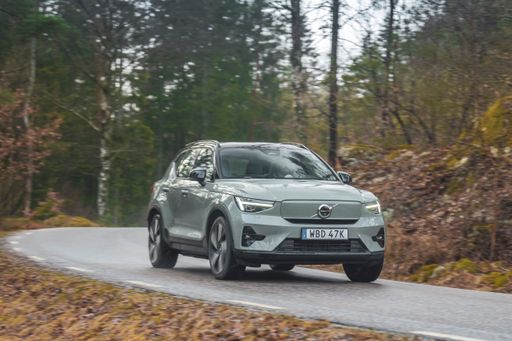
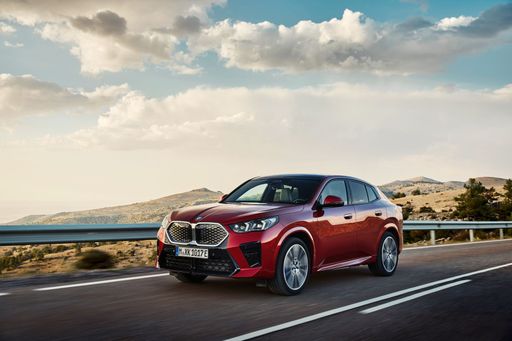
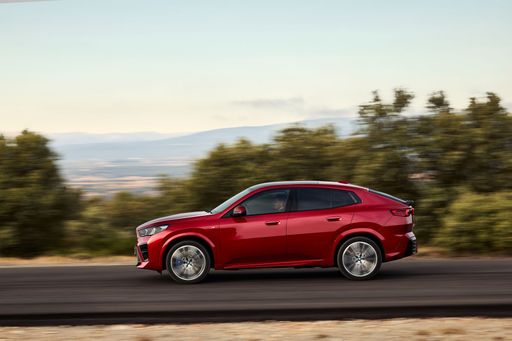
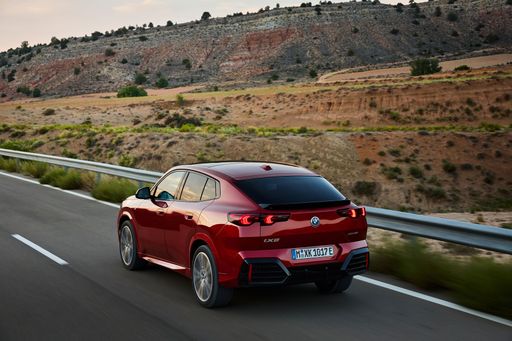
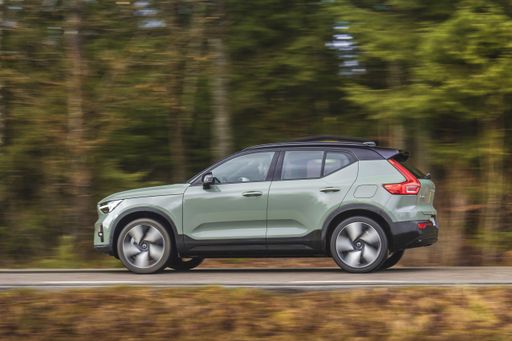
Both the BMW iX2 and the Volvo EX40 embody the contemporary SUV design ethos, but they do so with distinct stylistic approaches. The iX2 measures 4554 mm in length, 1845 mm in width, and stands 1560 mm in height, offering a robust stance with aerodynamic efficiency. In contrast, the EX40 is slightly more compact at 4440 mm in length, 1863 mm wide, and with a height of 1647 mm, it presents a slightly taller profile, lending it an authoritative road presence.

iX2

Performance and Power

The performance figures of these electric SUVs cater to diverse driving preferences. The BMW iX2 offers two power outputs: 204 HP with front-wheel drive and a more powerful all-wheel drive option offering 313 HP. This results in acceleration times from 0 to 100 km/h of 8.6 seconds and 5.6 seconds, respectively. The iX2 delivers torque ranging from 250 Nm to 494 Nm, ensuring a responsive drive.

The Volvo EX40, on the other hand, also presents multiple power configurations, ranging from 238 HP to an exhilarating 408 HP, with acceleration from 7.3 seconds down to a swift 4.6 seconds depending on the model. Torque options from 420 Nm to 670 Nm imply potent pulling power, which is ideal for those who crave performance.

EX40

Battery and Range

Electric vehicles often win or lose customers over their range and efficiency. The BMW iX2 boasts a battery capacity of 64.8 kWh, achieving an electric range of up to 459 km. Its consumption is between 15.9 and 16.9 kWh/100km, classified within the A efficiency class for CO2.

Volvo positions the EX40 as a long-range warrior with battery capacities of 67 kWh and 79 kWh. It sets benchmarks with an extended range reaching up to 576 km under optimal conditions. Consumption varies slightly from 16.6 to 17.6 kWh/100km, also within the A class for CO2 efficiency, offering an environmentally conscious choice.

iX2

Interior and Practicality

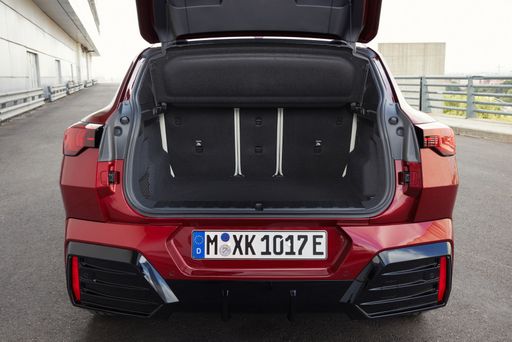
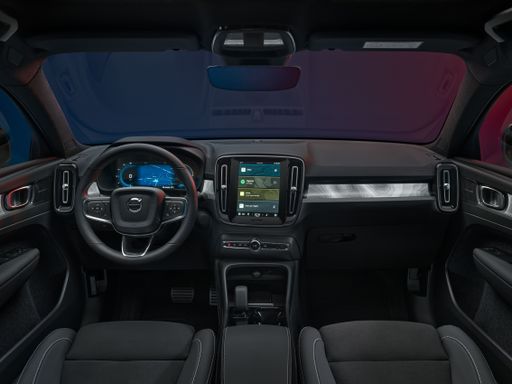
Both SUVs offer a spacious interior with five seats, catering to the needs of families and adventurers alike. The BMW iX2 provides a generous trunk space of 525 liters, while the Volvo EX40 offers a more modest 410 liters, which may influence your decision if cargo space is a priority.

EX40

Conclusion

The decision between the BMW iX2 and Volvo EX40 comes down to personal preference in performance, range, and design. The iX2 might appeal to those desiring a blend of efficiency and a sportier drive, while the EX40 is an outstanding choice for drivers seeking long range and varied performance options. Either way, both vehicles are at the forefront of innovative electric SUV offerings, showcasing the best of what their respective manufactures have to offer in 2024.

BMW iX2

5 (2 Reviews)
rate

Volvo EX40

5 (1 Reviews)
rate

Here’s where it gets real: The technical differences in detail

iX2

Costs and Efficiency:

Looking at overall running costs, both models reveal some interesting differences in everyday economy.

Volvo EX40 has a minimal advantage in terms of price – it starts at 42800 £ , while the BMW iX2 costs 43700 £ . That’s a price difference of around 866 £.

In terms of energy consumption, the advantage goes to the BMW iX2: with 14.40 kWh per 100 km, it’s somewhat more efficient than the Volvo EX40 with 16.60 kWh. That’s a difference of about 2.20 kWh.

As for electric range, the Volvo EX40 performs slightly better – achieving up to 576 km, about 64 km more than the BMW iX2.

Engine and Performance:

Under the bonnet, it becomes clear which model is tuned for sportiness and which one takes the lead when you hit the accelerator.

When it comes to engine power, the Volvo EX40 has a clearly perceptible edge – offering 442 HP compared to 313 HP. That’s roughly 129 HP more horsepower.

In acceleration from 0 to 100 km/h, the Volvo EX40 is distinct quicker – completing the sprint in 4.60 s, while the BMW iX2 takes 5.60 s. That’s about 1 s faster.

There’s also a difference in torque: Volvo EX40 pulls clearly perceptible stronger with 670 Nm compared to 494 Nm. That’s about 176 Nm difference.

Space and Everyday Use:

Beyond pure performance, interior space and usability matter most in daily life. This is where you see which car is more practical and versatile.

Both vehicles offer seating for 5 people.

In curb weight, BMW iX2 is minimal lighter – 1960 kg compared to 2040 kg. The difference is around 80 kg.

In terms of boot space, the BMW iX2 offers clearly perceptible more room – 525 L compared to 410 L. That’s a difference of about 115 L.

When it comes to payload, BMW iX2 slight takes the win – 510 kg compared to 480 kg. That’s a difference of about 30 kg.

Who wins the race in the data check?

The Volvo EX40 is far ahead overall in the objective data comparison.
This result only shows which model scores more points on paper – not which of the two cars feels right for you.

BMW iX2
Volvo EX40

Costs and Consumption

View detailed analysis

Engine and Performance

View detailed analysis

Dimensions and Body

View detailed analysis
from about £42,800
EX40

Volvo EX40

  • Engine Type : Electric
  • Transmission : Automatic
  • Drive Type : Rear-Wheel Drive, All-Wheel Drive
  • Power HP : 238 - 442 HP
  • Consumption kWh/100km : 16.6 - 17.6 kWh
  • Electric Range : 480 - 576 km

BMW iX2

5 (2 Reviews)
rate

The BMW iX2 cuts a sporty silhouette and delivers the buttoned-up premium feel you expect from the brand, wrapped in a compact electric package that’s easy to live with. It’s a smart pick for buyers who want engaging city driving, clever cabin tech and a touch of eco-conscious flair without giving up the fun behind the wheel.

details

Volvo EX40

5 (1 Reviews)
rate

The Volvo EX40 wraps Scandinavian calm and clever practicality into a compact electric package that feels both premium and refreshingly uncomplicated. It's the grown-up answer to flashier rivals — a safe, comfy, and city-friendly EV with thoughtful tech that makes everyday driving quietly satisfying.

details
BMW iX2
Volvo EX40

Costs and Consumption

Price
43700 - 55600 £
Price
42800 - 58200 £
Consumption L/100km
-
Consumption L/100km
-
Consumption kWh/100km
14.4 - 15.4 kWh
Consumption kWh/100km
16.6 - 17.6 kWh
Electric Range
476 - 512 km
Electric Range
480 - 576 km
Battery Capacity
-
Battery Capacity
67 - 79 kWh
co2
0 g/km
co2
0 g/km
Fuel tank capacity
-
Fuel tank capacity
-

Dimensions and Body

Body Type
SUV
Body Type
SUV
Seats
5
Seats
5
Doors
-
Doors
5
Curb weight
1960 - 2095 kg
Curb weight
2040 - 2170 kg
Trunk capacity
525 L
Trunk capacity
410 L
Length
-
Length
4440 mm
Width
1845 mm
Width
1863 mm
Height
-
Height
1647 mm
Max trunk capacity
-
Max trunk capacity
1400 L
Payload
500 - 510 kg
Payload
430 - 480 kg

Engine and Performance

Engine Type
Electric
Engine Type
Electric
Transmission
Automatic
Transmission
Automatic
Transmission Detail
Reduction Gearbox
Transmission Detail
Reduction Gearbox
Drive Type
Front-Wheel Drive, All-Wheel Drive
Drive Type
Rear-Wheel Drive, All-Wheel Drive
Power HP
204 - 313 HP
Power HP
238 - 442 HP
Acceleration 0-100km/h
5.6 - 8.6 s
Acceleration 0-100km/h
4.6 - 7.3 s
Max Speed
-
Max Speed
180 km/h
Torque
250 - 494 Nm
Torque
420 - 670 Nm
Number of Cylinders
-
Number of Cylinders
-
Power kW
150 - 230 kW
Power kW
175 - 325 kW
Engine capacity
-
Engine capacity
-

General

Model Year
2026
Model Year
2024
CO2 Efficiency Class
A
CO2 Efficiency Class
A
Brand
BMW
Brand
Volvo
What drivetrain options does the BMW iX2 have?

The BMW iX2 is available as Front-Wheel Drive or All-Wheel Drive.

The prices shown are estimates based on German list prices, adjusted for local VAT. Local registration taxes (e.g. NoVA, BPM or CO2 malus) are not included. This information is not legally binding.