VS

VW ID.7 vs Audi Q4 e-tron comparison

Compare performance (340 HP vs 340 HP), boot space and price (46,400 £ vs 39,600 £ ) at a glance. Find out which car is the better choice for you – VW ID.7 or Audi Q4 e-tron?

VW ID.7 vs Audi Q4 e-tron: Key differences

VW ID.7

4 (4 Reviews)
rate
  • moderately more efficient
  • clearly more electric range

Audi Q4 e-tron

4.9 (2 Reviews)
rate
  • a bit cheaper
  • marginally lighter
  • marginally more trunk space

All details on performance, efficiency, range and trunk space can be found in the technical comparison below – including user reviews for both models.

ID.7

Head-to-Head: Audi Q4 e-tron vs VW ID.7

The electric vehicle market is flourishing, and two of the most notable contenders providing innovative technology and stunning design are the Audi Q4 e-tron and the VW ID.7. Both vehicles boast impressive specifications, yet they cater to different preferences and driving needs. In this article, we will compare these two automotive marvels to help you determine which model suits you best.
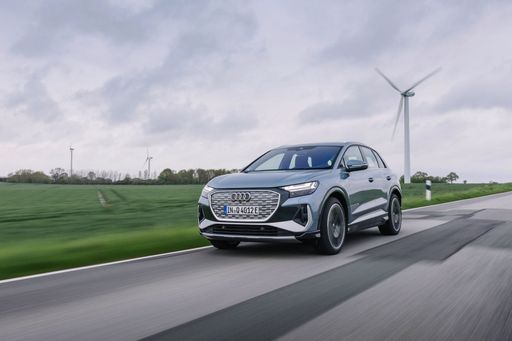
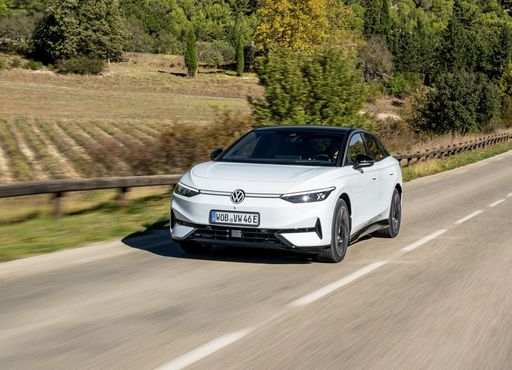
Q4 e-tron

Design and Body Type

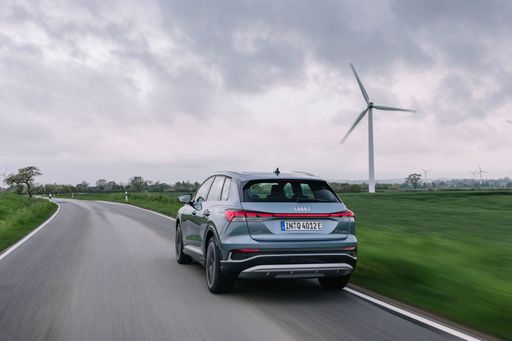
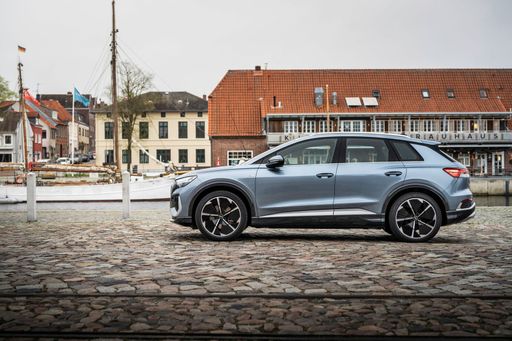
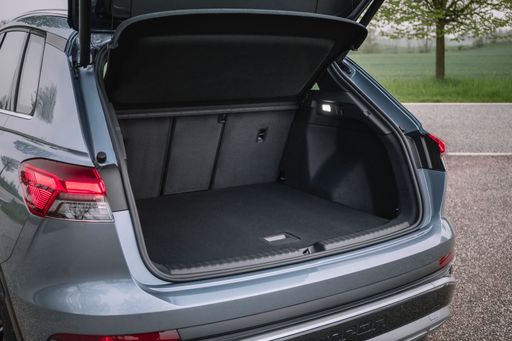
The Audi Q4 e-tron is an SUV, presenting a robust and commanding presence on the road. With a length of 4588 mm, width of 1865 mm, and height of 1632 mm, it offers ample interior space for passengers and cargo alike. The spacious trunk capacity of between 520 to 535 liters ensures that you can easily accommodate your belongings.

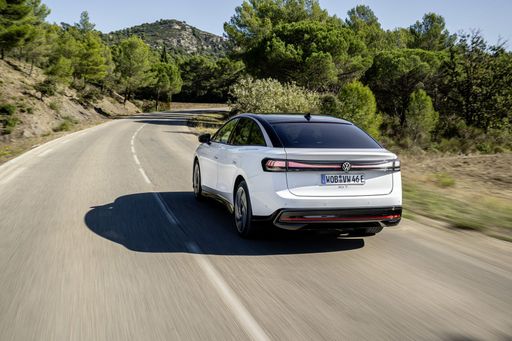
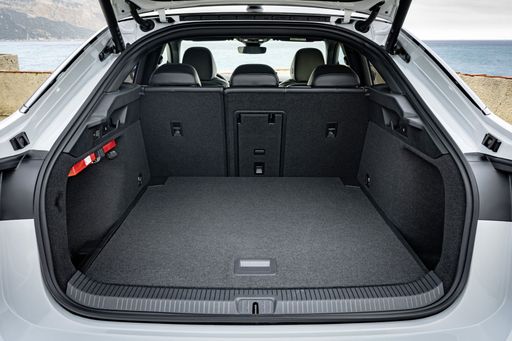
On the other hand, the VW ID.7 is designed as a hatchback, with a longer frame measuring 4961 mm in length and a height of 1536 mm. The ID.7's width is slightly narrower at 1862 mm but still provides a comfortable environment. With a trunk capacity of 532 liters, the ID.7 remains practical for everyday use.

ID.7

Performance and Efficiency

Both models feature advanced electric powertrains, but they differ in specifications. The Audi Q4 e-tron comes with power options ranging from 170 HP to a robust 340 HP, offering rear-wheel and all-wheel drive configurations. It can achieve 0-100 km/h in as little as 5.4 seconds, depending on the variant. Its electric range is notable, with several configurations boasting between 351 km and a remarkable 554 km.

In contrast, the VW ID.7 also offers a competitive range of 595 km to 709 km on a single charge, depending on the battery capacity of either 77 kWh or 86 kWh. Its performance matches the Q4 e-tron with a power output up to 340 HP and an acceleration of 0-100 km/h in as fast as 5.4 seconds as well.

Q4 e-tron

Battery and Charging Technologies

When it comes to battery technology, the Audi Q4 e-tron utilizes a 52 kWh and 77 kWh battery capacity options. This allows for efficient consumption rates varying from 15.9 kWh to 17.4 kWh per 100 km, which is impressive for an SUV of its size.

The VW ID.7 leads the charge with its consumption rates, offering as low as 13.6 kWh per 100 km, making it a more efficient option overall. This lower consumption, along with its capacity options, results in excellent range performance, appealing to the environmentally-conscious consumer.

ID.7

Interior and Innovations

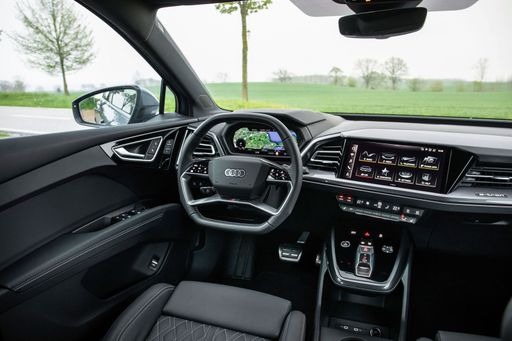
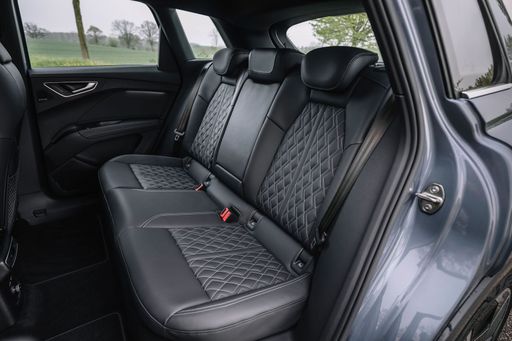
Both vehicles prioritize passenger comfort and modern technology. The Audi Q4 e-tron is equipped with a cutting-edge infotainment system, expansive touch-screen displays, and high-quality materials throughout the cabin. With attention to detail and premium design, the Q4 e-tron promises a luxurious experience.

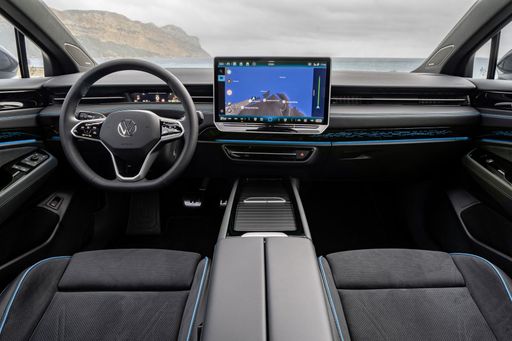
The VW ID.7, while slightly more utilitarian, does not skimp on technology. Its advanced infotainment and connectivity options, along with sustainable materials for the interior, make it an innovative choice. The ID.7 also embraces the latest in driver-assistance technologies, ensuring a secure and convenient ride.

Q4 e-tron

Conclusion: Choose Your Champion

Both the Audi Q4 e-tron and the VW ID.7 represent significant advancements in the realm of electric vehicles, excelling in performance, efficiency, and innovation. The Q4 e-tron delivers an SUV experience with abundant comfort and luxury, while the ID.7 shines in terms of efficiency and hatchback versatility.

Your choice ultimately will depend on your specific needs: if you require more space and an SUV's reliability, the Audi Q4 e-tron is an excellent choice. However, if you prefer a more efficient, sleek hatchback experience, the VW ID.7 could be your ideal match. Whichever model you choose, you'll undoubtedly enjoy the benefits of cutting-edge electric vehicle technology.

Here’s where it gets real: The technical differences in detail

ID.7

Costs and Efficiency:

Price and efficiency are often the first things buyers look at. Here it becomes clear which model has the long-term edge – whether at the pump, the plug, or in purchase price.

Audi Q4 e-tron is a bit cheaper – starting at 39,600 £ , while the VW ID.7 costs 46,400 £ . That’s a price difference of around 6,818 £.

In terms of energy consumption, the VW ID.7 is moderately more efficient: consuming 13.6 kWh/100km compared to 15.9 kWh/100km for the Audi Q4 e-tron. That’s a difference of about 2.3 kWh/100km.

As for electric range, the VW ID.7 offers clearly more range – reaching up to 708 km, about 154 km more than the Audi Q4 e-tron.

Q4 e-tron

Engine and Performance:

Power, torque and acceleration are the classic benchmarks for car enthusiasts – and here, some clear differences start to show.

Both models deliver identical power – 340 HP each.

Both models accelerate almost equally fast – 5.4 s from 0 to 100 km/h.

There’s no difference in top speed – both reach 180 km/h.

Both models offer the same torque – 679 Nm.

ID.7

Space and Everyday Use:

Cabin size, boot volume and payload all play a role in everyday practicality. Here, comfort and flexibility make the difference.

Both vehicles offer seating for 5 people.

In terms of curb weight, Audi Q4 e-tron is marginally lighter – 2,035 kg compared to 2,180 kg. The difference is around 145 kg.

Looking at boot space, the Audi Q4 e-tron offers marginally more boot space – 535 L compared to 532 L. That’s a difference of about 3 L.

For maximum load capacity, the VW ID.7 offers very slightly more capacity – up to 1,586 L, about 96 L more than the Audi Q4 e-tron.

When it comes to payload, the Audi Q4 e-tron carries only slightly more – 515 kg compared to 465 kg. That’s a difference of about 50 kg.

Who wins the race in the data check?

The VW ID.7 is slightly ahead in the objective data comparison.
This result only shows which model scores more points on paper – not which of the two cars feels right for you.

from £46,400
ID.7

VW ID.7

  • Engine Type : Electric
  • Transmission : Automatic
  • Drive Type : Rear-Wheel Drive, All-Wheel Drive
  • Power HP : 286 - 340 HP
  • Consumption kWh/100km : 13.6 - 16.2 kWh/100km
  • Electric Range : 594 - 708 km
VW ID.7
Audi Q4 e-tron

Costs and Consumption

View detailed analysis

Engine and Performance

View detailed analysis

Dimensions and Body

View detailed analysis

VW ID.7

VW ID.7 arrives as Volkswagen's electric grand tourer, pairing a low-slung, aerodynamic silhouette with a calm, understated interior that prioritizes comfort and space. It’s a sensible choice for buyers who want a relaxed, high-tech cruiser that covers motorway miles with poise rather than bravado.

details

Audi Q4 e-tron

The Audi Q4 e-tron brings Audi polish into the electric crossover scene, pairing a sleek exterior with a refined, airy interior that makes everyday driving feel distinctly premium. It’s an easy-to-live-with EV that balances comfort and real-world usability with intuitive tech, making it a smart choice for buyers who want electric mobility without giving up Audi character — and yes, it still looks good in the driveway.

details
VW ID.7
Audi Q4 e-tron

Costs and Consumption

Price
46,400 - 54,200 £
Price
39,600 - 58,800 £
Consumption L/100km
-
Consumption L/100km
-
Consumption kWh/100km
13.6 - 16.2 kWh/100km
Consumption kWh/100km
15.9 - 17.4 kWh/100km
Electric Range
594 - 708 km
Electric Range
406 - 554 km
Battery Capacity
77 - 86 kWh
Battery Capacity
77 kWh
co2
0 g/km
co2
0 g/km
Fuel tank capacity
-
Fuel tank capacity
-

Dimensions and Body

Body Type
Hatchback
Body Type
SUV
Seats
5
Seats
5
Doors
5
Doors
5
Curb weight
2,180 - 2,325 kg
Curb weight
2,035 - 2,235 kg
Trunk capacity
532 L
Trunk capacity
520 - 535 L
Length
4,961 mm
Length
4,588 mm
Width
1,862 mm
Width
1,865 mm
Height
1,535 - 1,536 mm
Height
1,614 - 1,632 mm
Max trunk capacity
1,586 L
Max trunk capacity
1,460 - 1,490 L
Payload
460 - 465 kg
Payload
505 - 515 kg

Engine and Performance

Engine Type
Electric
Engine Type
Electric
Transmission
Automatic
Transmission
Automatic
Transmission Detail
Reduction Gearbox
Transmission Detail
Reduction Gearbox
Drive Type
Rear-Wheel Drive, All-Wheel Drive
Drive Type
Rear-Wheel Drive, All-Wheel Drive
Power HP
286 - 340 HP
Power HP
204 - 340 HP
Acceleration 0-100km/h
5.4 - 6.6 s
Acceleration 0-100km/h
5.4 - 8.1 s
Max Speed
180 km/h
Max Speed
180 km/h
Torque
545 - 679 Nm
Torque
310 - 679 Nm
Number of Cylinders
-
Number of Cylinders
-
Power kW
210 - 250 kW
Power kW
150 - 250 kW
Engine capacity
-
Engine capacity
-

General

Model Year
2,023 - 2,024
Model Year
2,023 - 2,025
CO2 Efficiency Class
A
CO2 Efficiency Class
A
Brand
VW
Brand
Audi
DriveDuel uses data analysis and artificial intelligence to evaluate vehicle data and create content. Content is regularly reviewed and improved. The displayed prices are estimates based on German list prices, adjusted to the respective country’s VAT. Country-specific registration taxes are not included. This information is not legally binding.