VS

VW ID.7 vs Audi Q6 e-tron comparison

Compare performance (340 HP vs 490 HP), boot space and price (46,400 £ vs 54,400 £ ) at a glance. Find out which car is the better choice for you – VW ID.7 or Audi Q6 e-tron?

VW ID.7 vs Audi Q6 e-tron: Key differences

VW ID.7

4 (4 Reviews)
rate
  • somewhat cheaper
  • somewhat more efficient
  • very slightly more electric range
  • barely lighter
  • only slightly more trunk space

Audi Q6 e-tron

4.9 (3 Reviews)
rate
  • clearly more power
  • markedly quicker 0–100 km/h

All details on performance, efficiency, range and trunk space can be found in the technical comparison below – including user reviews for both models.

ID.7

Introduction: The Battle of Electric Titans

As the automotive industry increasingly shifts towards electrification, consumers are presented with a myriad of compelling options. Two notable contenders making significant strides in the electric vehicle segment are the Audi Q6 e-tron and the VW ID.7. While both vehicles emanate from the German automotive powerhouse Volkswagen Group, they offer distinct characteristics tailored for diverse driving needs and preferences. Let’s delve deeper into a head-to-head comparison of these exciting models.
Q6 e-tron

Design and Dimensions

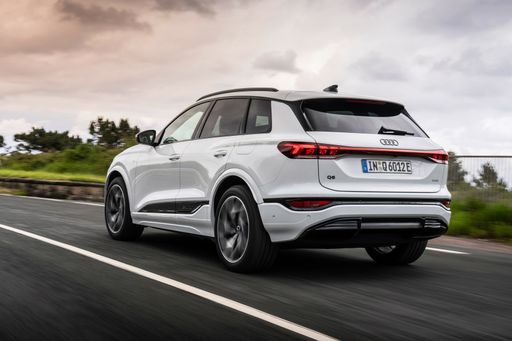
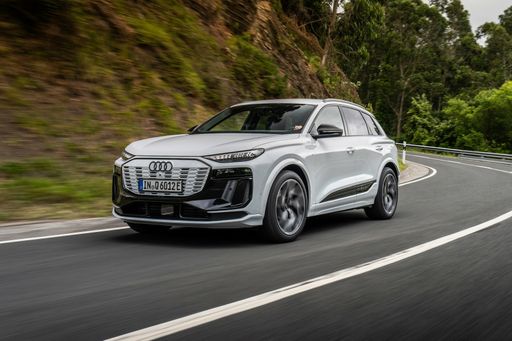
The Audi Q6 e-tron is crafted in the form of a robust SUV, measuring 4,771 mm in length, 1,939 mm in width, and 1,685 mm in height. With a cargo capacity of up to 526 liters, it embodies practicality and sophistication.

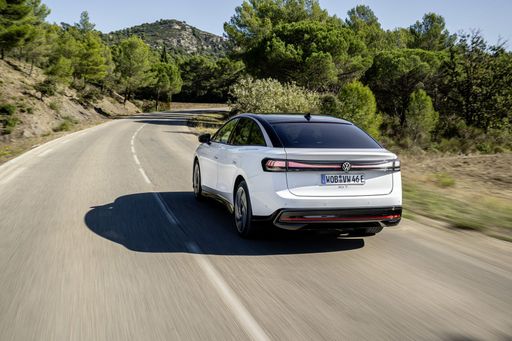
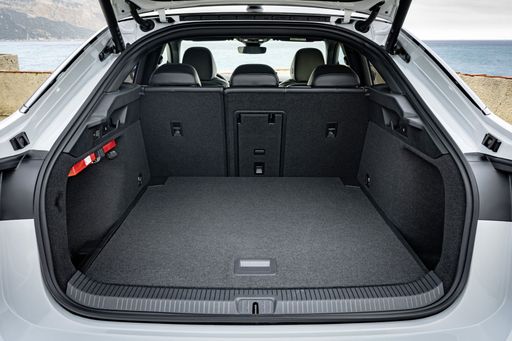
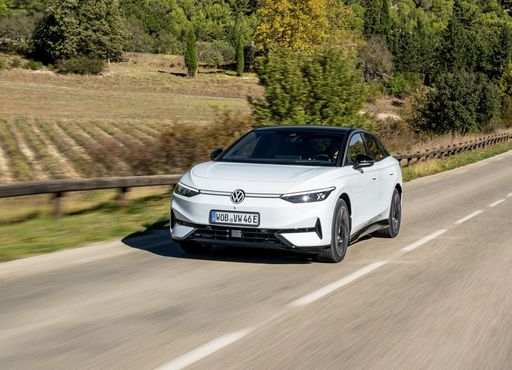
In contrast, the VW ID.7 takes on a hatchback silhouette, accentuating its sleek design. It measures 4,961 mm in length, 1,862 mm in width, and 1,536 mm in height. The trunk capacity of the ID.7 is slightly more, offering up to 532 liters, making it an appealing choice for those needing extra storage.

ID.7

Powertrain and Performance

When it comes to powertrains, the Audi Q6 e-tron offers various configurations, ranging from 292 to a staggering 516 HP, along with torque figures reaching up to 855 Nm. With options for rear-wheel and all-wheel drive, it caters to drivers seeking performance while providing an impressive acceleration from 0-100 km/h in as little as 4.3 seconds.

The VW ID.7, on the other hand, features two main power variants, delivering between 286 to 340 HP, with torque reaching 679 Nm. It accelerates from 0-100 km/h in 5.4 seconds, demonstrating its capability while prioritizing efficiency.

Q6 e-tron

Battery Capacity and Range

The Q6 e-tron boasts battery options of 75.8 kWh and 94.9 kWh, achieving an electric range of up to 656 km, depending on the variant selected. This impressive range makes it a formidable choice for long trips.

The ID.7 offers slightly different battery configurations, with capacities of 77 kWh and 86 kWh. It excels in efficiency, providing an electric range of up to 709 km, allowing for longer journeys with fewer charging stops.

ID.7

Efficiency and Energy Consumption

In terms of energy consumption, the Audi Q6 e-tron’s figures range from 15.6 to 18.9 kWh/100 km. While competitive, it’s slightly higher compared to the ID.7, which boasts figures between 13.6 and 16.2 kWh/100 km. This advantage positions the ID.7 as a more efficient option for eco-conscious drivers.

Q6 e-tron

Interior and Technology

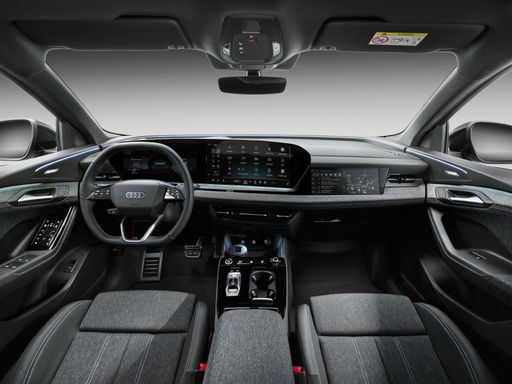
Both models prioritize comfort and tech-savvy interiors. The Q6 e-tron offers a luxurious cabin environment featuring high-quality materials, advanced infotainment systems, and cutting-edge driver assistance features. The spacious SUV layout with seating for five ensures a comfortable ride.

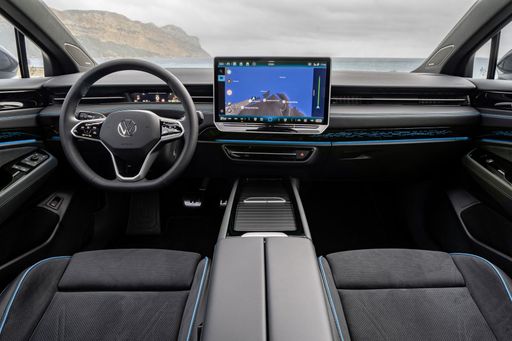
Meanwhile, the ID.7 embraces a more minimalist design. Its interior is equipped with a user-friendly touchscreen system and a plethora of tech features aimed at enhancing both driver convenience and safety. The hatchback's design ensures that all passengers enjoy ample space and features for a comfortable journey.

ID.7

Sustainability and Eco-Friendliness

Both vehicles receive a CO2 efficiency rating of "A" due to their zero emissions, fulfilling the demand for greener alternatives in the automotive market. This makes them both appealing for environmentally conscious consumers looking to reduce their carbon footprint.

Final Verdict: Which One to Choose?

Choosing between the Audi Q6 e-tron and the VW ID.7 ultimately depends on individual priorities. If luxury, power, and SUV capabilities are at the forefront of your needs, the Q6 e-tron is hard to resist. Conversely, if you're looking for efficiency, a sleek design, and high tech features in a hatchback format, the ID.7 shines bright.

Each model has its unique appeal, ensuring that whether you lean towards Audi or Volkswagen, you’ll be driving a top-tier electric vehicle that aligns with the evolving landscape of automotive innovation.

Here’s where it gets real: The technical differences in detail

ID.7

Costs and Efficiency:

Price and efficiency are key factors when choosing a car – and this is often where the real differences emerge.

VW ID.7 is somewhat cheaper – starting at 46,400 £ , while the Audi Q6 e-tron costs 54,400 £ . That’s a price difference of around 8,053 £.

In terms of energy consumption, the VW ID.7 is somewhat more efficient: consuming 13.6 kWh/100km compared to 15.6 kWh/100km for the Audi Q6 e-tron. That’s a difference of about 2 kWh/100km.

As for electric range, the VW ID.7 offers very slightly more range – reaching up to 708 km, about 52 km more than the Audi Q6 e-tron.

Q6 e-tron

Engine and Performance:

Power, torque and acceleration are the classic benchmarks for car enthusiasts – and here, some clear differences start to show.

When it comes to engine power, the Audi Q6 e-tron offers clearly more power – delivering 490 HP compared to 340 HP. That’s roughly 150 HP more horsepower.

When accelerating from 0 to 100 km/h, the Audi Q6 e-tron is markedly quicker – completing the sprint in 4.4 s, while the VW ID.7 takes 5.4 s. That’s about 1 s quicker.

Looking at top speed, the Audi Q6 e-tron is noticeably faster – reaching 230 km/h, while the VW ID.7 tops out at 180 km/h. The difference is around 50 km/h.

There’s also a difference in torque: the Audi Q6 e-tron delivers noticeably more torque with 855 Nm compared to 679 Nm. That’s about 176 Nm more.

ID.7

Space and Everyday Use:

Cabin size, boot volume and payload all play a role in everyday practicality. Here, comfort and flexibility make the difference.

Both vehicles offer seating for 5 people.

In terms of curb weight, VW ID.7 is barely lighter – 2,180 kg compared to 2,200 kg. The difference is around 20 kg.

Looking at boot space, the VW ID.7 offers only slightly more boot space – 532 L compared to 526 L. That’s a difference of about 6 L.

For maximum load capacity, the VW ID.7 offers only slightly more capacity – up to 1,586 L, about 57 L more than the Audi Q6 e-tron.

When it comes to payload, the Audi Q6 e-tron carries slightly more – 540 kg compared to 465 kg. That’s a difference of about 75 kg.

Who wins the race in the data check?

The Audi Q6 e-tron stands well ahead of its rival in the objective data comparison.
This result only shows which model scores more points on paper – not which of the two cars feels right for you.

from £54,400
Q6 e-tron

Audi Q6 e-tron

  • Engine Type : Electric
  • Transmission : Automatic
  • Drive Type : Rear-Wheel Drive, All-Wheel Drive
  • Power HP : 252 - 490 HP
  • Consumption kWh/100km : 15.6 - 18.4 kWh/100km
  • Electric Range : 529 - 656 km
VW ID.7
Audi Q6 e-tron

Costs and Consumption

View detailed analysis

Engine and Performance

View detailed analysis

Dimensions and Body

View detailed analysis

VW ID.7

VW ID.7 arrives as Volkswagen's electric grand tourer, pairing a low-slung, aerodynamic silhouette with a calm, understated interior that prioritizes comfort and space. It’s a sensible choice for buyers who want a relaxed, high-tech cruiser that covers motorway miles with poise rather than bravado.

details

Audi Q6 e-tron

The Audi Q6 e-tron balances sleek, coupe-like styling with a roomy, upscale interior that feels modern without being showy. It delivers refined electric performance and smart tech that make daily driving effortless — the sort of EV that might make petrolheads grudgingly admit they fancy the future.

details
VW ID.7
Audi Q6 e-tron

Costs and Consumption

Price
46,400 - 54,200 £
Price
54,400 - 82,500 £
Consumption L/100km
-
Consumption L/100km
-
Consumption kWh/100km
13.6 - 16.2 kWh/100km
Consumption kWh/100km
15.6 - 18.4 kWh/100km
Electric Range
594 - 708 km
Electric Range
529 - 656 km
Battery Capacity
77 - 86 kWh
Battery Capacity
75.8 - 94.9 kWh
co2
0 g/km
co2
0 g/km
Fuel tank capacity
-
Fuel tank capacity
-

Dimensions and Body

Body Type
Hatchback
Body Type
SUV
Seats
5
Seats
5
Doors
5
Doors
5
Curb weight
2,180 - 2,325 kg
Curb weight
2,200 - 2,425 kg
Trunk capacity
532 L
Trunk capacity
499 - 526 L
Length
4,961 mm
Length
4,771 mm
Width
1,862 mm
Width
1,939 - 1,965 mm
Height
1,535 - 1,536 mm
Height
1,665 - 1,685 mm
Max trunk capacity
1,586 L
Max trunk capacity
1,361 - 1,529 L
Payload
460 - 465 kg
Payload
540 kg

Engine and Performance

Engine Type
Electric
Engine Type
Electric
Transmission
Automatic
Transmission
Automatic
Transmission Detail
Reduction Gearbox
Transmission Detail
Reduction Gearbox
Drive Type
Rear-Wheel Drive, All-Wheel Drive
Drive Type
Rear-Wheel Drive, All-Wheel Drive
Power HP
286 - 340 HP
Power HP
252 - 490 HP
Acceleration 0-100km/h
5.4 - 6.6 s
Acceleration 0-100km/h
4.4 - 7.6 s
Max Speed
180 km/h
Max Speed
210 - 230 km/h
Torque
545 - 679 Nm
Torque
450 - 855 Nm
Number of Cylinders
-
Number of Cylinders
-
Power kW
210 - 250 kW
Power kW
185 - 360 kW
Engine capacity
-
Engine capacity
-

General

Model Year
2,023 - 2,024
Model Year
2,024 - 2,025
CO2 Efficiency Class
A
CO2 Efficiency Class
A
Brand
VW
Brand
Audi
DriveDuel uses data analysis and artificial intelligence to evaluate vehicle data and create content. Content is regularly reviewed and improved. The displayed prices are estimates based on German list prices, adjusted to the respective country’s VAT. Country-specific registration taxes are not included. This information is not legally binding.