VS

VW T-Roc vs Mercedes GLA comparison

Compare performance (150 HP vs 421 HP), boot space and price (26,400 £ vs 38,800 £ ) at a glance. Find out which car is the better choice for you – VW T-Roc or Mercedes GLA?

VW T-Roc vs Mercedes GLA: Key differences

VW T-Roc

4.6 (7 Reviews)
rate
  • significantly cheaper
  • very slightly lighter
  • marginally more trunk space
details

Mercedes GLA

4.5 (4 Reviews)
rate
  • significantly more power
  • substantially more efficient
  • substantially quicker 0–100 km/h
details

All details on performance, efficiency, range and trunk space can be found in the technical comparison below – including user reviews for both models.

By Achim Sedelmaier

T-Roc

Mercedes GLA VS VW T‑Roc — quick take for buyers

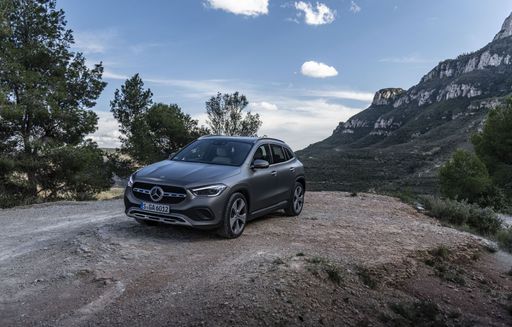
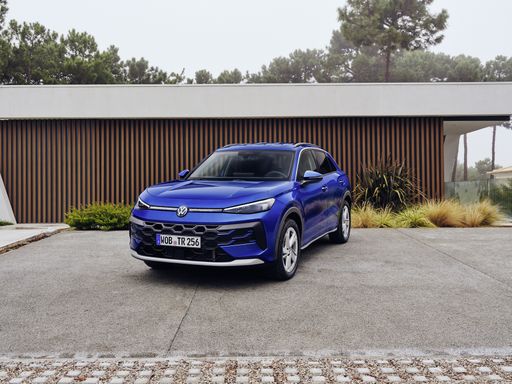
Mercedes GLA VS VW T‑Roc pits a premium‑leaning compact SUV against a newly matured, practical Volkswagen contender and this comparison strips the choices down to how they feel in everyday life. The Mercedes GLA presents itself as a quieter, more tech‑forward cruiser with a strong emphasis on comfort and road calm. The VW T‑Roc answers with clearer practicality, improved materials and a more straightforward, user‑friendly cabin. Read on to see which car fits your routine: the GLA’s lounge‑like calm or the T‑Roc’s sensible versatility.
GLA

Comfort and long‑distance behaviour

On longer drives the Mercedes GLA leans into a composed, cushioned ride that reduces fatigue and masks road noise in a way that reads premium. The VW T‑Roc is also relaxed at speed but tends to feel a touch firmer, and choosing its adaptive damping widens the gap between soft touring and firmer handling. That means the GLA is the easier car to spend hours in without noticing every seam and expansion joint, while the T‑Roc rewards those who want the option to tighten things up for dynamic stretches. Wheel and tyre choices amplify the difference — the T‑Roc’s larger rims make it feel more planted but less forgiving than the GLA’s more consistent comfort tune.

T-Roc

City friendliness and everyday usability

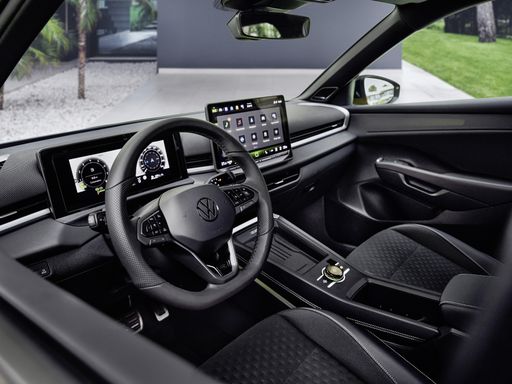
In tight urban environments the Mercedes GLA’s compact dimensions and elevated seating make manoeuvres and visibility comfortable, and its driver assistance tech eases congested commutes. The VW T‑Roc matches that practicality but delivers a clearer, more conventional control layout and a tauter steering feel that makes short runs feel instinctive. The GLA’s high‑tech interfaces can impress but also distract when you need fast, physical controls; the T‑Roc keeps key switches and a tactile centre control that most owners reach for without thinking. In stop‑start traffic both cars expose small irritations — the GLA’s low‑speed gearbox quirks and the T‑Roc’s DSG hesitation under abrupt inputs — but the everyday experience tips toward the T‑Roc for predictability and toward the GLA for assisted refinement.

GLA

Practicality, cargo and family use

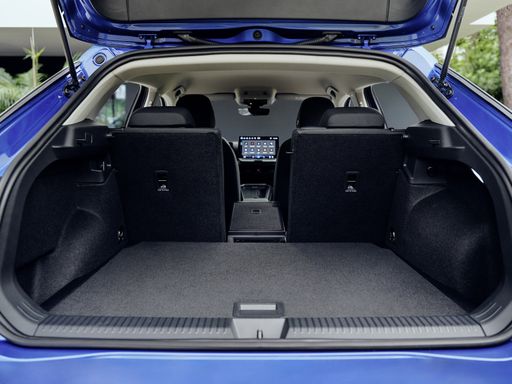
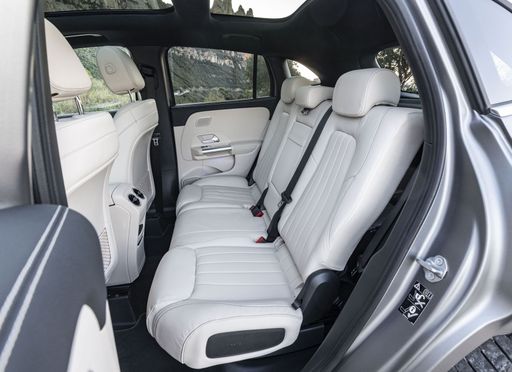
When it comes to hauling people and kit the VW T‑Roc shows its strengths with a more usable boot layout and a three‑part rear seat that lets you carry passengers and long items together without acrobatics. The Mercedes GLA offers comfortable rear seating and premium touches, yet its cargo area is less flexible and plug‑in variants further eat into usable space. Families who pack strollers, sports gear and groceries will find the T‑Roc’s variable floor and easier loading edge more forgiving on a daily basis. If rear passenger comfort for two adults is the priority, the GLA holds its own, but if sheer packing practicality matters, the T‑Roc is the smarter daily partner.

T-Roc

Cabin feel, perceived quality and everyday tech

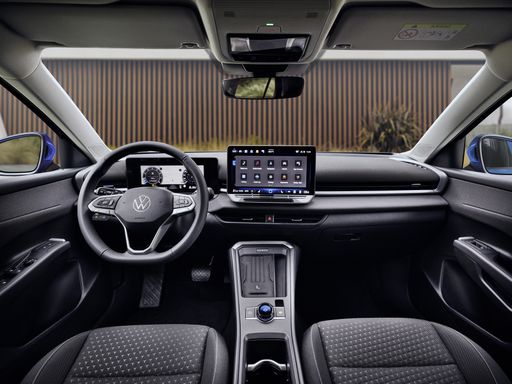
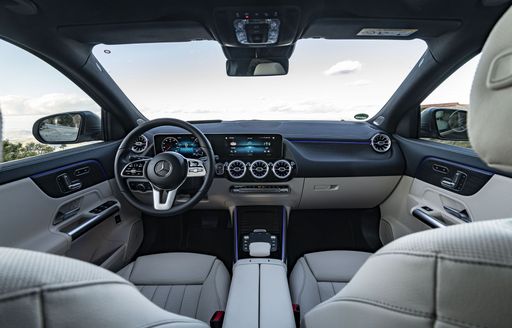
The Mercedes GLA makes a strong first impression with a modern, design‑forward cabin and large displays that signal premium intent from the moment you open the door. The VW T‑Roc has closed the quality gap with softer surfaces and a sturdier, more grown‑up ambience that rewards regular use without feeling precious. MBUX in the GLA packs advanced features and slick integration, but its touch‑centric controls and steering pad take a learning curve that some owners find irritating. The T‑Roc trades a bit of theatre for conventional ergonomics and tactile controls, which can feel more user‑friendly after a week behind the wheel and less fiddly during daily chores.

GLA

Buyer fit: who should choose which car?

Choose the Mercedes GLA if you prioritise highway serenity, a premium cabin mood and the latest infotainment tech as part of a comfort‑first purchase — ideal for solo commuters and frequent motorway miles. Opt for the VW T‑Roc if you want a more pragmatic daily partner with clearer controls, better luggage usability and a slightly more down‑to‑earth running experience that still feels upmarket. The trade‑off is simple: GLA buys refinement and tech polish; T‑Roc buys usability and sensible space. Continue to the technical comparison to match those character differences with engine choices, economy and boot‑volume details that will determine running costs and real‑world practicality.

Here’s where it gets real: The technical differences in detail

T-Roc

Costs and Efficiency:

Price and efficiency are key factors when choosing a car – and this is often where the real differences emerge.

VW T-Roc is significantly cheaper – starting at 26,400 £ , while the Mercedes GLA costs 38,800 £ . That’s a price difference of around 12,398 £.

Fuel consumption also shows a difference: the Mercedes GLA uses 2.9 L/100km and is substantially more efficient than the VW T-Roc with 5.5 L/100km. The difference is about 2.6 L/100km.

GLA

Engine and Performance:

Power, torque and acceleration say a lot about how a car feels on the road. This is where you see which model delivers more driving dynamics.

When it comes to engine power, the Mercedes GLA offers significantly more power – delivering 421 HP compared to 150 HP. That’s roughly 271 HP more horsepower.

When accelerating from 0 to 100 km/h, the Mercedes GLA is substantially quicker – completing the sprint in 4.3 s, while the VW T-Roc takes 8.9 s. That’s about 4.6 s quicker.

There’s also a difference in torque: the Mercedes GLA delivers clearly more torque with 500 Nm compared to 250 Nm. That’s about 250 Nm more.

T-Roc

Space and Everyday Use:

Cabin size, boot volume and payload all play a role in everyday practicality. Here, comfort and flexibility make the difference.

Both vehicles offer seating for 5 people.

In terms of curb weight, VW T-Roc is very slightly lighter – 1,465 kg compared to 1,570 kg. The difference is around 105 kg.

Looking at boot space, the VW T-Roc offers marginally more boot space – 475 L compared to 435 L. That’s a difference of about 40 L.

When it comes to payload, the VW T-Roc carries marginally more – 515 kg compared to 500 kg. That’s a difference of about 15 kg.

Who wins the race in the data check?

The Mercedes GLA is decisively ahead in the objective data comparison.
This result only shows which model scores more points on paper – not which of the two cars feels right for you.

from £38,800
GLA

Mercedes GLA

  • Engine Type Petrol MHEV, Plugin Hybrid, Diesel, Petrol
  • Transmission Automatic
  • Drive Type Front-Wheel Drive, All-Wheel Drive
  • Power HP 116 - 421 HP
  • Consumption L/100km 2.9 - 9.5 L/100km
  • Electric Range 74 km
VW T-Roc
Mercedes GLA

Costs and Consumption

View detailed analysis

Engine and Performance

View detailed analysis

Dimensions and Body

View detailed analysis

VW T-Roc

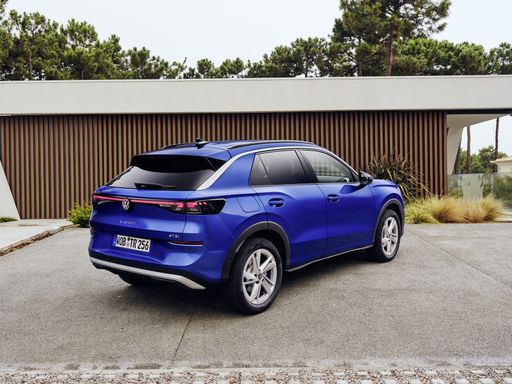
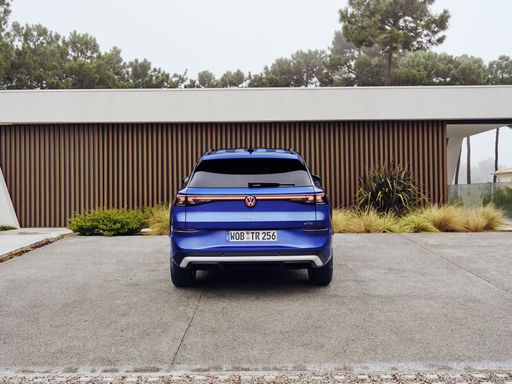
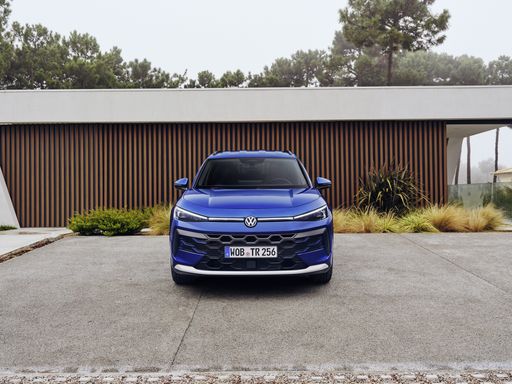
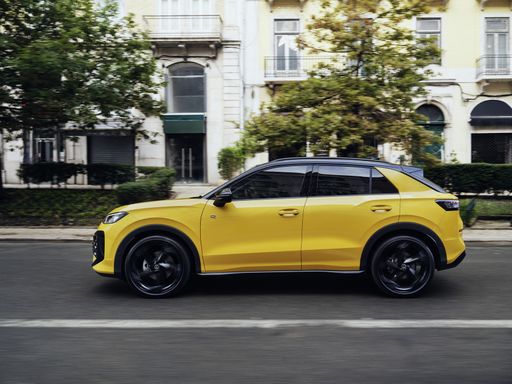
The Volkswagen T‑Roc is a stylish, well-proportioned crossover that blends hatchback agility with SUV presence. It delivers a comfortable cabin, user-friendly tech and a composed ride, making it a sensible choice for buyers who want practicality with a bit of character.

details

Mercedes GLA

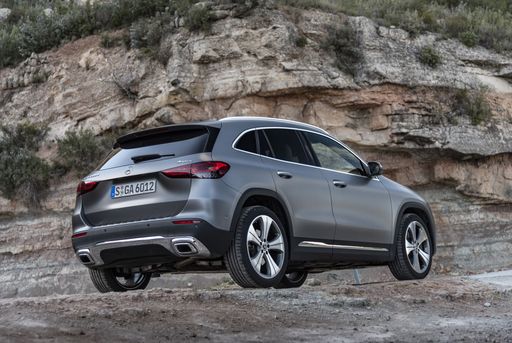
The Mercedes GLA is a compact luxury crossover that brings Mercedes-Benz's refined design and premium cabin materials into a practical, city-friendly package. It combines comfortable ride quality and intuitive tech with poised handling, making it a confident choice for everyday driving and longer journeys.

details
VW T-Roc
Mercedes GLA

Costs and Consumption

Price
26,400 - 38,600 £
Price
38,800 - 75,300 £
Consumption L/100km
5.5 - 6.3 L/100km
Consumption L/100km
2.9 - 9.5 L/100km
Consumption kWh/100km
-
Consumption kWh/100km
-
Electric Range
-
Electric Range
74 km
Battery Capacity
-
Battery Capacity
-
co2
126 - 143 g/km
co2
66 - 216 g/km
Fuel tank capacity
-
Fuel tank capacity
-

Dimensions and Body

Body Type
SUV
Body Type
SUV
Seats
4 - 5
Seats
5
Doors
-
Doors
-
Curb weight
1,465 - 1,539 kg
Curb weight
1,570 - 1,810 kg
Trunk capacity
284 - 475 L
Trunk capacity
385 - 435 L
Length
-
Length
-
Width
1,811 - 1,828 mm
Width
1,834 - 1,849 mm
Height
-
Height
-
Max trunk capacity
-
Max trunk capacity
-
Payload
368 - 515 kg
Payload
480 - 500 kg

Engine and Performance

Engine Type
Petrol, Petrol MHEV
Engine Type
Petrol MHEV, Plugin Hybrid, Diesel, Petrol
Transmission
Manuel, Automatic
Transmission
Automatic
Transmission Detail
Manual Gearbox, Dual-Clutch Automatic
Transmission Detail
Dual-Clutch Automatic
Drive Type
Front-Wheel Drive
Drive Type
Front-Wheel Drive, All-Wheel Drive
Power HP
115 - 150 HP
Power HP
116 - 421 HP
Acceleration 0-100km/h
8.9 - 12.3 s
Acceleration 0-100km/h
4.3 - 11 s
Max Speed
-
Max Speed
-
Torque
200 - 250 Nm
Torque
230 - 500 Nm
Number of Cylinders
3 - 4
Number of Cylinders
4
Power kW
85 - 110 kW
Power kW
85 - 310 kW
Engine capacity
999 - 1,498 cm3
Engine capacity
1,332 - 1,991 cm3

General

Model Year
2,024 - 2,025
Model Year
2025
CO2 Efficiency Class
E, D
CO2 Efficiency Class
E, F, B, G
Brand
VW
Brand
Mercedes-Benz
DriveDuel uses data analysis and artificial intelligence to evaluate vehicle data and create content. Content is regularly reviewed and improved. The displayed prices are estimates based on German list prices, adjusted to the respective country’s VAT. Country-specific registration taxes are not included. This information is not legally binding.