VS

VW T-Roc vs Skoda Kamiq comparison

Compare performance (150 HP vs 150 HP), boot space and price (26,400 £ vs 22,300 £ ) at a glance. Find out which car is the better choice for you – VW T-Roc or Skoda Kamiq?

VW T-Roc vs Skoda Kamiq: Key differences

VW T-Roc

4.6 (7 Reviews)
rate
  • a bit more trunk space
details

Skoda Kamiq

4.9 (6 Reviews)
rate
  • moderately cheaper
  • barely more efficient
  • marginally quicker 0–100 km/h
  • somewhat lighter
details

All details on performance, efficiency, range and trunk space can be found in the technical comparison below – including user reviews for both models.

By Achim Sedelmaier

T-Roc

Skoda Kamiq vs VW T-Roc: the real-world matchup

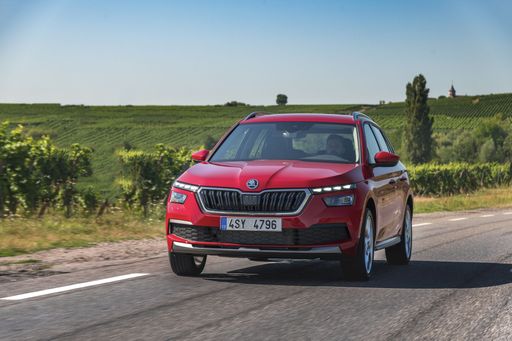
The Skoda Kamiq and the VW T-Roc aim at similar needs but deliver them with different personalities, making Skoda Kamiq VS VW T-Roc a genuinely useful comparison. The Skoda Kamiq plays the pragmatic card: easy to live with, roomy for its size, and notably frugal. The VW T-Roc feels a class up in polish, with a calmer, more insulated drive and a cabin that looks and feels more premium. There is a price step to reach the T-Roc’s extra sheen, and options can push it higher. Deciding between them is about how you drive and what you value day to day, not a spec-sheet arm wrestle.
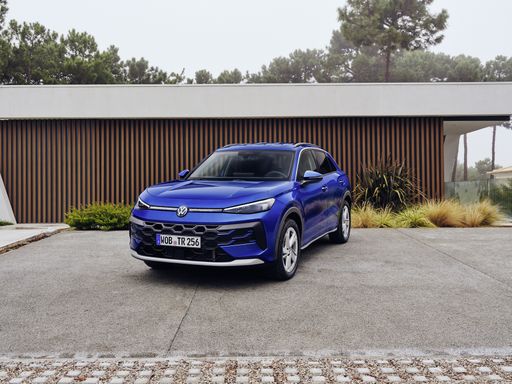
Kamiq

Driving character and comfort

The Skoda Kamiq is set up for relaxed progress: light steering, an easygoing gait, and a suspension tune that favors comfort over cornering heroics. Push it and you’ll notice more body movement, but on a commute it’s unfussy and settled. The VW T-Roc feels more planted and mature on a fast road, with better noise suppression and an optional adaptive setup that widens the comfort-to-control spread. Choose sensible wheel sizes on the T-Roc to keep the ride supple; the biggest rims add thump over sharp edges. Both pair smoothly with a dual-clutch gearbox in steady driving, though the Skoda’s can fidget at parking speeds while the VW’s can hesitate if you jab the throttle.

T-Roc

Cabin feel and controls

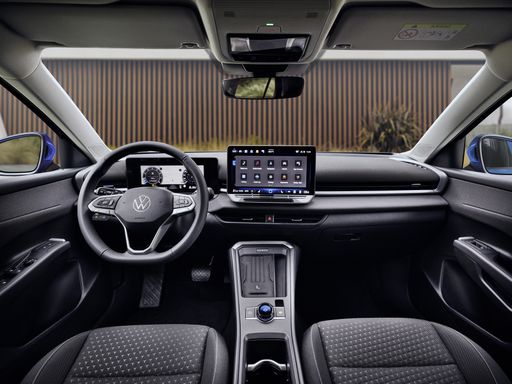
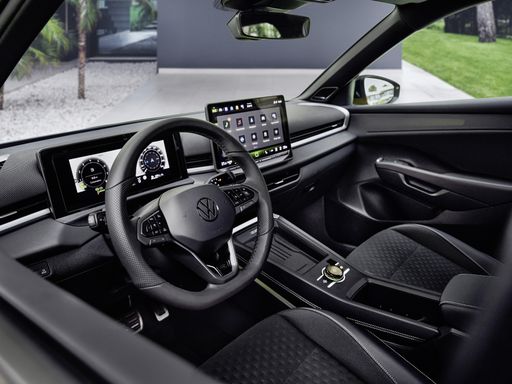
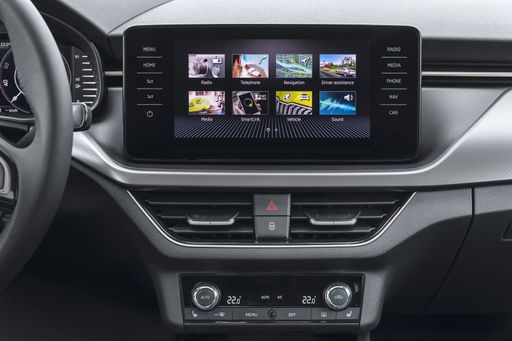
Inside, the Skoda Kamiq keeps things straightforward, with proper climate knobs and clear menus that are easy to use on the move. Materials are robust rather than plush, and the infotainment can be a beat behind with the odd smartphone quirk. The VW T-Roc counters with a noticeably richer look and touch, from soft surfaces to neatly integrated displays and welcome returns of real steering-wheel buttons. Its climate is managed by touch sliders and a multifunction rotary controller that work once learned, but they demand more attention initially. If you prize tactile simplicity, the Kamiq’s approach is friendlier; if you want a more upmarket ambiance, the T-Roc delivers.

Kamiq

Space and everyday practicality

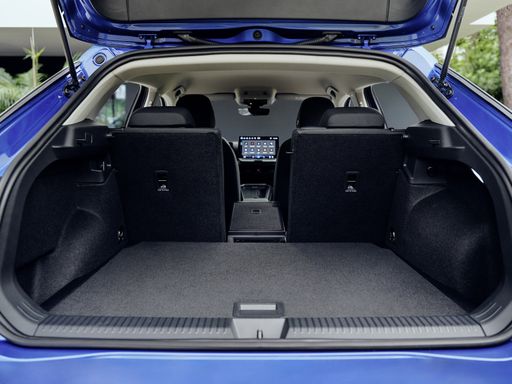
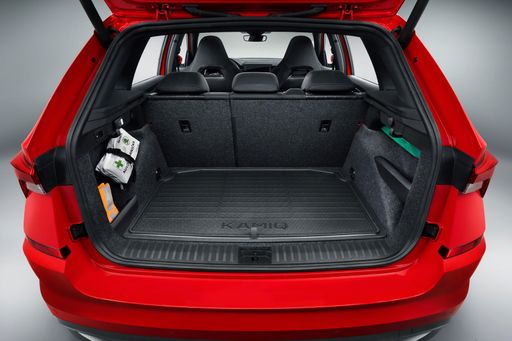
The Skoda Kamiq majors on clever space: rear legroom is excellent for a small SUV, doors open wide, and family kit finds handy homes in the cabin. Its boot is usefully shaped, though without the optional variable floor you get a step and the 60:40 rear bench isn’t the most flexible. The VW T-Roc offers more elbow room and a cargo area that’s easier to configure, with a variable floor and a 40:20:40 backrest for long items. That split makes ski trips or flat-pack runs far simpler without sacrificing two rear seats. There’s no sliding rear bench on either, and with the T-Roc’s floor in the lowest position an inner load lip remains, but overall it’s the more versatile hauler.

T-Roc

City ease vs motorway manners

In town, the Skoda Kamiq’s lighter feel, generous glass area and tidy footprint make squeezing through gaps and slotting into tight bays almost stress-free. The VW T-Roc is still compact enough for the city, but feels a touch broader; its cameras and sensors take the strain in crowded car parks. On a long run the T-Roc settles into an impressively quiet lope, shrugging off wind and road roar and tracking straight with minimal effort. The Skoda Kamiq is stable and pleasantly quiet for its class, and its thrifty nature stretches fuel stops, but you’ll hear a little more texture from the road. Off the line the Kamiq can feel a shade more eager, while the T-Roc trades a hint of sprint for superior cruising calm.

Kamiq

Costs, efficiency and who each car suits

If you’re watching upfront and running costs, the Skoda Kamiq typically lands lighter on the wallet and sips less in everyday driving. The VW T-Roc asks more but gives back in perceived quality, long-distance hush and a richer set of assistance tech, especially as you climb trims. Ergonomically, the Kamiq’s physical controls are blissfully simple; the T-Roc’s tech feels newer and classier but its touch sliders won’t please everyone. City-based families and pragmatic commuters will click with the Kamiq’s ease of use, big rear seat and sensible efficiency. Frequent motorway travelers and buyers who value cabin polish and flexible cargo solutions will feel better served by the T-Roc. Keep those priorities in mind as you dive into the technical comparison next to see which one lines up best with your life.

Here’s where it gets real: The technical differences in detail

T-Roc

Costs and Efficiency:

When it comes to price and running costs, the biggest differences usually appear. This is often where you see which car fits your budget better in the long run.

Skoda Kamiq is moderately cheaper – starting at 22,300 £ , while the VW T-Roc costs 26,400 £ . That’s a price difference of around 4,170 £.

Fuel consumption also shows a difference: the Skoda Kamiq uses 5.3 L/100km and is barely more efficient than the VW T-Roc with 5.5 L/100km. The difference is about 0.2 L/100km.

Kamiq

Engine and Performance:

Power, torque and acceleration say a lot about how a car feels on the road. This is where you see which model delivers more driving dynamics.

Both models deliver identical power – 150 HP each.

When accelerating from 0 to 100 km/h, the Skoda Kamiq is marginally quicker – completing the sprint in 8.1 s, while the VW T-Roc takes 8.9 s. That’s about 0.8 s quicker.

Both models offer the same torque – 250 Nm.

T-Roc

Space and Everyday Use:

Whether family car or daily driver – which one offers more room, flexibility and comfort?

Both vehicles offer seating for 5 people.

In terms of curb weight, Skoda Kamiq is somewhat lighter – 1,231 kg compared to 1,465 kg. The difference is around 234 kg.

Looking at boot space, the VW T-Roc offers a bit more boot space – 475 L compared to 400 L. That’s a difference of about 75 L.

When it comes to payload, the Skoda Kamiq carries marginally more – 539 kg compared to 515 kg. That’s a difference of about 24 kg.

Who wins the race in the data check?

The Skoda Kamiq holds a solid overall lead in the objective data comparison.
This result only shows which model scores more points on paper – not which of the two cars feels right for you.

from £22,300
Kamiq

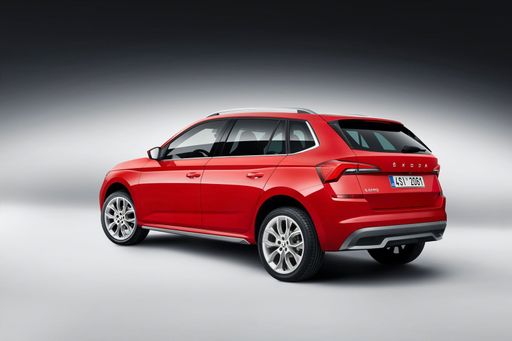
Skoda Kamiq

  • Engine Type Petrol
  • Transmission Manuel, Automatic
  • Drive Type Front-Wheel Drive
  • Power HP 95 - 150 HP
  • Consumption L/100km 5.3 - 5.7 L/100km
VW T-Roc
Skoda Kamiq

Costs and Consumption

View detailed analysis

Engine and Performance

View detailed analysis

Dimensions and Body

View detailed analysis

VW T-Roc

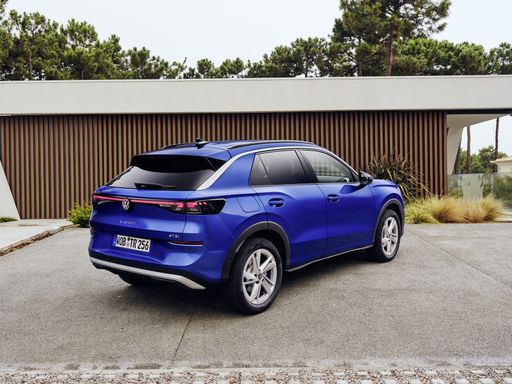
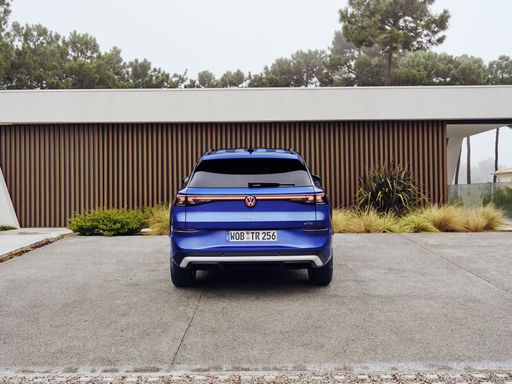
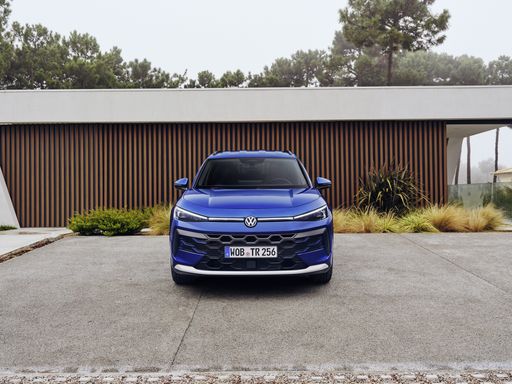
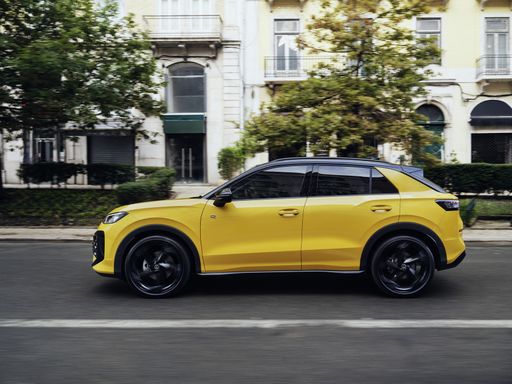
The Volkswagen T‑Roc is a stylish, well-proportioned crossover that blends hatchback agility with SUV presence. It delivers a comfortable cabin, user-friendly tech and a composed ride, making it a sensible choice for buyers who want practicality with a bit of character.

details

Skoda Kamiq

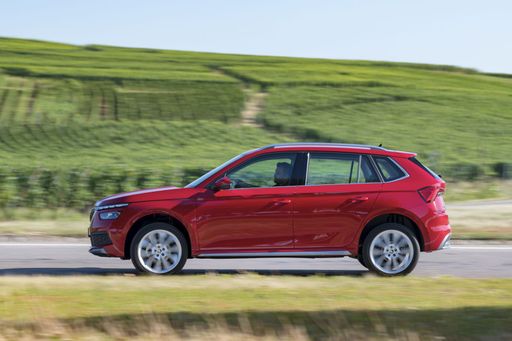
The Skoda Kamiq is a practical, well-built small crossover that mixes city-friendly manners with surprisingly versatile interior space and clever storage solutions. It offers a comfortable ride, user-friendly technology and solid value, making it a sensible choice for everyday driving.

details
VW T-Roc
Skoda Kamiq

Costs and Consumption

Price
26,400 - 38,600 £
Price
22,300 - 32,700 £
Consumption L/100km
5.5 - 6.3 L/100km
Consumption L/100km
5.3 - 5.7 L/100km
Consumption kWh/100km
-
Consumption kWh/100km
-
Electric Range
-
Electric Range
-
Battery Capacity
-
Battery Capacity
-
co2
126 - 143 g/km
co2
121 - 128 g/km
Fuel tank capacity
-
Fuel tank capacity
-

Dimensions and Body

Body Type
SUV
Body Type
SUV
Seats
4 - 5
Seats
5
Doors
-
Doors
-
Curb weight
1,465 - 1,539 kg
Curb weight
1,231 - 1,340 kg
Trunk capacity
284 - 475 L
Trunk capacity
400 L
Length
-
Length
-
Width
1,811 - 1,828 mm
Width
1,793 mm
Height
-
Height
-
Max trunk capacity
-
Max trunk capacity
-
Payload
368 - 515 kg
Payload
439 - 539 kg

Engine and Performance

Engine Type
Petrol, Petrol MHEV
Engine Type
Petrol
Transmission
Manuel, Automatic
Transmission
Manuel, Automatic
Transmission Detail
Manual Gearbox, Dual-Clutch Automatic
Transmission Detail
Manual Gearbox, Dual-Clutch Automatic
Drive Type
Front-Wheel Drive
Drive Type
Front-Wheel Drive
Power HP
115 - 150 HP
Power HP
95 - 150 HP
Acceleration 0-100km/h
8.9 - 12.3 s
Acceleration 0-100km/h
8.1 - 11 s
Max Speed
-
Max Speed
-
Torque
200 - 250 Nm
Torque
175 - 250 Nm
Number of Cylinders
3 - 4
Number of Cylinders
3 - 4
Power kW
85 - 110 kW
Power kW
70 - 110 kW
Engine capacity
999 - 1,498 cm3
Engine capacity
999 - 1,498 cm3

General

Model Year
2,024 - 2,025
Model Year
2025
CO2 Efficiency Class
E, D
CO2 Efficiency Class
D
Brand
VW
Brand
Skoda
DriveDuel uses data analysis and artificial intelligence to evaluate vehicle data and create content. Content is regularly reviewed and improved. The displayed prices are estimates based on German list prices, adjusted to the respective country’s VAT. Country-specific registration taxes are not included. This information is not legally binding.