VS

VW Taigo vs Mazda CX-30 comparison

Compare performance (150 HP vs 186 HP), boot space and price (19,900 £ vs 25,700 £ ) at a glance. Find out which car is the better choice for you – VW Taigo or Mazda CX-30?

VW Taigo vs Mazda CX-30: Key differences

VW Taigo

4.9 (3 Reviews)
rate
  • visibly cheaper
  • very slightly more efficient
  • very slightly quicker 0–100 km/h
  • slightly lighter
  • only slightly more trunk space
details

Mazda CX-30

4.5 (9 Reviews)
rate
  • a bit more power
details

All details on performance, efficiency, range and trunk space can be found in the technical comparison below – including user reviews for both models.

By Achim Sedelmaier

Taigo

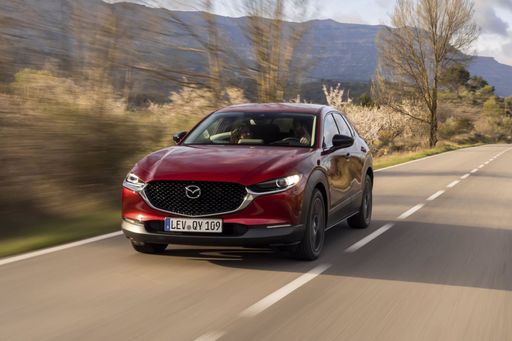
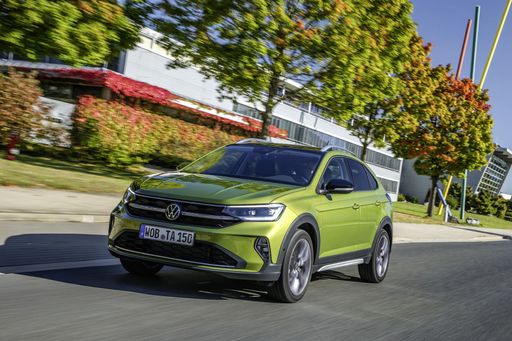
The automotive landscape continues to evolve with compact SUVs gaining popularity among urban drivers and families. Among the contenders in this segment, the Mazda CX-30 and Volkswagen Taigo stand out for their unique offerings. This article presents a detailed comparison of the two vehicles highlighting their technical specifications, innovative features, and driving experiences.
CX-30

Engine and Performance

The Mazda CX-30 enters the arena with two engine options: a 2.0-liter petrol engine producing 186 hp and a 2.5-liter alternative delivering 140 hp. These engines, paired with either a manual or an automatic gearbox, provide versatility in driving preferences. The CX-30 can achieve a top speed of 204 km/h and accelerates from 0 to 100 km/h in as little as 8.3 seconds, demonstrating its sporty edge.

In contrast, the VW Taigo offers a range of powertrains including a 1.0-liter engine with outputs of 95 hp, 115 hp, and a 1.5-liter option offering 150 hp. The Taigo's optimal engine configuration can reach a top speed of 212 km/h with a commendable acceleration time of 8.2 seconds. The Taigo's focus appears to lie in delivering a balanced performance suited for city driving.

Taigo

Fuel Efficiency and Consumption

When it comes to fuel efficiency, the CX-30 holds its ground with consumption figures ranging between 5.7 to 6.6 L/100 km depending on the engine configuration. This places it in a competitive position among compact SUVs.

The VW Taigo, however, edges this competition slightly, with consumption figures as low as 5.4 L/100 km, making it an excellent option for those conscious of fuel costs. With a smaller 40-liter fuel tank, the Taigo still manages to provide adequate range for everyday use despite its less robust capacity compared to the CX-30's 51-liter tank.

CX-30

Dimensions and Practicality

In terms of size, the Mazda CX-30 measures 4395 mm in length, 1795 mm in width, and 1540 mm in height, while the VW Taigo is slightly smaller at 4266 mm in length, 1757 mm in width, and 1518 mm in height. The CX-30’s larger dimensions translate into a roomy interior and a trunk capacity of 430 liters, which can accommodate more luggage or gear.

On the other hand, the VW Taigo offers a marginally larger trunk space at 440 liters, despite its smaller exterior footprint. This clever packaging maximizes cargo potential, making it an attractive choice for daily errands and weekend adventures alike.

Taigo

Interior Features and Technology

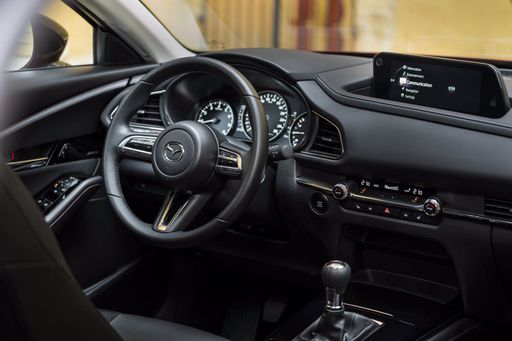
Inside, both vehicles offer a modern and user-friendly cabin featuring high-quality materials. The CX-30 shines with its emphasis on driver-focused design and advanced technology like the Mazda Connect infotainment system, which integrates seamlessly with smartphones and comes with a responsive touchscreen.

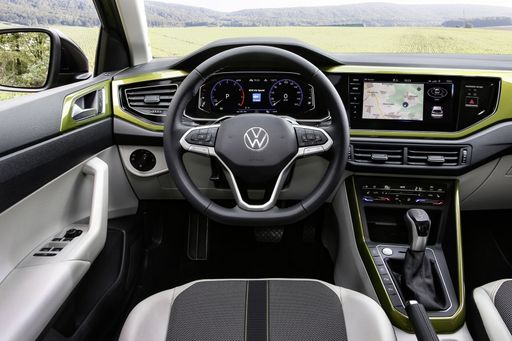
The Volkswagen Taigo, leans heavily on its tech-savvy approach with a digital cockpit displaying essential data at a glance. The infotainment system is quick and intuitive, though some may find the touch buttons less tactile compared to traditional knobs.

CX-30

Safety Innovations

Safety is paramount in both SUVs. The Mazda CX-30 comes equipped with a suite of Driver Assistance Technologies including adaptive cruise control, lane-keeping assist, and automated emergency braking, earning high safety ratings from testing agencies.

Similarly, the VW Taigo features an impressive array of safety technologies, including front assist with emergency braking and blind-spot monitoring. Both vehicles promise peace of mind regardless of the driving conditions.

Taigo

Conclusion: A Choice of Character

Choosing between the Mazda CX-30 and Volkswagen Taigo ultimately hinges on individual preferences. The CX-30 offers a more dynamic driving experience with a sportier performance angle and a slightly larger, practical cabin, making it suitable for those needing versatility.

The Taigo, meanwhile, caters to urbanites seeking exceptional fuel economy and a compact, stylish profile without sacrificing practicality. Both vehicles are well-equipped, ensuring that whichever you choose, you will not be disappointed.

Here’s where it gets real: The technical differences in detail

Taigo

Costs and Efficiency:

When it comes to price and running costs, the biggest differences usually appear. This is often where you see which car fits your budget better in the long run.

VW Taigo is visibly cheaper – starting at 19,900 £ , while the Mazda CX-30 costs 25,700 £ . That’s a price difference of around 5,785 £.

Fuel consumption also shows a difference: the VW Taigo uses 5.3 L/100km and is very slightly more efficient than the Mazda CX-30 with 5.7 L/100km. The difference is about 0.4 L/100km.

CX-30

Engine and Performance:

Power, torque and acceleration are the classic benchmarks for car enthusiasts – and here, some clear differences start to show.

When it comes to engine power, the Mazda CX-30 offers a bit more power – delivering 186 HP compared to 150 HP. That’s roughly 36 HP more horsepower.

When accelerating from 0 to 100 km/h, the VW Taigo is very slightly quicker – completing the sprint in 8.2 s, while the Mazda CX-30 takes 8.3 s. That’s about 0.1 s quicker.

There’s also a difference in torque: the VW Taigo delivers only slightly more torque with 250 Nm compared to 240 Nm. That’s about 10 Nm more.

Taigo

Space and Everyday Use:

Cabin size, boot volume and payload all play a role in everyday practicality. Here, comfort and flexibility make the difference.

Both vehicles offer seating for 5 people.

In terms of curb weight, VW Taigo is slightly lighter – 1,229 kg compared to 1,455 kg. The difference is around 226 kg.

Looking at boot space, the VW Taigo offers only slightly more boot space – 440 L compared to 430 L. That’s a difference of about 10 L.

When it comes to payload, the Mazda CX-30 carries marginally more – 496 kg compared to 457 kg. That’s a difference of about 39 kg.

Who wins the race in the data check?

The Mazda CX-30 has only a minor advantage in the objective data comparison.
This result only shows which model scores more points on paper – not which of the two cars feels right for you.

from £25,700
CX-30

Mazda CX-30

  • Engine Type Petrol MHEV
  • Transmission Manuel, Automatic
  • Drive Type Front-Wheel Drive, All-Wheel Drive
  • Power HP 140 - 186 HP
  • Consumption L/100km 5.7 - 6.6 L/100km
VW Taigo
Mazda CX-30

Costs and Consumption

View detailed analysis

Engine and Performance

View detailed analysis

Dimensions and Body

View detailed analysis

VW Taigo

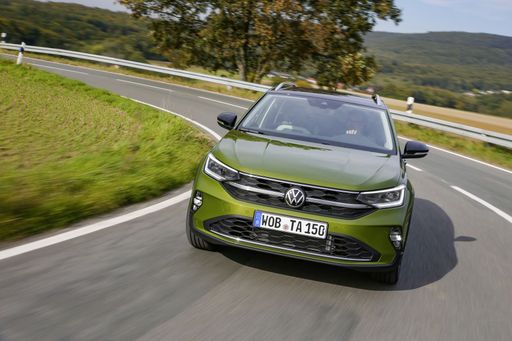
The VW Taigo blends a coupe-like roofline with crossover practicality, giving it a stylish presence on the road while remaining easy to live with for everyday driving. It delivers a comfortable ride, intuitive tech and smart use of space, making it a good choice if you want SUV looks without the bulk of a larger vehicle.

details

Mazda CX-30

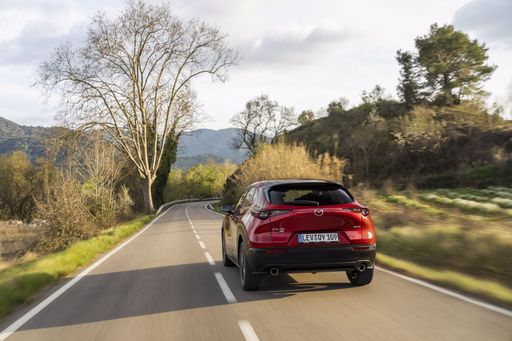
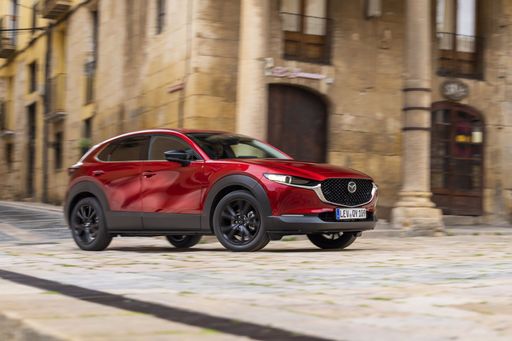
The Mazda CX-30 blends Mazda’s upscale styling with a compact crossover body, offering a refined interior and engaging driving dynamics. It’s a practical choice for buyers who want a premium feel and agile handling in a city-friendly package.

details
VW Taigo
Mazda CX-30

Costs and Consumption

Price
19,900 - 31,800 £
Price
25,700 - 37,200 £
Consumption L/100km
5.3 - 5.8 L/100km
Consumption L/100km
5.7 - 6.6 L/100km
Consumption kWh/100km
-
Consumption kWh/100km
-
Electric Range
-
Electric Range
-
Battery Capacity
-
Battery Capacity
-
co2
120 - 132 g/km
co2
129 - 148 g/km
Fuel tank capacity
-
Fuel tank capacity
-

Dimensions and Body

Body Type
SUV
Body Type
SUV
Seats
5
Seats
5
Doors
-
Doors
-
Curb weight
1,229 - 1,302 kg
Curb weight
1,455 - 1,587 kg
Trunk capacity
440 L
Trunk capacity
422 - 430 L
Length
-
Length
-
Width
1,757 mm
Width
1,795 mm
Height
-
Height
-
Max trunk capacity
-
Max trunk capacity
-
Payload
448 - 457 kg
Payload
458 - 496 kg

Engine and Performance

Engine Type
Petrol
Engine Type
Petrol MHEV
Transmission
Manuel, Automatic
Transmission
Manuel, Automatic
Transmission Detail
Manual Gearbox, Dual-Clutch Automatic
Transmission Detail
Manual Gearbox, Automatic Gearbox
Drive Type
Front-Wheel Drive
Drive Type
Front-Wheel Drive, All-Wheel Drive
Power HP
95 - 150 HP
Power HP
140 - 186 HP
Acceleration 0-100km/h
8.2 - 11.1 s
Acceleration 0-100km/h
8.3 - 10.3 s
Max Speed
-
Max Speed
-
Torque
175 - 250 Nm
Torque
238 - 240 Nm
Number of Cylinders
3 - 4
Number of Cylinders
4
Power kW
70 - 110 kW
Power kW
103 - 137 kW
Engine capacity
999 - 1,498 cm3
Engine capacity
1,998 - 2,488 cm3

General

Model Year
2,024 - 2,025
Model Year
2025
CO2 Efficiency Class
D
CO2 Efficiency Class
D, E
Brand
VW
Brand
Mazda
DriveDuel uses data analysis and artificial intelligence to evaluate vehicle data and create content. Content is regularly reviewed and improved. The displayed prices are estimates based on German list prices, adjusted to the respective country’s VAT. Country-specific registration taxes are not included. This information is not legally binding.