VS

VW Tayron vs Toyota RAV4 comparison

Compare performance (272 HP vs 306 HP), boot space and price (39,600 £ vs 35,100 £ ) at a glance. Find out which car is the better choice for you – VW Tayron or Toyota RAV4?

VW Tayron vs Toyota RAV4: Key differences

VW Tayron

4.8 (2 Reviews)
rate
  • clearly more electric range
  • only slightly lighter
  • visibly more trunk space
details

Toyota RAV4

4.8 (7 Reviews)
rate
  • a bit cheaper
  • somewhat more power
  • considerably more efficient
  • barely quicker 0–100 km/h
details

All details on performance, efficiency, range and trunk space can be found in the technical comparison below – including user reviews for both models.

By Achim Sedelmaier

Tayron

Street Stance and First Impressions

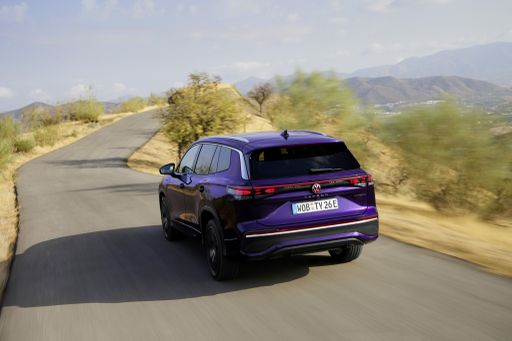
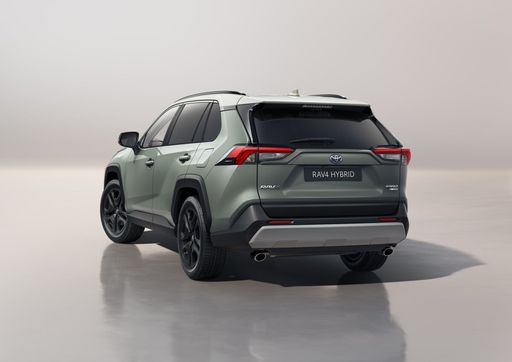
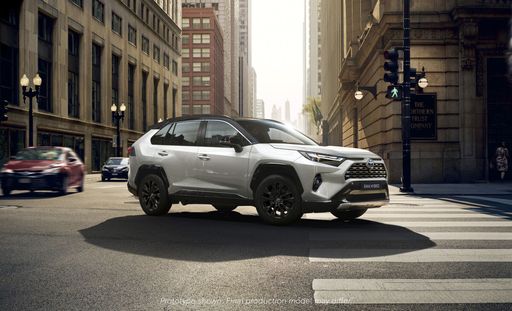
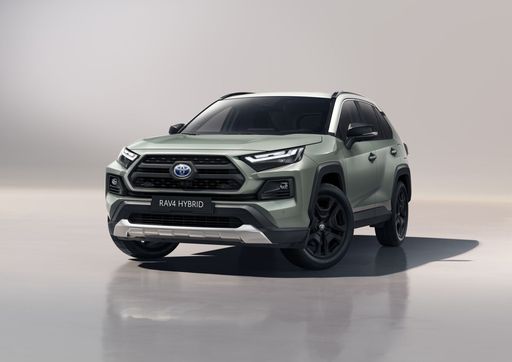
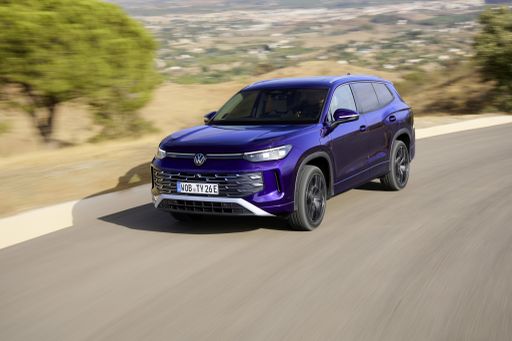
The two rivals arrive with very different attitudes: the Toyota RAV4 carries a rugged, no-nonsense vibe that looks equally at home on a supermarket run or a gravel track, while the VW Tayron leans toward a more composed, grown-up elegance that favors clean lines and presence. From a distance each signals its intent — one bullish and practical, the other polished and a touch premium. Buyers who prize personality will find reasons to smile with either; it comes down to whether you prefer functional toughness or refined poise. Both manage to stand out without shouting, which makes them safe choices in a crowded market.
RAV4

Salon and Suitability

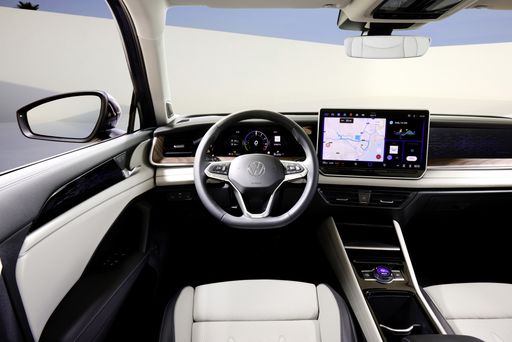
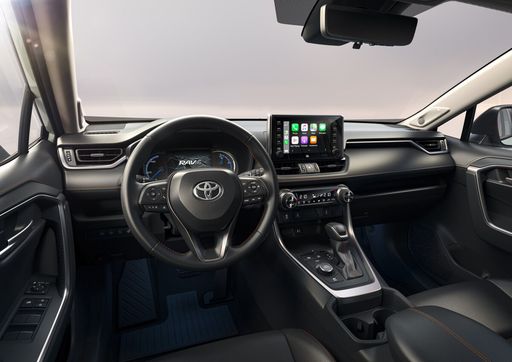
Step inside and the contrast continues: the Toyota RAV4's cabin feels purposeful and hard-wearing, with controls that prioritize clarity over flair, whereas the VW Tayron aims for a softer, more upmarket mood with touches that suggest refinement. Ergonomics are broadly friendly in both, though the Tayron edges ahead for those who want a more premium ambience and quieter surroundings on long runs. Practical details matter here — intuitive layouts, good visibility and comfortable seats — and both deliver, just with different emphases. If you spend lots of time in the car, the choice becomes as much about daily mood as it is about pure functionality.

Tayron

On-road Personality

These SUVs don't try to be sports cars, but their characters are clear: the Toyota RAV4 feels robust and eager to get moving, delivering a reassuring sense of shove and composure, while the VW Tayron focuses on controlled refinement and a composed high-speed demeanor. Steering and suspension tuning reveal their priorities — one favors confidence and a grin-inducing shove, the other a smoother, more measured approach that soaks up miles with less fuss. In town both are easy to live with, and on longer trips the differences become a matter of taste rather than necessity. Expect neither to offend; each simply offers a different flavour of SUV driving.

RAV4

Family Life and Weekend Plans

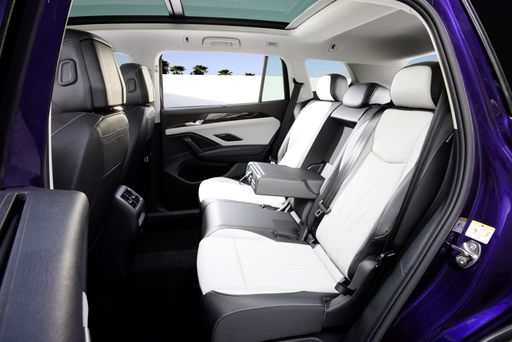
Practicality is where these models earn their keep: the Toyota RAV4 presents itself as a sensible partner for family life with durable surfaces and a focus on usability, whereas the VW Tayron caters to owners who want a tidier, more versatile load area and a slightly more refined experience for passengers. Folding seats, sensible storage cubbies and easy-to-use entry points are strengths on both sides, making school runs and grocery trips painless. If you regularly haul gear or push the limits of cargo space, one will feel more convenient in daily shuffles, while the other will appeal to those who want a neater blend of practicality and polish. Either way, both are competent family machines rather than niche toys.

Tayron

Keeping It on the Road

Ownership considerations often sway buyers more than showroom bravado, and here perceptions matter: the Toyota RAV4 benefits from a reputation for straightforward reliability and low-hassle service, while the VW Tayron brings a sense of premium servicing and a refined ownership feel that some are happy to pay for. Running costs, dealer networks and how a car feels after a year of use will likely shape long-term satisfaction more than the badge on the nose. Think about how you plan to use the car day-to-day — commute, family duty or occasional adventures — and which ownership experience suits your tolerance for complexity and cost.

RAV4

The Choice Compass

If you’re a commuter after a dependable workhorse that’s easy to live with and prefers function first, the Toyota RAV4 makes a convincing argument; if you’re a style-conscious buyer who values refinement, a smoother cabin and a little extra presence on the road, the VW Tayron will likely speak to you. Both are adaptable, but your priorities — mood, practicality, and the kind of driving you do most — should steer your decision more than a spec sheet. Keep reading to find out which of these contenders takes the DriveDuel crown.

Here’s where it gets real: The technical differences in detail

Tayron

Costs and Efficiency:

Price and efficiency are often the first things buyers look at. Here it becomes clear which model has the long-term edge – whether at the pump, the plug, or in purchase price.

Toyota RAV4 is a bit cheaper – starting at 35,100 £ , while the VW Tayron costs 39,600 £ . That’s a price difference of around 4,478 £.

Fuel consumption also shows a difference: the Toyota RAV4 uses 1 L/100km and is considerably more efficient than the VW Tayron with 1.5 L/100km. The difference is about 0.5 L/100km.

As for electric range, the VW Tayron offers clearly more range – reaching up to 123 km, about 48 km more than the Toyota RAV4.

RAV4

Engine and Performance:

Power, torque and acceleration are the classic benchmarks for car enthusiasts – and here, some clear differences start to show.

When it comes to engine power, the Toyota RAV4 offers somewhat more power – delivering 306 HP compared to 272 HP. That’s roughly 34 HP more horsepower.

When accelerating from 0 to 100 km/h, the Toyota RAV4 is barely quicker – completing the sprint in 6 s, while the VW Tayron takes 6.1 s. That’s about 0.1 s quicker.

Looking at top speed, the VW Tayron is somewhat faster – reaching 221 km/h, while the Toyota RAV4 tops out at 180 km/h. The difference is around 41 km/h.

Tayron

Space and Everyday Use:

Beyond pure performance, interior space and usability matter most in daily life. This is where you see which car is more practical and versatile.

Both vehicles offer seating for 5 people.

In terms of curb weight, VW Tayron is only slightly lighter – 1,682 kg compared to 1,745 kg. The difference is around 63 kg.

Looking at boot space, the VW Tayron offers visibly more boot space – 885 L compared to 580 L. That’s a difference of about 305 L.

For maximum load capacity, the VW Tayron offers moderately more capacity – up to 2,090 L, about 400 L more than the Toyota RAV4.

When it comes to payload, the Toyota RAV4 carries only slightly more – 600 kg compared to 566 kg. That’s a difference of about 34 kg.

Who wins the race in the data check?

The Toyota RAV4 comes out clearly ahead in the objective data comparison.
This result only shows which model scores more points on paper – not which of the two cars feels right for you.

from £35,100
RAV4

Toyota RAV4

  • Engine Type : Full Hybrid, Plugin Hybrid
  • Transmission : Automatic
  • Drive Type : Front-Wheel Drive, All-Wheel Drive
  • Power HP : 218 - 306 HP
  • Consumption L/100km : 1 - 5.6 L/100km
  • Electric Range : 75 km
VW Tayron
Toyota RAV4

Costs and Consumption

View detailed analysis

Engine and Performance

View detailed analysis

Dimensions and Body

View detailed analysis

VW Tayron

The VW Tayron is Volkswagen's roomy, no-nonsense SUV that pairs clean, familiar styling with a practical cabin built for families and everyday use. It rides comfortably, packs sensible tech and creature comforts, and feels like the sensible sweater of SUVs for buyers who prefer steady value over headline-grabbing drama.

details

Toyota RAV4

The Toyota RAV4 is a pragmatic, family-friendly SUV that pairs impressively low running costs in hybrid form with a relaxed, motorway-friendly ride and a generous rear seat and boot that make everyday life easy. Its cabin leans toward practicality rather than polish—expect plenty of hard plastics and a tidy infotainment system that’s quick to respond but buries some climate functions in a touchscreen and can nag with drive‑recorder popups, so buyers wanting a premium feel or sporty dynamics should look elsewhere.

details
VW Tayron
Toyota RAV4

Costs and Consumption

Price
39,600 - 56,000 £
Price
35,100 - 55,700 £
Consumption L/100km
1.5 - 8.5 L/100km
Consumption L/100km
1 - 5.6 L/100km
Consumption kWh/100km
-
Consumption kWh/100km
-
Electric Range
116 - 123 km
Electric Range
75 km
Battery Capacity
19.7 kWh
Battery Capacity
-
co2
33 - 192 g/km
co2
22 - 128 g/km
Fuel tank capacity
45 - 58 L
Fuel tank capacity
55 L

Dimensions and Body

Body Type
SUV
Body Type
SUV
Seats
5
Seats
5
Doors
5
Doors
5
Curb weight
1,682 - 1,948 kg
Curb weight
1,745 - 1,910 kg
Trunk capacity
705 - 885 L
Trunk capacity
520 - 580 L
Length
4,792 mm
Length
4,600 mm
Width
1,853 - 1,866 mm
Width
1,855 mm
Height
1,666 - 1,668 mm
Height
1,685 mm
Max trunk capacity
1,915 - 2,090 L
Max trunk capacity
1,604 - 1,690 L
Payload
489 - 566 kg
Payload
390 - 600 kg

Engine and Performance

Engine Type
Petrol MHEV, Diesel, Petrol, Plugin Hybrid
Engine Type
Full Hybrid, Plugin Hybrid
Transmission
Automatic
Transmission
Automatic
Transmission Detail
Dual-Clutch Automatic
Transmission Detail
CVT
Drive Type
Front-Wheel Drive, All-Wheel Drive
Drive Type
Front-Wheel Drive, All-Wheel Drive
Power HP
150 - 272 HP
Power HP
218 - 306 HP
Acceleration 0-100km/h
6.1 - 9.7 s
Acceleration 0-100km/h
6 - 8.4 s
Max Speed
204 - 221 km/h
Max Speed
180 km/h
Torque
250 - 400 Nm
Torque
-
Number of Cylinders
4
Number of Cylinders
4
Power kW
110 - 200 kW
Power kW
160 - 225 kW
Engine capacity
1,498 - 1,984 cm3
Engine capacity
2,487 cm3

General

Model Year
2,025 - 2,026
Model Year
2,024 - 2,025
CO2 Efficiency Class
E, F, G, B
CO2 Efficiency Class
D, B
Brand
VW
Brand
Toyota
DriveDuel uses data analysis and artificial intelligence to evaluate vehicle data and create content. Content is regularly reviewed and improved. The displayed prices are estimates based on German list prices, adjusted to the respective country’s VAT. Country-specific registration taxes are not included. This information is not legally binding.