VS

VW Tayron vs Volvo XC90 comparison

Compare performance (272 HP vs 455 HP), boot space and price (39,600 £ vs 69,800 £ ) at a glance. Find out which car is the better choice for you – VW Tayron or Volvo XC90?

VW Tayron vs Volvo XC90: Key differences

VW Tayron

4.8 (2 Reviews)
rate
  • substantially cheaper
  • significantly more efficient
  • significantly more electric range
  • noticeably lighter
  • clearly more trunk space
details

Volvo XC90

5 (1 Reviews)
rate
  • clearly more power
  • slightly quicker 0–100 km/h
details

All details on performance, efficiency, range and trunk space can be found in the technical comparison below – including user reviews for both models.

By Achim Sedelmaier

Tayron

Presence and Personality

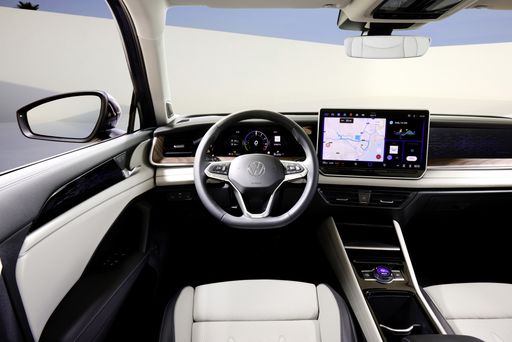
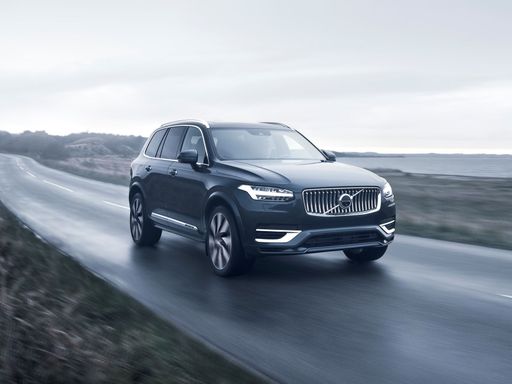
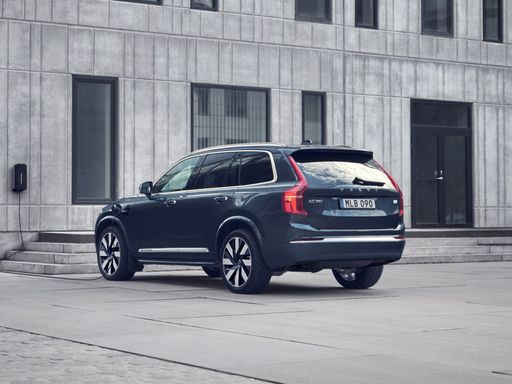
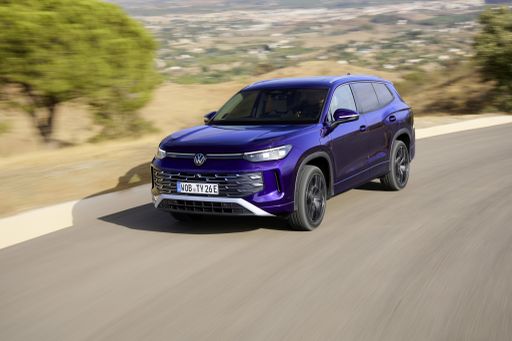
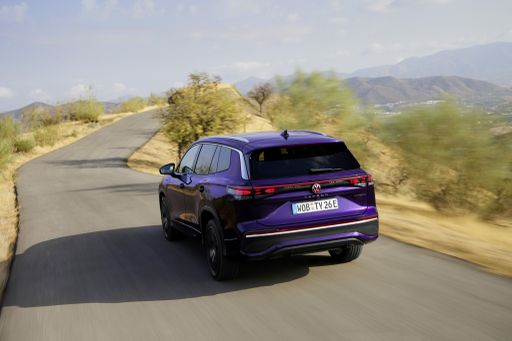
The Volvo greets you with a composed, Scandinavian calm that reads as quietly premium, while the Volkswagen arrives with a more extroverted, sporty posture that wants to be noticed in the urban jungle. Inside, materials and finishes set different moods: one leans into restrained luxury, the other into contemporary pragmatism with a hint of athleticism. Both feel thoughtfully designed, but they speak to different tastes — the Volvo to the style-conscious minimalist, the Tayron to buyers who prefer momentum and flair.
XC90

Traffic and Tight Corners

In traffic the VW feels lighter on its feet, slipping through city streets with a nimble steering response that invites confident lane changes and short bursts of pace. The Volvo trades some of that agility for a more settled, assured character that soaks up imperfections and keeps occupants cocooned on awkward surfaces. If your daily grind is stop-start city work, the Tayron’s livelier manners will be appreciated; if your commute includes motorway miles, the XC90’s composure makes the hours feel shorter.

Tayron

Cabin Calm and Passenger Life

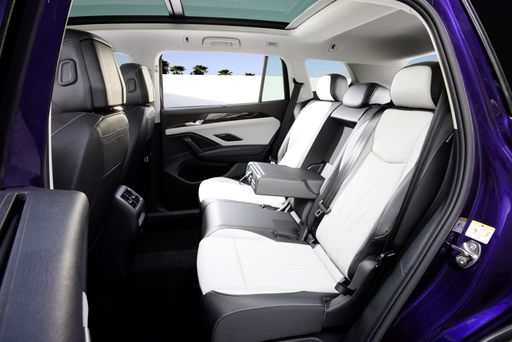
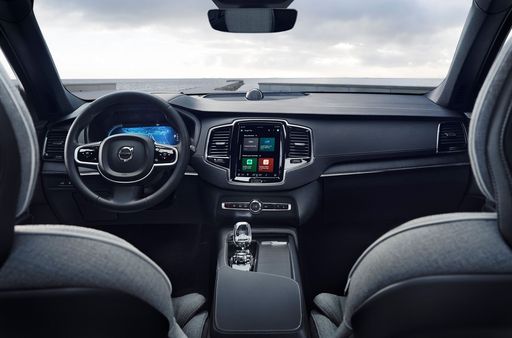
Both cabins are comfortable, but they go about it differently: Volvo’s interior is a study in calm ergonomics and supportive seating that encourages relaxed long-distance travel, while the VW favors a more dynamic seating position and an interior layout that feels practical and unpretentious. Noise insulation and ride tuning further underline their characters — one leans toward sanctuary, the other toward engaged motoring that still keeps rear passengers content. Families will notice the subtle differences in how each car treats rear-seat occupants during longer trips.

XC90

Suitcase, Sports Gear and School Runs

When it comes to daily usefulness, the Tayron emphasises flexibility and easy-loading practicality, engineered for owners who juggle errands, weekend kit and the odd bulky item with minimal fuss. The XC90 answers with a more deliberate, luxury-minded approach that prioritises passenger comfort and thoughtful storage touches over sheer cargo gymnastics. Both make family life easier, but your priorities — whether hauling gear or cocooning passengers — will steer your preference.

Tayron

Displays, Buttons and Everyday Tech

Tech presentation differs: the Volvo’s screen and control philosophy aim to be elegant and reduce clutter, requiring a short familiarisation period to get the most out of it, while the Volkswagen opts for a more conventional, tactile approach that most drivers will grasp instantly. Haptic feedback, menu logic and steering-wheel controls all matter in daily use, and here the VW’s immediacy contrasts with the Volvo’s serene but slightly more abstract interface. If you value quick, intuitive control, the Tayron has an edge; if you prefer a refined, less flashy system once you’ve settled in, the XC90 rewards patience.

XC90

Ownership Feel and Value

Running either of these SUVs will be about lifestyle choices as much as cost — the Tayron projects sensible value and low fuss, the Volvo projects premium refinement and a sense of slightly elevated ownership. Service networks, perceived resale appeal and how each car fits into your household budget will tip the balance, as will how much importance you place on image versus pragmatic utility. Both make compelling cases depending on whether you prefer to economise or to invest in a quieter, more luxurious daily companion.

Tayron

Who Should Buy Which?

If your life revolves around neatly balancing family duties, practical weekend adventures and an appetite for straightforward usability, the VW will likely slot into your routine with cheerful efficiency; if your priority is serene long-distance comfort, understated luxury and a cabin that soothes the day’s stress, the Volvo will better suit that role. Think about the image you want to project, the kinds of journeys you do most often and how much value you place on nimbleness versus serenity before deciding. Stick with us and keep reading — the DriveDuel Champion will be revealed afterwards.

Here’s where it gets real: The technical differences in detail

Tayron

Costs and Efficiency:

Looking at overall running costs, both models reveal some interesting differences in everyday economy.

VW Tayron is substantially cheaper – starting at 39,600 £ , while the Volvo XC90 costs 69,800 £ . That’s a price difference of around 30,150 £.

Fuel consumption also shows a difference: the VW Tayron uses 1.5 L/100km and is significantly more efficient than the Volvo XC90 with 3.5 L/100km. The difference is about 2 L/100km.

As for electric range, the VW Tayron offers significantly more range – reaching up to 123 km, about 52 km more than the Volvo XC90.

XC90

Engine and Performance:

Under the bonnet, it becomes clear which model is tuned for sportiness and which one takes the lead when you hit the accelerator.

When it comes to engine power, the Volvo XC90 offers clearly more power – delivering 455 HP compared to 272 HP. That’s roughly 183 HP more horsepower.

When accelerating from 0 to 100 km/h, the Volvo XC90 is slightly quicker – completing the sprint in 5.4 s, while the VW Tayron takes 6.1 s. That’s about 0.7 s quicker.

Looking at top speed, the VW Tayron is moderately faster – reaching 221 km/h, while the Volvo XC90 tops out at 180 km/h. The difference is around 41 km/h.

There’s also a difference in torque: the Volvo XC90 delivers significantly more torque with 709 Nm compared to 400 Nm. That’s about 309 Nm more.

Tayron

Space and Everyday Use:

Whether family car or daily driver – which one offers more room, flexibility and comfort?

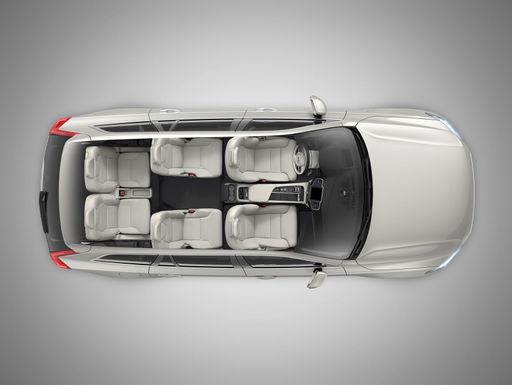
Seats: Volvo XC90 offers more seats – 7 vs 5.

In terms of curb weight, VW Tayron is noticeably lighter – 1,682 kg compared to 2,080 kg. The difference is around 398 kg.

Looking at boot space, the VW Tayron offers clearly more boot space – 885 L compared to 302 L. That’s a difference of about 583 L.

For maximum load capacity, the VW Tayron offers moderately more capacity – up to 2,090 L, about 234 L more than the Volvo XC90.

When it comes to payload, the Volvo XC90 carries noticeably more – 710 kg compared to 566 kg. That’s a difference of about 144 kg.

Who wins the race in the data check?

The VW Tayron stands well ahead of its rival in the objective data comparison.
This result only shows which model scores more points on paper – not which of the two cars feels right for you.

from £39,600
Tayron

VW Tayron

  • Engine Type : Petrol MHEV, Diesel, Petrol, Plugin Hybrid
  • Transmission : Automatic
  • Drive Type : Front-Wheel Drive, All-Wheel Drive
  • Power HP : 150 - 272 HP
  • Consumption L/100km : 1.5 - 8.5 L/100km
  • Electric Range : 116 - 123 km
VW Tayron
Volvo XC90

Costs and Consumption

View detailed analysis

Engine and Performance

View detailed analysis

Dimensions and Body

View detailed analysis

VW Tayron

The VW Tayron is Volkswagen's roomy, no-nonsense SUV that pairs clean, familiar styling with a practical cabin built for families and everyday use. It rides comfortably, packs sensible tech and creature comforts, and feels like the sensible sweater of SUVs for buyers who prefer steady value over headline-grabbing drama.

details

Volvo XC90

The Volvo XC90 is a serene Scandinavian SUV that mixes minimalist luxury with a composed, confidence-inspiring presence — ideal for buyers who want family practicality without sacrificing style. Inside it serves up a calm, well-crafted cabin and user-friendly tech that keeps long journeys pleasant and tantrums to a minimum, making the XC90 a smart, stylish pick for sensible drivers.

details
VW Tayron
Volvo XC90

Costs and Consumption

Price
39,600 - 56,000 £
Price
69,800 - 84,600 £
Consumption L/100km
1.5 - 8.5 L/100km
Consumption L/100km
3.5 - 8.5 L/100km
Consumption kWh/100km
-
Consumption kWh/100km
-
Electric Range
116 - 123 km
Electric Range
71 km
Battery Capacity
19.7 kWh
Battery Capacity
-
co2
33 - 192 g/km
co2
79 - 191 g/km
Fuel tank capacity
45 - 58 L
Fuel tank capacity
71 L

Dimensions and Body

Body Type
SUV
Body Type
SUV
Seats
5
Seats
7
Doors
5
Doors
5
Curb weight
1,682 - 1,948 kg
Curb weight
2,080 - 2,297 kg
Trunk capacity
705 - 885 L
Trunk capacity
262 - 302 L
Length
4,792 mm
Length
4,953 mm
Width
1,853 - 1,866 mm
Width
1,923 mm
Height
1,666 - 1,668 mm
Height
1,771 mm
Max trunk capacity
1,915 - 2,090 L
Max trunk capacity
1,856 L
Payload
489 - 566 kg
Payload
653 - 710 kg

Engine and Performance

Engine Type
Petrol MHEV, Diesel, Petrol, Plugin Hybrid
Engine Type
Petrol MHEV, Plugin Hybrid
Transmission
Automatic
Transmission
Automatic
Transmission Detail
Dual-Clutch Automatic
Transmission Detail
Automatic Gearbox
Drive Type
Front-Wheel Drive, All-Wheel Drive
Drive Type
All-Wheel Drive
Power HP
150 - 272 HP
Power HP
250 - 455 HP
Acceleration 0-100km/h
6.1 - 9.7 s
Acceleration 0-100km/h
5.4 - 7.7 s
Max Speed
204 - 221 km/h
Max Speed
180 km/h
Torque
250 - 400 Nm
Torque
360 - 709 Nm
Number of Cylinders
4
Number of Cylinders
4
Power kW
110 - 200 kW
Power kW
184 - 335 kW
Engine capacity
1,498 - 1,984 cm3
Engine capacity
1,969 cm3

General

Model Year
2,025 - 2,026
Model Year
2,024 - 2,025
CO2 Efficiency Class
E, F, G, B
CO2 Efficiency Class
G, B
Brand
VW
Brand
Volvo
DriveDuel uses data analysis and artificial intelligence to evaluate vehicle data and create content. Content is regularly reviewed and improved. The displayed prices are estimates based on German list prices, adjusted to the respective country’s VAT. Country-specific registration taxes are not included. This information is not legally binding.