VS

VW Tiguan vs Ford Kuga comparison

Compare performance (272 HP vs 243 HP), boot space and price (33,600 £ vs 34,200 £ ) at a glance. Find out which car is the better choice for you – VW Tiguan or Ford Kuga?

VW Tiguan vs Ford Kuga: Key differences

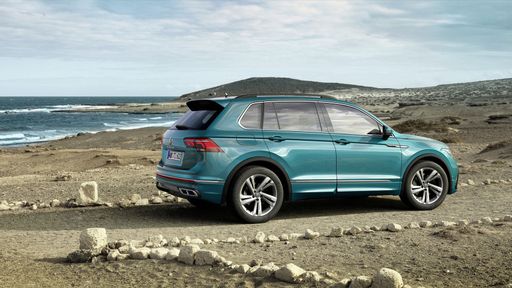
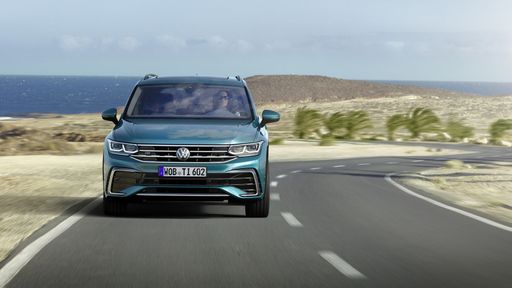
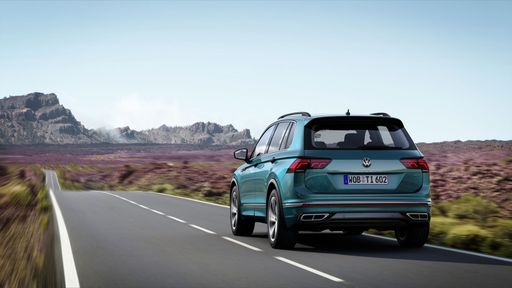
VW Tiguan

3.9 (7 Reviews)
rate
  • very slightly cheaper
  • a bit more power
  • clearly more efficient
  • clearly more electric range
  • noticeably quicker 0–100 km/h

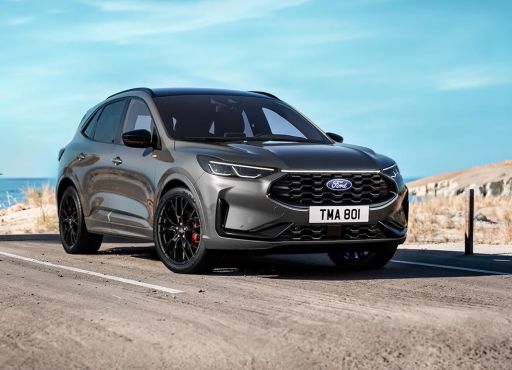
Ford Kuga

4.3 (5 Reviews)
rate
  • barely lighter

All details on performance, efficiency, range and trunk space can be found in the technical comparison below – including user reviews for both models.

Tiguan

Ford Kuga vs VW Tiguan: The Ultimate SUV Showdown

The SUV segment continues to flourish, driven by a demand for versatility and performance. Amongst the popular contenders are the Ford Kuga and the VW Tiguan. Both vehicles bring impressive features to the table, appealing to diverse drivers with their unique strengths. In this comparison, we’ll delve into technicalities, innovations, and driving experiences that make these SUVs stand out.
Kuga

Engine and Performance

The Ford Kuga is available in multiple engine types including petrol, full hybrid, and plug-in hybrid options, with power outputs ranging from 150 HP to an impressive 243 HP. This versatility allows drivers to choose based on their preference for performance or efficiency. The Kuga’s acceleration capability is equally notable, with the sportier variants reaching 0-100 km/h in as little as 7.3 seconds.

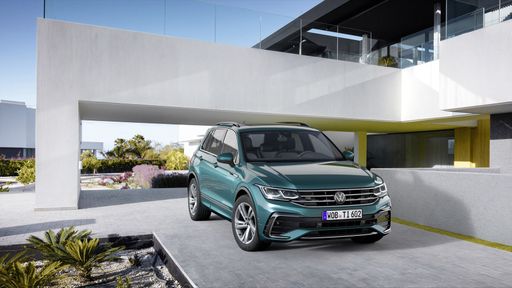
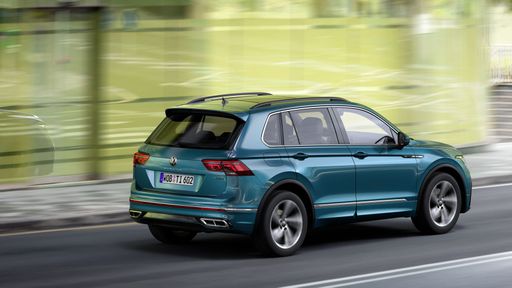
Contrastingly, the VW Tiguan also presents a rich array of engines including petrol (MHEV), diesel, and plug-in hybrid options. Power ratings range up to 272 HP, providing robust performance, especially in the more powerful configurations that can accelerate from 0-100 km/h in a swift 5.9 seconds. With maximum speeds as high as 242 km/h, the Tiguan showcases impressive power and agility on the road.

Tiguan

Fuel Efficiency and Environmental Impact

In terms of fuel efficiency, the Ford Kuga excels with consumption rates as low as 5.3 L/100km for hybrid versions, making it an appealing choice for eco-conscious drivers. The Kuga also features a commendable electric range of up to 69 km, providing drivers with the option for short, emission-free local journeys.

The VW Tiguan, meanwhile, showcases advanced fuel efficiency with some configurations achieving consumption rates around 5.3 L/100km, while its hybrid models offer a substantial electric range of up to 113 km. This emphasis on reduced emissions complements the growing trend of sustainability in the automotive market.

Kuga

Interior Comfort and Technology

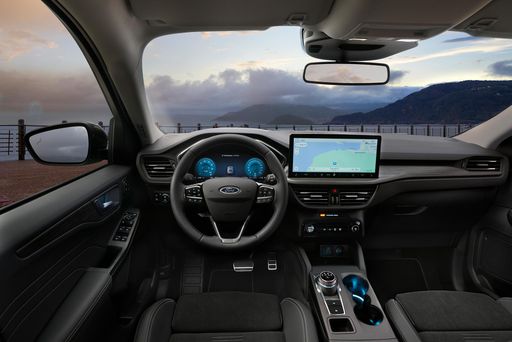
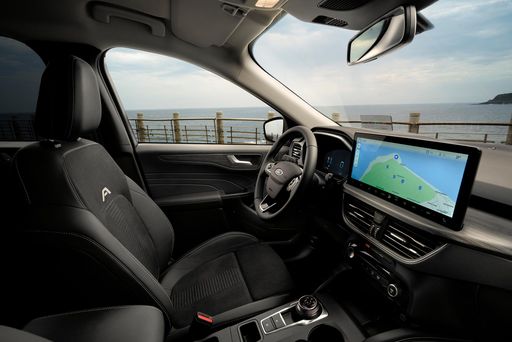
Inside, the Ford Kuga offers a spacious cabin with seating for five and a trunk capacity of 412 liters. The ergonomic layout enhances driver comfort, making it an ideal family car or a vehicle for long journeys. The 2024 model year Kuga incorporates tech innovations, including an intuitive infotainment system equipped with connected services that keep drivers synchronized with their lives outside the vehicle.

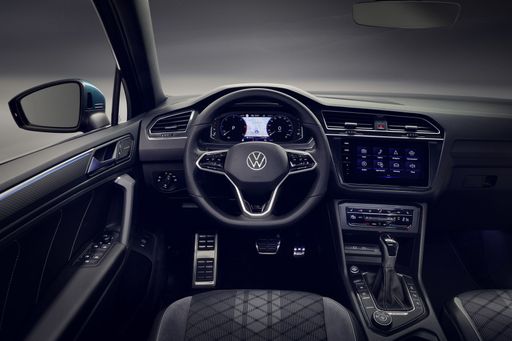
In comparison, the VW Tiguan raises the bar with its premium interior finish and superior trunk space of up to 652 liters. Its user-friendly digital cockpit and advanced connectivity options create an immersive experience for both driver and passengers. The inclusion of sophisticated driver-assistance systems makes the Tiguan an enticing option for tech-savvy consumers.

Tiguan

Safety Features

Safety is paramount in both the Ford Kuga and VW Tiguan. The Kuga is equipped with an array of advanced safety features, from adaptive cruise control to lane-keeping assist, all designed to ensure a secure driving experience. The latest model has undergone rigorous testing, earning solid ratings in various safety assessments.

Similarly, the Tiguan is renowned for its robust safety ratings and a comprehensive suite of driver-assistance technologies. The inclusion of features such as emergency braking and blind-spot monitoring elevates its standing in the safety domain, reassuring drivers and passengers alike.

Kuga

Final Verdict: Which SUV Reigns Supreme?

The Ford Kuga and VW Tiguan both represent strong contenders in the SUV market, each bringing unique strengths and innovations to meet the needs of different drivers. The Kuga impresses with a diverse powertrain, fuel efficiency, and a comfortable environment, while the Tiguan excels in performance offerings, trunk space, and premium tech features.

Your choice ultimately boils down to individual priorities—whether it's performance, efficiency, or cutting-edge technology. However, one thing is clear: both SUVs are exceptional options that embody what consumers are seeking in today's automotive landscape.

Here’s where it gets real: The technical differences in detail

Tiguan

Costs and Efficiency:

Price and efficiency are often the first things buyers look at. Here it becomes clear which model has the long-term edge – whether at the pump, the plug, or in purchase price.

VW Tiguan is very slightly cheaper – starting at 33,600 £ , while the Ford Kuga costs 34,200 £ . That’s a price difference of around 664 £.

Fuel consumption also shows a difference: the VW Tiguan uses 1.4 L/100km and is clearly more efficient than the Ford Kuga with 2.8 L/100km. The difference is about 1.4 L/100km.

As for electric range, the VW Tiguan offers clearly more range – reaching up to 126 km, about 58 km more than the Ford Kuga.

Kuga

Engine and Performance:

Power, torque and acceleration say a lot about how a car feels on the road. This is where you see which model delivers more driving dynamics.

When it comes to engine power, the VW Tiguan offers a bit more power – delivering 272 HP compared to 243 HP. That’s roughly 29 HP more horsepower.

When accelerating from 0 to 100 km/h, the VW Tiguan is noticeably quicker – completing the sprint in 5.9 s, while the Ford Kuga takes 7.3 s. That’s about 1.4 s quicker.

There’s also a difference in torque: the VW Tiguan delivers markedly more torque with 400 Nm compared to 240 Nm. That’s about 160 Nm more.

Tiguan

Space and Everyday Use:

Whether family car or daily driver – which one offers more room, flexibility and comfort?

Both vehicles offer seating for 5 people.

In terms of curb weight, Ford Kuga is barely lighter – 1,526 kg compared to 1,599 kg. The difference is around 73 kg.

When it comes to payload, the Ford Kuga carries very slightly more – 550 kg compared to 533 kg. That’s a difference of about 17 kg.

Who wins the race in the data check?

The VW Tiguan stands well ahead of its rival in the objective data comparison.
This result only shows which model scores more points on paper – not which of the two cars feels right for you.

from £33,600
Tiguan

VW Tiguan

  • Engine Type : Petrol MHEV, Petrol, Diesel, Plugin Hybrid
  • Transmission : Automatic
  • Drive Type : Front-Wheel Drive, All-Wheel Drive
  • Power HP : 130 - 272 HP
  • Consumption L/100km : 1.4 - 8.4 L/100km
  • Electric Range : 118 - 126 km
VW Tiguan
Ford Kuga

Costs and Consumption

View detailed analysis

Engine and Performance

View detailed analysis

Dimensions and Body

View detailed analysis

VW Tiguan

The VW Tiguan blends sensible family practicality with a dash of German polish, delivering a calm, reassuring ride and a cabin that never feels like an afterthought. For buyers who want an SUV that’s easy to live with yet still nicely dressed, the Tiguan is the grown‑up choice that keeps a cheeky wink in reserve.

details

Ford Kuga

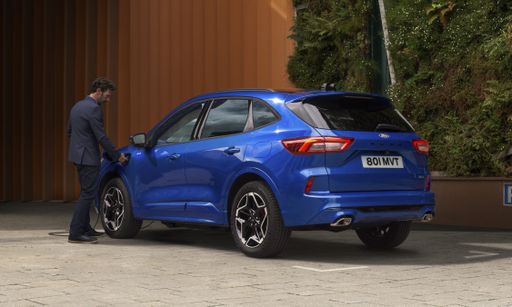
The Kuga is Ford’s adaptable family SUV that blends usable space with a surprisingly lively driving character, making daily commutes and weekend escapes equally enjoyable. With smart interior packaging, an easy-to-use infotainment setup and composed road manners, it’s a sensible choice for buyers who want a bit of fun without the fuss.

details
VW Tiguan
Ford Kuga

Costs and Consumption

Price
33,600 - 54,600 £
Price
34,200 - 46,300 £
Consumption L/100km
1.4 - 8.4 L/100km
Consumption L/100km
2.8 - 6.8 L/100km
Consumption kWh/100km
-
Consumption kWh/100km
-
Electric Range
118 - 126 km
Electric Range
68 km
Battery Capacity
19.7 kWh
Battery Capacity
-
co2
32 - 190 g/km
co2
55 - 154 g/km
Fuel tank capacity
45 L
Fuel tank capacity
-

Dimensions and Body

Body Type
SUV
Body Type
SUV
Seats
5
Seats
5
Doors
5
Doors
-
Curb weight
1,599 - 1,879 kg
Curb weight
1,526 - 1,859 kg
Trunk capacity
490 - 652 L
Trunk capacity
-
Length
4,539 mm
Length
-
Width
1,842 - 1,859 mm
Width
1,882 mm
Height
1,658 mm
Height
-
Max trunk capacity
1,486 L
Max trunk capacity
-
Payload
460 - 533 kg
Payload
541 - 550 kg

Engine and Performance

Engine Type
Petrol MHEV, Petrol, Diesel, Plugin Hybrid
Engine Type
Petrol, Full Hybrid, Plugin Hybrid
Transmission
Automatic
Transmission
Manuel, Automatic
Transmission Detail
Dual-Clutch Automatic
Transmission Detail
Manual Gearbox, CVT, Automatic Gearbox
Drive Type
Front-Wheel Drive, All-Wheel Drive
Drive Type
Front-Wheel Drive, All-Wheel Drive
Power HP
130 - 272 HP
Power HP
150 - 243 HP
Acceleration 0-100km/h
5.9 - 10.6 s
Acceleration 0-100km/h
7.3 - 9.9 s
Max Speed
210 - 215 km/h
Max Speed
-
Torque
220 - 400 Nm
Torque
240 Nm
Number of Cylinders
4
Number of Cylinders
3 - 4
Power kW
96 - 200 kW
Power kW
111 - 178 kW
Engine capacity
1,498 - 1,984 cm3
Engine capacity
1,496 - 2,488 cm3

General

Model Year
2,024 - 2,026
Model Year
2,025
CO2 Efficiency Class
D, E, F, B, G
CO2 Efficiency Class
E, D, B
Brand
VW
Brand
Ford
DriveDuel uses data analysis and artificial intelligence to evaluate vehicle data and create content. Content is regularly reviewed and improved. The displayed prices are estimates based on German list prices, adjusted to the respective country’s VAT. Country-specific registration taxes are not included. This information is not legally binding.