VS

VW Tiguan vs SEAT Ateca comparison

Compare performance (272 HP vs 150 HP), boot space and price (33,600 £ vs 25,100 £ ) at a glance. Find out which car is the better choice for you – VW Tiguan or SEAT Ateca?

VW Tiguan vs SEAT Ateca: Key differences

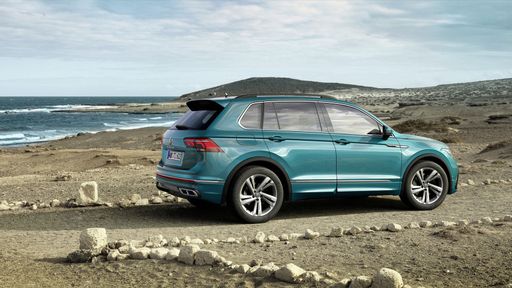
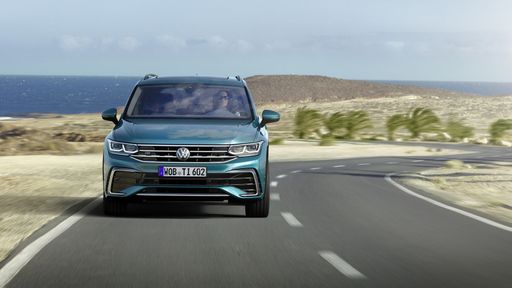
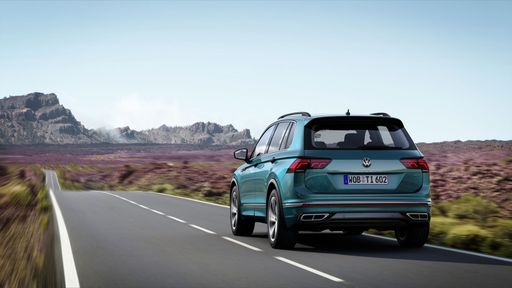
VW Tiguan

3.9 (7 Reviews)
rate
  • clearly more power
  • clearly more efficient
  • considerably quicker 0–100 km/h
  • visibly more trunk space

SEAT Ateca

4.9 (3 Reviews)
rate
  • clearly cheaper
  • somewhat lighter

All details on performance, efficiency, range and trunk space can be found in the technical comparison below – including user reviews for both models.

Tiguan

SEAT Ateca vs. VW Tiguan: The Battle of the Compact SUVs

In the bustling arena of compact SUVs, two stalwarts consistently vie for dominance: the SEAT Ateca and the VW Tiguan. Both vehicles, renowned for their superior engineering and design, have been updated for the 2024 model year. Below, we delve into the technical specifics and innovative features of these two automotive contenders, helping you decide which might be the best fit for your needs.
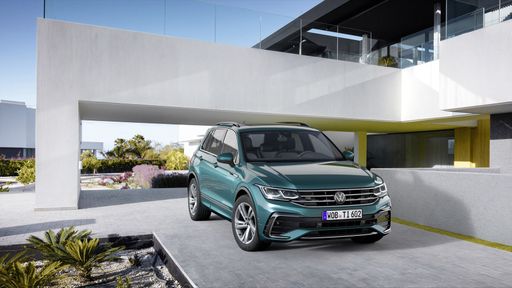
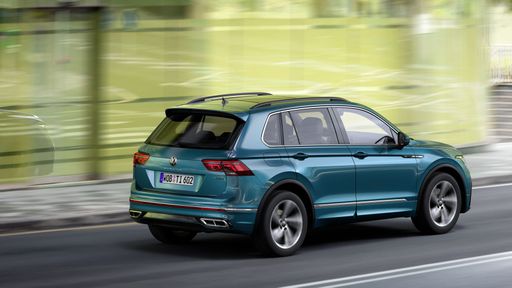
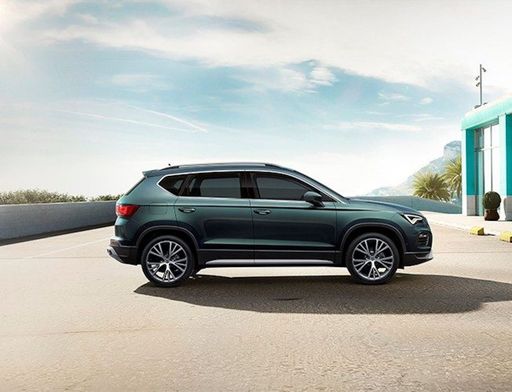
Ateca

Performance and Power

The SEAT Ateca offers a balanced range of petrol and diesel engines, boasting power outputs from 116 HP to 150 HP. With a choice between manual gearbox and dual-clutch automatic transmission, it caters to a variety of driving preferences. The Ateca reaches a maximum speed between 183 km/h and 202 km/h, accelerating from 0 to 100 km/h within an impressive 9 to 11 seconds. It achieves torque ranging from 200 Nm to 360 Nm.

On the other hand, the VW Tiguan impresses with a diverse mix of petrol, diesel, and hybrid variants, with power ranging from 130 HP to a robust 272 HP. Its dual-clutch automatic transmission ensures smooth transitions. Notably, the Tiguan's acceleration times span from 5.9 to 10.6 seconds, underscoring its capacity for both efficiency and exhilaration. For those focused on sustainability, the plug-in hybrid model offers an electric range of up to 113 km.

Tiguan

Fuel Efficiency and Environmental Impact

Fuel consumption is a critical factor for many SUV buyers. The SEAT Ateca's petrol and diesel engines offer consumption figures ranging from 4.9 L/100km to 6.4 L/100km. However, this is juxtaposed against a CO2 efficiency class ranging from D to E, with emissions between 129 g/km and 144 g/km.

The Tiguan, showcasing its hybrid prowess, boasts fuel consumption as low as 0.4 L/100km for its plugin-hybrid variant, significantly reducing environmental impact. Traditional engine options offer consumption rates spanning from 5.3 L/100km to 8.5 L/100km. CO2 emissions also vary broadly, from impressive single digits in hybrid models to 193 g/km in other ranges, categorized from B to G in efficiency classes.

Ateca

Dimensions and Practicality

Measuring 4381 mm in length, 1841 mm in width, and 1601 mm in height, the SEAT Ateca presents a compact profile that is ideal for urban environments while offering a trunk capacity of 510 liters.

The VW Tiguan, slightly larger at 4539 mm in length, provides a generous trunk space that can reach up to 652 liters, catering to those requiring more cargo capacity. Its width and height extend to 1859 mm and 1658 mm respectively, emphasizing a spacious interior feel.

Tiguan

Innovations and Features

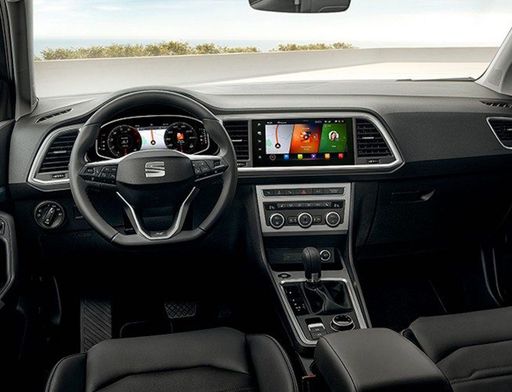
Both SUVs are equipped with cutting-edge technology and driving aids. The SEAT Ateca includes advanced features such as digital cockpit and connectivity services, enhancing the driving experience with seamless technology integration.

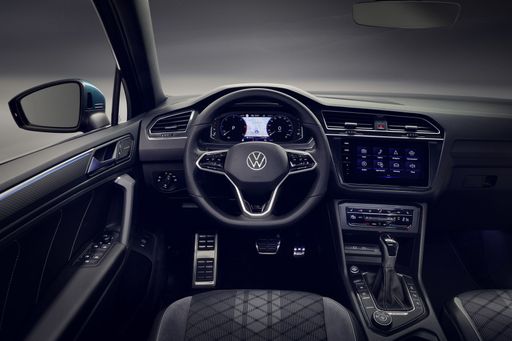
The VW Tiguan matches this with a sophisticated infotainment system and the inclusion of VW's Travel Assist, which offers semi-autonomous driving capabilities. The availability of all-wheel drive further augments the Tiguan's appeal for those seeking versatility in various driving conditions.

Ateca

Final Verdict

In summation, the SEAT Ateca appeals with its robust engine range and agile compact design, suitable for those prioritizing fuel efficiency and a spirited drive. Conversely, the VW Tiguan's strength lies in its versatile powertrains, particularly the environmentally friendly hybrid option, and a larger cargo space appealing to families and adventure enthusiasts alike.

The choice between these two outstanding SUVs ultimately depends on personal priorities—be it power, space, sustainability, or technological sophistication.

Here’s where it gets real: The technical differences in detail

Tiguan

Costs and Efficiency:

When it comes to price and running costs, the biggest differences usually appear. This is often where you see which car fits your budget better in the long run.

SEAT Ateca is clearly cheaper – starting at 25,100 £ , while the VW Tiguan costs 33,600 £ . That’s a price difference of around 8,473 £.

Fuel consumption also shows a difference: the VW Tiguan uses 1.4 L/100km and is clearly more efficient than the SEAT Ateca with 4.9 L/100km. The difference is about 3.5 L/100km.

Ateca

Engine and Performance:

Power, torque and acceleration are the classic benchmarks for car enthusiasts – and here, some clear differences start to show.

When it comes to engine power, the VW Tiguan offers clearly more power – delivering 272 HP compared to 150 HP. That’s roughly 122 HP more horsepower.

When accelerating from 0 to 100 km/h, the VW Tiguan is considerably quicker – completing the sprint in 5.9 s, while the SEAT Ateca takes 9 s. That’s about 3.1 s quicker.

There’s also a difference in torque: the VW Tiguan delivers marginally more torque with 400 Nm compared to 360 Nm. That’s about 40 Nm more.

Tiguan

Space and Everyday Use:

Whether family car or daily driver – which one offers more room, flexibility and comfort?

Both vehicles offer seating for 5 people.

In terms of curb weight, SEAT Ateca is somewhat lighter – 1,345 kg compared to 1,599 kg. The difference is around 254 kg.

Looking at boot space, the VW Tiguan offers visibly more boot space – 652 L compared to 510 L. That’s a difference of about 142 L.

When it comes to payload, the VW Tiguan carries marginally more – 533 kg compared to 525 kg. That’s a difference of about 8 kg.

Who wins the race in the data check?

The VW Tiguan stands well ahead of its rival in the objective data comparison.
This result only shows which model scores more points on paper – not which of the two cars feels right for you.

from £33,600
Tiguan

VW Tiguan

  • Engine Type : Petrol MHEV, Petrol, Diesel, Plugin Hybrid
  • Transmission : Automatic
  • Drive Type : Front-Wheel Drive, All-Wheel Drive
  • Power HP : 130 - 272 HP
  • Consumption L/100km : 1.4 - 8.4 L/100km
  • Electric Range : 118 - 126 km
VW Tiguan
SEAT Ateca

Costs and Consumption

View detailed analysis

Engine and Performance

View detailed analysis

Dimensions and Body

View detailed analysis

VW Tiguan

The VW Tiguan blends sensible family practicality with a dash of German polish, delivering a calm, reassuring ride and a cabin that never feels like an afterthought. For buyers who want an SUV that’s easy to live with yet still nicely dressed, the Tiguan is the grown‑up choice that keeps a cheeky wink in reserve.

details

SEAT Ateca

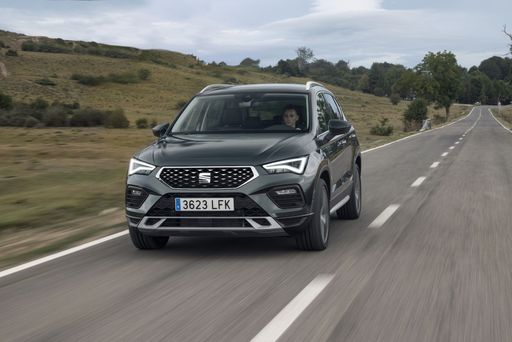
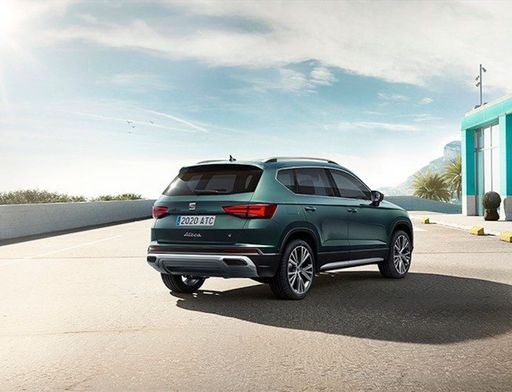
The SEAT Ateca blends sharp, purposeful styling with practical space that turns everyday errands into something a bit more enjoyable. It’s poised and engaging to drive for its segment, offers solid value, and has just enough personality to make you smile on the school run.

details
VW Tiguan
SEAT Ateca

Costs and Consumption

Price
33,600 - 54,600 £
Price
25,100 - 36,900 £
Consumption L/100km
1.4 - 8.4 L/100km
Consumption L/100km
4.9 - 6.4 L/100km
Consumption kWh/100km
-
Consumption kWh/100km
-
Electric Range
118 - 126 km
Electric Range
-
Battery Capacity
19.7 kWh
Battery Capacity
-
co2
32 - 190 g/km
co2
129 - 144 g/km
Fuel tank capacity
45 L
Fuel tank capacity
-

Dimensions and Body

Body Type
SUV
Body Type
SUV
Seats
5
Seats
5
Doors
5
Doors
-
Curb weight
1,599 - 1,879 kg
Curb weight
1,345 - 1,514 kg
Trunk capacity
490 - 652 L
Trunk capacity
510 L
Length
4,539 mm
Length
-
Width
1,842 - 1,859 mm
Width
1,841 mm
Height
1,658 mm
Height
-
Max trunk capacity
1,486 L
Max trunk capacity
-
Payload
460 - 533 kg
Payload
516 - 525 kg

Engine and Performance

Engine Type
Petrol MHEV, Petrol, Diesel, Plugin Hybrid
Engine Type
Petrol, Diesel
Transmission
Automatic
Transmission
Manuel, Automatic
Transmission Detail
Dual-Clutch Automatic
Transmission Detail
Manual Gearbox, Dual-Clutch Automatic
Drive Type
Front-Wheel Drive, All-Wheel Drive
Drive Type
Front-Wheel Drive
Power HP
130 - 272 HP
Power HP
116 - 150 HP
Acceleration 0-100km/h
5.9 - 10.6 s
Acceleration 0-100km/h
9 - 11 s
Max Speed
210 - 215 km/h
Max Speed
-
Torque
220 - 400 Nm
Torque
200 - 360 Nm
Number of Cylinders
4
Number of Cylinders
3 - 4
Power kW
96 - 200 kW
Power kW
85 - 110 kW
Engine capacity
1,498 - 1,984 cm3
Engine capacity
999 - 1,968 cm3

General

Model Year
2,024 - 2,026
Model Year
2,025
CO2 Efficiency Class
D, E, F, B, G
CO2 Efficiency Class
E, D
Brand
VW
Brand
SEAT
DriveDuel uses data analysis and artificial intelligence to evaluate vehicle data and create content. Content is regularly reviewed and improved. The displayed prices are estimates based on German list prices, adjusted to the respective country’s VAT. Country-specific registration taxes are not included. This information is not legally binding.