VS

VW Tiguan vs Skoda Karoq comparison

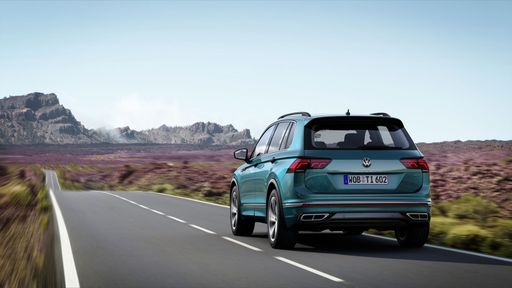
Compare performance (272 HP vs 190 HP), boot space and price (33,600 £ vs 29,100 £ ) at a glance. Find out which car is the better choice for you – VW Tiguan or Skoda Karoq?

VW Tiguan vs Skoda Karoq: Key differences

VW Tiguan

3.9 (7 Reviews)
rate
  • visibly more power
  • considerably more efficient
  • somewhat quicker 0–100 km/h
  • markedly more trunk space

Skoda Karoq

4.6 (2 Reviews)
rate
  • somewhat cheaper
  • a bit lighter

All details on performance, efficiency, range and trunk space can be found in the technical comparison below – including user reviews for both models.

Tiguan

Skoda Karoq vs. VW Tiguan: A Comprehensive Comparison of Two Leading SUVs

SUV enthusiasts often find themselves torn between the Skoda Karoq and the VW Tiguan. Both vehicles offer an impressive array of features, yet they cater to slightly different needs and preferences. This article delves deep into the technical aspects and innovations of these two popular models to help prospective buyers make an informed decision.

Karoq

Design and Dimensions

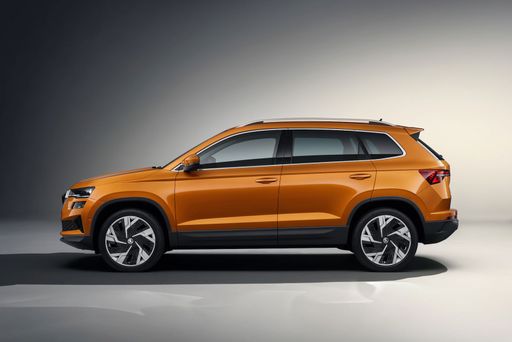
Starting with dimensions, the Skoda Karoq measures 4,390 mm in length, 1,841 mm in width, and stands at a height ranging from 1,603 mm to 1,624 mm. The VW Tiguan, on the other hand, stretches slightly longer at 4,539 mm, is marginally wider at 1,842 mm to 1,859 mm, and has a height of 1,656 mm to 1,658 mm. This slight variation translates to a subtle difference in road presence and interior space, with the Tiguan offering a roomier cabin feel.

Tiguan

Powertrain and Performance

The Skoda Karoq offers several engine options with power outputs ranging from 115 HP to 190 HP. It provides petrol and diesel variants, coupled with either a manual gearbox or a dual-clutch automatic transmission. The Karoq boasts acceleration times from 0-100 km/h between 7 to 10.6 seconds, dependent on the engine configuration, and a maximum speed of up to 221 km/h.

In contrast, the VW Tiguan offers a broader engine lineup, including petrol MHEV, plug-in hybrid, diesel, and petrol versions. Power outputs range from 130 HP to an impressive 272 HP, with all models featuring a dual-clutch automatic transmission. The Tiguan accelerates from 0-100 km/h in as little as 5.9 seconds for higher-end models, up to a top speed of 242 km/h.

Karoq

Efficiency and Environment

Fuel efficiency is crucial for many buyers, and the Karoq offers consumption figures between 4.9 to 7.6 L/100 km. In contrast, the Tiguan boasts similar petrol and diesel consumption figures but stands out with its plug-in hybrid option consuming only 0.4 to 0.5 L/100 km, with an electric range of up to 113 km. This positions the Tiguan as a more environmentally-conscious choice with its CO2 emissions as low as 8 g/km.

Tiguan

Interior and Cargo Space

Both SUVs comfortably seat five passengers. However, the VW Tiguan offers more trunk capacity at 652 liters compared to the Karoq's 521 liters, providing an edge in terms of luggage carrying capacity, which could be an essential deciding factor for families and those with active lifestyles.

Karoq

Innovations and Technology

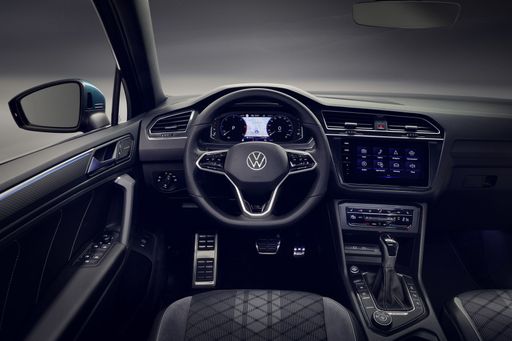
The Skoda Karoq incorporates advanced technologies such as adaptive cruise control and lane-keeping assist. In contrast, the VW Tiguan ups the ante with features like a larger infotainment system, advanced driver assistance technologies, and enhanced connectivity options. Its plug-in hybrid offerings make it particularly appealing to tech-savvy and eco-conscious buyers alike.

Tiguan

Final Verdict

Choosing between the Skoda Karoq and the VW Tiguan depends largely on individual preferences and priorities. The Karoq is an excellent all-rounder offering practical features and efficient performance. However, those looking for a more technologically advanced SUV with hybrid capabilities and larger cargo space may find the VW Tiguan a more fitting choice. Either way, both cars stand out as quality vehicles in the competitive SUV market.

Here’s where it gets real: The technical differences in detail

Tiguan

Costs and Efficiency:

Price and efficiency are often the first things buyers look at. Here it becomes clear which model has the long-term edge – whether at the pump, the plug, or in purchase price.

Skoda Karoq is somewhat cheaper – starting at 29,100 £ , while the VW Tiguan costs 33,600 £ . That’s a price difference of around 4,496 £.

Fuel consumption also shows a difference: the VW Tiguan uses 1.4 L/100km and is considerably more efficient than the Skoda Karoq with 4.9 L/100km. The difference is about 3.5 L/100km.

Karoq

Engine and Performance:

Under the bonnet, it becomes clear which model is tuned for sportiness and which one takes the lead when you hit the accelerator.

When it comes to engine power, the VW Tiguan offers visibly more power – delivering 272 HP compared to 190 HP. That’s roughly 82 HP more horsepower.

When accelerating from 0 to 100 km/h, the VW Tiguan is somewhat quicker – completing the sprint in 5.9 s, while the Skoda Karoq takes 7 s. That’s about 1.1 s quicker.

Looking at top speed, the VW Tiguan is marginally faster – reaching 215 km/h, while the Skoda Karoq tops out at 210 km/h. The difference is around 5 km/h.

There’s also a difference in torque: the VW Tiguan delivers only slightly more torque with 400 Nm compared to 360 Nm. That’s about 40 Nm more.

Tiguan

Space and Everyday Use:

Whether family car or daily driver – which one offers more room, flexibility and comfort?

Both vehicles offer seating for 5 people.

In terms of curb weight, Skoda Karoq is a bit lighter – 1,380 kg compared to 1,599 kg. The difference is around 219 kg.

Looking at boot space, the VW Tiguan offers markedly more boot space – 652 L compared to 521 L. That’s a difference of about 131 L.

For maximum load capacity, the Skoda Karoq offers only slightly more capacity – up to 1,630 L, about 144 L more than the VW Tiguan.

When it comes to payload, the Skoda Karoq carries barely more – 549 kg compared to 533 kg. That’s a difference of about 16 kg.

Who wins the race in the data check?

The VW Tiguan holds a decisive overall lead in the objective data comparison.
This result only shows which model scores more points on paper – not which of the two cars feels right for you.

from £33,600
Tiguan

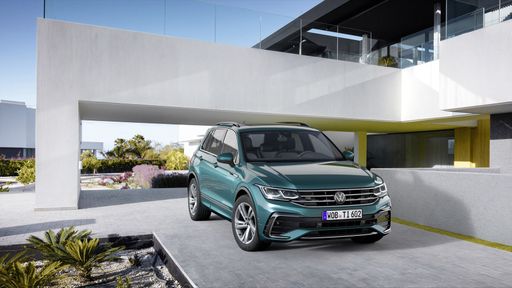
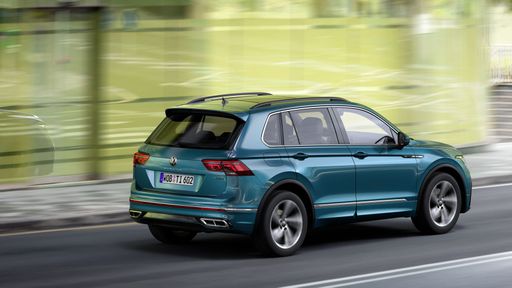
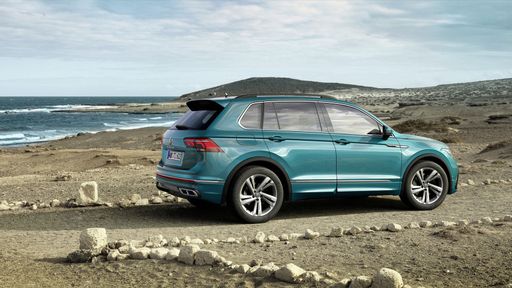
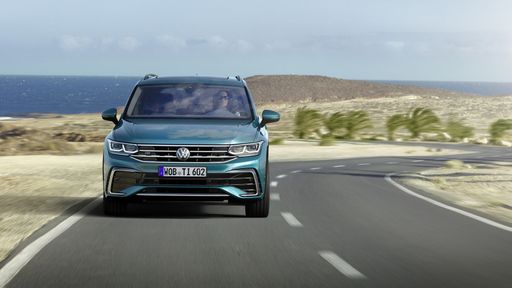
VW Tiguan

  • Engine Type : Petrol MHEV, Petrol, Diesel, Plugin Hybrid
  • Transmission : Automatic
  • Drive Type : Front-Wheel Drive, All-Wheel Drive
  • Power HP : 130 - 272 HP
  • Consumption L/100km : 1.4 - 8.4 L/100km
  • Electric Range : 118 - 126 km
VW Tiguan
Skoda Karoq

Costs and Consumption

View detailed analysis

Engine and Performance

View detailed analysis

Dimensions and Body

View detailed analysis

VW Tiguan

The VW Tiguan blends sensible family practicality with a dash of German polish, delivering a calm, reassuring ride and a cabin that never feels like an afterthought. For buyers who want an SUV that’s easy to live with yet still nicely dressed, the Tiguan is the grown‑up choice that keeps a cheeky wink in reserve.

details

Skoda Karoq

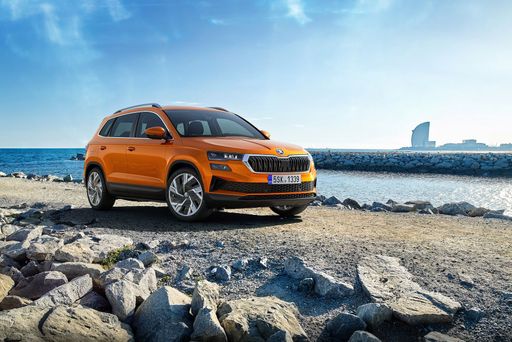
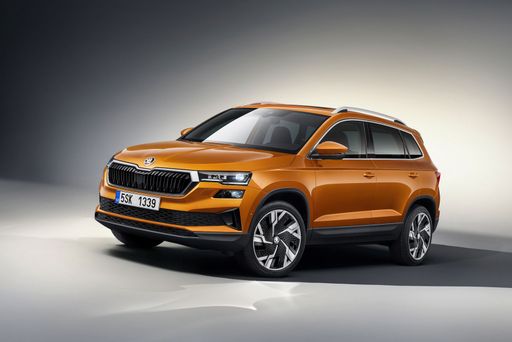
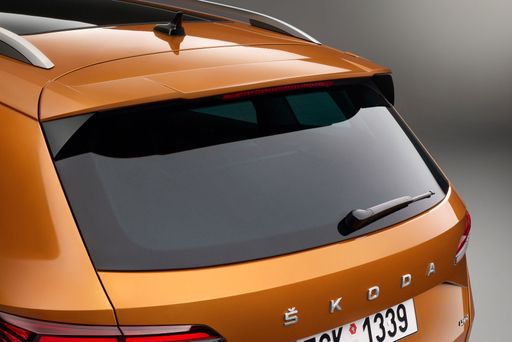
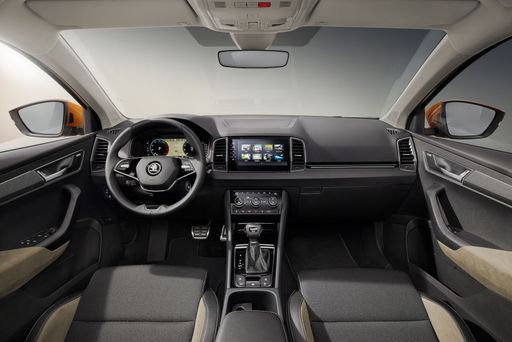
The Skoda Karoq is a smart, unfussy compact SUV that blends roomy practicality with a pleasantly composed driving character. It won’t turn heads at a car meet, but it will make daily life easier with clever storage, sensible ergonomics and a reassuringly grown-up ride.

details
VW Tiguan
Skoda Karoq

Costs and Consumption

Price
33,600 - 54,600 £
Price
29,100 - 41,700 £
Consumption L/100km
1.4 - 8.4 L/100km
Consumption L/100km
4.9 - 7.6 L/100km
Consumption kWh/100km
-
Consumption kWh/100km
-
Electric Range
118 - 126 km
Electric Range
-
Battery Capacity
19.7 kWh
Battery Capacity
-
co2
32 - 190 g/km
co2
128 - 173 g/km
Fuel tank capacity
45 L
Fuel tank capacity
50 - 55 L

Dimensions and Body

Body Type
SUV
Body Type
SUV
Seats
5
Seats
5
Doors
5
Doors
5
Curb weight
1,599 - 1,879 kg
Curb weight
1,380 - 1,655 kg
Trunk capacity
490 - 652 L
Trunk capacity
521 L
Length
4,539 mm
Length
4,390 mm
Width
1,842 - 1,859 mm
Width
1,841 mm
Height
1,658 mm
Height
1,624 mm
Max trunk capacity
1,486 L
Max trunk capacity
1,630 L
Payload
460 - 533 kg
Payload
456 - 549 kg

Engine and Performance

Engine Type
Petrol MHEV, Petrol, Diesel, Plugin Hybrid
Engine Type
Petrol, Diesel
Transmission
Automatic
Transmission
Manuel, Automatic
Transmission Detail
Dual-Clutch Automatic
Transmission Detail
Manual Gearbox, Dual-Clutch Automatic
Drive Type
Front-Wheel Drive, All-Wheel Drive
Drive Type
Front-Wheel Drive, All-Wheel Drive
Power HP
130 - 272 HP
Power HP
115 - 190 HP
Acceleration 0-100km/h
5.9 - 10.6 s
Acceleration 0-100km/h
7 - 11.2 s
Max Speed
210 - 215 km/h
Max Speed
192 - 210 km/h
Torque
220 - 400 Nm
Torque
200 - 360 Nm
Number of Cylinders
4
Number of Cylinders
3 - 4
Power kW
96 - 200 kW
Power kW
85 - 140 kW
Engine capacity
1,498 - 1,984 cm3
Engine capacity
999 - 1,984 cm3

General

Model Year
2,024 - 2,026
Model Year
2,025
CO2 Efficiency Class
D, E, F, B, G
CO2 Efficiency Class
D, E, F
Brand
VW
Brand
Skoda
DriveDuel uses data analysis and artificial intelligence to evaluate vehicle data and create content. Content is regularly reviewed and improved. The displayed prices are estimates based on German list prices, adjusted to the respective country’s VAT. Country-specific registration taxes are not included. This information is not legally binding.