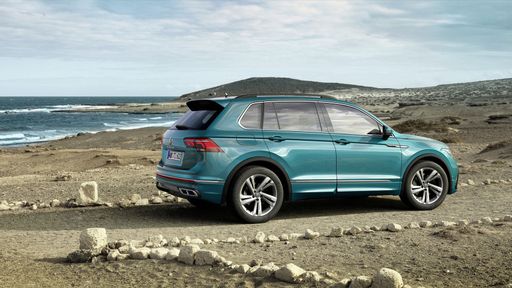
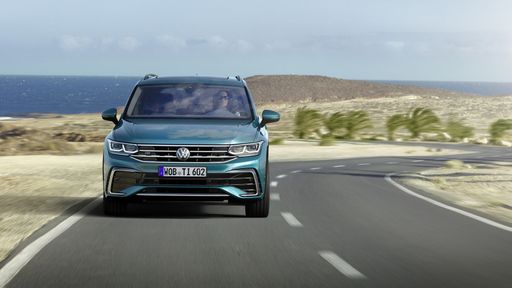
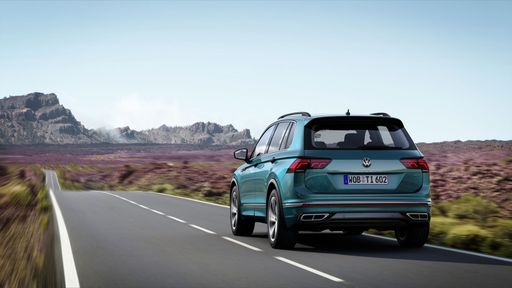
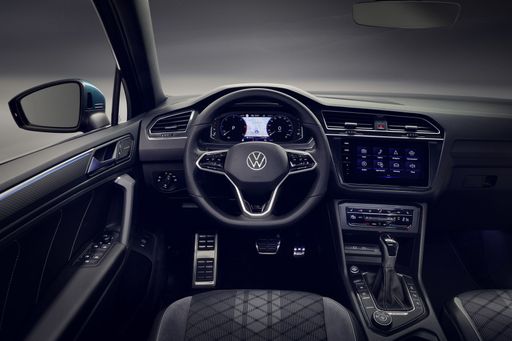
VS

VW Tiguan vs Volvo XC60 comparison

Compare performance (272 HP vs 455 HP), boot space and price (33,600 £ vs 49,200 £ ) at a glance. Find out which car is the better choice for you – VW Tiguan or Volvo XC60?

VW Tiguan vs Volvo XC60: Key differences

VW Tiguan

3.9 (7 Reviews)
rate
  • clearly cheaper
  • significantly more efficient
  • clearly more electric range
  • slightly lighter
  • visibly more trunk space

Volvo XC60

4.8 (6 Reviews)
rate
  • significantly more power
  • noticeably quicker 0–100 km/h

All details on performance, efficiency, range and trunk space can be found in the technical comparison below – including user reviews for both models.

Tiguan

Two SUVs, Two Moods

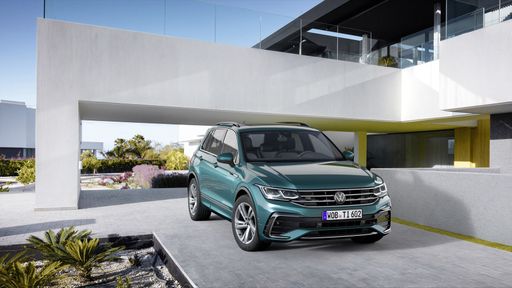
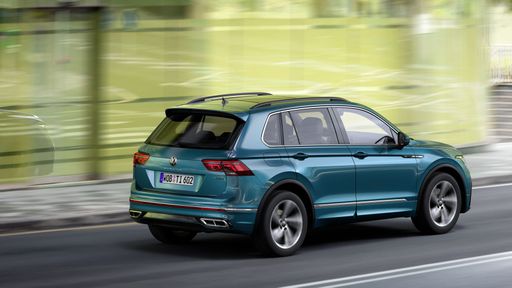
Think of this as a meeting between velvet and utility: the Volvo XC60 arrives with a calm, Scandi confidence while the VW Tiguan walks in practical, engineered for everyday sense. Both aim at the middle of the market but they wear very different outfits — one quietly luxurious, the other quietly competent. This duel is less about who wins and more about which personality fits your driveway.
XC60

Feel on the Road: Poise vs Purpose

The XC60 telegraphs composed ride quality and a focus on relaxed progress, rewarding passengers with a sense of isolation from the outside scramble. The Tiguan answers with a livelier, tauter character; it feels planted and handy when you ask it to change direction or thread tight urban spaces. One soothes, the other gets the job done with tidy confidence.

Tiguan

Daily Life: Family-Friendly Luxury or Pragmatic Flexibility?

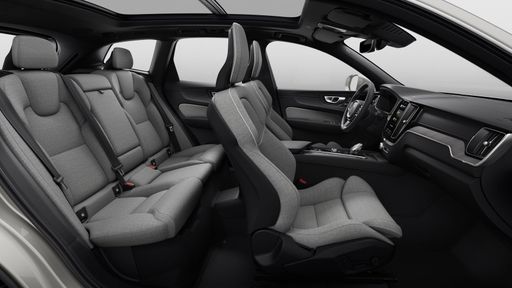
For long commutes and motorway miles the Volvo’s cabin is built to make hours slip by with minimal fuss, its interior layout emphasizing simplicity and comfort. The Tiguan flips the script toward usability, with an easy-to-live-with cabin and a knack for folding plans — perfect for weekend gear, school runs and city manoeuvres. Each interprets everyday usability differently, so your routine decides the advantage.

XC60

What It Says About You

Choosing the XC60 signals a preference for understated premium taste and that little extra reassurance when you unlock the door; it’s the sort of car that finishes the outfit. Choosing the Tiguan reads as sensible and intentional — someone who values flexibility, straightforward controls and a vehicle that adapts to tasks without drama. Neither choice is about showing off, but they send distinct social notes.

Tiguan

If what matters to you is calm confidence and a grown-up cabin, read this for the Volvo XC60

If what matters to you is arriving relaxed, enjoying a tactile, well-damped interior and projecting a composed, slightly premium image, the Volvo XC60 fits that script. It’s tailored for buyers who prize comfort on long runs and a cabin that feels curated rather than cluttered. Expect a buying decision driven by peace of mind and perceived quality rather than headline practicality.

XC60

If what matters to you is everyday cleverness and easy ownership, read this for the VW Tiguan

If what matters to you is a versatile footprint, fuss-free packaging and a car that bends to the needs of family life or city chores, the VW Tiguan is pitched squarely at that brief. It suits those who put value and straightforward utility ahead of theatrical flair, and who want a car that’s unpretentious to run day in, day out. Keep reading below to see how these different strengths line up on paper.

Here’s where it gets real: The technical differences in detail

Tiguan

Costs and Efficiency:

When it comes to price and running costs, the biggest differences usually appear. This is often where you see which car fits your budget better in the long run.

VW Tiguan is clearly cheaper – starting at 33,600 £ , while the Volvo XC60 costs 49,200 £ . That’s a price difference of around 15,613 £.

Fuel consumption also shows a difference: the VW Tiguan uses 1.4 L/100km and is significantly more efficient than the Volvo XC60 with 2.8 L/100km. The difference is about 1.4 L/100km.

As for electric range, the VW Tiguan offers clearly more range – reaching up to 126 km, about 44 km more than the Volvo XC60.

XC60

Engine and Performance:

Power, torque and acceleration are the classic benchmarks for car enthusiasts – and here, some clear differences start to show.

When it comes to engine power, the Volvo XC60 offers significantly more power – delivering 455 HP compared to 272 HP. That’s roughly 183 HP more horsepower.

When accelerating from 0 to 100 km/h, the Volvo XC60 is noticeably quicker – completing the sprint in 4.9 s, while the VW Tiguan takes 5.9 s. That’s about 1 s quicker.

Looking at top speed, the VW Tiguan is moderately faster – reaching 215 km/h, while the Volvo XC60 tops out at 180 km/h. The difference is around 35 km/h.

There’s also a difference in torque: the Volvo XC60 delivers substantially more torque with 709 Nm compared to 400 Nm. That’s about 309 Nm more.

Tiguan

Space and Everyday Use:

Whether family car or daily driver – which one offers more room, flexibility and comfort?

Both vehicles offer seating for 5 people.

In terms of curb weight, VW Tiguan is slightly lighter – 1,599 kg compared to 1,900 kg. The difference is around 301 kg.

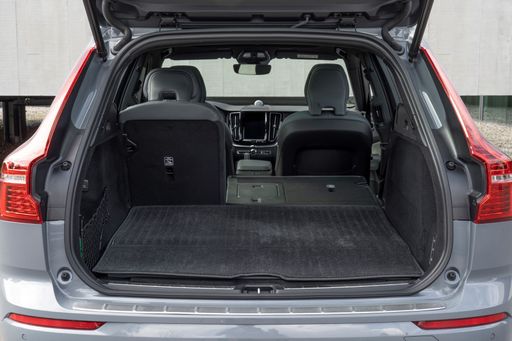
Looking at boot space, the VW Tiguan offers visibly more boot space – 652 L compared to 483 L. That’s a difference of about 169 L.

For maximum load capacity, the Volvo XC60 offers very slightly more capacity – up to 1,543 L, about 57 L more than the VW Tiguan.

When it comes to payload, the Volvo XC60 carries marginally more – 550 kg compared to 533 kg. That’s a difference of about 17 kg.

Who wins the race in the data check?

The VW Tiguan is far ahead overall in the objective data comparison.
This result only shows which model scores more points on paper – not which of the two cars feels right for you.

from £33,600
Tiguan

VW Tiguan

  • Engine Type : Petrol MHEV, Petrol, Diesel, Plugin Hybrid
  • Transmission : Automatic
  • Drive Type : Front-Wheel Drive, All-Wheel Drive
  • Power HP : 130 - 272 HP
  • Consumption L/100km : 1.4 - 8.4 L/100km
  • Electric Range : 118 - 126 km
VW Tiguan
Volvo XC60

Costs and Consumption

View detailed analysis

Engine and Performance

View detailed analysis

Dimensions and Body

View detailed analysis

VW Tiguan

The VW Tiguan blends sensible family practicality with a dash of German polish, delivering a calm, reassuring ride and a cabin that never feels like an afterthought. For buyers who want an SUV that’s easy to live with yet still nicely dressed, the Tiguan is the grown‑up choice that keeps a cheeky wink in reserve.

details

Volvo XC60

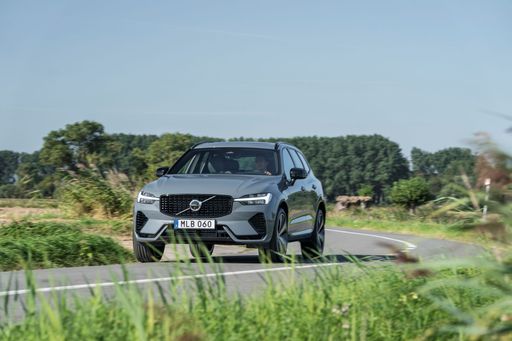
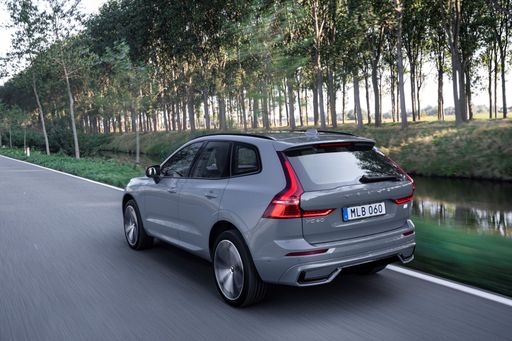
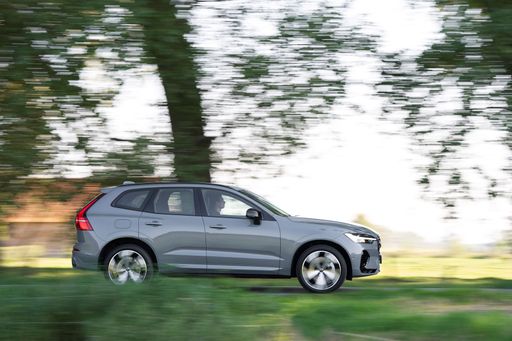
The Volvo XC60 blends Scandinavian calm with confident presence, offering a cabin that feels plush without shouting for attention. It’s a smart pick for buyers after a composed ride, clever practicality and thoughtful safety touches — it even makes running the family shuttle feel almost serene, which is a small miracle.

details
VW Tiguan
Volvo XC60

Costs and Consumption

Price
33,600 - 54,600 £
Price
49,200 - 75,100 £
Consumption L/100km
1.4 - 8.4 L/100km
Consumption L/100km
2.8 - 7.5 L/100km
Consumption kWh/100km
-
Consumption kWh/100km
-
Electric Range
118 - 126 km
Electric Range
74 - 82 km
Battery Capacity
19.7 kWh
Battery Capacity
-
co2
32 - 190 g/km
co2
64 - 169 g/km
Fuel tank capacity
45 L
Fuel tank capacity
71 L

Dimensions and Body

Body Type
SUV
Body Type
SUV
Seats
5
Seats
5
Doors
5
Doors
5
Curb weight
1,599 - 1,879 kg
Curb weight
1,900 - 2,150 kg
Trunk capacity
490 - 652 L
Trunk capacity
468 - 483 L
Length
4,539 mm
Length
4,708 mm
Width
1,842 - 1,859 mm
Width
1,902 mm
Height
1,658 mm
Height
1,655 mm
Max trunk capacity
1,486 L
Max trunk capacity
1,543 L
Payload
460 - 533 kg
Payload
510 - 550 kg

Engine and Performance

Engine Type
Petrol MHEV, Petrol, Diesel, Plugin Hybrid
Engine Type
Petrol MHEV, Plugin Hybrid
Transmission
Automatic
Transmission
Automatic
Transmission Detail
Dual-Clutch Automatic
Transmission Detail
Automatic Gearbox
Drive Type
Front-Wheel Drive, All-Wheel Drive
Drive Type
All-Wheel Drive
Power HP
130 - 272 HP
Power HP
250 - 455 HP
Acceleration 0-100km/h
5.9 - 10.6 s
Acceleration 0-100km/h
4.9 - 6.9 s
Max Speed
210 - 215 km/h
Max Speed
180 km/h
Torque
220 - 400 Nm
Torque
350 - 709 Nm
Number of Cylinders
4
Number of Cylinders
4
Power kW
96 - 200 kW
Power kW
184 - 335 kW
Engine capacity
1,498 - 1,984 cm3
Engine capacity
1,969 cm3

General

Model Year
2,024 - 2,026
Model Year
2,025
CO2 Efficiency Class
D, E, F, B, G
CO2 Efficiency Class
F, B
Brand
VW
Brand
Volvo
DriveDuel uses data analysis and artificial intelligence to evaluate vehicle data and create content. Content is regularly reviewed and improved. The displayed prices are estimates based on German list prices, adjusted to the respective country’s VAT. Country-specific registration taxes are not included. This information is not legally binding.