VS

VW Touareg vs Skoda Kodiaq comparison

Compare performance (462 HP vs 265 HP), boot space and price (64,300 £ vs 37,900 £ ) at a glance. Find out which car is the better choice for you – VW Touareg or Skoda Kodiaq?

VW Touareg vs Skoda Kodiaq: Key differences

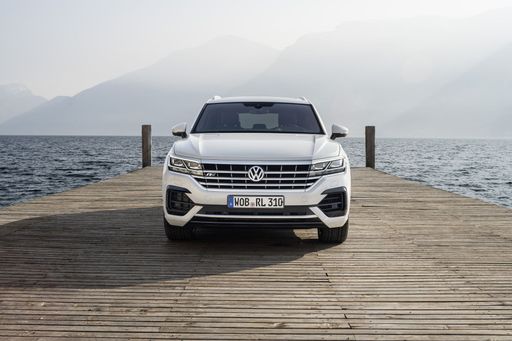
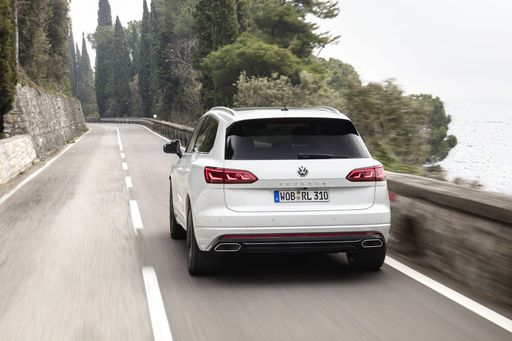
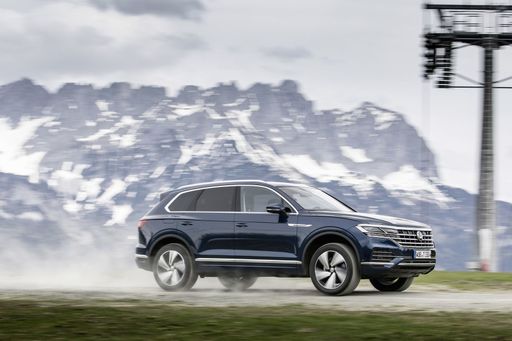
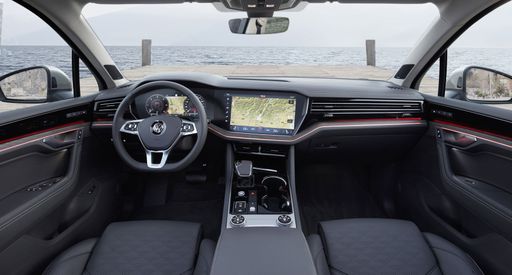
VW Touareg

4.9 (3 Reviews)
rate
  • significantly more power
  • clearly quicker 0–100 km/h

Skoda Kodiaq

5 (4 Reviews)
rate
  • considerably cheaper
  • considerably more efficient
  • substantially more electric range
  • noticeably lighter
  • a bit more trunk space

All details on performance, efficiency, range and trunk space can be found in the technical comparison below – including user reviews for both models.

Touareg

The Battle of the SUVs: Skoda Kodiaq vs. VW Touareg

In the competitive world of SUVs, drivers are spoilt for choice. The Skoda Kodiaq and VW Touareg, both stalwarts in the SUV segment, have been popular choices for families and adventurers alike. Yet, they cater to different needs. Let's dive into the technical aspects and innovations these models offer to determine which might suit your lifestyle best.
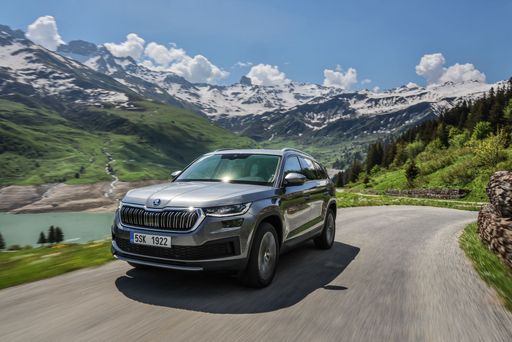
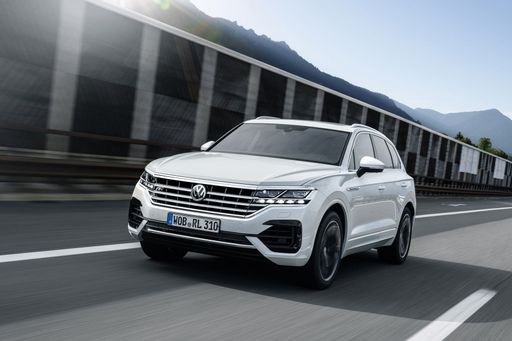
Kodiaq

Engine Options and Performance

The Skoda Kodiaq provides a variety of engine types, including petrol, diesel, and a plugin hybrid, offering power outputs from 150 HP to 265 HP. The plugin hybrid variant excels in efficiency, boasting an electric range of up to 123 km and fuel consumption as low as 0.4 L/100km. Despite having a lesser power range compared to the Touareg, it offers nimble acceleration with a 0-100 km/h time of 6.3 seconds in its top configuration.

In contrast, the VW Touareg offers more powerful engines. With a broad power range from 231 HP to a roaring 462 HP, it clearly targets those craving performance. The plugin hybrid model delivers both efficiency and capability, with up to 51 km of electric range. Its top variant boasts a 0-100 km/h acceleration of just 5.1 seconds, clearly affirming its status as a sporty SUV.

Touareg

Design and Dimensions

Both SUVs are designed to meet the needs of modern drivers, though their dimensions set them apart. The Skoda Kodiaq, slightly more compact at 4761 mm in length, balances interior space with maneuverability. Sporting a wide body of 1864 mm, it maintains an assertive road presence.

The VW Touareg is the larger contender, at 4902 mm in length and 1984 mm in width, which translates to more cargo space and a dominating stance. It features a trunk capacity of 810 liters, perfect for long road trips with family or friends.

Kodiaq

Transmission and Drive Dynamics

Both vehicles feature automatic transmissions, yet they offer distinct driving experiences. The Kodiaq utilizes a dual-clutch automatic that is available in front-wheel-drive and all-wheel-drive configurations, providing flexibility for various driving conditions.

The Touareg exclusively uses all-wheel drive, emphasizing superior handling and safety, essential for diverse terrain. Its automatic gearbox is tailored to deliver smooth and responsive shifts, enhancing driver confidence during high-performance driving.

Touareg

Efficiency and Sustainability

Environmental considerations continue to shape automotive industries. The Kodiaq plugin hybrid, with its commendable fuel consumption rates and minimal CO2 emissions as low as 9 g/km, stands out in efficiency, particularly for daily commuting or eco-conscious drivers.

While the Touareg presents CO2 emissions starting at 48 g/km for its hybrid variant, it delivers higher consumption rates for its more powerful engines. However, it remains a solid option for those who prioritize performance while still offering a plugin hybrid for greener driving.

Kodiaq

Conclusion: Which SUV is Right for You?

The choice between the Skoda Kodiaq and VW Touareg ultimately depends on your priorities. If you seek a versatile, efficient, and slightly more compact vehicle, the Skoda Kodiaq is a prudent choice. On the other hand, for those craving power, luxury, and a larger footprint, the VW Touareg provides an enticing package.

Both vehicles embody the best of modern SUV design and technology, but whether you lean towards efficiency or performance will likely guide your decision. Each has its flair, making them standout choices in today's automotive landscape.

Here’s where it gets real: The technical differences in detail

Touareg

Costs and Efficiency:

Price and efficiency are key factors when choosing a car – and this is often where the real differences emerge.

Skoda Kodiaq is considerably cheaper – starting at 37,900 £ , while the VW Touareg costs 64,300 £ . That’s a price difference of around 26,430 £.

Fuel consumption also shows a difference: the Skoda Kodiaq uses 1.5 L/100km and is considerably more efficient than the VW Touareg with 5.2 L/100km. The difference is about 3.7 L/100km.

As for electric range, the Skoda Kodiaq offers substantially more range – reaching up to 122 km, about 73 km more than the VW Touareg.

Kodiaq

Engine and Performance:

Under the bonnet, it becomes clear which model is tuned for sportiness and which one takes the lead when you hit the accelerator.

When it comes to engine power, the VW Touareg offers significantly more power – delivering 462 HP compared to 265 HP. That’s roughly 197 HP more horsepower.

When accelerating from 0 to 100 km/h, the VW Touareg is clearly quicker – completing the sprint in 5.1 s, while the Skoda Kodiaq takes 6.3 s. That’s about 1.2 s quicker.

Looking at top speed, the VW Touareg is marginally faster – reaching 250 km/h, while the Skoda Kodiaq tops out at 226 km/h. The difference is around 24 km/h.

There’s also a difference in torque: the VW Touareg delivers significantly more torque with 700 Nm compared to 400 Nm. That’s about 300 Nm more.

Touareg

Space and Everyday Use:

Whether family car or daily driver – which one offers more room, flexibility and comfort?

Both vehicles offer seating for 5 people.

In terms of curb weight, Skoda Kodiaq is noticeably lighter – 1,684 kg compared to 2,059 kg. The difference is around 375 kg.

Looking at boot space, the Skoda Kodiaq offers a bit more boot space – 910 L compared to 810 L. That’s a difference of about 100 L.

For maximum load capacity, the Skoda Kodiaq offers moderately more capacity – up to 2,105 L, about 305 L more than the VW Touareg.

When it comes to payload, the VW Touareg carries noticeably more – 751 kg compared to 563 kg. That’s a difference of about 188 kg.

Who wins the race in the data check?

The Skoda Kodiaq stands well ahead of its rival in the objective data comparison.
This result only shows which model scores more points on paper – not which of the two cars feels right for you.

from £37,900
Kodiaq

Skoda Kodiaq

  • Engine Type : Petrol, Petrol MHEV, Diesel, Plugin Hybrid
  • Transmission : Automatic
  • Drive Type : All-Wheel Drive, Front-Wheel Drive
  • Power HP : 150 - 265 HP
  • Consumption L/100km : 1.5 - 8.2 L/100km
  • Electric Range : 119 - 122 km
VW Touareg
Skoda Kodiaq

Costs and Consumption

View detailed analysis

Engine and Performance

View detailed analysis

Dimensions and Body

View detailed analysis

VW Touareg

Volkswagen Touareg wraps a grown-up presence in a classy, well-appointed cabin that feels more like a premium saloon than an SUV. It glides with quiet composure, devours long journeys and tucks away clever tech that makes life easier whether you’re stuck in town or nipping off the beaten track.

details

Skoda Kodiaq

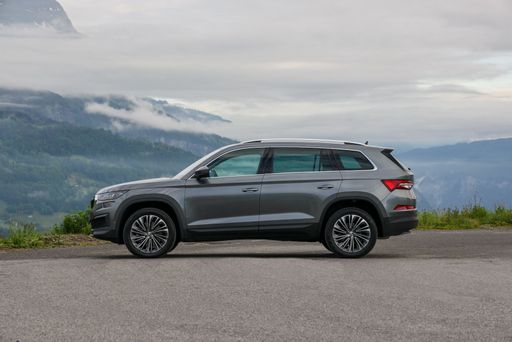
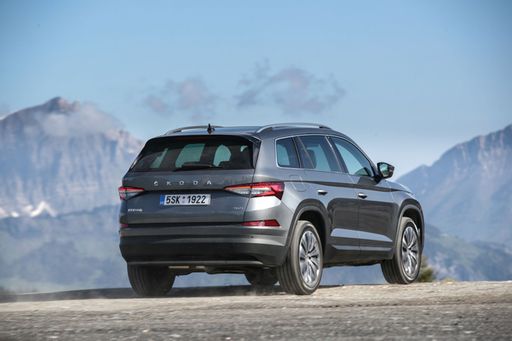
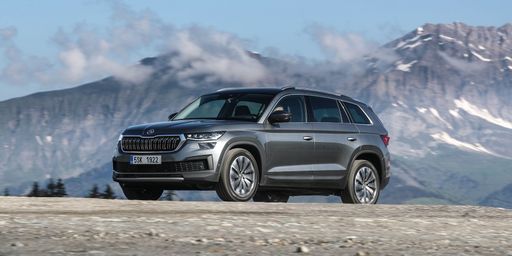
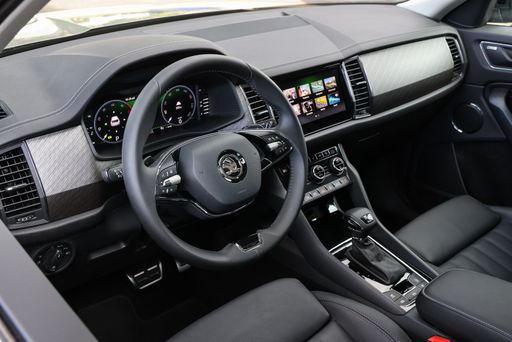
The Skoda Kodiaq blends sensible practicality with surprising style, so families and weekend adventurers get roomy comfort without looking like a moving van. It feels calm and composed on the road, packs clever storage and user-friendly tech, and manages to deliver a near-premium vibe without the pretension.

details
VW Touareg
Skoda Kodiaq

Costs and Consumption

Price
64,300 - 88,300 £
Price
37,900 - 50,600 £
Consumption L/100km
5.2 - 10.5 L/100km
Consumption L/100km
1.5 - 8.2 L/100km
Consumption kWh/100km
-
Consumption kWh/100km
-
Electric Range
47 - 49 km
Electric Range
119 - 122 km
Battery Capacity
14.3 kWh
Battery Capacity
-
co2
119 - 239 g/km
co2
35 - 186 g/km
Fuel tank capacity
75 L
Fuel tank capacity
58 L

Dimensions and Body

Body Type
SUV
Body Type
SUV
Seats
5
Seats
5
Doors
5
Doors
5
Curb weight
2,059 - 2,470 kg
Curb weight
1,684 - 1,970 kg
Trunk capacity
665 - 810 L
Trunk capacity
745 - 910 L
Length
4,878 - 4,902 mm
Length
4,758 mm
Width
1,984 mm
Width
1,864 mm
Height
1,693 - 1,712 mm
Height
1,679 - 1,683 mm
Max trunk capacity
1,675 - 1,800 L
Max trunk capacity
2,105 L
Payload
550 - 751 kg
Payload
460 - 563 kg

Engine and Performance

Engine Type
Petrol, Plugin Hybrid, Diesel
Engine Type
Petrol, Petrol MHEV, Diesel, Plugin Hybrid
Transmission
Automatic
Transmission
Automatic
Transmission Detail
Automatic Gearbox
Transmission Detail
Dual-Clutch Automatic
Drive Type
All-Wheel Drive
Drive Type
All-Wheel Drive, Front-Wheel Drive
Power HP
231 - 462 HP
Power HP
150 - 265 HP
Acceleration 0-100km/h
5.1 - 7.7 s
Acceleration 0-100km/h
6.3 - 9.7 s
Max Speed
222 - 250 km/h
Max Speed
226 km/h
Torque
450 - 700 Nm
Torque
250 - 400 Nm
Number of Cylinders
6
Number of Cylinders
4
Power kW
170 - 340 kW
Power kW
110 - 195 kW
Engine capacity
2,967 - 2,995 cm3
Engine capacity
1,498 - 1,984 cm3

General

Model Year
2,025
Model Year
2,024 - 2,025
CO2 Efficiency Class
G, D
CO2 Efficiency Class
F, G, E, B
Brand
VW
Brand
Skoda
DriveDuel uses data analysis and artificial intelligence to evaluate vehicle data and create content. Content is regularly reviewed and improved. The displayed prices are estimates based on German list prices, adjusted to the respective country’s VAT. Country-specific registration taxes are not included. This information is not legally binding.