VS

VW Touran vs Peugeot 5008 comparison

Compare performance (150 HP vs 325 HP), boot space and price (36,000 £ vs 39,300 £ ) at a glance. Find out which car is the better choice for you – VW Touran or Peugeot 5008?

VW Touran vs Peugeot 5008: Key differences

VW Touran

4.8 (3 Reviews)
rate
  • barely cheaper
  • a bit lighter
  • substantially more trunk space
details

Peugeot 5008

4.7 (1 Reviews)
rate
  • considerably more power
  • significantly more efficient
  • markedly quicker 0–100 km/h
details

All details on performance, efficiency, range and trunk space can be found in the technical comparison below – including user reviews for both models.

By Achim Sedelmaier

Touran

Peugeot 5008 VS VW Touran — overview

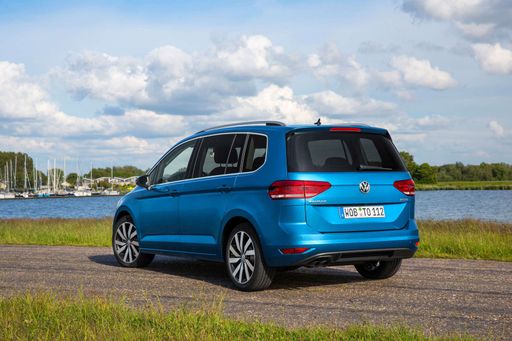
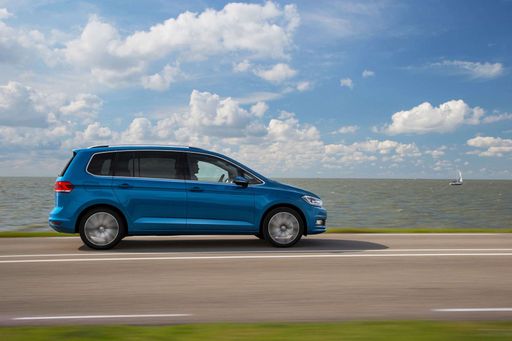
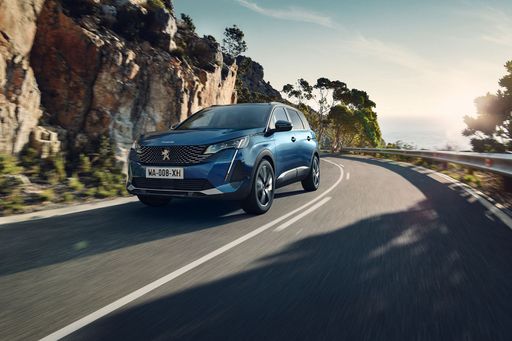
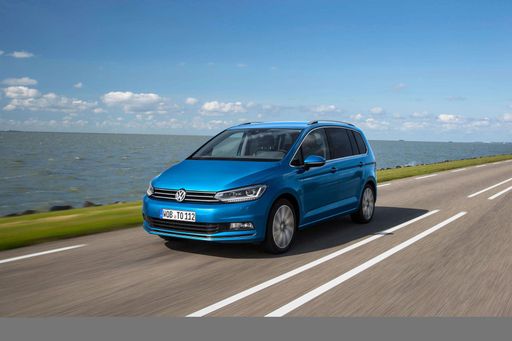
The Peugeot 5008 and the VW Touran sit on the same family‑car shopping list but they answer different questions, so thinking “Peugeot 5008 VS VW Touran” actually clarifies priorities rather than creating confusion. The 5008 presents itself as a design‑forward, quieter SUV with a genuine seven‑seat layout and a premium cabin mood. The Touran is the pragmatic compact‑van: highly usable, exceptionally clear sightlines and a cargo‑first mentality. Below we break down how those opposing characters play out in comfort, practicality, city use and long‑distance travel so you can match the car to your real life.
5008

Driving character and everyday behavior

On the move the Peugeot 5008 feels like a relaxed long‑distance companion — well insulated, composed and willing to deliver brisk performance when you choose a stronger engine. The VW Touran is less theatrical and more matter‑of‑fact: predictable, stable and reassuring when loaded or towing, it rewards steady, practical driving rather than sporty inputs. That means the 5008 will suit buyers who prefer a quieter, more refined ride with a touch of presence, while the Touran appeals to those who want dependability and ease of use under family demands. Choose the 5008 if you want cruiser comfort and a bit of on‑demand shove; choose the Touran if you prioritise steadiness and functional reliability day after day.

Touran

Cabin feel, materials and usability

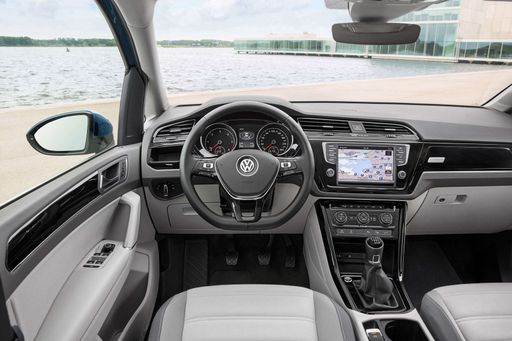
The Peugeot 5008 aims higher on style and perceived quality: layered surfaces, a modern layout and a boutique‑like ambience make the cockpit feel special. That contemporary approach also brings a touchscreen‑led control philosophy that looks clean but can be fiddly in practice, demanding more attention to operate. The VW Touran trades fashion for clarity — robust materials, physical controls and a cockpit that’s straightforward to use without learning curves. If you value a designer interior and a premium feel the 5008 is more rewarding; if you want low‑stress, logical ergonomics the Touran is the pragmatic choice.

5008

Practicality and family usability

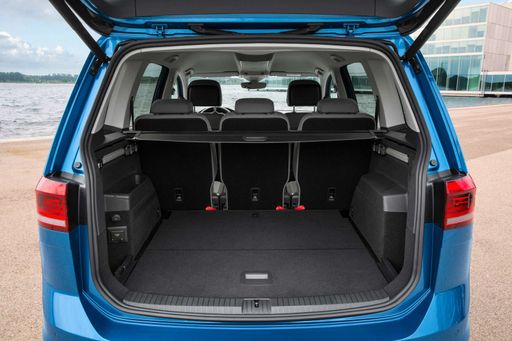
Practical differences decide many family purchases: the Peugeot 5008 is a genuine seven‑seater with a sliding second row and an extra third row best used for children or occasional passengers, which gives flexibility at the cost of cargo space when you seat seven. The VW Touran, conversely, focuses on everyday family logistics with three independent second‑row seats, multiple child‑seat attachment options and a much more generous boot when used as a five‑seater. Loading awkward, bulky items tends to be easier in the Touran because of its simpler load geometry and lower sill, whereas the 5008’s tailgate and sill can make heavy lifting more bothersome. For families juggling three child seats or lots of luggage the Touran typically fits better; for those who regularly need two extra occasional seats and want a stylish cabin the 5008 wins out.

Touran

City friendliness vs motorway behavior

In urban environments the Peugeot 5008 surprises with light steering and a compact turning circle that masks its size, but its broad pillars and tighter rear visibility make cameras or parking aids almost essential. The Touran is the easier car to live with in town thanks to large windows, slim pillars and excellent all‑round visibility that simplify parking and kid drop‑offs. On the motorway the 5008 is the calmer, quieter companion — especially pleasant on long runs — though its electric variants can need more frequent charging and show limits at sustained high speeds. The Touran is steady and confidence‑inspiring at speed but may reveal wind or tyre noise depending on specification, so buyers must pick between serenity (5008) and plainspoken motorway utility (Touran).

5008

Who each car actually suits — buyer fit and next steps

Pick the Peugeot 5008 if you prioritise a refined, design‑led cabin, quieter long‑distance cruising and the ability to carry up to seven people in comfort on occasion. Opt for the VW Touran if your daily reality is three child seats, lots of luggage, straightforward ergonomics and visibility that makes school runs and parking simpler. The trade‑off is essentially style and calm versus maximal family practicality and cargo utility, so your decision should hinge on which compromise you are willing to accept. Read on to the technical comparison to see the specific specifications and measurements that underpin these real‑world differences and help you finalise the match to your needs.

Here’s where it gets real: The technical differences in detail

Touran

Costs and Efficiency:

When it comes to price and running costs, the biggest differences usually appear. This is often where you see which car fits your budget better in the long run.

VW Touran is barely cheaper – starting at 36,000 £ , while the Peugeot 5008 costs 39,300 £ . That’s a price difference of around 3,313 £.

Fuel consumption also shows a difference: the Peugeot 5008 uses 2.7 L/100km and is significantly more efficient than the VW Touran with 5.2 L/100km. The difference is about 2.5 L/100km.

5008

Engine and Performance:

Power, torque and acceleration are the classic benchmarks for car enthusiasts – and here, some clear differences start to show.

When it comes to engine power, the Peugeot 5008 offers considerably more power – delivering 325 HP compared to 150 HP. That’s roughly 175 HP more horsepower.

When accelerating from 0 to 100 km/h, the Peugeot 5008 is markedly quicker – completing the sprint in 6.5 s, while the VW Touran takes 8.9 s. That’s about 2.4 s quicker.

There’s also a difference in torque: the Peugeot 5008 delivers markedly more torque with 511 Nm compared to 360 Nm. That’s about 151 Nm more.

Touran

Space and Everyday Use:

Whether family car or daily driver – which one offers more room, flexibility and comfort?

Seats: Peugeot 5008 offers more seats – 7 vs 5.

In terms of curb weight, VW Touran is a bit lighter – 1,520 kg compared to 1,700 kg. The difference is around 180 kg.

Looking at boot space, the VW Touran offers substantially more boot space – 834 L compared to 348 L. That’s a difference of about 486 L.

When it comes to payload, the Peugeot 5008 carries only slightly more – 640 kg compared to 601 kg. That’s a difference of about 39 kg.

Who wins the race in the data check?

The Peugeot 5008 stands well ahead of its rival in the objective data comparison.
This result only shows which model scores more points on paper – not which of the two cars feels right for you.

from £39,300
5008

Peugeot 5008

  • Engine Type Electric, Petrol MHEV, Plugin Hybrid
  • Transmission Automatic
  • Drive Type Front-Wheel Drive, All-Wheel Drive
  • Power HP 145 - 325 HP
  • Consumption L/100km 2.7 - 5.6 L/100km
  • Consumption kWh/100km 17.8 - 18.1 kWh/100km
  • Electric Range 78 - 669 km
VW Touran
Peugeot 5008

Costs and Consumption

View detailed analysis

Engine and Performance

View detailed analysis

Dimensions and Body

View detailed analysis

VW Touran

The VW Touran is a sensible family people‑carrier that mixes practical packaging with tidy, German-built refinement, making everyday life with kids and shopping feel a lot less chaotic. If you want a reliable, no-nonsense companion that drives with surprising poise and values usefulness over flash, the Touran is a very persuasive choice.

details

Peugeot 5008

The Peugeot 5008 blends Peugeot's sharp design with the space and versatility families actually need, wrapping clever packaging and a premium-feeling cabin in a crisp, SUV-like silhouette. It drives with more poise than you'd expect from a people carrier, serves up practical touches and flexible seating for everyday chaos, and still looks good when parked outside the school gates.

details
VW Touran
Peugeot 5008

Costs and Consumption

Price
36,000 - 45,300 £
Price
39,300 - 54,300 £
Consumption L/100km
5.2 - 6.5 L/100km
Consumption L/100km
2.7 - 5.6 L/100km
Consumption kWh/100km
-
Consumption kWh/100km
17.8 - 18.1 kWh/100km
Electric Range
-
Electric Range
78 - 669 km
Battery Capacity
-
Battery Capacity
-
co2
136 - 149 g/km
co2
0 - 127 g/km
Fuel tank capacity
-
Fuel tank capacity
-

Dimensions and Body

Body Type
MPV
Body Type
SUV
Seats
5
Seats
7
Doors
-
Doors
-
Curb weight
1,520 - 1,631 kg
Curb weight
1,700 - 2,344 kg
Trunk capacity
834 L
Trunk capacity
294 - 348 L
Length
-
Length
-
Width
1,829 mm
Width
1,895 mm
Height
-
Height
-
Max trunk capacity
-
Max trunk capacity
-
Payload
590 - 601 kg
Payload
596 - 640 kg

Engine and Performance

Engine Type
Petrol, Diesel
Engine Type
Electric, Petrol MHEV, Plugin Hybrid
Transmission
Manuel, Automatic
Transmission
Automatic
Transmission Detail
Manual Gearbox, Dual-Clutch Automatic
Transmission Detail
Reduction Gearbox, Dual-Clutch Automatic
Drive Type
Front-Wheel Drive
Drive Type
Front-Wheel Drive, All-Wheel Drive
Power HP
122 - 150 HP
Power HP
145 - 325 HP
Acceleration 0-100km/h
8.9 - 10.8 s
Acceleration 0-100km/h
6.5 - 10.2 s
Max Speed
-
Max Speed
-
Torque
250 - 360 Nm
Torque
230 - 511 Nm
Number of Cylinders
4
Number of Cylinders
3 - 4
Power kW
90 - 110 kW
Power kW
107 - 239 kW
Engine capacity
1,498 - 1,968 cm3
Engine capacity
1,199 - 1,598 cm3

General

Model Year
2,024 - 2,025
Model Year
2,024 - 2,026
CO2 Efficiency Class
E
CO2 Efficiency Class
A, D, B
Brand
VW
Brand
Peugeot
DriveDuel uses data analysis and artificial intelligence to evaluate vehicle data and create content. Content is regularly reviewed and improved. The displayed prices are estimates based on German list prices, adjusted to the respective country’s VAT. Country-specific registration taxes are not included. This information is not legally binding.