VS

XPeng P7+ vs BYD Seal comparison

Compare performance (503 HP vs 530 HP), boot space and price (39,900 £ vs 41,100 £ ) at a glance. Find out which car is the better choice for you – XPeng P7+ or BYD Seal?

XPeng P7+ vs BYD Seal: Key differences

XPeng P7+

  • barely cheaper
  • only slightly more efficient
details

BYD Seal

4.9 (1 Reviews)
rate
  • only slightly more power
  • marginally more electric range
  • slightly quicker 0–100 km/h
  • very slightly lighter
details

All details on performance, efficiency, range and trunk space can be found in the technical comparison below – including user reviews for both models.

By Achim Sedelmaier

P7+

Head-to-head: BYD Seal and XPeng P7+ in direct comparison

The BYD Seal and XPeng P7+ represent two different answers to the same buyer question: roomy, well‑equipped electric limousines that compete on comfort and long‑distance usability. In this BYD Seal VS XPeng P7+ matchup the Seal reads as the more polished, lounge‑like option while the P7+ trades a touch of finesse for sheer practicality and ultra‑short charging stops. Each car leans into a clear role rather than trying to be everything — one prioritises interior feel and a calm highway demeanour, the other prioritises quick turnarounds and usable space. Read on to see how those choices matter in everyday life, from family trips to daily commutes and motorway runs.
Seal

Cabin feel, comfort and perceived quality

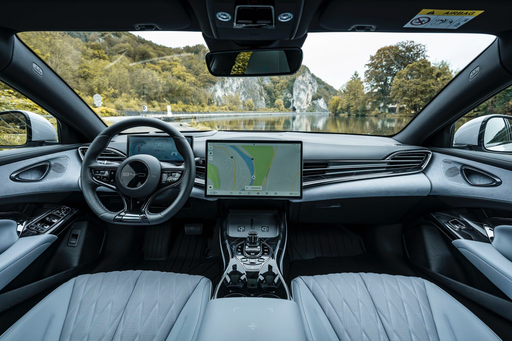
Step inside the BYD Seal and the immediate impression is of careful material choices and a higher‑end finish that aims to feel more premium than its price suggests, while the XPeng P7+ offers a quieter, more spacious cabin that prioritises rear‑seat comfort. BYD Seal seats tend toward a loungey, slightly firmer support that favors long motorway miles, whereas the P7+ cushions the rear passengers with optional heating, ventilation and massage that make it closer to a short mobile living room. Both systems bury some functions behind touch menus, but BYD’s overall trim and detailing feel a touch more cohesive; XPeng compensates with scale and refinement in noise insulation. For buyers who value tactile quality and a composed dashboard, the Seal nudges ahead; those who put real rear‑seat luxury and silence top of the list will be drawn to the P7+.

How they behave on long trips and while charging

On the motorway both the BYD Seal and XPeng P7+ settle into calm, long‑distance cruising, but they solve the charging puzzle differently — and that changes the travel rhythm. The XPeng P7+ is built around very short DC stops, which turns a multi‑stage trip into rapid refuel pauses and keeps total travel time down; it rewards drivers who value minimizing stop duration. The BYD Seal gives a relaxed, consistent range and the battery chemistry makes frequent full charges less worrying, yet its high‑power charging tapers sooner so stops tend to be longer. Choose the P7+ if you want the fastest practical trips with fewer minutes parked, pick the Seal if you prefer predictable range and a more forgiving battery routine despite longer station stops.

Practicality, usability and city friendliness

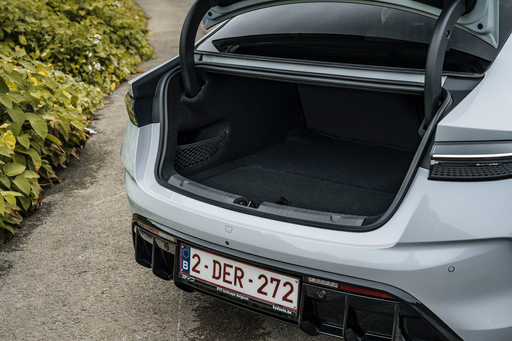
Practical differences become obvious in daily life: the XPeng P7+ is a big car with a wide, deep boot and a generous rear cabin that makes family duties and luggage loading easier, while the BYD Seal’s limousine profile brings a smaller opening and a slightly more fiddly luggage routine. In tight urban spots the BYD Seal’s marginally smaller footprint and sharper manoeuvrability feel friendlier, whereas the P7+ can be cumbersome in narrow streets or compact parking garages despite its excellent camera suite. Both cars seat five comfortably in normal use, but families who regularly carry tall passengers or large parcels will appreciate the P7+ layout more. If you live in the city with limited parking, the Seal’s easier urban manners will pay dividends; if cargo and rear‑seat amenity matter most, the P7+ is the more practical daily tool.

Driving character and everyday usability

The BYD Seal leans toward a composed, assured driving style — strong straight‑line shove available on demand and a chassis tuned for stability — while the XPeng P7+ favours a softer, quieter ride and a more relaxed steering feel. Drivers who want crisp feedback and a sensation of immediate acceleration will prefer the Seal’s more urgent nature, especially in higher‑powered variants, but those seeking a serene, low‑stress commute will find the P7+’s quietness and smoothness very persuasive. Both cars suffer from menu‑heavy controls and occasionally fussy driver‑assist alerts, so expect some software quirks whichever you choose. In short, the Seal is the more assertive limousine; the P7+ is the cosseting grand tourer.

Who each car suits and what to check next

If your priority is a premium interior feel, a firm motorway demeanour and a car that can be charged to full routinely without battery‑worry, the BYD Seal makes a strong case; buyers who want the shortest practical charging stops, maximum rear space and the best value package will lean toward the XPeng P7+. Consider your typical use: frequent long legs with quick pit‑stops push you to the P7+, while regular city driving with occasional motorway runs and a taste for perceived quality point to the Seal. Before deciding, drive both on familiar roads and check the real‑world charging performance and boot access with your usual luggage — those impressions map directly onto the numbers. The technical comparison that follows breaks down range, charging behaviour, power and weight so you can match those practical impressions to the figures and refine which trade‑offs matter most for your life.

Here’s where it gets real: The technical differences in detail

P7+

Costs and Efficiency:

Price and efficiency are key factors when choosing a car – and this is often where the real differences emerge.

XPeng P7+ is barely cheaper – starting at 39,900 £ , while the BYD Seal costs 41,100 £ . That’s a price difference of around 1,192 £.

In terms of energy consumption, the XPeng P7+ is only slightly more efficient: consuming 15.2 kWh/100km compared to 15.4 kWh/100km for the BYD Seal. That’s a difference of about 0.2 kWh/100km.

As for electric range, the BYD Seal offers marginally more range – reaching up to 570 km, about 40 km more than the XPeng P7+.

Seal

Engine and Performance:

Under the bonnet, it becomes clear which model is tuned for sportiness and which one takes the lead when you hit the accelerator.

When it comes to engine power, the BYD Seal offers only slightly more power – delivering 530 HP compared to 503 HP. That’s roughly 27 HP more horsepower.

When accelerating from 0 to 100 km/h, the BYD Seal is slightly quicker – completing the sprint in 3.8 s, while the XPeng P7+ takes 4.3 s. That’s about 0.5 s quicker.

Both models offer the same torque – 670 Nm.

Space and Everyday Use:

Cabin size, boot volume and payload all play a role in everyday practicality. Here, comfort and flexibility make the difference.

Both vehicles offer seating for 5 people.

In terms of curb weight, BYD Seal is very slightly lighter – 1,907 kg compared to 1,999 kg. The difference is around 92 kg.

Who wins the race in the data check?

The BYD Seal comes out modestly ahead in the objective data comparison.
This result only shows which model scores more points on paper – not which of the two cars feels right for you.

from £41,100
Seal

BYD Seal

  • Engine Type : Electric
  • Transmission : Automatic
  • Drive Type : Rear-Wheel Drive, All-Wheel Drive
  • Power HP : 231 - 530 HP
  • Consumption kWh/100km : 15.4 - 18.2 kWh/100km
  • Electric Range : 460 - 570 km
XPeng P7+
BYD Seal

Costs and Consumption

View detailed analysis

Engine and Performance

View detailed analysis

Dimensions and Body

View detailed analysis

XPeng P7+

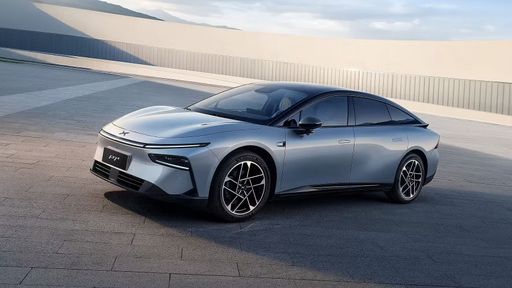
The XPeng P7+ is a sleek, coupe-like electric sedan that pairs a spacious, tech-forward cabin with an easygoing yet poised driving character — think premium feel without premium smugness. Packed with clever driver aids and a refined ride that earns the odd grin on twisty roads, it’s a compelling, modern alternative to the usual premium suspects.

details

BYD Seal

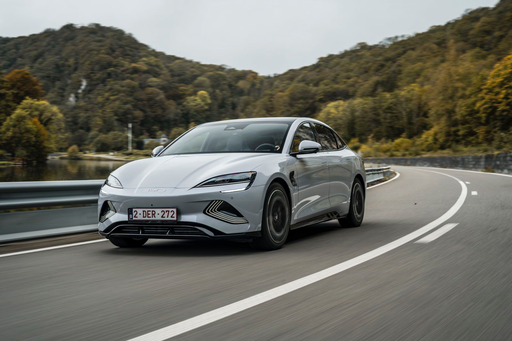
The BYD Seal is a sleek electric fastback that punches above its class with sporty looks and a surprisingly premium cabin, offering a very modern alternative for buyers who want style and substance without the badge snobbery. On the road it feels composed and eager, packed with tech and everyday practicality—ideal for shoppers after eco-friendly performance with a cheeky wink.

details
XPeng P7+
BYD Seal

Costs and Consumption

Price
39,900 - 45,900 £
Price
41,100 - 46,300 £
Consumption L/100km
-
Consumption L/100km
-
Consumption kWh/100km
15.2 - 17.4 kWh/100km
Consumption kWh/100km
15.4 - 18.2 kWh/100km
Electric Range
455 - 530 km
Electric Range
460 - 570 km
Battery Capacity
-
Battery Capacity
-
co2
0 g/km
co2
0 g/km
Fuel tank capacity
-
Fuel tank capacity
-

Dimensions and Body

Body Type
Hatchback
Body Type
Sedan
Seats
5
Seats
5
Doors
-
Doors
-
Curb weight
1,999 - 2,200 kg
Curb weight
1,907 - 2,185 kg
Trunk capacity
573 L
Trunk capacity
-
Length
-
Length
-
Width
1,937 mm
Width
1,875 mm
Height
-
Height
-
Max trunk capacity
-
Max trunk capacity
-
Payload
-
Payload
446 - 473 kg

Engine and Performance

Engine Type
Electric
Engine Type
Electric
Transmission
Automatic
Transmission
Automatic
Transmission Detail
Reduction Gearbox
Transmission Detail
Reduction Gearbox
Drive Type
Rear-Wheel Drive, All-Wheel Drive
Drive Type
Rear-Wheel Drive, All-Wheel Drive
Power HP
245 - 503 HP
Power HP
231 - 530 HP
Acceleration 0-100km/h
4.3 - 6.9 s
Acceleration 0-100km/h
3.8 - 7.5 s
Max Speed
-
Max Speed
-
Torque
450 - 670 Nm
Torque
360 - 670 Nm
Number of Cylinders
-
Number of Cylinders
-
Power kW
180 - 370 kW
Power kW
170 - 390 kW
Engine capacity
-
Engine capacity
-

General

Model Year
2026
Model Year
2026
CO2 Efficiency Class
A
CO2 Efficiency Class
A
Brand
XPeng
Brand
BYD
DriveDuel uses data analysis and artificial intelligence to evaluate vehicle data and create content. Content is regularly reviewed and improved. The displayed prices are estimates based on German list prices, adjusted to the respective country’s VAT. Country-specific registration taxes are not included. This information is not legally binding.