VS

Suzuki Vitara vs Mitsubishi ASX comparison

Compare performance (184 HP vs 158 HP), boot space and price (23,600 £ vs 21,400 £ ) at a glance. Find out which car is the better choice for you – Suzuki Vitara or Mitsubishi ASX?

Suzuki Vitara vs Mitsubishi ASX: Key differences

Suzuki Vitara

4.5 (4 Reviews)
rate
  • slightly more power
  • clearly quicker 0–100 km/h
  • very slightly lighter
details

Mitsubishi ASX

4.9 (2 Reviews)
rate
  • slightly cheaper
  • noticeably more efficient
  • markedly more trunk space
details

All details on performance, efficiency, range and trunk space can be found in the technical comparison below – including user reviews for both models.

By Achim Sedelmaier

Vitara

Mitsubishi ASX VS Suzuki Vitara — calm refinement versus honest practicality

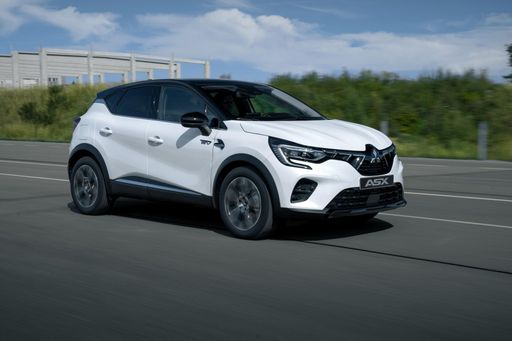
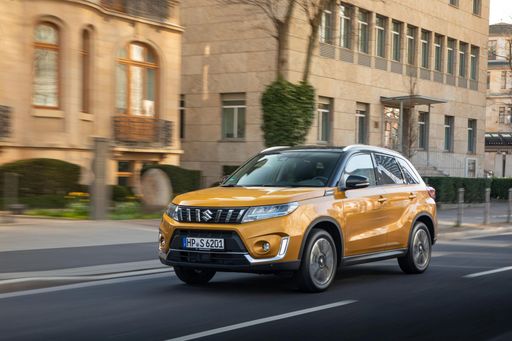
Mitsubishi ASX and Suzuki Vitara take very different approaches to the same compact‑SUV brief: the ASX pushes for calm, hybrid‑led refinement and flexible everyday usability, while the Vitara trades polish for lightness, directness and a no‑nonsense layout. The ASX leans on quieter low‑speed manners, a longer warranty and a sliding rear bench to solve real‑world packing headaches; the Vitara answers with a lighter footprint, crisper initial response and the rare option of all‑wheel drive in this class. That divergence frames most decisions here — comfort and everyday finesse on one side, simplicity and agility on the other. Read on to see how those philosophical differences play out in cabin feel, long‑distance comfort, city usability and practical family life.
ASX

Cabin feel and perceived quality: modern polish vs. pragmatic simplicity

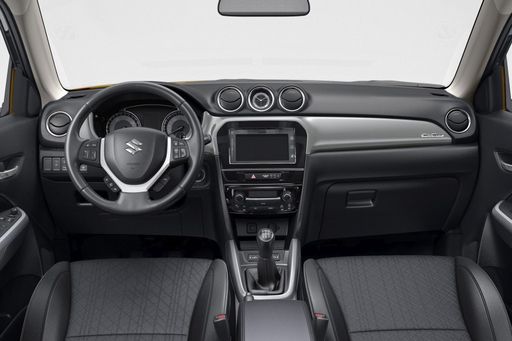
The Mitsubishi ASX feels a step more contemporary inside with cleaner lines, better‑fitting panels and an interior that aims for a slightly more premium impression than the Suzuki Vitara. The Vitara keeps things deliberately simple: many hard plastics and tactile knobs that favour usability over show, which some will find refreshingly honest and others a little dated. Infotainment is a clear contrast — the ASX has newer integration and physical climate controls that make routine adjustments easier, but its touchscreen can sometimes lag; the Vitara’s screen is capable but buries controls and locks some menus while driving. So the ASX wins on perceived finish and connectivity, while the Vitara wins on tactile, intuitive controls for drivers who prefer buttons over menus.

Vitara

Comfort and long‑distance behaviour: civilised cruiser versus lively roadholder

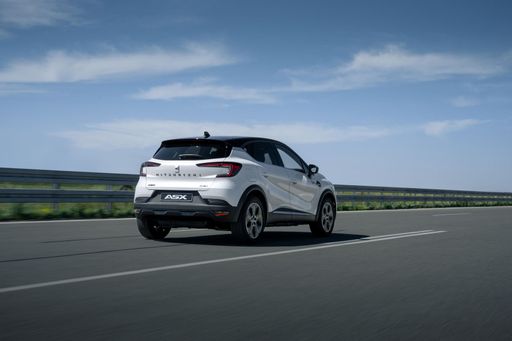
On long runs the Mitsubishi ASX generally feels more civilised thanks to hybrid tuning that tames low‑speed vibrations and a cabin that isolates road and drivetrain noise at typical cruising speeds. The ASX’s suspension is comfort‑biased, soaking up long stretches well though it can feel a touch firmer over sharp ridges, and its seats offer cushioning rather than sporty support. The Suzuki Vitara, being lighter and more direct, is more agile on country roads and gives a more engaging steering feel, but wind and engine noise are more noticeable on the motorway and the seats are less supportive for day‑long drives. In short, choose the ASX if motorway serenity and relaxed long‑distance comfort matter; pick the Vitara if you want a nimble, engaging companion for B‑roads and winter lanes, accepting a louder, less cushioned ride on trips.

ASX

City friendliness and everyday usability: quiet hybrid finesse vs. clear visibility and immediacy

The Mitsubishi ASX has been tuned for urban life — its hybrid low‑speed manners, parking aids and sliding rear bench make school runs and shopping trips noticeably easier and less stressful. Suzuki Vitara is every bit as city‑competent thanks to light steering, wide glass areas and a small turning circle that make manoeuvring and parking effortless, and its physical controls reduce distraction when you’re juggling bags or kids. Where they differ is feel: the ASX delivers a calmer, quieter stop‑start experience, while some Vitara powertrain variants feel more immediate but can be jerky in heavy traffic. Thus, the ASX favours a relaxed, fuss‑free urban routine; the Vitara favours directness and visibility for drivers who want to feel in control at low speeds.

Vitara

Practicality and cargo: adaptable loading versus compact honesty

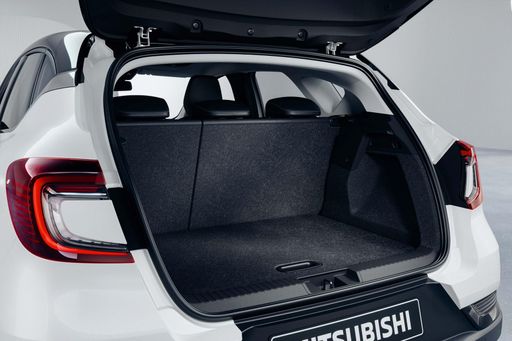
The Mitsubishi ASX is the more versatile partner for real‑world hauling thanks to a larger, more adaptable boot area and a rear bench that can slide to prioritise passengers or luggage. The Suzuki Vitara’s luggage area is more modest and certain hybrid versions reduce usable volume further, which is felt when fitting a stroller or several suitcases. Both cabin layouts seat four adults comfortably, but the ASX’s flexible load options make family weekends and DIY trips simpler to manage without wrestling with awkward packing. Take care with electrified variants, though — opting for certain hybrid versions can eat into boot practicality, so check the specific combination if cargo is a priority.

ASX

Buyer fit and how to choose before the specs section

If you want a quieter, more refined daily experience with clever interior flexibility and the reassurance of an extended warranty, start your test drive with the Mitsubishi ASX; it favours comfort, efficient urban driving and family practicality. If you prefer a lighter, more straightforward car with excellent visibility, easier parking, optional all‑wheel drive and a driving feel that’s more immediate, the Suzuki Vitara will suit you better. The decision comes down to a fundamental trade‑off: ASX for comfort and polished everyday usability, Vitara for directness, simplicity and occasional off‑piste confidence. Below this editorial comparison you’ll find the technical breakdown that explains why those trade‑offs exist and helps you match engines, cargo and features to your real needs.

Here’s where it gets real: The technical differences in detail

Vitara

Costs and Efficiency:

Price and efficiency are key factors when choosing a car – and this is often where the real differences emerge.

Mitsubishi ASX is slightly cheaper – starting at 21,400 £ , while the Suzuki Vitara costs 23,600 £ . That’s a price difference of around 2,151 £.

Fuel consumption also shows a difference: the Mitsubishi ASX uses 4.3 L/100km and is noticeably more efficient than the Suzuki Vitara with 5.3 L/100km. The difference is about 1 L/100km.

ASX

Engine and Performance:

Under the bonnet, it becomes clear which model is tuned for sportiness and which one takes the lead when you hit the accelerator.

When it comes to engine power, the Suzuki Vitara offers slightly more power – delivering 184 HP compared to 158 HP. That’s roughly 26 HP more horsepower.

When accelerating from 0 to 100 km/h, the Suzuki Vitara is clearly quicker – completing the sprint in 7.4 s, while the Mitsubishi ASX takes 8.9 s. That’s about 1.5 s quicker.

There’s also a difference in torque: the Suzuki Vitara delivers markedly more torque with 307 Nm compared to 245 Nm. That’s about 62 Nm more.

Vitara

Space and Everyday Use:

Cabin size, boot volume and payload all play a role in everyday practicality. Here, comfort and flexibility make the difference.

Both vehicles offer seating for 5 people.

In terms of curb weight, Suzuki Vitara is very slightly lighter – 1,255 kg compared to 1,296 kg. The difference is around 41 kg.

Looking at boot space, the Mitsubishi ASX offers markedly more boot space – 484 L compared to 375 L. That’s a difference of about 109 L.

When it comes to payload, the Mitsubishi ASX carries barely more – 445 kg compared to 425 kg. That’s a difference of about 20 kg.

Who wins the race in the data check?

The Suzuki Vitara is far ahead overall in the objective data comparison.
This result only shows which model scores more points on paper – not which of the two cars feels right for you.

from £23,600
Vitara

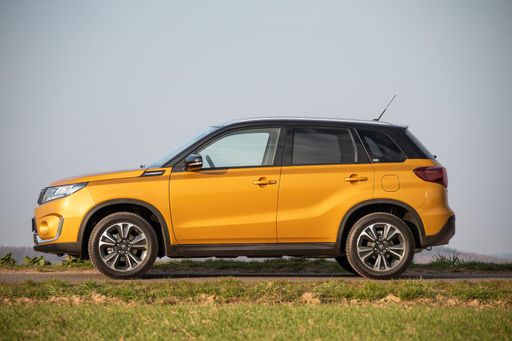
Suzuki Vitara

  • Engine Type : Petrol MHEV, Electric
  • Transmission : Automatic, Manuel
  • Drive Type : Front-Wheel Drive, All-Wheel Drive
  • Power HP : 110 - 184 HP
  • Consumption L/100km : 5.3 - 5.8 L/100km
  • Consumption kWh/100km : 14.9 - 16.6 kWh/100km
  • Electric Range : 344 - 426 km
Suzuki Vitara
Mitsubishi ASX

Costs and Consumption

View detailed analysis

Engine and Performance

View detailed analysis

Dimensions and Body

View detailed analysis

Suzuki Vitara

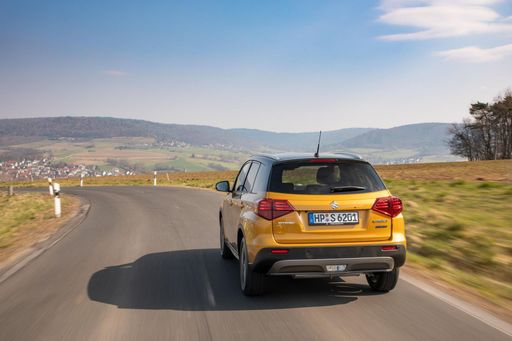
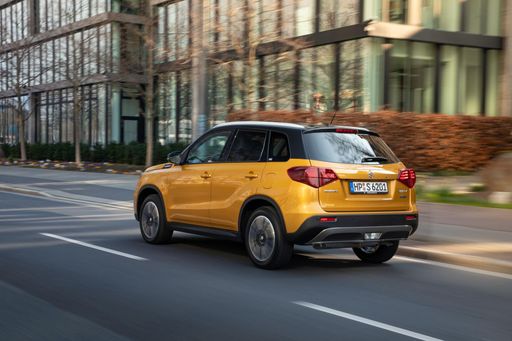
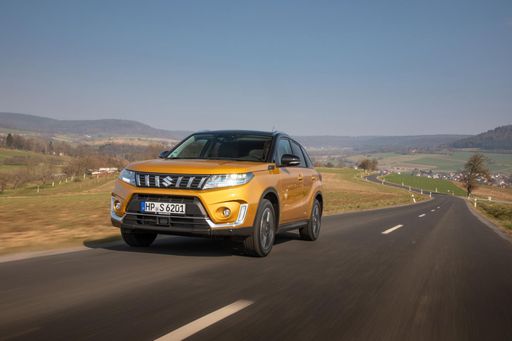
The Vitara is a city-smart SUV with a cheeky streak of off-road promise, perfect for drivers who want practicality without pretense. It’s honest, easy to live with and surprisingly likeable, a sensible companion for everyday adventures and weekend escapes.

details

Mitsubishi ASX

The Mitsubishi ASX is a compact crossover that mixes practicality with a no-nonsense personality, making it an easy choice for buyers who want sensible space without the showroom theatrics. It won't set your pulse racing, but its composed ride and user-friendly kit make it a dependable companion for daily errands and weekend escapes — reliable rather than flashy.

details
Suzuki Vitara
Mitsubishi ASX

Costs and Consumption

Price
23,600 - 36,800 £
Price
21,400 - 32,500 £
Consumption L/100km
5.3 - 5.8 L/100km
Consumption L/100km
4.3 - 6 L/100km
Consumption kWh/100km
14.9 - 16.6 kWh/100km
Consumption kWh/100km
-
Electric Range
344 - 426 km
Electric Range
-
Battery Capacity
-
Battery Capacity
-
co2
0 - 137 g/km
co2
99 - 137 g/km
Fuel tank capacity
-
Fuel tank capacity
-

Dimensions and Body

Body Type
SUV
Body Type
SUV
Seats
5
Seats
5
Doors
-
Doors
-
Curb weight
1,255 - 1,935 kg
Curb weight
1,296 - 1,493 kg
Trunk capacity
310 - 375 L
Trunk capacity
348 - 484 L
Length
-
Length
-
Width
1,775 - 1,800 mm
Width
1,797 mm
Height
-
Height
-
Max trunk capacity
-
Max trunk capacity
-
Payload
395 - 425 kg
Payload
397 - 445 kg

Engine and Performance

Engine Type
Petrol MHEV, Electric
Engine Type
Petrol, Petrol MHEV, Full Hybrid
Transmission
Automatic, Manuel
Transmission
Manuel, Automatic
Transmission Detail
Automatic Gearbox, Manual Gearbox
Transmission Detail
Manual Gearbox, Dual-Clutch Automatic, Automatic Gearbox
Drive Type
Front-Wheel Drive, All-Wheel Drive
Drive Type
Front-Wheel Drive
Power HP
110 - 184 HP
Power HP
115 - 158 HP
Acceleration 0-100km/h
7.4 - 9.6 s
Acceleration 0-100km/h
8.9 - 12.3 s
Max Speed
-
Max Speed
-
Torque
193 - 307 Nm
Torque
190 - 245 Nm
Number of Cylinders
4
Number of Cylinders
3 - 4
Power kW
81 - 135 kW
Power kW
84 - 116 kW
Engine capacity
1,373 cm3
Engine capacity
1,199 - 1,789 cm3

General

Model Year
2,025 - 2,026
Model Year
2,025 - 2,026
CO2 Efficiency Class
D, E, A
CO2 Efficiency Class
D, E, C
Brand
Suzuki
Brand
Mitsubishi
DriveDuel uses data analysis and artificial intelligence to evaluate vehicle data and create content. Content is regularly reviewed and improved. The displayed prices are estimates based on German list prices, adjusted to the respective country’s VAT. Country-specific registration taxes are not included. This information is not legally binding.