VS

Suzuki Vitara vs Mitsubishi ASX comparison

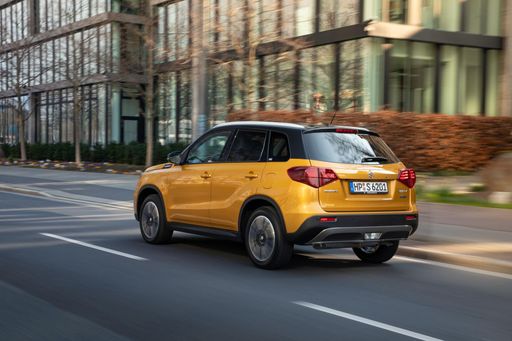
Compare performance (184 HP vs 158 HP), boot space and price (23,600 £ vs 21,400 £ ) at a glance. Find out which car is the better choice for you – Suzuki Vitara or Mitsubishi ASX?

Suzuki Vitara vs Mitsubishi ASX: Key differences

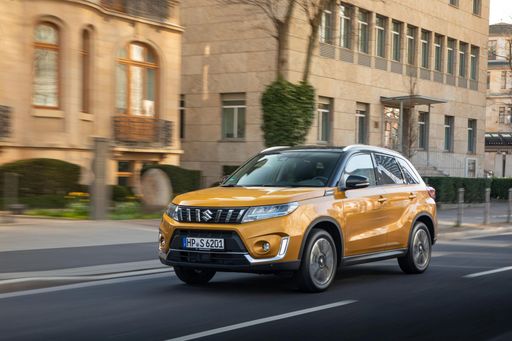
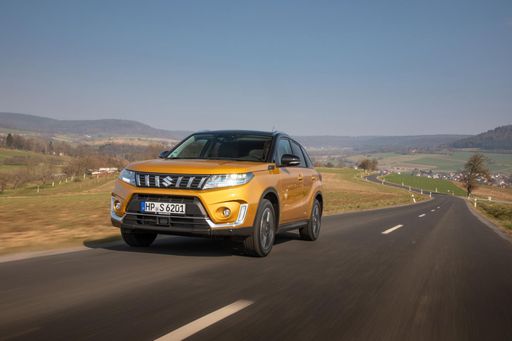
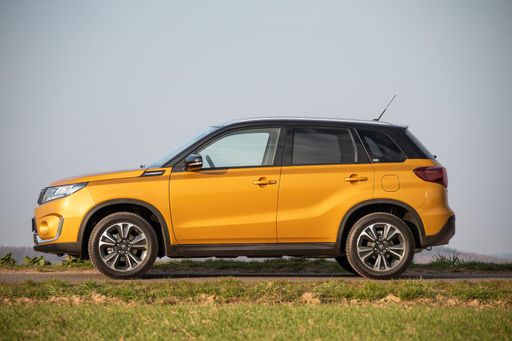
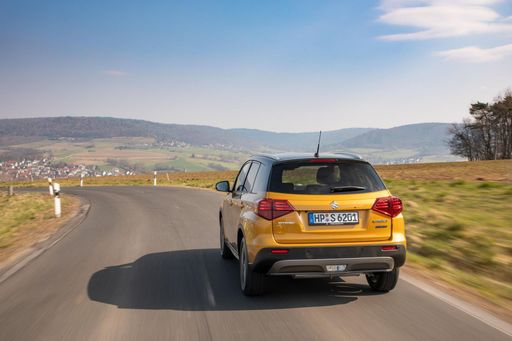
Suzuki Vitara

4.5 (3 Reviews)
rate
  • slightly more power
  • clearly quicker 0–100 km/h
  • very slightly lighter

Mitsubishi ASX

5 (1 Reviews)
rate
  • slightly cheaper
  • moderately more efficient
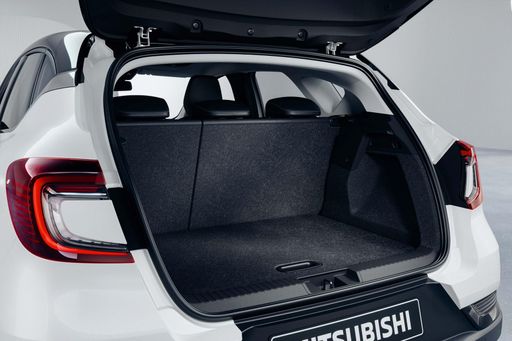
  • markedly more trunk space

All details on performance, efficiency, range and trunk space can be found in the technical comparison below – including user reviews for both models.

Vitara

Introduction to the Compact SUV Battle

The compact SUV segment has become increasingly popular among drivers looking for a blend of practicality, comfort, and performance. Two notable contenders in this category are the Mitsubishi ASX and the Suzuki Vitara. Both vehicles offer unique features and technological innovations that cater to a wide range of preferences. This article dives deep into a comparison of the Mitsubishi ASX and Suzuki Vitara in terms of technical specifications, design, and innovations.

ASX

Powertrain Options and Performance

The Mitsubishi ASX offers a diverse lineup of engines, catering to a variety of driving preferences. Engine options include petrol, petrol mild hybrid electric vehicle (MHEV), and full hybrid variants. The power output ranges from 91 HP to 158 HP with torque figures peaking at 270 Nm. The ASX also provides different transmission options including manual, automated manual, and an automatic gearbox, along with front-wheel drive as standard.

In contrast, the Suzuki Vitara focuses primarily on petrol MHEV and full hybrid variants, producing between 116 HP and 129 HP with a torque output of 235 Nm. It offers both front-wheel drive and all-wheel drive configurations, allowing customers to choose based on their driving needs and conditions. The Vitara also provides a choice between manual and automatic transmissions, ensuring a smooth driving experience.

Vitara

Efficiency and Fuel Consumption

When it comes to fuel efficiency, the Mitsubishi ASX shows promising figures, with consumption ranging from 4.7 L/100km to 6 L/100km, depending on the engine variant and driving conditions. The ASX's CO2 emissions range from 107 g/km to 135 g/km, which is competitive within its class.

On the other hand, the Suzuki Vitara demonstrates remarkable efficiency with fuel consumption as low as 5 L/100km to 5.6 L/100km. Its CO2 emissions are also commendably low, varying from 113 g/km to 129 g/km. This enhances the Vitara's appeal for environmentally-conscious consumers.

ASX

Dimensions and Interior Comfort

Dimensionally, the Mitsubishi ASX measures 4239 mm in length, 1797 mm in width, and 1575 mm in height, providing a spacious interior. It can accommodate up to 5 passengers and offers a trunk capacity of 484 L, making it practical for everyday use.

Meanwhile, the Suzuki Vitara comes in slightly smaller, measuring 4185 mm in length and 1775 mm in width, with a height of 1595 mm. Despite its smaller dimensions, it also comfortably seats 5 passengers; however, its trunk capacity is lower at 375 L. While this means slightly less cargo space, the Vitara's design maximizes interior comfort.

Vitara

Safety Features and Innovations

Both the Mitsubishi ASX and Suzuki Vitara have equipped themselves with industry-standard safety features to ensure the protection of their passengers. The ASX has a range of advanced technologies designed to enhance its safety profile, including multiple airbags, stability control systems, and various driver-assist features, helping to mitigate potential hazards on the road.

Similarly, the Suzuki Vitara comes with a suite of advanced safety technologies, including adaptive cruise control, lane departure warning, and collision prevention systems. Its reputation for reliability and safety further cements its standing in the market.

ASX

Conclusion: Which SUV Reigns Supreme?

In the battle of the compact SUVs, the Mitsubishi ASX and Suzuki Vitara both present compelling cases. The ASX offers more variety in its powertrains and a larger trunk capacity. Conversely, the Vitara excels in fuel efficiency and boasts sophisticated safety features. Ultimately, the choice between these two vehicles will come down to individual preferences regarding performance, space, and safety features. Both deliver exceptional value in today’s competitive automotive landscape.

Here’s where it gets real: The technical differences in detail

Vitara

Costs and Efficiency:

Price and efficiency are key factors when choosing a car – and this is often where the real differences emerge.

Mitsubishi ASX is slightly cheaper – starting at 21,400 £ , while the Suzuki Vitara costs 23,600 £ . That’s a price difference of around 2,151 £.

Fuel consumption also shows a difference: the Mitsubishi ASX uses 4.4 L/100km and is moderately more efficient than the Suzuki Vitara with 5 L/100km. The difference is about 0.6 L/100km.

ASX

Engine and Performance:

Under the bonnet, it becomes clear which model is tuned for sportiness and which one takes the lead when you hit the accelerator.

When it comes to engine power, the Suzuki Vitara offers slightly more power – delivering 184 HP compared to 158 HP. That’s roughly 26 HP more horsepower.

When accelerating from 0 to 100 km/h, the Suzuki Vitara is clearly quicker – completing the sprint in 7.4 s, while the Mitsubishi ASX takes 8.9 s. That’s about 1.5 s quicker.

There’s also a difference in torque: the Suzuki Vitara delivers markedly more torque with 307 Nm compared to 245 Nm. That’s about 62 Nm more.

Vitara

Space and Everyday Use:

Cabin size, boot volume and payload all play a role in everyday practicality. Here, comfort and flexibility make the difference.

Both vehicles offer seating for 5 people.

In terms of curb weight, Suzuki Vitara is very slightly lighter – 1,255 kg compared to 1,296 kg. The difference is around 41 kg.

Looking at boot space, the Mitsubishi ASX offers markedly more boot space – 484 L compared to 375 L. That’s a difference of about 109 L.

When it comes to payload, the Mitsubishi ASX carries barely more – 445 kg compared to 425 kg. That’s a difference of about 20 kg.

Who wins the race in the data check?

The Suzuki Vitara is far ahead overall in the objective data comparison.
This result only shows which model scores more points on paper – not which of the two cars feels right for you.

from £23,600
Vitara

Suzuki Vitara

  • Engine Type : Petrol MHEV, Full Hybrid, Electric
  • Transmission : Manuel, Automatic
  • Drive Type : Front-Wheel Drive, All-Wheel Drive
  • Power HP : 110 - 184 HP
  • Consumption L/100km : 5 - 5.9 L/100km
  • Consumption kWh/100km : 14.9 - 16.6 kWh/100km
  • Electric Range : 344 - 426 km
Suzuki Vitara
Mitsubishi ASX

Costs and Consumption

View detailed analysis

Engine and Performance

View detailed analysis

Dimensions and Body

View detailed analysis

Suzuki Vitara

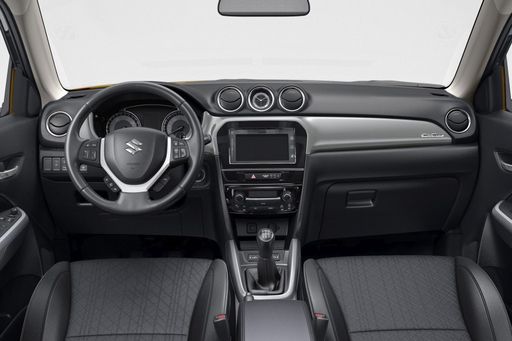
The Vitara is a city-smart SUV with a cheeky streak of off-road promise, perfect for drivers who want practicality without pretense. It’s honest, easy to live with and surprisingly likeable, a sensible companion for everyday adventures and weekend escapes.

details

Mitsubishi ASX

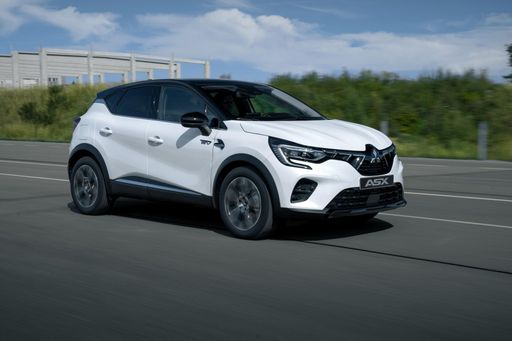
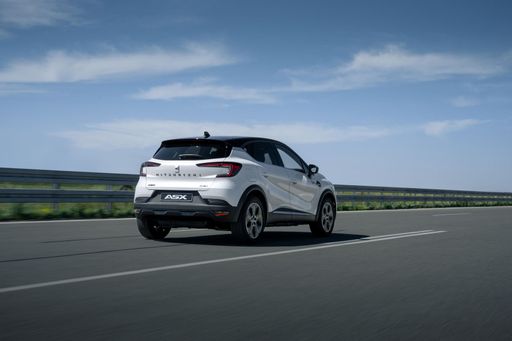
The Mitsubishi ASX is a compact crossover that mixes practicality with a no-nonsense personality, making it an easy choice for buyers who want sensible space without the showroom theatrics. It won't set your pulse racing, but its composed ride and user-friendly kit make it a dependable companion for daily errands and weekend escapes — reliable rather than flashy.

details
Suzuki Vitara
Mitsubishi ASX

Costs and Consumption

Price
23,600 - 36,800 £
Price
21,400 - 32,500 £
Consumption L/100km
5 - 5.9 L/100km
Consumption L/100km
4.4 - 6 L/100km
Consumption kWh/100km
14.9 - 16.6 kWh/100km
Consumption kWh/100km
-
Electric Range
344 - 426 km
Electric Range
-
Battery Capacity
-
Battery Capacity
-
co2
0 - 138 g/km
co2
99 - 137 g/km
Fuel tank capacity
47 L
Fuel tank capacity
-

Dimensions and Body

Body Type
SUV
Body Type
SUV
Seats
5
Seats
5
Doors
5
Doors
-
Curb weight
1,255 - 1,935 kg
Curb weight
1,296 - 1,493 kg
Trunk capacity
289 - 375 L
Trunk capacity
348 - 484 L
Length
4,185 mm
Length
-
Width
1,775 - 1,800 mm
Width
1,797 mm
Height
1,595 mm
Height
-
Max trunk capacity
1,046 - 1,120 L
Max trunk capacity
-
Payload
375 - 425 kg
Payload
397 - 445 kg

Engine and Performance

Engine Type
Petrol MHEV, Full Hybrid, Electric
Engine Type
Full Hybrid, Petrol, Petrol MHEV
Transmission
Manuel, Automatic
Transmission
Automatic, Manuel
Transmission Detail
Manual Gearbox, Automated Manual, Automatic Gearbox
Transmission Detail
Automatic Gearbox, Manual Gearbox, Dual-Clutch Automatic
Drive Type
Front-Wheel Drive, All-Wheel Drive
Drive Type
Front-Wheel Drive
Power HP
110 - 184 HP
Power HP
115 - 158 HP
Acceleration 0-100km/h
7.4 - 12.7 s
Acceleration 0-100km/h
8.9 - 12.3 s
Max Speed
180 - 190 km/h
Max Speed
-
Torque
193 - 307 Nm
Torque
190 - 245 Nm
Number of Cylinders
4
Number of Cylinders
3 - 4
Power kW
81 - 135 kW
Power kW
84 - 116 kW
Engine capacity
1,373 - 1,462 cm3
Engine capacity
1,199 - 1,789 cm3

General

Model Year
2,024 - 2,026
Model Year
2,025
CO2 Efficiency Class
D, C, E, A
CO2 Efficiency Class
C, D, E
Brand
Suzuki
Brand
Mitsubishi
DriveDuel uses data analysis and artificial intelligence to evaluate vehicle data and create content. Content is regularly reviewed and improved. The displayed prices are estimates based on German list prices, adjusted to the respective country’s VAT. Country-specific registration taxes are not included. This information is not legally binding.