VS

Volvo EX30 vs Kia EV3 comparison

Compare performance (428 HP vs 265 HP), boot space and price (30,000 £ vs 40,200 £ ) at a glance. Find out which car is the better choice for you – Volvo EX30 or Kia EV3?

Volvo EX30 vs Kia EV3: Key differences

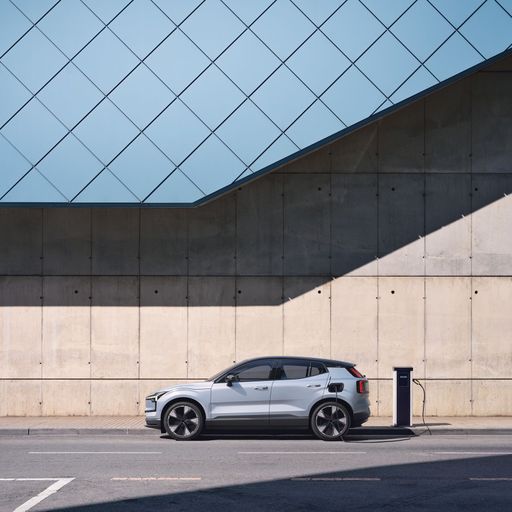
Volvo EX30

3.5 (8 Reviews)
rate
  • markedly cheaper
  • clearly more power
  • clearly quicker 0–100 km/h
  • marginally lighter
details

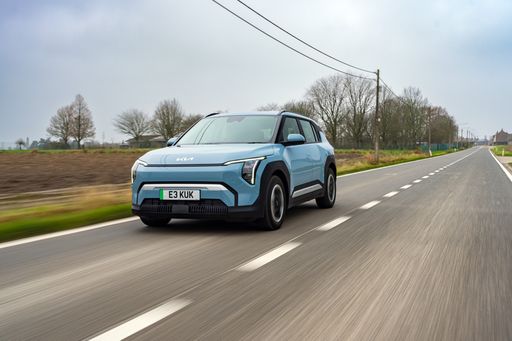
Kia EV3

4.6 (5 Reviews)
rate
  • marginally more efficient
  • slightly more electric range
  • markedly more trunk space
details

All details on performance, efficiency, range and trunk space can be found in the technical comparison below – including user reviews for both models.

By Achim Sedelmaier

EX30

The electric vehicle market continues to evolve rapidly, with manufacturers pushing boundaries in technology and performance. Two standout contenders in the compact SUV segment are the Kia EV3 and the Volvo EX30. Both vehicles boast impressive specifications and innovative features, but how do they stack up against each other? Let’s take a detailed look at their technical aspects, innovations, and overall capabilities.
EV3

Powertrains and Performance

The Kia EV3 comes with a front-wheel-drive layout, offering a smooth driving experience powered by a single electric motor that generates 204 HP and 283 Nm of torque. It features a choice of two battery capacities—58.3 kWh and 81.4 kWh—allowing for electric ranges between 436 km and 605 km, depending on the battery choice. With an acceleration time from 0 to 100 km/h ranging from 7.5 to 7.9 seconds, it provides a balanced blend of efficiency and performance.

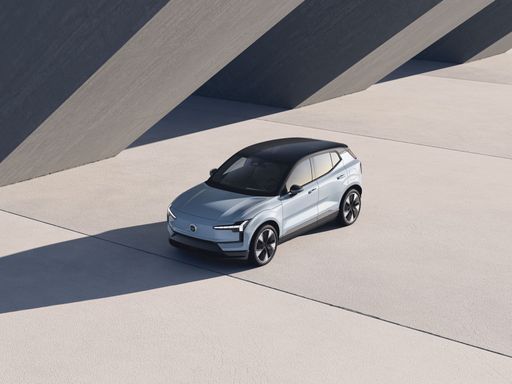
On the other hand, the Volvo EX30 is available in rear-wheel-drive and all-wheel-drive configurations, depending on the variant. The base model offers 272 HP, reaching a top speed of 180 km/h, while the high-performance variant can push out an impressive 428 HP and 543 Nm of torque, achieving 0 to 100 km/h in just 3.6 seconds. The battery options include 49 kWh and 65 kWh, delivering ranges from 339 km to 476 km, catering to varied consumer needs.

EX30

Battery and Efficiency

When it comes to efficiency, the Kia EV3 excels with a consumption rate ranging from 14.9 to 16.2 kWh/100 km, making it a highly economical choice for daily driving. Its larger battery capacity allows for an extended range, making it less dependent on frequent charging.

In contrast, the Volvo EX30's consumption is slightly higher, clocking in at around 17 to 17.5 kWh/100 km. However, it compensates for this with its robust power offerings and dynamic performance. While its range falls short compared to the EV3, the driving experience and acceleration of the EX30 still position it as a compelling choice for those prioritizing performance.

EV3

Design and Dimensions

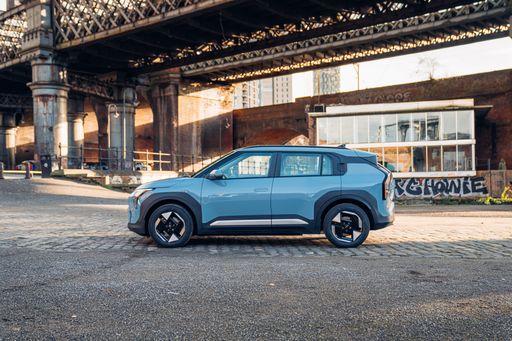
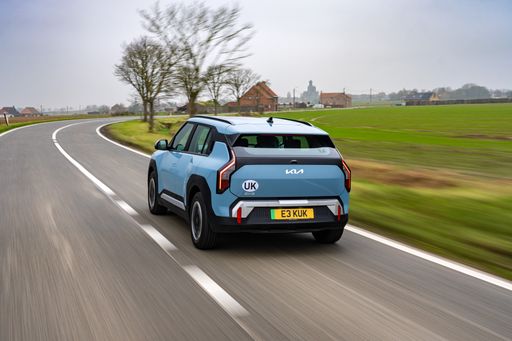
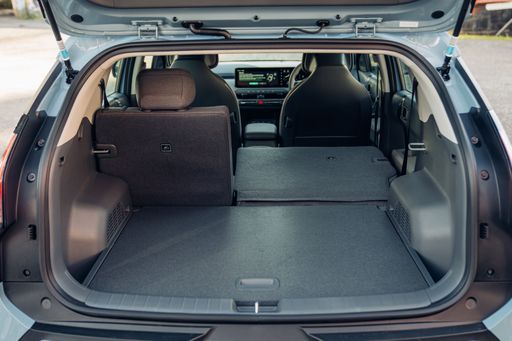
The dimensions of both SUVs reflect their compact class. The Kia EV3 measures 4300 mm in length, 1850 mm in width, and stands at a height of 1560 mm, while the Volvo EX30 is slightly smaller at 4233 mm in length, 1837 mm in width, and 1549 mm in height. Both vehicles come with five doors and can comfortably seat five passengers; however, the Kia offers a more generous trunk capacity of 460 liters compared to the Volvo's 318 liters.

EX30

Innovative Features and Technology

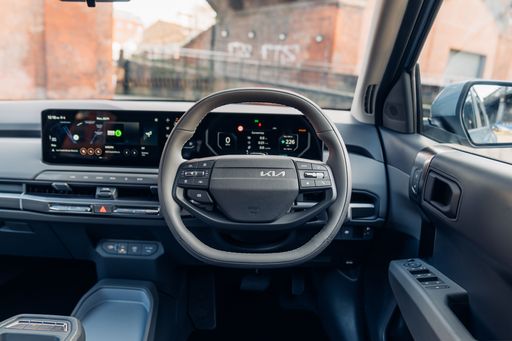
In terms of interior technology and safety features, both vehicles are equipped with modern infotainment systems that offer seamless connectivity, advanced driver assistance systems, and high-quality materials that enhance the driving experience. The Kia EV3 focuses on providing an intuitive user interface with abundant digital displays, while the Volvo EX30 embraces Scandinavian minimalism, integrating eco-friendly materials throughout the cabin design.

Moreover, the safety aspects of both vehicles are robust, with both brands consistently recognized for their superior safety ratings. Volvo, renowned for its safety innovations, continues to implement cutting-edge technologies, whereas Kia is significantly enhancing its safety repertoire with advanced features.

EV3

Final Thoughts

Ultimately, the choice between the Kia EV3 and the Volvo EX30 boils down to personal preference paired with specific driving needs. The Kia EV3 proves to be a champion of range and efficiency, ideal for longer commutes and eco-conscious drivers. In contrast, the Volvo EX30 appeals to those who seek exhilarating performance and dynamic driving dynamics.

Both models represent the exciting evolution of electric SUVs, highlighting the advancements in automotive technology and sustainability. As the market continues to mature, it will be fascinating to see how these two competitors evolve and influence the future of electric mobility.

Here’s where it gets real: The technical differences in detail

EX30

Costs and Efficiency:

When it comes to price and running costs, the biggest differences usually appear. This is often where you see which car fits your budget better in the long run.

Volvo EX30 is markedly cheaper – starting at 30,000 £ , while the Kia EV3 costs 40,200 £ . That’s a price difference of around 10,191 £.

In terms of energy consumption, the Kia EV3 is marginally more efficient: consuming 15.8 kWh/100km compared to 17 kWh/100km for the Volvo EX30. That’s a difference of about 1.2 kWh/100km.

As for electric range, the Kia EV3 offers slightly more range – reaching up to 572 km, about 97 km more than the Volvo EX30.

EV3

Engine and Performance:

Under the bonnet, it becomes clear which model is tuned for sportiness and which one takes the lead when you hit the accelerator.

When it comes to engine power, the Volvo EX30 offers clearly more power – delivering 428 HP compared to 265 HP. That’s roughly 163 HP more horsepower.

When accelerating from 0 to 100 km/h, the Volvo EX30 is clearly quicker – completing the sprint in 3.6 s, while the Kia EV3 takes 6.6 s. That’s about 3 s quicker.

There’s also a difference in torque: the Volvo EX30 delivers visibly more torque with 543 Nm compared to 385 Nm. That’s about 158 Nm more.

EX30

Space and Everyday Use:

Beyond pure performance, interior space and usability matter most in daily life. This is where you see which car is more practical and versatile.

Both vehicles offer seating for 5 people.

In terms of curb weight, Volvo EX30 is marginally lighter – 1,840 kg compared to 1,995 kg. The difference is around 155 kg.

Looking at boot space, the Kia EV3 offers markedly more boot space – 413 L compared to 318 L. That’s a difference of about 95 L.

When it comes to payload, the Kia EV3 carries slightly more – 485 kg compared to 390 kg. That’s a difference of about 95 kg.

Who wins the race in the data check?

The Volvo EX30 stands well ahead of its rival in the objective data comparison.
This result only shows which model scores more points on paper – not which of the two cars feels right for you.

from £30,000
EX30

Volvo EX30

  • Engine Type Electric
  • Transmission Automatic
  • Drive Type Rear-Wheel Drive, All-Wheel Drive
  • Power HP 150 - 428 HP
  • Consumption kWh/100km 17 - 18.3 kWh/100km
  • Electric Range 339 - 475 km
Volvo EX30
Kia EV3

Costs and Consumption

View detailed analysis

Engine and Performance

View detailed analysis

Dimensions and Body

View detailed analysis

Volvo EX30

The Volvo EX30 is a compact all-electric crossover that mixes Volvo's strong safety focus with clean Scandinavian design for a really city-friendly package. It feels lively and easy to live with, pairing a premium-feeling interior and modern connectivity with a practical footprint for urban driving.

details

Kia EV3

The Kia EV3 is a stylish, user-friendly electric crossover that focuses on practicality and a roomy, well-equipped cabin. It delivers a comfortable ride with intuitive technology and efficient everyday performance, making it a sensible choice for city and family use.

details
Volvo EX30
Kia EV3

Costs and Consumption

Price
30,000 - 47,800 £
Price
40,200 - 43,900 £
Consumption L/100km
-
Consumption L/100km
-
Consumption kWh/100km
17 - 18.3 kWh/100km
Consumption kWh/100km
15.8 kWh/100km
Electric Range
339 - 475 km
Electric Range
572 km
Battery Capacity
-
Battery Capacity
-
co2
0 g/km
co2
0 g/km
Fuel tank capacity
-
Fuel tank capacity
-

Dimensions and Body

Body Type
SUV
Body Type
SUV
Seats
5
Seats
5
Doors
-
Doors
-
Curb weight
1,840 - 1,960 kg
Curb weight
1,995 kg
Trunk capacity
318 L
Trunk capacity
413 L
Length
-
Length
-
Width
1,838 mm
Width
1,850 mm
Height
-
Height
-
Max trunk capacity
-
Max trunk capacity
-
Payload
370 - 390 kg
Payload
485 kg

Engine and Performance

Engine Type
Electric
Engine Type
Electric
Transmission
Automatic
Transmission
Automatic
Transmission Detail
Reduction Gearbox
Transmission Detail
Reduction Gearbox
Drive Type
Rear-Wheel Drive, All-Wheel Drive
Drive Type
All-Wheel Drive
Power HP
150 - 428 HP
Power HP
265 HP
Acceleration 0-100km/h
3.6 - 8.6 s
Acceleration 0-100km/h
6.6 s
Max Speed
-
Max Speed
-
Torque
343 - 543 Nm
Torque
385 Nm
Number of Cylinders
-
Number of Cylinders
-
Power kW
110 - 315 kW
Power kW
195 kW
Engine capacity
-
Engine capacity
-

General

Model Year
2026
Model Year
2026
CO2 Efficiency Class
A
CO2 Efficiency Class
A
Brand
Volvo
Brand
Kia
DriveDuel uses data analysis and artificial intelligence to evaluate vehicle data and create content. Content is regularly reviewed and improved. The displayed prices are estimates based on German list prices, adjusted to the respective country’s VAT. Country-specific registration taxes are not included. This information is not legally binding.