VS

Alfa Romeo Junior vs Suzuki Vitara comparison

Compare performance (280 HP vs 184 HP), boot space and price (26100 £ vs 23600 £ ) at a glance. Find out which car is the better choice for you – Alfa Romeo Junior or Suzuki Vitara?

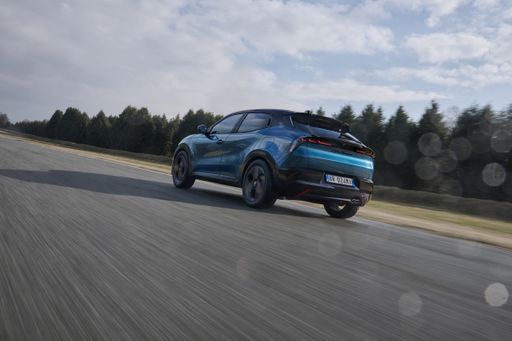
Junior

Alfa Romeo Junior vs. Suzuki Vitara: A Comprehensive Comparison

In the ever-evolving world of automotive engineering, two standout models have captured the attention of SUV enthusiasts: the Alfa Romeo Junior and the Suzuki Vitara. Both vehicles balance performance and practicality, yet they cater to different sets of priorities. Let's dive into their technical attributes and innovations to see which one might be the perfect fit for you.
Vitara

Power and Performance

The Alfa Romeo Junior offers a wide range of powertrains, including electric and petrol mild hybrid engine options. With power outputs ranging from 136 to 280 HP, drivers can expect a robust acceleration experience. The Junior boasts an impressive 0-100 km/h acceleration time of just 5.9 seconds in its most powerful iteration, offering a top speed of up to 206 km/h. On the technical side, its electric version achieves remarkable efficiency, consuming as low as 15.2 kWh per 100 km with an electric range of up to 410 km.

On the other hand, the Suzuki Vitara focuses on efficiency and simplicity. Available in petrol mild hybrid and full hybrid variants, it generates power up to 129 HP. Its acceleration from 0-100 km/h varies around 9.5 to 12.7 seconds, with a maximum speed reaching up to 190 km/h. The Vitara's fuel consumption is commendable, averaging between 5 to 5.6 L/100 km.

Junior

Drive and Handling

When it comes to drive types, both the Junior and Vitara offer front-wheel and all-wheel drive options, catering to various driving demands and conditions. The Junior's automatic transmission variants, such as the dual-clutch automatic and reduction gearbox, aim to provide a seamless and responsive driving experience.

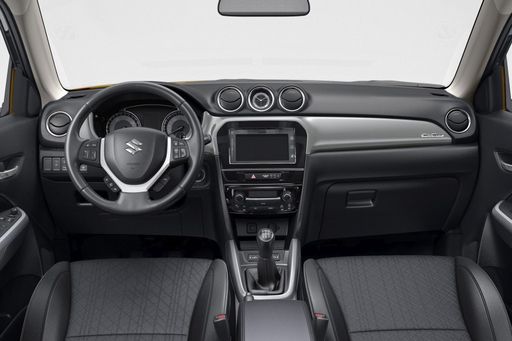
Conversely, the Vitara mainly emphasizes versatility and ease of use with its manual gearbox and automated manual transmission, appealing to those who prefer a hands-on approach to driving.

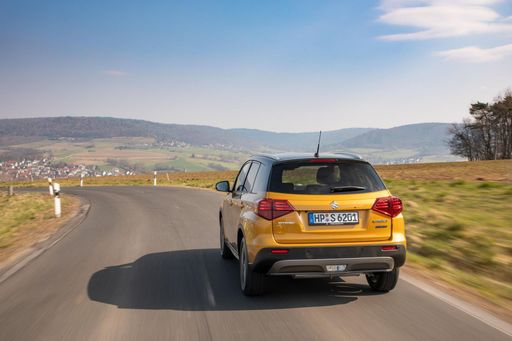
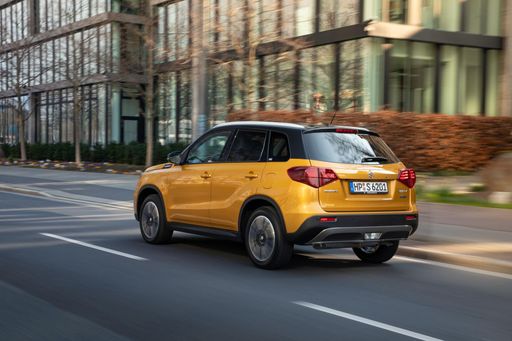
Vitara

Dimensions and Comfort

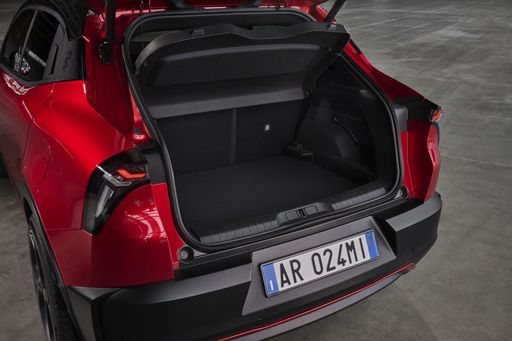
Size often matters when it comes to SUV preferences. The Alfa Romeo Junior spans a length of 4173 mm, with a width of 1781 mm and height variances reaching up to 1538 mm. It comfortably accommodates five passengers, providing a trunk capacity of up to 415 liters, thus promising a spacious interior.

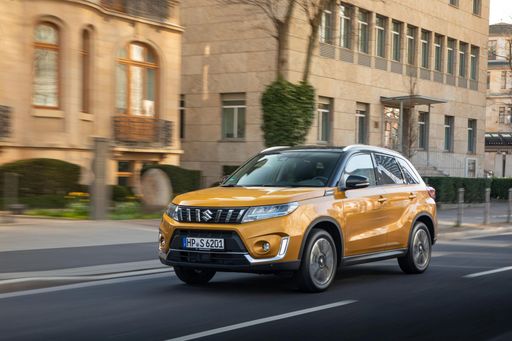
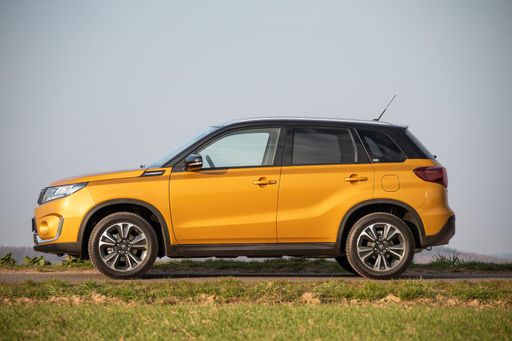
The Suzuki Vitara is slightly longer at 4185 mm but slightly narrower and taller, measuring 1775 mm in width and 1595 mm in height. It offers a trunk capacity ranging from 289 to 375 liters, also fitting five occupants, with a more upright posture that could appeal to those who prioritize an excellent view of the road ahead.

Junior

Environmental Impact

For the eco-conscious driver, the Alfa Romeo Junior inspires with its electric model's zero emissions and efficiency class A rating. Even its mild hybrid versions keep carbon footprints relatively modest, with CO2 emissions ranging from 103 to 119 g/km.

The Suzuki Vitara, while primarily a combustion engine vehicle with hybrid assistance, maintains respectably low CO2 emissions, classing between categories C and D. This makes it a more environmentally friendly option than traditional petrol-only vehicles.

Vitara

Conclusion

Choosing between the Alfa Romeo Junior and the Suzuki Vitara ultimately depends on your priorities. If you're seeking an SUV with potent performance, electric innovation, and a touch of luxury, the Alfa Romeo Junior might be your match. However, if your focus is on practicality, reliability, and cost-effectiveness, the Suzuki Vitara stands out as a pragmatic choice. Both vehicles bring unique advantages to the table, making each a contender in the SUV arena.

Alfa Romeo Junior vs Suzuki Vitara: Key differences

Alfa Romeo Junior

5 (1 Reviews)
rate
  • clearly perceptible more power
  • hardly perceptible more efficient
  • evident quicker from 0–100 km/h
  • slight more trunk space

Suzuki Vitara

4.5 (3 Reviews)
rate
  • somewhat cheaper
  • barely noticeable more efficient
  • slight more electric range
  • slight lighter

All details on performance, efficiency, range and trunk space can be found in the technical comparison below – including user reviews for both models.

Here’s where it gets real: The technical differences in detail

Costs and Efficiency:

When it comes to price and running costs, the biggest differences usually appear. This is often where you see which car fits your budget better in the long run.

Suzuki Vitara has a somewhat advantage in terms of price – it starts at 23600 £ , while the Alfa Romeo Junior costs 26100 £ . That’s a price difference of around 2529 £.

Fuel consumption also shows a difference: Alfa Romeo Junior manages with 4.80 L and is therefore hardly perceptible more efficient than the Suzuki Vitara with 5 L. The difference is about 0.20 L per 100 km.

In terms of energy consumption, the advantage goes to the Suzuki Vitara: with 14.90 kWh per 100 km, it’s barely noticeable more efficient than the Alfa Romeo Junior with 15.10 kWh. That’s a difference of about 0.20 kWh.

As for electric range, the Suzuki Vitara performs slight better – achieving up to 426 km, about 16 km more than the Alfa Romeo Junior.

Engine and Performance:

Power, torque and acceleration are the classic benchmarks for car enthusiasts – and here, some clear differences start to show.

When it comes to engine power, the Alfa Romeo Junior has a clearly perceptible edge – offering 280 HP compared to 184 HP. That’s roughly 96 HP more horsepower.

In acceleration from 0 to 100 km/h, the Alfa Romeo Junior is evident quicker – completing the sprint in 5.90 s, while the Suzuki Vitara takes 7.40 s. That’s about 1.50 s faster.

In terms of top speed, the Alfa Romeo Junior performs hardly perceptible better – reaching 206 km/h, while the Suzuki Vitara tops out at 190 km/h. The difference is around 16 km/h.

There’s also a difference in torque: Alfa Romeo Junior pulls somewhat stronger with 345 Nm compared to 307 Nm. That’s about 38 Nm difference.

Space and Everyday Use:

Cabin size, boot volume and payload all play a role in everyday practicality. Here, comfort and flexibility make the difference.

Both vehicles offer seating for 5 people.

In curb weight, Suzuki Vitara is slight lighter – 1255 kg compared to 1380 kg. The difference is around 125 kg.

In terms of boot space, the Alfa Romeo Junior offers slight more room – 415 L compared to 375 L. That’s a difference of about 40 L.

In maximum load capacity, the Alfa Romeo Junior performs slightly better – up to 1280 L, which is about 160 L more than the Suzuki Vitara.

When it comes to payload, Suzuki Vitara hardly perceptible takes the win – 425 kg compared to 420 kg. That’s a difference of about 5 kg.

Who wins the race in the data check?

The Alfa Romeo Junior is clearly superior overall in the objective data comparison.
This result only shows which model scores more points on paper – not which of the two cars feels right for you.

Alfa Romeo Junior
Suzuki Vitara

Costs and Consumption

View detailed analysis

Engine and Performance

View detailed analysis

Dimensions and Body

View detailed analysis
from about £26,100
Junior

Alfa Romeo Junior

  • Engine Type : Electric, Petrol MHEV
  • Transmission : Automatic
  • Drive Type : Front-Wheel Drive, All-Wheel Drive
  • Power HP : 136 - 280 HP
  • Consumption L/100km : 4.8 - 5.4 L
  • Consumption kWh/100km : 15.1 - 17.5 kWh
  • Electric Range : 344 - 410 km

Alfa Romeo Junior

5 (1 Reviews)
rate

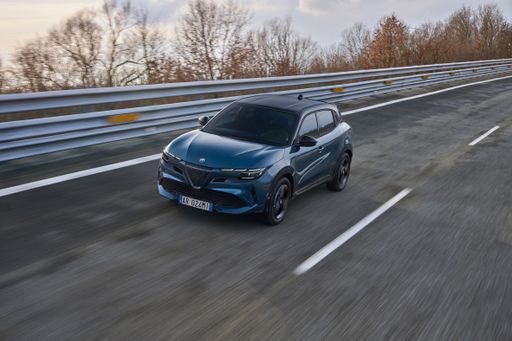
The Alfa Romeo Junior captures the essence of Italian design with its sleek lines and compact dimensions, making it an icon of elegance and performance. With a spirited driving experience and a charming retro aesthetic, it appeals to enthusiasts and casual drivers alike. This delightful car embodies the brand's rich heritage while remaining a fun and engaging option for those seeking a unique automotive experience.

details

Suzuki Vitara

4.5 (3 Reviews)
rate

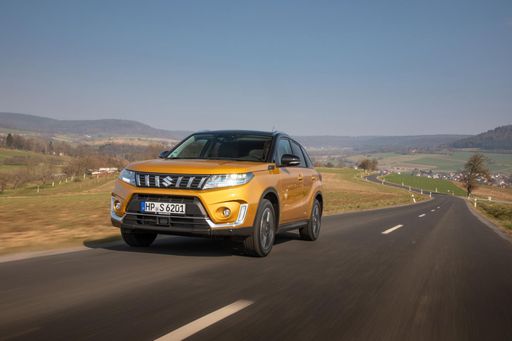
The Vitara is a city-smart SUV with a cheeky streak of off-road promise, perfect for drivers who want practicality without pretense. It’s honest, easy to live with and surprisingly likeable, a sensible companion for everyday adventures and weekend escapes.

details
Alfa Romeo Junior
Suzuki Vitara

Costs and Consumption

Price
26100 - 41600 £
Price
23600 - 36800 £
Consumption L/100km
4.8 - 5.4 L
Consumption L/100km
5 - 5.9 L
Consumption kWh/100km
15.1 - 17.5 kWh
Consumption kWh/100km
14.9 - 16.6 kWh
Electric Range
344 - 410 km
Electric Range
344 - 426 km
Battery Capacity
0.4 - 51 kWh
Battery Capacity
-
co2
0 - 119 g/km
co2
0 - 138 g/km
Fuel tank capacity
44 - 45 L
Fuel tank capacity
47 L

Dimensions and Body

Body Type
SUV
Body Type
SUV
Seats
5
Seats
5
Doors
5
Doors
5
Curb weight
1380 - 1689 kg
Curb weight
1255 - 1935 kg
Trunk capacity
340 - 415 L
Trunk capacity
289 - 375 L
Length
4173 mm
Length
4185 mm
Width
1781 mm
Width
1775 - 1800 mm
Height
1505 - 1538 mm
Height
1595 mm
Max trunk capacity
1205 - 1280 L
Max trunk capacity
1046 - 1120 L
Payload
390 - 420 kg
Payload
375 - 425 kg

Engine and Performance

Engine Type
Electric, Petrol MHEV
Engine Type
Petrol MHEV, Full Hybrid, Electric
Transmission
Automatic
Transmission
Manuel, Automatic
Transmission Detail
Reduction Gearbox, Dual-Clutch Automatic
Transmission Detail
Manual Gearbox, Automated Manual, Automatic Gearbox
Drive Type
Front-Wheel Drive, All-Wheel Drive
Drive Type
Front-Wheel Drive, All-Wheel Drive
Power HP
136 - 280 HP
Power HP
110 - 184 HP
Acceleration 0-100km/h
5.9 - 9.1 s
Acceleration 0-100km/h
7.4 - 12.7 s
Max Speed
150 - 206 km/h
Max Speed
180 - 190 km/h
Torque
230 - 345 Nm
Torque
193 - 307 Nm
Number of Cylinders
3
Number of Cylinders
4
Power kW
107 - 207 kW
Power kW
81 - 135 kW
Engine capacity
1199 cm3
Engine capacity
1373 - 1462 cm3

General

Model Year
2024 - 2025
Model Year
2024 - 2026
CO2 Efficiency Class
A, C, D
CO2 Efficiency Class
D, C, E, A
Brand
Alfa Romeo
Brand
Suzuki
What drive types are available for the Alfa Romeo Junior?

Available configurations include Front-Wheel Drive or All-Wheel Drive.

The prices shown are estimates based on German list prices, adjusted for local VAT. Local registration taxes (e.g. NoVA, BPM or CO2 malus) are not included. This information is not legally binding.