VS

Audi Q3 vs Peugeot 2008 comparison

Compare performance (272 HP vs 156 HP), boot space and price (38,200 £ vs 24,800 £ ) at a glance. Find out which car is the better choice for you – Audi Q3 or Peugeot 2008?

Audi Q3 vs Peugeot 2008: Key differences

Audi Q3

5 (1 Reviews)
rate
  • clearly more power
  • substantially more efficient
  • considerably quicker 0–100 km/h
  • slightly more trunk space

Peugeot 2008

5 (1 Reviews)
rate
  • substantially cheaper
  • considerably more electric range
  • visibly lighter

All details on performance, efficiency, range and trunk space can be found in the technical comparison below – including user reviews for both models.

By Achim Sedelmaier

Q3

Audi Q3 vs Peugeot 2008: A Battle of Compact SUVs

In the competitive world of compact SUVs, two models stand out for their engineering prowess and consumer popularity: the Audi Q3 and the Peugeot 2008. Both 2024 models have been designed with modern drivers in mind, offering a range of features to enhance their on-road experience. Let's dive into the technical aspects and innovations that distinguish these two contenders.

2008

Power and Performance

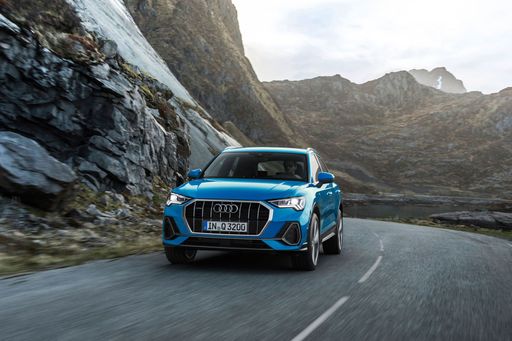
The Audi Q3 offers a diverse range of powertrains, with engines available in both petrol and diesel variants. Horsepower ranges from 150 to an impressive 245 HP, providing a flexible driving experience whether you're looking for efficiency or performance. Notably, the model comes with a choice between a manual gearbox or a dual-clutch automatic transmission. Drivers can choose between front-wheel drive and all-wheel drive, making it suitable for various terrains and driving conditions. The Q3 accelerates from 0 to 100 km/h in as little as 5.8 seconds, with a top speed of 237 km/h, appealing to those who value speed.

The Peugeot 2008, on the other hand, is offered in petrol mild hybrid electric vehicle (MHEV), traditional petrol, and fully electric options. The horsepower ranges from 101 to 156 HP. The vehicle is solely front-wheel drive, which simplifies the drivetrain but might limit off-road capability. Acceleration from 0 to 100 km/h can be achieved in as little as 8.3 seconds in its sportier configuration, with a top speed of 206 km/h. For those inclined towards eco-friendliness, the electric variant offers a range of up to 406 km on a full charge.


Q3

Fuel Efficiency and Sustainability

Fuel economy is a growing concern among consumers, and here, both models present interesting options. The Audi Q3 has a fuel consumption range between 5.5 L/100 km and 8.5 L/100 km depending on the engine choice, while CO2 emissions range from 143 to 193 g/km.

Peugeot’s 2008 is more environmentally conscious, particularly its electric variant with zero emissions. The petrol versions of the 2008 offer fuel consumption figures as low as 5 L/100 km, and CO2 emissions are significantly reduced at 113 g/km, making it a greener option in urban settings.

2008

Design and Dimensions

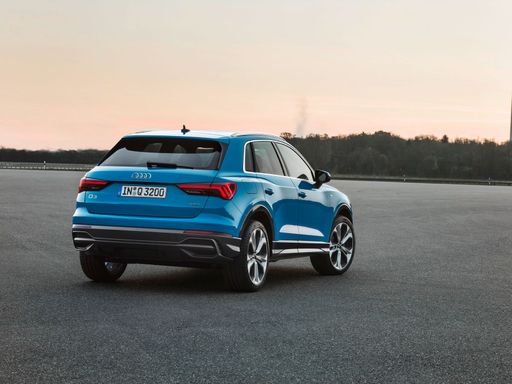
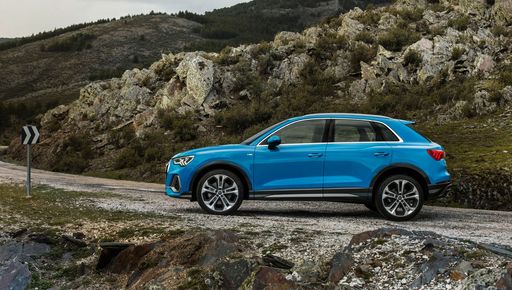
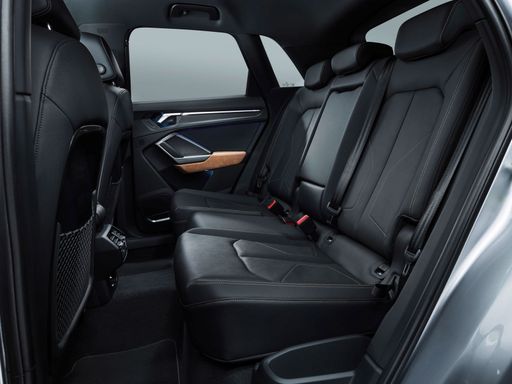
Both vehicles are notable for their desirable SUV aesthetics. The Audi Q3 is slightly larger, measuring between 4484 and 4500 mm in length, and offers a trunk capacity of 530 liters, making it a practical choice for families. The vehicle's sturdy build with curb weights ranging from 1525 to 1735 kg gives it a secure and premium feel on the road.

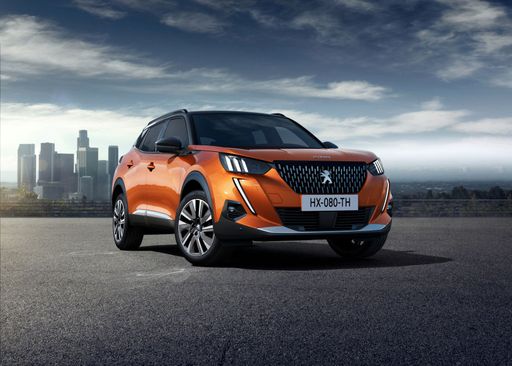
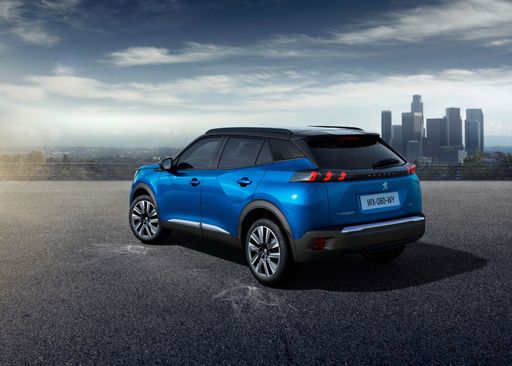
In contrast, the Peugeot 2008 is more compact with a length of 4304 mm. Despite a smaller footprint, it offers commendable trunk space of 434 liters. It's lighter too, with curb weights varying between 1263 and 1623 kg, which aids in fuel efficiency and handling agility.

Q3

Innovations and Technologies

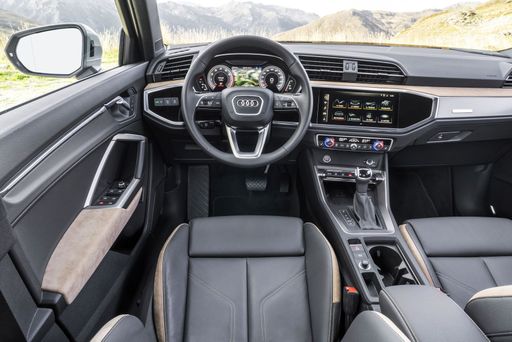
Both the Q3 and the 2008 boast a suite of innovative technologies aimed at enhancing user experience and safety. The Audi Q3's cockpit is a digital marvel, utilizing the latest in infotainment technology with a customizable virtual cockpit display.

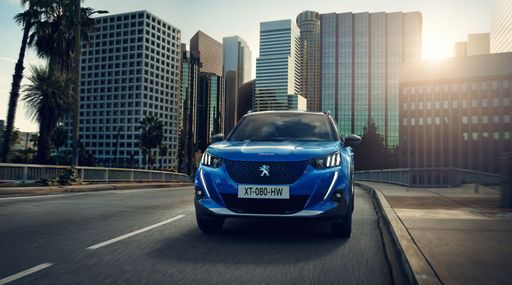
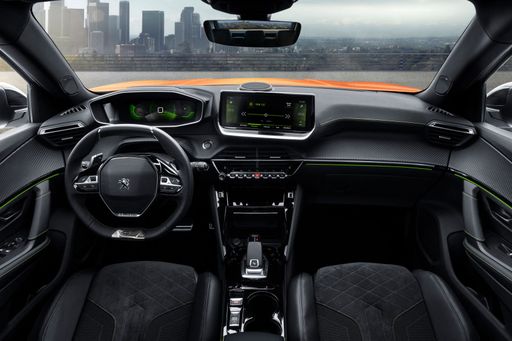
Meanwhile, the Peugeot 2008 features an advanced 3D i-Cockpit, enhancing driver engagement with its futuristic design and user-friendly interface. The integration of semi-autonomous driving capabilities in its electric variant sets the 2008 apart as a forward-thinking contender in its class.

2008

Conclusion

When pitting the Audi Q3 against the Peugeot 2008, both compact SUVs exhibit distinct strengths tailored to different consumer preferences. The Audi Q3 appeals to those seeking a versatile, performance-oriented vehicle with luxurious elements. The Peugeot 2008, with its innovative eco-friendly options and cutting-edge technology, is ideal for environmentally conscious drivers and those with an eye on the future of automotive design.

Here’s where it gets real: The technical differences in detail

Q3

Costs and Efficiency:

Price and efficiency are often the first things buyers look at. Here it becomes clear which model has the long-term edge – whether at the pump, the plug, or in purchase price.

Peugeot 2008 is substantially cheaper – starting at 24,800 £ , while the Audi Q3 costs 38,200 £ . That’s a price difference of around 13,466 £.

Fuel consumption also shows a difference: the Audi Q3 uses 1.7 L/100km and is substantially more efficient than the Peugeot 2008 with 4.9 L/100km. The difference is about 3.2 L/100km.

As for electric range, the Peugeot 2008 offers considerably more range – reaching up to 406 km, about 287 km more than the Audi Q3.

2008

Engine and Performance:

Power, torque and acceleration are the classic benchmarks for car enthusiasts – and here, some clear differences start to show.

When it comes to engine power, the Audi Q3 offers clearly more power – delivering 272 HP compared to 156 HP. That’s roughly 116 HP more horsepower.

When accelerating from 0 to 100 km/h, the Audi Q3 is considerably quicker – completing the sprint in 5.7 s, while the Peugeot 2008 takes 8.3 s. That’s about 2.6 s quicker.

There’s also a difference in torque: the Audi Q3 delivers visibly more torque with 400 Nm compared to 270 Nm. That’s about 130 Nm more.

Q3

Space and Everyday Use:

Beyond pure performance, interior space and usability matter most in daily life. This is where you see which car is more practical and versatile.

Both vehicles offer seating for 5 people.

In terms of curb weight, Peugeot 2008 is visibly lighter – 1,263 kg compared to 1,635 kg. The difference is around 372 kg.

Looking at boot space, the Audi Q3 offers slightly more boot space – 488 L compared to 434 L. That’s a difference of about 54 L.

When it comes to payload, the Audi Q3 carries slightly more – 535 kg compared to 447 kg. That’s a difference of about 88 kg.

Who wins the race in the data check?

The Audi Q3 is far ahead overall in the objective data comparison.
This result only shows which model scores more points on paper – not which of the two cars feels right for you.

from £38,200
Q3

Audi Q3

  • Engine Type : Petrol MHEV, Petrol, Plugin Hybrid, Diesel
  • Transmission : Automatic
  • Drive Type : Front-Wheel Drive, All-Wheel Drive
  • Power HP : 150 - 272 HP
  • Consumption L/100km : 1.7 - 8.6 L/100km
  • Electric Range : 118 - 119 km
Audi Q3
Peugeot 2008

Costs and Consumption

View detailed analysis

Engine and Performance

View detailed analysis

Dimensions and Body

View detailed analysis

Audi Q3

The Audi Q3 feels like a grown-up compact SUV with premium polish and city-friendly agility, the sort of car that makes weekend escapes and daily commutes equally satisfying. Inside, you get quality materials and smart packaging that keep things practical without skimping on style, so it’s an easy pick for buyers who want luxury without the drama.

details

Peugeot 2008

The Peugeot 2008 is a stylish, city-friendly crossover that packs big character into a compact package, turning mundane errands into a mildly entertaining drive. Its clever interior layout, polished looks and confident ride make it a smart choice for buyers who want practical daily sense with a touch of flair.

details
Audi Q3
Peugeot 2008

Costs and Consumption

Price
38,200 - 52,900 £
Price
24,800 - 40,400 £
Consumption L/100km
1.7 - 8.6 L/100km
Consumption L/100km
4.9 - 5.7 L/100km
Consumption kWh/100km
-
Consumption kWh/100km
15.3 - 15.5 kWh/100km
Electric Range
118 - 119 km
Electric Range
405 - 406 km
Battery Capacity
-
Battery Capacity
51 kWh
co2
39 - 195 g/km
co2
0 - 129 g/km
Fuel tank capacity
-
Fuel tank capacity
44 L

Dimensions and Body

Body Type
SUV
Body Type
SUV
Seats
5
Seats
5
Doors
-
Doors
5
Curb weight
1,635 - 1,900 kg
Curb weight
1,263 - 1,623 kg
Trunk capacity
375 - 488 L
Trunk capacity
434 L
Length
-
Length
4,304 mm
Width
1,859 mm
Width
1,770 mm
Height
-
Height
1,523 mm
Max trunk capacity
-
Max trunk capacity
1,467 L
Payload
505 - 535 kg
Payload
407 - 447 kg

Engine and Performance

Engine Type
Petrol MHEV, Petrol, Plugin Hybrid, Diesel
Engine Type
Electric, Petrol MHEV, Petrol
Transmission
Automatic
Transmission
Automatic, Manuel
Transmission Detail
Dual-Clutch Automatic
Transmission Detail
Reduction Gearbox, Dual-Clutch Automatic, Manual Gearbox
Drive Type
Front-Wheel Drive, All-Wheel Drive
Drive Type
Front-Wheel Drive
Power HP
150 - 272 HP
Power HP
101 - 156 HP
Acceleration 0-100km/h
5.7 - 9.2 s
Acceleration 0-100km/h
8.3 - 10.9 s
Max Speed
-
Max Speed
150 - 206 km/h
Torque
250 - 400 Nm
Torque
205 - 270 Nm
Number of Cylinders
4
Number of Cylinders
3
Power kW
110 - 200 kW
Power kW
74 - 115 kW
Engine capacity
1,498 - 1,984 cm3
Engine capacity
1,199 cm3

General

Model Year
2,025
Model Year
2,023 - 2,026
CO2 Efficiency Class
E, G, B
CO2 Efficiency Class
A, C, D
Brand
Audi
Brand
Peugeot
DriveDuel uses data analysis and artificial intelligence to evaluate vehicle data and create content. Content is regularly reviewed and improved. The displayed prices are estimates based on German list prices, adjusted to the respective country’s VAT. Country-specific registration taxes are not included. This information is not legally binding.