VS

Audi Q6 e-tron vs Audi Q7 comparison

Compare performance (490 HP vs 507 HP), boot space and price (54,400 £ vs 70,600 £ ) at a glance. Find out which car is the better choice for you – Audi Q6 e-tron or Audi Q7?

Audi Q6 e-tron vs Audi Q7: Key differences

Audi Q6 e-tron

4.9 (3 Reviews)
rate
  • markedly cheaper
  • considerably more electric range

Audi Q7

4 (1 Reviews)
rate
  • barely more power
  • only slightly quicker 0–100 km/h
  • barely lighter
  • significantly more trunk space

All details on performance, efficiency, range and trunk space can be found in the technical comparison below – including user reviews for both models.

Q6 e-tron

Electrifying the Arena: Audi Q6 e-tron vs. Audi Q7

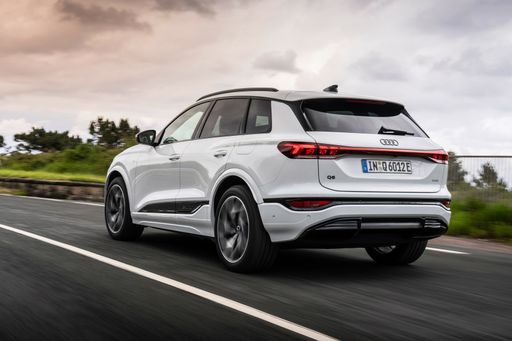
In a world where technology is transforming automobiles at an unprecedented pace, two contenders from Audi stand at the forefront: the electric Audi Q6 e-tron and the traditional powerhouse Audi Q7. As SUVs continue to dominate modern roadways, these two models offer a mix of performance, style, and innovation, each appealing to a different kind of driver. Let’s delve into the details of these automotive marvels.
Q7

Powertrain and Performance

The Audi Q6 e-tron shines with its variety of electric powertrains, ranging from 292 to a potent 516 horsepower (HP). Its all-wheel-drive options and acceleration capabilities, as quick as 4.3 seconds from 0 to 100 km/h, make it a green machine without compromising on performance.

Conversely, the Audi Q7, available with multiple engine types including Diesel MHEV, Plugin Hybrid, and Petrol, offers power outputs from 231 to a robust 507 HP. Acceleration in the Q7 can reach as fast as 4.1 seconds for the top-spec version, thanks to its various engine choices, including V6 and V8 configurations.

Q6 e-tron

Range and Efficiency

The electric drive of the Q6 e-tron promises significant electric range, peaking at 656 kilometers on a single charge. Its battery capacity between 75.8 to 94.9 kWh ensures that drivers can cover long distances with ease, with consumption rates between 15.6 to 18.9 kWh/100km.

The Q7, with its conventional engines, presents a different efficiency profile. In its most eco-friendly guise as a Plugin Hybrid, it offers an electric range of up to 84 kilometers and a remarkably low fuel consumption of 1.2 L/100km. However, traditional petrol and diesel options consume significantly more fuel, up to 12 L/100km, emphasizing power over efficiency.

Q7

Design and Dimensions

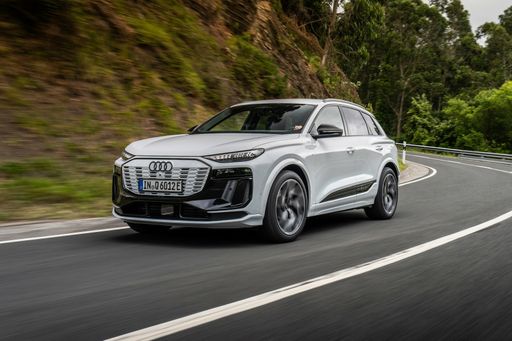
The Q6 e-tron’s sleek and aerodynamic body is distinctly modern, stretching to 4771 mm in length, and standing at a height of 1685 mm. It offers a modest trunk capacity of around 499 to 526 liters, efficiently designed considering its electric architecture.

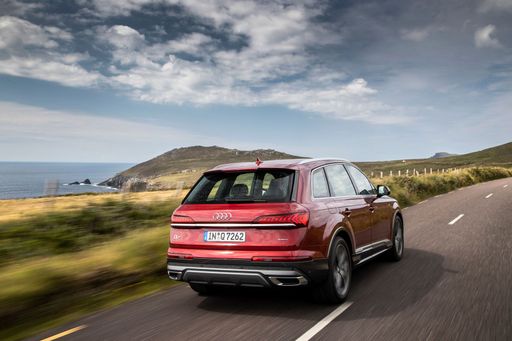
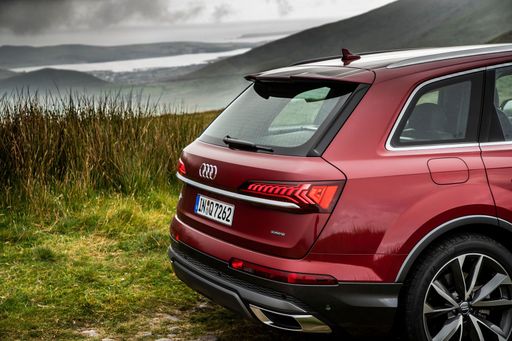
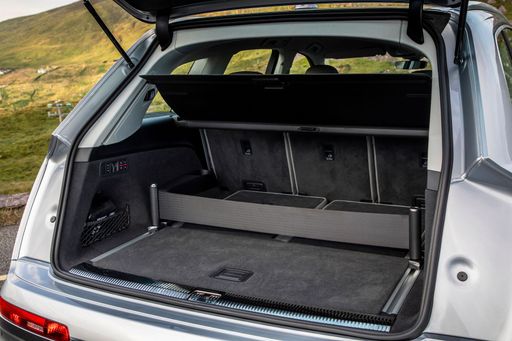
The Q7’s more traditional SUV design dimensions exceed those of its electric sibling, measuring 5072 mm in length and up to 1735 mm in height. It benefits from a significantly larger trunk space, ranging from 563 to an exceptional 887 liters, pivotal for families and adventurers alike.

Q6 e-tron

Seating and Comfort

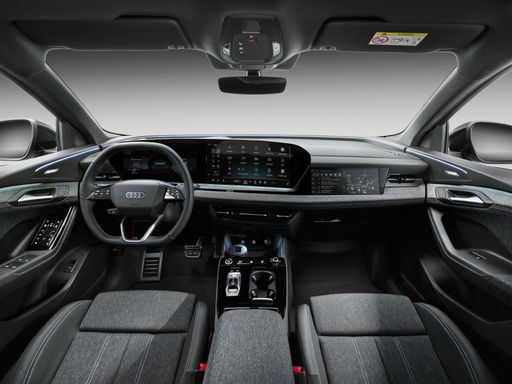
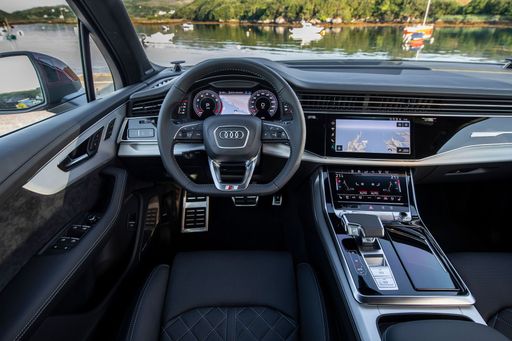
The inside of the Q6 e-tron is tailored for up to five occupants, balancing luxury and technology within its confines, ensuring that even those long journeys remain comfortable and connected.

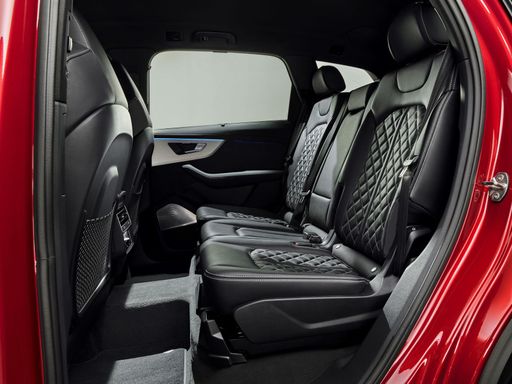
The Q7, meanwhile, offers versatility with seating options for five to seven passengers, making it an ideal choice for larger families who prioritize space and comfort over everything else.

Q7

Technology and Innovation

Both the Q6 e-tron and the Q7 are equipped with Audi’s latest technological advancements. The Q6 e-tron's focus is on sleek, cutting-edge EV technologies that blend performance with sustainability. It’s a marvel for those attracted by the allure of silent, zero-emission cruising.

The Q7 still embraces the advantages of its classic lineage with sophisticated MHEV systems and a plugin hybrid option, blending traditional power with modern eco-friendly advantages.

Conclusion: Two Roads Diverge

The choice between the Audi Q6 e-tron and the Audi Q7 ultimately depends on individual priorities. For the environmentally conscious driver who favors the future and fancies the innovation of electric propulsion, the Q6 e-tron’s exceptional range and eco-friendliness create a compelling case. On the other hand, those who seek power coupled with traditional driving experiences, mixed adjustments with efficient hybrid technology, will find the Audi Q7 an irresistible candidate. Whichever route you choose, Audi ensures both journeys are luxurious.

Here’s where it gets real: The technical differences in detail

Q6 e-tron

Costs and Efficiency:

Looking at overall running costs, both models reveal some interesting differences in everyday economy.

Audi Q6 e-tron is markedly cheaper – starting at 54,400 £ , while the Audi Q7 costs 70,600 £ . That’s a price difference of around 16,200 £.

As for electric range, the Audi Q6 e-tron offers considerably more range – reaching up to 656 km, about 574 km more than the Audi Q7.

Q7

Engine and Performance:

Power, torque and acceleration are the classic benchmarks for car enthusiasts – and here, some clear differences start to show.

When it comes to engine power, the Audi Q7 offers barely more power – delivering 507 HP compared to 490 HP. That’s roughly 17 HP more horsepower.

When accelerating from 0 to 100 km/h, the Audi Q7 is only slightly quicker – completing the sprint in 4.1 s, while the Audi Q6 e-tron takes 4.4 s. That’s about 0.3 s quicker.

There’s also a difference in torque: the Audi Q6 e-tron delivers marginally more torque with 855 Nm compared to 770 Nm. That’s about 85 Nm more.

Q6 e-tron

Space and Everyday Use:

Beyond pure performance, interior space and usability matter most in daily life. This is where you see which car is more practical and versatile.

Seats: Audi Q7 offers more seats – 7 vs 5.

In terms of curb weight, Audi Q7 is barely lighter – 2,055 kg compared to 2,200 kg. The difference is around 145 kg.

Looking at boot space, the Audi Q7 offers significantly more boot space – 887 L compared to 526 L. That’s a difference of about 361 L.

When it comes to payload, the Audi Q7 carries visibly more – 885 kg compared to 540 kg. That’s a difference of about 345 kg.

Who wins the race in the data check?

The Audi Q6 e-tron stands well ahead of its rival in the objective data comparison.
This result only shows which model scores more points on paper – not which of the two cars feels right for you.

from £54,400
Q6 e-tron

Audi Q6 e-tron

  • Engine Type : Electric
  • Transmission : Automatic
  • Drive Type : Rear-Wheel Drive, All-Wheel Drive
  • Power HP : 252 - 490 HP
  • Consumption kWh/100km : 15.6 - 18.4 kWh/100km
  • Electric Range : 529 - 656 km
Audi Q6 e-tron
Audi Q7

Costs and Consumption

View detailed analysis

Engine and Performance

View detailed analysis

Dimensions and Body

View detailed analysis

Audi Q6 e-tron

The Audi Q6 e-tron balances sleek, coupe-like styling with a roomy, upscale interior that feels modern without being showy. It delivers refined electric performance and smart tech that make daily driving effortless — the sort of EV that might make petrolheads grudgingly admit they fancy the future.

details

Audi Q7

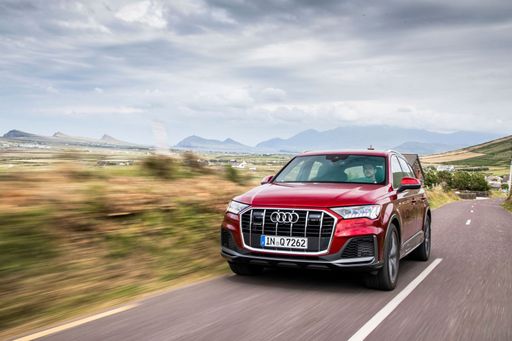
The Audi Q7 cuts an imposing figure on the road, balancing restrained luxury with a spacious, tech-rich cabin that makes long journeys feel effortless. It rides with confident composure and polished manners, so if you want a premium family SUV that feels grown-up and worth the badge, the Q7 is a persuasive choice — even the in-laws will be impressed.

details
Audi Q6 e-tron
Audi Q7

Costs and Consumption

Price
54,400 - 82,500 £
Price
70,600 - 100,600 £
Consumption L/100km
-
Consumption L/100km
3.8 - 11.9 L/100km
Consumption kWh/100km
15.6 - 18.4 kWh/100km
Consumption kWh/100km
-
Electric Range
529 - 656 km
Electric Range
81 - 82 km
Battery Capacity
75.8 - 94.9 kWh
Battery Capacity
-
co2
0 g/km
co2
86 - 271 g/km
Fuel tank capacity
-
Fuel tank capacity
-

Dimensions and Body

Body Type
SUV
Body Type
SUV
Seats
5
Seats
5 - 7
Doors
5
Doors
-
Curb weight
2,200 - 2,425 kg
Curb weight
2,055 - 2,460 kg
Trunk capacity
499 - 526 L
Trunk capacity
563 - 887 L
Length
4,771 mm
Length
-
Width
1,939 - 1,965 mm
Width
1,970 mm
Height
1,665 - 1,685 mm
Height
-
Max trunk capacity
1,361 - 1,529 L
Max trunk capacity
-
Payload
540 kg
Payload
640 - 885 kg

Engine and Performance

Engine Type
Electric
Engine Type
Petrol MHEV, Diesel MHEV, Petrol, Plugin Hybrid
Transmission
Automatic
Transmission
Automatic
Transmission Detail
Reduction Gearbox
Transmission Detail
Automatic Gearbox
Drive Type
Rear-Wheel Drive, All-Wheel Drive
Drive Type
All-Wheel Drive
Power HP
252 - 490 HP
Power HP
231 - 507 HP
Acceleration 0-100km/h
4.4 - 7.6 s
Acceleration 0-100km/h
4.1 - 7.1 s
Max Speed
210 - 230 km/h
Max Speed
-
Torque
450 - 855 Nm
Torque
500 - 770 Nm
Number of Cylinders
-
Number of Cylinders
6 - 8
Power kW
185 - 360 kW
Power kW
170 - 373 kW
Engine capacity
-
Engine capacity
2,967 - 3,996 cm3

General

Model Year
2,024 - 2,025
Model Year
2,025
CO2 Efficiency Class
A
CO2 Efficiency Class
G, B
Brand
Audi
Brand
Audi
DriveDuel uses data analysis and artificial intelligence to evaluate vehicle data and create content. Content is regularly reviewed and improved. The displayed prices are estimates based on German list prices, adjusted to the respective country’s VAT. Country-specific registration taxes are not included. This information is not legally binding.