VS

Audi Q6 e-tron vs BYD Seal U comparison

Compare performance (490 HP vs 324 HP), boot space and price (54,400 £ vs 34,300 £ ) at a glance. Find out which car is the better choice for you – Audi Q6 e-tron or BYD Seal U?

Audi Q6 e-tron vs BYD Seal U: Key differences

Audi Q6 e-tron

4.9 (3 Reviews)
rate
  • markedly more power
  • clearly more electric range
  • noticeably quicker 0–100 km/h

BYD Seal U

4.1 (7 Reviews)
rate
  • substantially cheaper
  • clearly more efficient
  • a bit lighter
  • only slightly more trunk space

All details on performance, efficiency, range and trunk space can be found in the technical comparison below – including user reviews for both models.

Q6 e-tron

A Clash of Titans: Audi Q6 e-tron vs BYD Seal U

The world of electric and hybrid SUVs is expanding rapidly, with more manufacturers entering the fray. Today, we compare two highly anticipated models: the Audi Q6 e-tron and the BYD Seal U. Both vehicles offer cutting-edge technology and innovation, but they cater to slightly different markets. Dive in as we explore their technical aspects and key innovations.
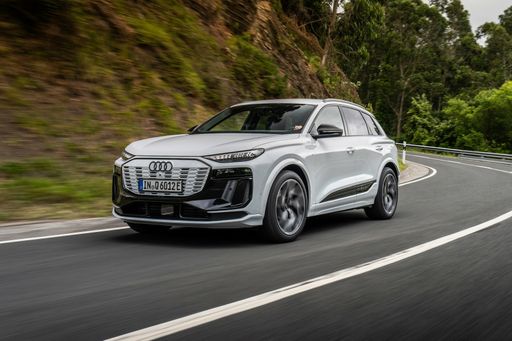
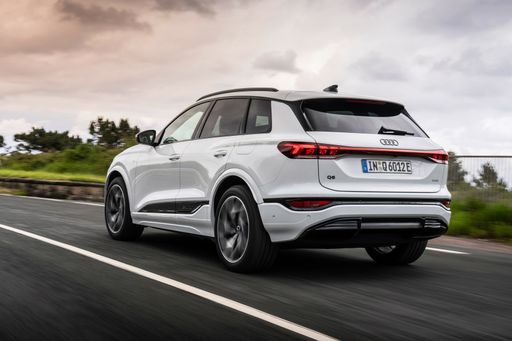
Seal U

Performance and Power

The Audi Q6 e-tron offers a variety of power options, ranging from 292 HP to a commanding 516 HP, making it clear that Audi isn’t compromising on performance. The torque figures are equally impressive, with values ranging from 450 Nm to a whopping 855 Nm.

On the other hand, the BYD Seal U provides power outputs of 218 HP and 324 HP, with torque ratings climbing up to 550 Nm, showing strong performance capabilities, especially for a hybrid model. The Seal U combines both electric and plugin hybrid options, offering flexibility for different driving needs.

Q6 e-tron

Electric Range and Efficiency

The Audi Q6 e-tron excels in terms of electric range, offering potential distances up to 656 kilometers on a full charge, supported by battery capacities of 75.8 kWh and 94.9 kWh. Its efficiency can be seen in its low consumption rates, varying between 15.6 kWh and 18.9 kWh per 100 km.

Meanwhile, the BYD Seal U, with its hybrid and electric options, provides a more modest electric range, with a maximum of 500 kilometers. Its consumption is higher, between 19.9 kWh and 20.5 kWh per 100 km, reflecting its hybrid powertrain mechanics.

Seal U

Speed and Acceleration

For speed enthusiasts, the Audi Q6 e-tron offers a competitive edge with top speeds reaching up to 230 km/h and 0-100 km/h acceleration times as quick as 4.3 seconds.

In contrast, the BYD Seal U offers a maximum speed of up to 180 km/h, with acceleration times from 0-100 km/h around 5.9 seconds for its quicker variant, balancing performance with efficiency.

Q6 e-tron

Space and Comfort

Both vehicles are designed as five-seaters, offering practicality and comfort. The Audi Q6 e-tron features trunk capacities ranging from 499 L to 526 L, which is quite generous for carrying luggage or equipment on trips.

By comparison, the BYD Seal U provides trunk space between 425 L and 552 L, ensuring ample room for everyday needs and adventures alike.

Seal U

Design and Dimensions

Audi’s Q6 e-tron measures 4771 mm in length, with a width between 1939 mm and 1965 mm, and a height spanning from 1665 mm to 1685 mm. These dimensions underscore its solid and bold SUV presence.

The BYD Seal U is similar in size, with lengths from 4775 mm to 4785 mm and a width of 1890 mm, paired with a height around 1670 mm, emphasizing a robust and sleek design ideal for urban and wilderness exploration.

Conclusion

Both the Audi Q6 e-tron and the BYD Seal U present compelling options in the SUV market. While the Q6 e-tron is ideal for those seeking cutting-edge electric technology with uncompromising power and range, the Seal U offers versatility with its hybrid capabilities, catering to drivers who require both electric efficiency and combustion convenience.

Ultimately, the choice between these two models will come down to personal preference and intended use, but both promise to deliver thrilling driving experiences in their own unique ways.

Here’s where it gets real: The technical differences in detail

Q6 e-tron

Costs and Efficiency:

Price and efficiency are key factors when choosing a car – and this is often where the real differences emerge.

BYD Seal U is substantially cheaper – starting at 34,300 £ , while the Audi Q6 e-tron costs 54,400 £ . That’s a price difference of around 20,151 £.

In terms of energy consumption, the BYD Seal U is clearly more efficient: consuming 12.1 kWh/100km compared to 15.6 kWh/100km for the Audi Q6 e-tron. That’s a difference of about 3.5 kWh/100km.

As for electric range, the Audi Q6 e-tron offers clearly more range – reaching up to 656 km, about 156 km more than the BYD Seal U.

Seal U

Engine and Performance:

Power, torque and acceleration say a lot about how a car feels on the road. This is where you see which model delivers more driving dynamics.

When it comes to engine power, the Audi Q6 e-tron offers markedly more power – delivering 490 HP compared to 324 HP. That’s roughly 166 HP more horsepower.

When accelerating from 0 to 100 km/h, the Audi Q6 e-tron is noticeably quicker – completing the sprint in 4.4 s, while the BYD Seal U takes 5.9 s. That’s about 1.5 s quicker.

Looking at top speed, the Audi Q6 e-tron is clearly faster – reaching 230 km/h, while the BYD Seal U tops out at 175 km/h. The difference is around 55 km/h.

There’s also a difference in torque: the Audi Q6 e-tron delivers visibly more torque with 855 Nm compared to 550 Nm. That’s about 305 Nm more.

Q6 e-tron

Space and Everyday Use:

Whether family car or daily driver – which one offers more room, flexibility and comfort?

Both vehicles offer seating for 5 people.

In terms of curb weight, BYD Seal U is a bit lighter – 1,940 kg compared to 2,200 kg. The difference is around 260 kg.

Looking at boot space, the BYD Seal U offers only slightly more boot space – 552 L compared to 526 L. That’s a difference of about 26 L.

For maximum load capacity, the Audi Q6 e-tron offers barely more capacity – up to 1,529 L, about 89 L more than the BYD Seal U.

When it comes to payload, the Audi Q6 e-tron carries visibly more – 540 kg compared to 410 kg. That’s a difference of about 130 kg.

Who wins the race in the data check?

The Audi Q6 e-tron is far ahead overall in the objective data comparison.
This result only shows which model scores more points on paper – not which of the two cars feels right for you.

from £54,400
Q6 e-tron

Audi Q6 e-tron

  • Engine Type : Electric
  • Transmission : Automatic
  • Drive Type : Rear-Wheel Drive, All-Wheel Drive
  • Power HP : 252 - 490 HP
  • Consumption kWh/100km : 15.6 - 18.4 kWh/100km
  • Electric Range : 529 - 656 km
Audi Q6 e-tron
BYD Seal U

Costs and Consumption

View detailed analysis

Engine and Performance

View detailed analysis

Dimensions and Body

View detailed analysis

Audi Q6 e-tron

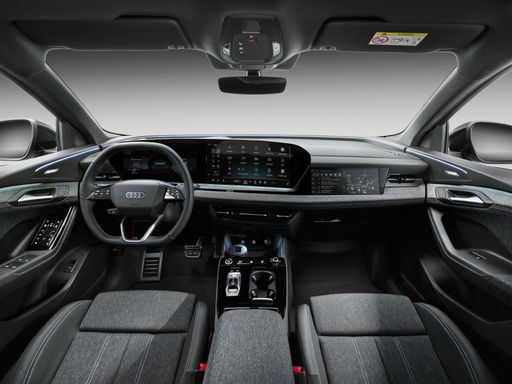
The Audi Q6 e-tron balances sleek, coupe-like styling with a roomy, upscale interior that feels modern without being showy. It delivers refined electric performance and smart tech that make daily driving effortless — the sort of EV that might make petrolheads grudgingly admit they fancy the future.

details

BYD Seal U

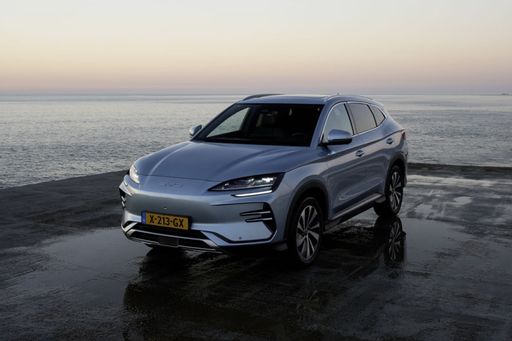
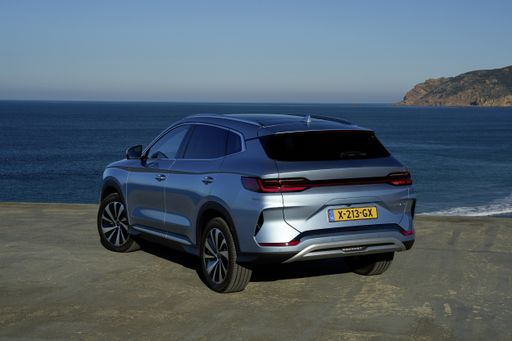
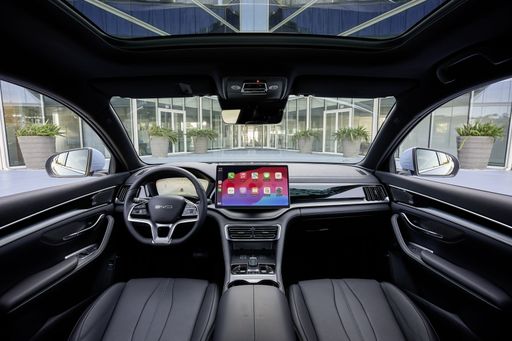
The BYD Seal U pairs a sleek fastback silhouette with a surprisingly roomy, tech-rich cabin, giving electric chic without the showroom pretension. It's a smart pick for buyers after confident handling, sensible practicality and standout value — all wrapped up with a cheeky grin when you put your foot down.

details
Audi Q6 e-tron
BYD Seal U

Costs and Consumption

Price
54,400 - 82,500 £
Price
34,300 - 39,800 £
Consumption L/100km
-
Consumption L/100km
-
Consumption kWh/100km
15.6 - 18.4 kWh/100km
Consumption kWh/100km
12.1 - 20.5 kWh/100km
Electric Range
529 - 656 km
Electric Range
70 - 500 km
Battery Capacity
75.8 - 94.9 kWh
Battery Capacity
-
co2
0 g/km
co2
0 - 71 g/km
Fuel tank capacity
-
Fuel tank capacity
-

Dimensions and Body

Body Type
SUV
Body Type
SUV
Seats
5
Seats
5
Doors
5
Doors
5
Curb weight
2,200 - 2,425 kg
Curb weight
1,940 - 2,147 kg
Trunk capacity
499 - 526 L
Trunk capacity
425 - 552 L
Length
4,771 mm
Length
4,785 mm
Width
1,939 - 1,965 mm
Width
1,890 mm
Height
1,665 - 1,685 mm
Height
1,668 mm
Max trunk capacity
1,361 - 1,529 L
Max trunk capacity
1,440 L
Payload
540 kg
Payload
410 kg

Engine and Performance

Engine Type
Electric
Engine Type
Electric, Plugin Hybrid
Transmission
Automatic
Transmission
Automatic
Transmission Detail
Reduction Gearbox
Transmission Detail
Reduction Gearbox, Automatic Gearbox
Drive Type
Rear-Wheel Drive, All-Wheel Drive
Drive Type
Front-Wheel Drive, All-Wheel Drive
Power HP
252 - 490 HP
Power HP
218 - 324 HP
Acceleration 0-100km/h
4.4 - 7.6 s
Acceleration 0-100km/h
5.9 - 9.6 s
Max Speed
210 - 230 km/h
Max Speed
175 km/h
Torque
450 - 855 Nm
Torque
300 - 550 Nm
Number of Cylinders
-
Number of Cylinders
4
Power kW
185 - 360 kW
Power kW
160 - 238 kW
Engine capacity
-
Engine capacity
1,497 - 1,498 cm3

General

Model Year
2,024 - 2,025
Model Year
2,024 - 2,026
CO2 Efficiency Class
A
CO2 Efficiency Class
A, B
Brand
Audi
Brand
BYD
DriveDuel uses data analysis and artificial intelligence to evaluate vehicle data and create content. Content is regularly reviewed and improved. The displayed prices are estimates based on German list prices, adjusted to the respective country’s VAT. Country-specific registration taxes are not included. This information is not legally binding.