@ Audi AG
@ Volvo Cars
VS

Audi Q6 e-tron vs Volvo XC90 – Which model is better for everyday use?

Two cars, one duel: Audi Q6 e-tron meets Volvo XC90.
Which one wins in performance, efficiency and value for money? Find out now!

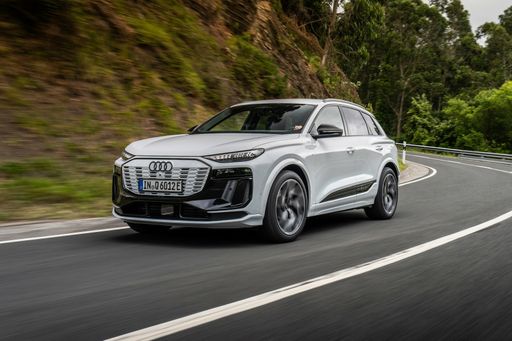
Q6 e-tron @ Audi AG

Audi Q6 e-tron vs. Volvo XC90: A Clash of Titans in the Luxury SUV Market

The luxury SUV market is an arena of constant innovation, where automakers strive to impress with cutting-edge technology, performance, and comfort. Two formidable contenders in this space are the Audi Q6 e-tron and the Volvo XC90. While both vehicles are engineered to meet the highest standards, they offer unique strengths and attributes. Let’s delve deeper into their technical features and innovations to identify which one aligns with your driving aspirations.
XC90 @ Volvo Cars

Powertrain & Performance

Starting with the Audi Q6 e-tron, it's a purely electric SUV offering a range of power outputs from 292 HP up to an impressive 516 HP. Audi’s dedication to electric performance is evident in its drive type options, allowing for Rear-Wheel Drive and All-Wheel Drive configurations. The Q6 e-tron can accelerate from 0-100 km/h in as little as 4.3 seconds, catering to those who crave swift and silent power delivery.

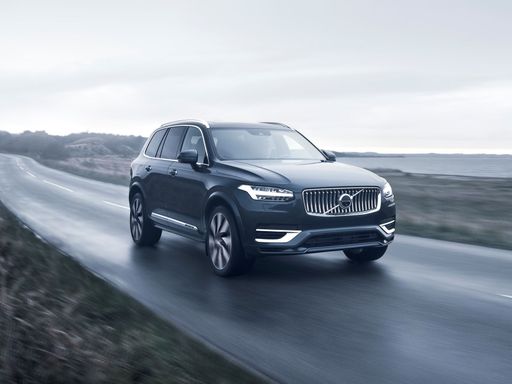
In contrast, the Volvo XC90 provides a choice between a petrol mild-hybrid engine and a plug-in hybrid system. With a maximum output of 455 HP and a unique blend of petrol and electric power, Volvo offers a dynamic, efficient experience. Despite its focus on versatility, the XC90 sacrifices some acceleration prowess against the Audi, reaching 0-100 km/h in 5.4 seconds at best. However, it compensates with a steadfast focus on efficiency, particularly in its plug-in hybrid variant with a consumption rate as low as 1.2 L/100 km.

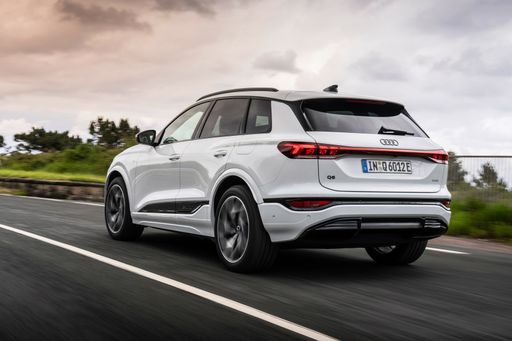
Q6 e-tron @ Audi AG

Electric Range & Efficiency

The Audi Q6 e-tron impresses with its substantial electric range, boasting capacities between 529 km to 656 km on a full charge, thanks to its 75.8 to 94.9 kWh battery. The model prioritizes eco-friendliness with a zero-tailpipe emission output, reflecting its ambition toward a sustainable future.

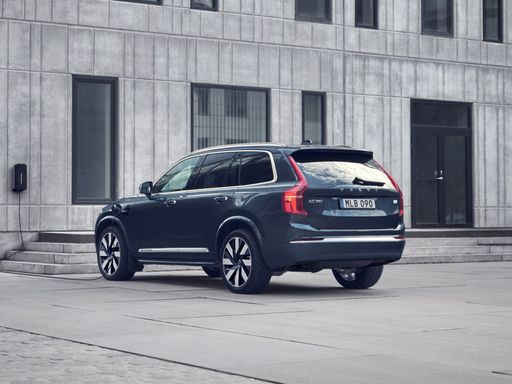
The Volvo XC90’s electric range of 71 km might seem modest in comparison, but this is supplemented by its efficient hybrid system that maintains low CO2 emissions and offers a cleaner alternative to traditional petrol engines. The XC90 adopts a comprehensive strategy, balancing electric and combustion power adeptly to cater to varied driving needs.

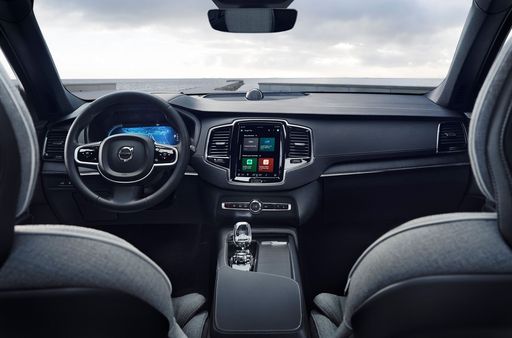
XC90 @ Volvo Cars

Interior & Comfort

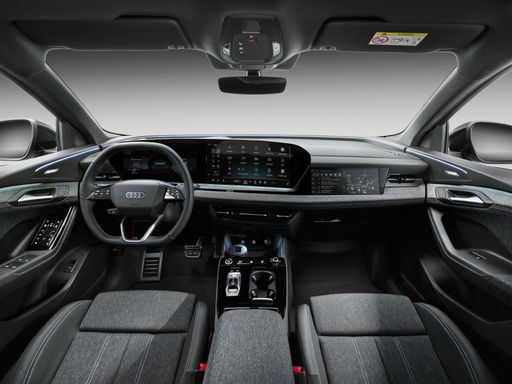
Both vehicles excel in offering luxury and comfort, though they tailor their appeal to different audiences. The Audi Q6 e-tron provides a spacious cabin with seating for five, emphasizing a sleek, futuristic design that aligns with its electric persona. Trunk capacity peaks at 526 L, supporting a modern lifestyle with ample room for travel essentials.

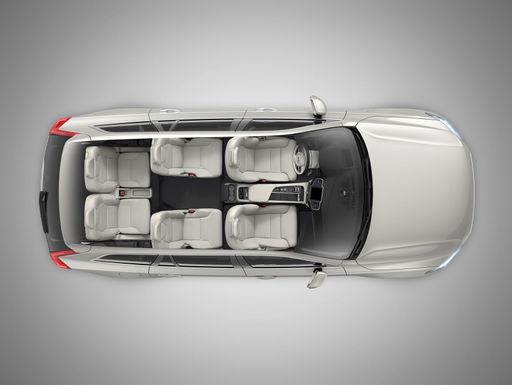
The Volvo XC90, accommodating up to seven passengers, stands as a family-oriented vehicle with its larger seating capacity. Despite a slightly reduced maximum trunk space of 302 L, its interior design reflects Volvo's commitment to Scandinavian elegance and comfort. The extra seating makes it an excellent choice for those who regularly travel with more passengers.

Q6 e-tron @ Audi AG

Innovation & Technology

Technological advancements are at the heart of both models. The Audi Q6 e-tron integrates the latest in electric vehicle technology, with a focus on seamless connectivity and digital driving experiences. The reduction gearbox and advanced driver aids place Audi firmly in the realm of future mobility trends.

Volvo, renowned for its dedication to safety and user-friendly technology, ensures the XC90 is no exception. Its plugin hybrid platform offers flexibility and economic efficiency, alongside driver-assist technologies that have become synonymous with the Volvo brand. The vehicle's integration of intuitive tech solutions ensures that drivers and passengers enjoy every journey with ease and serenity.

XC90 @ Volvo Cars

Conclusion

Choosing between the Audi Q6 e-tron and the Volvo XC90 depends largely on individual priorities. For those seeking a purely electric option with cutting-edge technology and performance, the Q6 e-tron delivers a compelling package. On the other hand, the XC90 shines with its hybrid flexibility, luxury for larger families, and a steadfast commitment to safety and efficiency. Both models are exemplary, offering a glimpse into the evolving landscape of luxury SUVs.

Here’s where it gets real: The technical differences in detail

Costs and Efficiency:

When it comes to price and running costs, the biggest differences usually appear. This is often where you see which car fits your budget better in the long run.

Audi Q6 e-tron has a noticeable advantage in terms of price – it starts at 54400 £, while the Volvo XC90 costs 69800 £. That’s a price difference of around 15334 £.

As for range, the Audi Q6 e-tron performs convincingly better – achieving up to 656 km, about 585 km more than the Volvo XC90.

Engine and Performance:

Under the bonnet, it becomes clear which model is tuned for sportiness and which one takes the lead when you hit the accelerator.

When it comes to engine power, the Audi Q6 e-tron has a barely noticeable edge – offering 490 HP compared to 455 HP. That’s roughly 35 HP more horsepower.

In acceleration from 0 to 100 km/h, the Audi Q6 e-tron is noticeable quicker – completing the sprint in 4.40 s, while the Volvo XC90 takes 5.40 s. That’s about 1 s faster.

In terms of top speed, the Audi Q6 e-tron performs clearly perceptible better – reaching 230 km/h, while the Volvo XC90 tops out at 180 km/h. The difference is around 50 km/h.

There’s also a difference in torque: Audi Q6 e-tron pulls a bit stronger with 855 Nm compared to 709 Nm. That’s about 146 Nm difference.

Space and Everyday Use:

Beyond pure performance, interior space and usability matter most in daily life. This is where you see which car is more practical and versatile.

Seats: Volvo XC90 offers clearly perceptible more seating capacity – 7 vs 5.

In curb weight, Volvo XC90 is slight lighter – 2080 kg compared to 2200 kg. The difference is around 120 kg.

In terms of boot space, the Audi Q6 e-tron offers convincingly more room – 526 L compared to 302 L. That’s a difference of about 224 L.

In maximum load capacity, the Volvo XC90 performs a bit better – up to 1856 L, which is about 327 L more than the Audi Q6 e-tron.

When it comes to payload, Volvo XC90 distinct takes the win – 710 kg compared to 540 kg. That’s a difference of about 170 kg.

Who wins the race?

The Audi Q6 e-tron proves to be dominates this comparison and therefore becomes our DriveDuel Champion!
Audi Q6 e-tron is the better all-rounder in this comparison.

from about £54,400
Q6 e-tron @ Audi AG

Audi Q6 e-tron

  • Engine Type : Electric
  • Transmission : Automatic
  • Drive Type : Rear-Wheel Drive, All-Wheel Drive
  • Power HP : 252 - 490 HP
  • Consumption kWh/100km : 15.6 - 18.9 kWh
  • Electric Range : 482 - 656 km

Audi Q6 e-tron

5 (2)
rate

The Audi Q6 e-tron balances sleek, coupe-like styling with a roomy, upscale interior that feels modern without being showy. It delivers refined electric performance and smart tech that make daily driving effortless — the sort of EV that might make petrolheads grudgingly admit they fancy the future.

details

Volvo XC90

5 (1)
rate

The Volvo XC90 is a serene Scandinavian SUV that mixes minimalist luxury with a composed, confidence-inspiring presence — ideal for buyers who want family practicality without sacrificing style. Inside it serves up a calm, well-crafted cabin and user-friendly tech that keeps long journeys pleasant and tantrums to a minimum, making the XC90 a smart, stylish pick for sensible drivers.

details
Audi Q6 e-tron
Volvo XC90
Q6 e-tron @ Audi AG
XC90 @ Volvo Cars

Costs and Consumption

Price
54400 - 91900 £
Price
69800 - 84600 £
Consumption L/100km
-
Consumption L/100km
3.5 - 8.5 L
Consumption kWh/100km
15.6 - 18.9 kWh
Consumption kWh/100km
-
Electric Range
482 - 656 km
Electric Range
71 km
Battery Capacity
75.8 - 94.9 kWh
Battery Capacity
14.70 kWh
co2
0 g/km
co2
79 - 191 g/km
Fuel tank capacity
-
Fuel tank capacity
71 L

Dimensions and Body

Body Type
SUV
Body Type
SUV
Seats
5
Seats
7
Doors
5
Doors
5
Curb weight
2200 - 2425 kg
Curb weight
2080 - 2297 kg
Trunk capacity
499 - 526 L
Trunk capacity
262 - 302 L
Length
4771 mm
Length
4953 mm
Width
1939 - 1965 mm
Width
1923 mm
Height
1665 - 1685 mm
Height
1771 mm
Max trunk capacity
1361 - 1529 L
Max trunk capacity
1816 - 1856 L
Payload
540 kg
Payload
653 - 710 kg

Engine and Performance

Engine Type
Electric
Engine Type
Petrol MHEV, Plugin Hybrid
Transmission
Automatic
Transmission
Automatic
Transmission Detail
Reduction Gearbox
Transmission Detail
Automatic Gearbox
Drive Type
Rear-Wheel Drive, All-Wheel Drive
Drive Type
All-Wheel Drive
Power HP
252 - 490 HP
Power HP
250 - 455 HP
Acceleration 0-100km/h
4.4 - 7.6 s
Acceleration 0-100km/h
5.4 - 7.7 s
Max Speed
210 - 230 km/h
Max Speed
180 km/h
Torque
450 - 855 Nm
Torque
360 - 709 Nm
Number of Cylinders
-
Number of Cylinders
4
Power kW
185 - 360 kW
Power kW
184 - 335 kW
Engine capacity
-
Engine capacity
1969 cm3

General

Model Year
2024 - 2025
Model Year
2024 - 2025
CO2 Efficiency Class
A
CO2 Efficiency Class
G, B
Brand
Audi
Brand
Volvo
What drivetrain options does the Audi Q6 e-tron have?

Available configurations include Rear-Wheel Drive or All-Wheel Drive.

The prices and data displayed are estimates based on German list prices and may vary by country. This information is not legally binding.