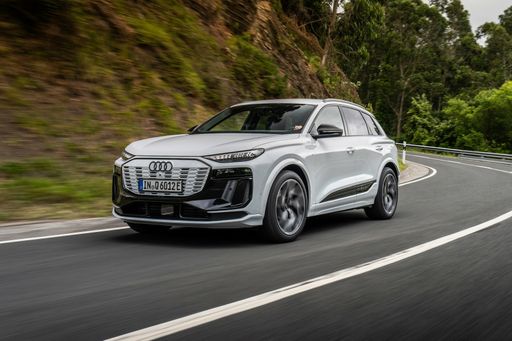
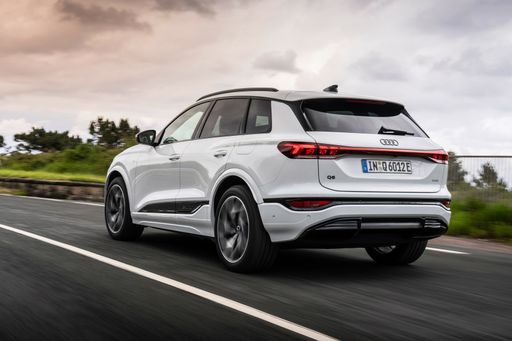
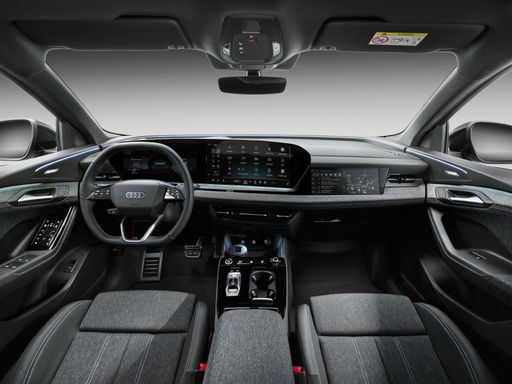
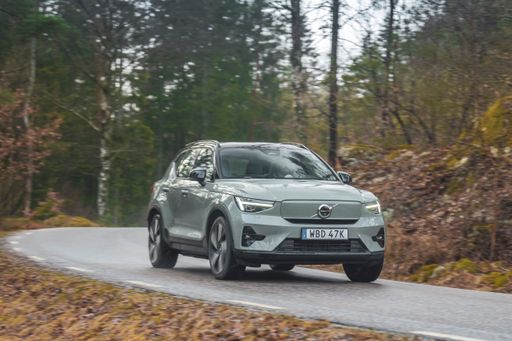
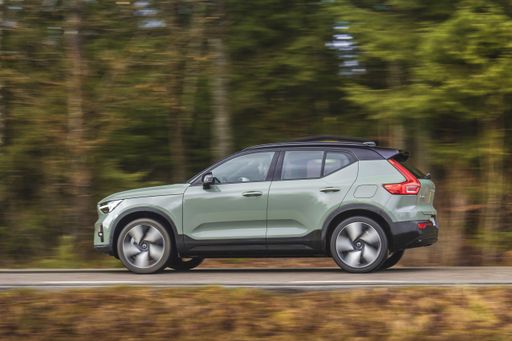
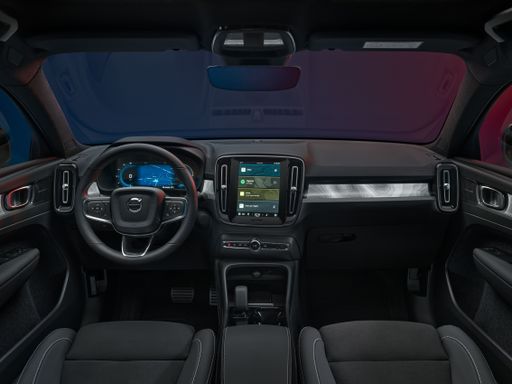
Compare performance (490 HP vs 442 HP), boot space and price (54400 £ vs 42800 £ ) at a glance. Find out which car is the better choice for you – Audi Q6 e-tron or Volvo EX40?
Price and efficiency are key factors when choosing a car – and this is often where the real differences emerge.
Volvo EX40 has a evident advantage in terms of price – it starts at 42800 £ , while the Audi Q6 e-tron costs 54400 £ . That’s a price difference of around 11580 £.
In terms of energy consumption, the advantage goes to the Audi Q6 e-tron: with 15.60 kWh per 100 km, it’s barely noticeable more efficient than the Volvo EX40 with 16.60 kWh. That’s a difference of about 1 kWh.
As for electric range, the Audi Q6 e-tron performs to a small extent better – achieving up to 656 km, about 80 km more than the Volvo EX40.
Power, torque and acceleration are the classic benchmarks for car enthusiasts – and here, some clear differences start to show.
When it comes to engine power, the Audi Q6 e-tron has a minimal edge – offering 490 HP compared to 442 HP. That’s roughly 48 HP more horsepower.
In acceleration from 0 to 100 km/h, the Audi Q6 e-tron is minimal quicker – completing the sprint in 4.40 s, while the Volvo EX40 takes 4.60 s. That’s about 0.20 s faster.
In terms of top speed, the Audi Q6 e-tron performs evident better – reaching 230 km/h, while the Volvo EX40 tops out at 180 km/h. The difference is around 50 km/h.
There’s also a difference in torque: Audi Q6 e-tron pulls evident stronger with 855 Nm compared to 670 Nm. That’s about 185 Nm difference.
Beyond pure performance, interior space and usability matter most in daily life. This is where you see which car is more practical and versatile.
Both vehicles offer seating for 5 people.
In curb weight, Volvo EX40 is hardly perceptible lighter – 2040 kg compared to 2200 kg. The difference is around 160 kg.
In terms of boot space, the Audi Q6 e-tron offers evident more room – 526 L compared to 410 L. That’s a difference of about 116 L.
In maximum load capacity, the Audi Q6 e-tron performs hardly perceptible better – up to 1529 L, which is about 129 L more than the Volvo EX40.
When it comes to payload, Audi Q6 e-tron to a small extent takes the win – 540 kg compared to 480 kg. That’s a difference of about 60 kg.
The Audi Q6 e-tron holds a decisive overall lead in the objective data comparison.
This result only shows which model scores more points on paper – not which of the two cars feels right for you.
The Audi Q6 e-tron balances sleek, coupe-like styling with a roomy, upscale interior that feels modern without being showy. It delivers refined electric performance and smart tech that make daily driving effortless — the sort of EV that might make petrolheads grudgingly admit they fancy the future.
detailsThe Volvo EX40 wraps Scandinavian calm and clever practicality into a compact electric package that feels both premium and refreshingly uncomplicated. It's the grown-up answer to flashier rivals — a safe, comfy, and city-friendly EV with thoughtful tech that makes everyday driving quietly satisfying.
detailsCosts and Consumption |
|
|---|---|
|
Price
54400 - 91900 £
|
Price
42800 - 58200 £
|
|
Consumption L/100km
-
|
Consumption L/100km
-
|
|
Consumption kWh/100km
15.6 - 18.9 kWh
|
Consumption kWh/100km
16.6 - 17.6 kWh
|
|
Electric Range
482 - 656 km
|
Electric Range
480 - 576 km
|
|
Battery Capacity
75.8 - 94.9 kWh
|
Battery Capacity
67 - 79 kWh
|
|
co2
0 g/km
|
co2
0 g/km
|
|
Fuel tank capacity
-
|
Fuel tank capacity
-
|
Dimensions and Body |
|
|---|---|
|
Body Type
SUV
|
Body Type
SUV
|
|
Seats
5
|
Seats
5
|
|
Doors
5
|
Doors
5
|
|
Curb weight
2200 - 2425 kg
|
Curb weight
2040 - 2170 kg
|
|
Trunk capacity
499 - 526 L
|
Trunk capacity
410 L
|
|
Length
4771 mm
|
Length
4440 mm
|
|
Width
1939 - 1965 mm
|
Width
1863 mm
|
|
Height
1665 - 1685 mm
|
Height
1647 mm
|
|
Max trunk capacity
1361 - 1529 L
|
Max trunk capacity
1286 - 1400 L
|
|
Payload
540 kg
|
Payload
430 - 480 kg
|
Engine and Performance |
|
|---|---|
|
Engine Type
Electric
|
Engine Type
Electric
|
|
Transmission
Automatic
|
Transmission
Automatic
|
|
Transmission Detail
Reduction Gearbox
|
Transmission Detail
Reduction Gearbox
|
|
Drive Type
Rear-Wheel Drive, All-Wheel Drive
|
Drive Type
Rear-Wheel Drive, All-Wheel Drive
|
|
Power HP
252 - 490 HP
|
Power HP
238 - 442 HP
|
|
Acceleration 0-100km/h
4.4 - 7.6 s
|
Acceleration 0-100km/h
4.6 - 7.3 s
|
|
Max Speed
210 - 230 km/h
|
Max Speed
180 km/h
|
|
Torque
450 - 855 Nm
|
Torque
420 - 670 Nm
|
|
Number of Cylinders
-
|
Number of Cylinders
-
|
|
Power kW
185 - 360 kW
|
Power kW
175 - 325 kW
|
|
Engine capacity
-
|
Engine capacity
-
|
General |
|
|---|---|
|
Model Year
2024 - 2025
|
Model Year
2024
|
|
CO2 Efficiency Class
A
|
CO2 Efficiency Class
A
|
|
Brand
Audi
|
Brand
Volvo
|
Available configurations include Rear-Wheel Drive or All-Wheel Drive.