VS

BMW 2 Series Active Tourer vs Volvo XC60 comparison

Compare performance (326 HP vs 406 HP), boot space and price (31,500 £ vs 58,300 £ ) at a glance. Find out which car is the better choice for you – BMW 2 Series Active Tourer or Volvo XC60?

BMW 2 Series Active Tourer vs Volvo XC60: Key differences

BMW 2 Series Active Tourer

4.1 (2 Reviews)
rate
  • substantially cheaper
  • marginally more electric range
  • markedly lighter
details

Volvo XC60

4.5 (13 Reviews)
rate
  • somewhat more power
  • clearly more efficient
  • somewhat quicker 0–100 km/h
details

All details on performance, efficiency, range and trunk space can be found in the technical comparison below – including user reviews for both models.

2 Series Active Tourer

The Battle of Versatility: BMW 2er Active Tourer VS Volvo XC60

In the realm of contemporary family vehicles, few rivalries are as compelling as that between the BMW 2er Active Tourer and the Volvo XC60. These two vehicles, each representing a strong European heritage, present a fascinating comparison of style, innovation, and utility. Let’s delve into what makes each unique, examining the technical aspects and groundbreaking features they bring to the roadway.
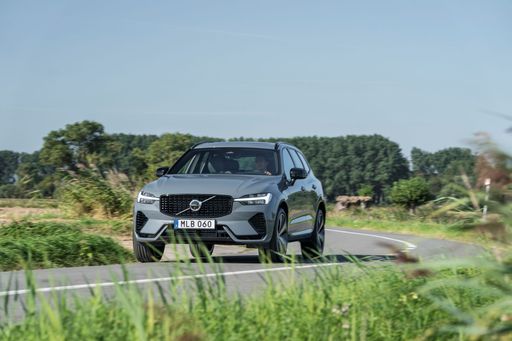
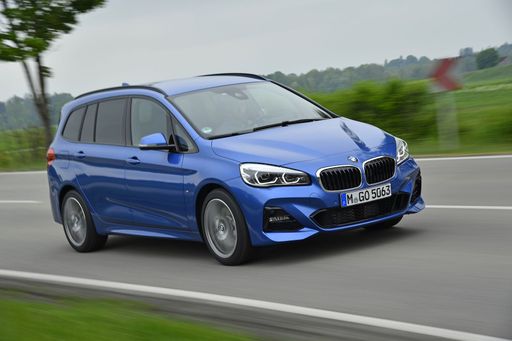
XC60

Design & Build: MPV Versus SUV

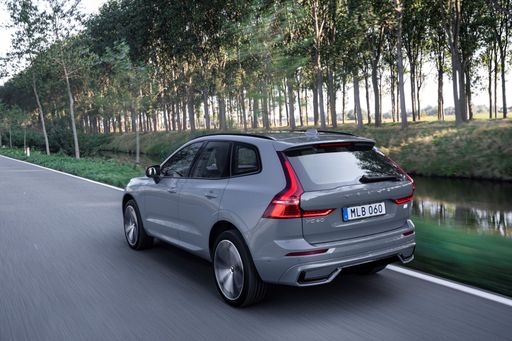
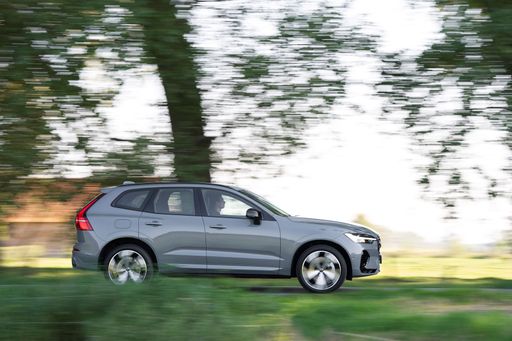
The BMW 2er Active Tourer, an MPV with a length of 4386 mm, emphasizes a blend of compact design and spacious interior. On the other hand, the Volvo XC60, unmistakable as an SUV, stretches to 4688 mm—offering a robust and commanding presence. While the 2er Active Tourer stands at 1576 mm in height, the XC60 rises taller at 1658 mm, providing that raised driving position many SUV lovers seek.

2 Series Active Tourer

Engine Power & Performance

The 2er Active Tourer caters to a variety of power needs with its wide engine selection, offering options ranging from 122 HP to a potent 326 HP in different petrol, diesel, and hybrid variants. It can achieve acceleration from 0 to 100 km/h in as little as 5.5 seconds. This model also shines with its plug-in hybrid, boasting an electric range of 88 km.

The Volvo XC60, however, focuses on all-wheel-drive power delivery across its lineup, highlighted by engines providing from 250 HP up to a mighty 455 HP in its plug-in hybrid variant. It dashes from 0 to 100 km/h in a swift 4.9 seconds. With an electric range standing at 79 km, it closely matches the BMW's abilities.

XC60

Fuel Efficiency & Environmental Impact

In terms of eco-friendliness, the BMW 2er Active Tourer's plug-in hybrid shines with an impressive fuel consumption of just 0.8 L/100km and CO2 emissions as low as 19 g/km. Volvo's XC60 follows closely with its hybrid variant being notably efficient, consuming 0.9 L/100km and producing 22 g/km CO2.

Those opting for the mild hybrid variants will notice that BMW’s options start from 4.5 L/100km consumption rates, while Volvo's petrol MHEV requires 7.7 L/100km, underscoring a trade-off between performance and efficiency.

2 Series Active Tourer

Interior Comfort & Practicality

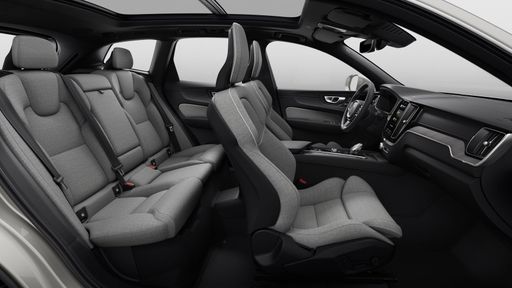
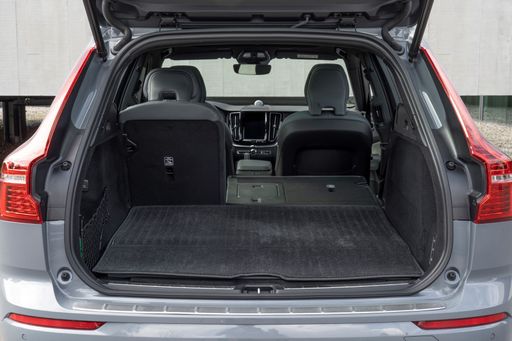
Both vehicles offer seating for five and prioritize passenger comfort and cargo versatility. The 2er Active Tourer provides a trunk capacity of up to 470 liters, slightly shy of the XC60's maximum 483 liters, yet both are more than capable of handling family and adventure gear. With payload capacities reaching up to 550 kg for the XC60 and 505 kg for the BMW, both vehicles ensure no trip is cut short by space constraints.

XC60

Technology & Innovations

BMW continues to innovate with its dual-clutch automatic transmission, enhancing both the driving experience and efficiency of the 2er Active Tourer. On the other hand, Volvo's XC60 embraces modern convenience through its automatic gearbox and state-of-the-art safety technologies, ensuring drivers are well-supported no matter the journey.

2 Series Active Tourer

Final Verdict

Choosing between the BMW 2er Active Tourer and the Volvo XC60 ultimately hinges on personal priorities. The BMW appeals with its variety, efficiency, and compact MPV versatility, perfect for eco-conscious families. Volvo’s XC60, with its powerful all-wheel-drive prowess and premium SUV aesthetics, caters to those desiring performance without sacrificing luxury and safety.

Whether it's the versatility of the MPV or the authoritative presence of an SUV, both vehicles promise to meet—and exceed—the diverse needs of modern drivers.

Here’s where it gets real: The technical differences in detail

2 Series Active Tourer

Costs and Efficiency:

Price and efficiency are key factors when choosing a car – and this is often where the real differences emerge.

BMW 2 Series Active Tourer is substantially cheaper – starting at 31,500 £ , while the Volvo XC60 costs 58,300 £ . That’s a price difference of around 26,777 £.

Fuel consumption also shows a difference: the Volvo XC60 uses 1.6 L/100km and is clearly more efficient than the BMW 2 Series Active Tourer with 2.9 L/100km. The difference is about 1.3 L/100km.

As for electric range, the BMW 2 Series Active Tourer offers marginally more range – reaching up to 82 km, about 3 km more than the Volvo XC60.

XC60

Engine and Performance:

Under the bonnet, it becomes clear which model is tuned for sportiness and which one takes the lead when you hit the accelerator.

When it comes to engine power, the Volvo XC60 offers somewhat more power – delivering 406 HP compared to 326 HP. That’s roughly 80 HP more horsepower.

When accelerating from 0 to 100 km/h, the Volvo XC60 is somewhat quicker – completing the sprint in 4.9 s, while the BMW 2 Series Active Tourer takes 5.5 s. That’s about 0.6 s quicker.

There’s also a difference in torque: the Volvo XC60 delivers markedly more torque with 669 Nm compared to 477 Nm. That’s about 192 Nm more.

2 Series Active Tourer

Space and Everyday Use:

Beyond pure performance, interior space and usability matter most in daily life. This is where you see which car is more practical and versatile.

Both vehicles offer seating for 5 people.

In terms of curb weight, BMW 2 Series Active Tourer is markedly lighter – 1,545 kg compared to 2,150 kg. The difference is around 605 kg.

When it comes to payload, the Volvo XC60 carries very slightly more – 510 kg compared to 505 kg. That’s a difference of about 5 kg.

Who wins the race in the data check?

The Volvo XC60 comes out clearly ahead in the objective data comparison.
This result only shows which model scores more points on paper – not which of the two cars feels right for you.

from £58,300
XC60

Volvo XC60

  • Engine Type Plug-in Hybrid
  • Transmission Automatic
  • Drive Type All-Wheel Drive
  • Power HP 335 - 406 HP
  • Consumption L/100km 1.6 L/100km
  • Electric Range 79 km
BMW 2 Series Active Tourer
Volvo XC60

Costs and Consumption

View detailed analysis

Engine and Performance

View detailed analysis

Dimensions and Body

View detailed analysis

BMW 2 Series Active Tourer

The BMW 2 Series Active Tourer turns the family MPV into something you’d actually want to park outside a café, pairing compact practicality with surprisingly premium cabin flair. It won’t thrill like a sports car, but it drives with the composed poise you expect from the badge and keeps daily life easy and un-fussy.

details

Volvo XC60

The Volvo XC60 blends Scandinavian elegance with a strong focus on occupant safety, delivering a calm, composed ride and a well-crafted, user-friendly cabin. It’s a practical yet premium compact SUV that balances comfort with confident road manners, ideal for buyers who value refinement and everyday usability.

details
BMW 2 Series Active Tourer
Volvo XC60

Costs and Consumption

Price
31,500 - 48,500 £
Price
58,300 - 71,400 £
Consumption L/100km
2.9 - 6.2 L/100km
Consumption L/100km
1.6 L/100km
Consumption kWh/100km
-
Consumption kWh/100km
-
Electric Range
82 km
Electric Range
79 km
Battery Capacity
-
Battery Capacity
-
co2
65 - 140 g/km
co2
59 g/km
Fuel tank capacity
-
Fuel tank capacity
-

Dimensions and Body

Body Type
MPV
Body Type
SUV
Seats
5
Seats
5
Doors
-
Doors
-
Curb weight
1,545 - 1,920 kg
Curb weight
2,150 kg
Trunk capacity
406 - 470 L
Trunk capacity
-
Length
-
Length
-
Width
1,824 mm
Width
1,902 mm
Height
-
Height
-
Max trunk capacity
-
Max trunk capacity
-
Payload
465 - 505 kg
Payload
510 kg

Engine and Performance

Engine Type
Petrol, Petrol MHEV, Diesel, Diesel MHEV, Plug-in Hybrid
Engine Type
Plug-in Hybrid
Transmission
Automatic
Transmission
Automatic
Transmission Detail
Dual-Clutch Automatic
Transmission Detail
Automatic Gearbox
Drive Type
Front-Wheel Drive, All-Wheel Drive
Drive Type
All-Wheel Drive
Power HP
122 - 326 HP
Power HP
335 - 406 HP
Acceleration 0-100km/h
5.5 - 10.3 s
Acceleration 0-100km/h
4.9 - 5.7 s
Max Speed
-
Max Speed
-
Torque
230 - 477 Nm
Torque
589 - 669 Nm
Number of Cylinders
3 - 4
Number of Cylinders
4
Power kW
90 - 240 kW
Power kW
247 - 299 kW
Engine capacity
1,499 - 1,998 cm3
Engine capacity
1,969 cm3

General

Model Year
2,024 - 2,025
Model Year
2026
CO2 Efficiency Class
E, D, B
CO2 Efficiency Class
B
Brand
BMW
Brand
Volvo
DriveDuel uses data analysis and artificial intelligence to evaluate vehicle data and create content. Content is regularly reviewed and improved. The displayed prices are estimates based on German list prices, adjusted to the respective country’s VAT. Country-specific registration taxes are not included. This information is not legally binding.