@ BMW Group Press
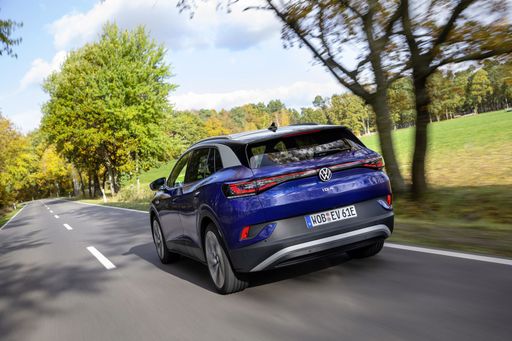
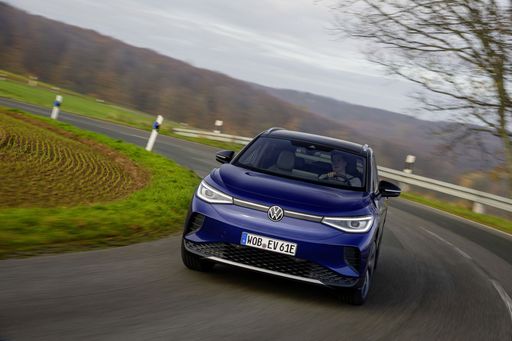
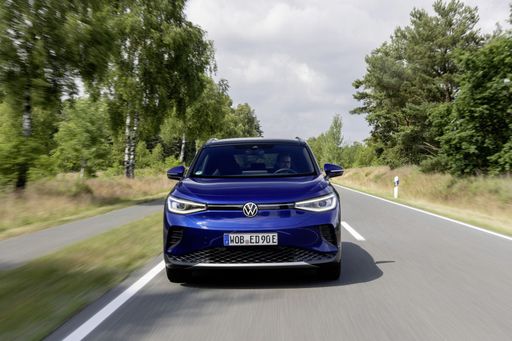
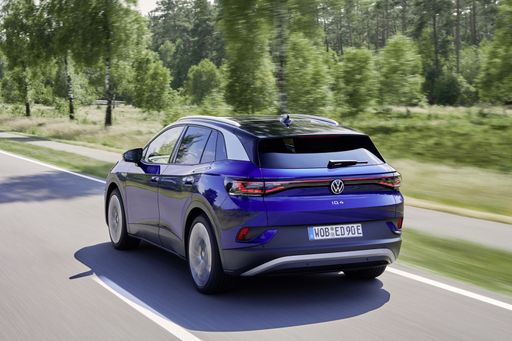
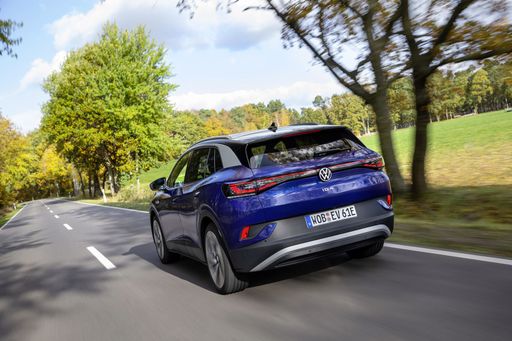
@ Volkswagen AG / VW Media
VS

BMW i4 vs VW ID.4 – Which car suits you better?

Everyday use, family trips or long-distance drives – here’s where the differences show.
Discover whether BMW i4 or VW ID.4 fits your lifestyle better.

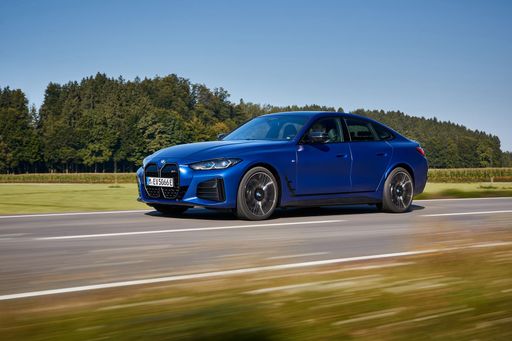
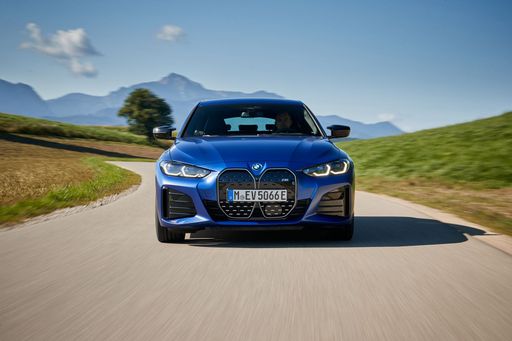
i4 @ BMW Group Press

The Clash of the Titans: BMW i4 vs. VW ID.4

The electric vehicle market is bustling with innovation, and two brands stand out in this electrifying race: BMW and VW. Their flagships, the BMW i4 and the VW ID.4, are compelling contenders in their segments. How do they measure up when put head-to-head? Let's dive into the technical details and innovations of these two electric marvels.
ID.4 @ Volkswagen AG / VW Media

Performance and Engine Specifications

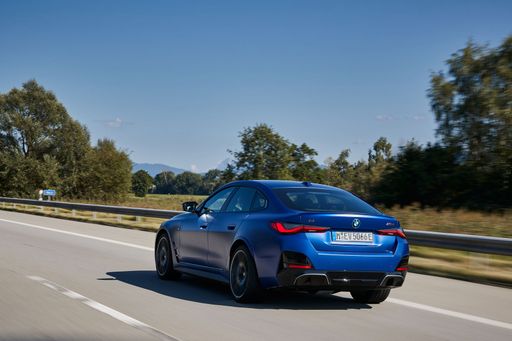
The BMW i4 brings impressive power to the table. With its range of power options, the i4 offers horsepower from 286 to an exhilarating 544 HP. Its remarkable torque, peaking at 795 Nm, makes it a force to reckon with. Notably, the i4 accelerates from 0 to 100 km/h in as little as 3.9 seconds, showcasing its prowess in terms of speed and performance.

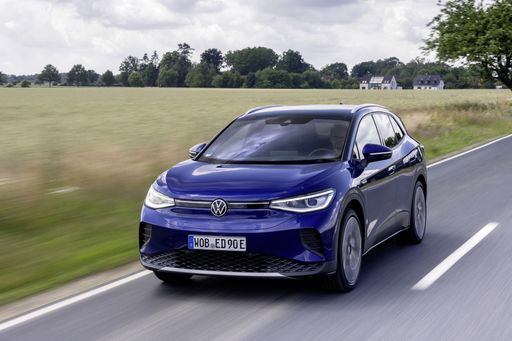
On the other hand, the VW ID.4 presents itself as a strong competitor with its maximum power reaching 340 HP, powered by torque up to 679 Nm. Offering a slightly more modest acceleration, the ID.4 can reach 100 km/h in 5.4 seconds. It incorporates efficient energy consumption in its design, using between 15.8 and 16.8 kWh/100 km.

i4 @ BMW Group Press

Driving Range and Battery Life

Electric range and battery capacity are pivotal in the EV buying decision. The BMW i4 impresses with an electric range that spans from 485 km to 582 km, supported by its battery options of 67.1 kWh and 81.3 kWh.

VW's ID.4 comes equipped with battery capacities of 52 kWh and 77 kWh, delivering ranges up to 572 km. This sizable range positions the ID.4 as a versatile choice for longer drives, enabling an excellent balance between power and endurance.

ID.4 @ Volkswagen AG / VW Media

Design and Interior Comfort

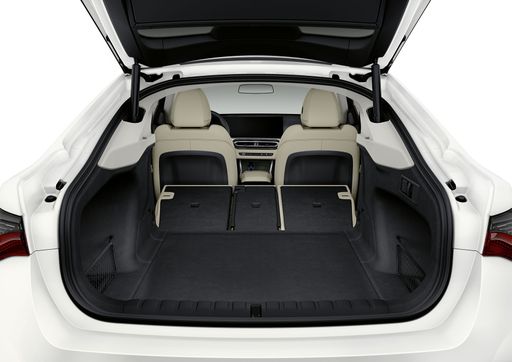
Both the BMW i4 and VW ID.4 house five passengers with ease, though their bodystyles differ. The i4, a sleek hatchback, is imposing with a length of 4783 mm, width of 1852 mm, and height of 1448 mm. It offers a trunk capacity of 470 L.

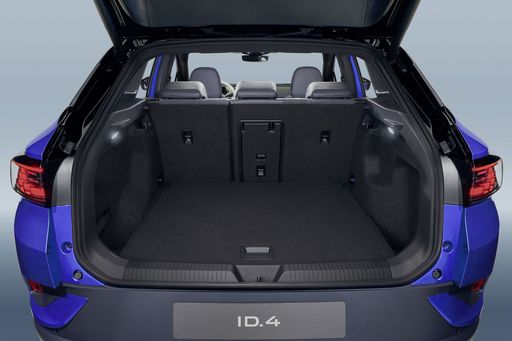
The ID.4 is an SUV, slightly shorter in length around 4584 mm but taller, standing at 1619 to 1634 mm. Its 543 L trunk space speaks to its utility-focused design. Both vehicles ensure a desirable balance between style, space, and practicality.

i4 @ BMW Group Press

Innovations and Efficiency

The ecological efficiency of both these models stands out. The BMW i4 and VW ID.4 achieve a CO2 efficiency class of A, with their emissions rated at an impressive 0 g/km. Furthermore, both vehicles employ a reduction gearbox in their drive systems, optimizing energy use and enhancing overall driving efficiency.

ID.4 @ Volkswagen AG / VW Media

Conclusion: A Choice of Style and Power

Choosing between the BMW i4 and VW ID.4 depends on your priorities. The i4 is designed for those who seek exhilarating performance and dynamic styling. In contrast, the VW ID.4 is an ideal choice for those prioritizing range, comfort, and utility in an efficient electric SUV.

Both vehicles symbolically represent the strength and innovation in their respective classes, promising a fulfilling experience for electric vehicle enthusiasts. Evaluate your driving needs to pick the truer match for your automotive aspirations.

Video - VW ID.4

Here’s where it gets real: The technical differences in detail

i4 @ BMW Group Press

Costs and Efficiency:

Price and efficiency are often the first things buyers look at. Here it becomes clear which model has the long-term edge – whether at the pump, the plug, or in purchase price.

VW ID.4 has a clearly advantage in terms of price – it starts at 34600 £, while the BMW i4 costs 49400 £. That’s a price difference of around 14799 £.

In terms of energy consumption, the advantage goes to the BMW i4: with 14.70 kWh per 100 km, it’s barely noticeable more efficient than the VW ID.4 with 15.60 kWh. That’s a difference of about 0.90 kWh.

As for range, the BMW i4 performs barely noticeable better – achieving up to 613 km, about 44 km more than the VW ID.4.

ID.4 @ Volkswagen AG / VW Media

Engine and Performance:

Under the bonnet, it becomes clear which model is tuned for sportiness and which one takes the lead when you hit the accelerator.

When it comes to engine power, the BMW i4 has a significantly edge – offering 601 HP compared to 340 HP. That’s roughly 261 HP more horsepower.

In acceleration from 0 to 100 km/h, the BMW i4 is clearly quicker – completing the sprint in 3.70 s, while the VW ID.4 takes 5.40 s. That’s about 1.70 s faster.

In terms of top speed, the BMW i4 performs to a small extent better – reaching 225 km/h, while the VW ID.4 tops out at 180 km/h. The difference is around 45 km/h.

There’s also a difference in torque: BMW i4 pulls slightly stronger with 795 Nm compared to 679 Nm. That’s about 116 Nm difference.

i4 @ BMW Group Press

Space and Everyday Use:

Beyond pure performance, interior space and usability matter most in daily life. This is where you see which car is more practical and versatile.

Both vehicles offer seating for 5 people.

In curb weight, VW ID.4 is minimal lighter – 1975 kg compared to 2070 kg. The difference is around 95 kg.

In terms of boot space, the VW ID.4 offers somewhat more room – 543 L compared to 470 L. That’s a difference of about 73 L.

In maximum load capacity, the VW ID.4 performs to a small extent better – up to 1575 L, which is about 285 L more than the BMW i4.

When it comes to payload, VW ID.4 somewhat takes the win – 551 kg compared to 480 kg. That’s a difference of about 71 kg.

Who comes out on top?

Overall, the BMW i4 shows itself to be is largely superior and secures the title of DriveDuel Champion.
It convinces with the more balanced overall package and proves to be the more versatile choice for everyday use.

from about £49,400
i4 @ BMW Group Press

BMW i4

  • Engine Type : Electric
  • Transmission : Automatic
  • Drive Type : Rear-Wheel Drive, All-Wheel Drive
  • Power HP : 286 - 601 HP
  • Consumption kWh/100km : 14.7 - 16.7 kWh
  • Electric Range : 514 - 613 km

BMW i4

5 (1)
rate

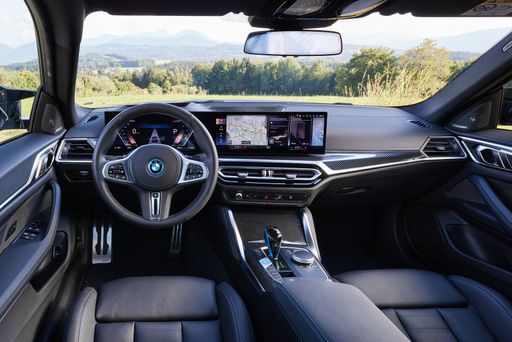
The BMW i4 arrives with the poise of a classic Gran Coupé, marrying BMW's playful handling with a sleek, modern interior that makes switching to electric feel like an upgrade rather than a compromise. For buyers who want a practical daily driver that still enjoys a spirited back-road run, the i4 quietly delivers smiles and a surprising dose of driver engagement.

details

VW ID.4

4.5 (2)
rate

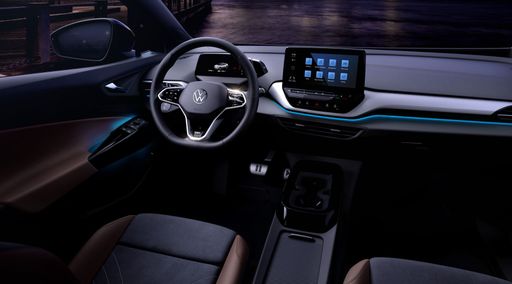
The VW ID.4 is a calm, roomy electric SUV that turns everyday driving into a quietly confident experience, its practical packaging and smooth manners tailored perfectly for family life. Volkswagen's solid build and intuitive interior tech mean you get electric practicality without the sci‑fi theatrics, making the ID.4 a sensible, surprisingly likable choice for most buyers.

details
BMW i4
VW ID.4
i4 @ BMW Group Press
ID.4 @ Volkswagen AG / VW Media

Costs and Consumption

Price
49400 - 62500 £
Price
34600 - 47200 £
Consumption L/100km
-
Consumption L/100km
-
Consumption kWh/100km
14.7 - 16.7 kWh
Consumption kWh/100km
15.6 - 17 kWh
Electric Range
514 - 613 km
Electric Range
356 - 569 km
Battery Capacity
67.1 - 81.3 kWh
Battery Capacity
52 - 77 kWh
co2
0 g/km
co2
0 g/km
Fuel tank capacity
-
Fuel tank capacity
-

Dimensions and Body

Body Type
Hatchback
Body Type
SUV
Seats
5
Seats
5
Doors
5
Doors
5
Curb weight
2070 - 2285 kg
Curb weight
1975 - 2248 kg
Trunk capacity
470 L
Trunk capacity
543 L
Length
4783 mm
Length
4582 - 4584 mm
Width
1852 mm
Width
1852 mm
Height
1448 mm
Height
1619 - 1634 mm
Max trunk capacity
1290 L
Max trunk capacity
1575 L
Payload
445 - 480 kg
Payload
511 - 551 kg

Engine and Performance

Engine Type
Electric
Engine Type
Electric
Transmission
Automatic
Transmission
Automatic
Transmission Detail
Reduction Gearbox
Transmission Detail
Reduction Gearbox
Drive Type
Rear-Wheel Drive, All-Wheel Drive
Drive Type
Rear-Wheel Drive, All-Wheel Drive
Power HP
286 - 601 HP
Power HP
170 - 340 HP
Acceleration 0-100km/h
3.7 - 6 s
Acceleration 0-100km/h
5.4 - 9 s
Max Speed
190 - 225 km/h
Max Speed
160 - 180 km/h
Torque
400 - 795 Nm
Torque
310 - 679 Nm
Number of Cylinders
-
Number of Cylinders
-
Power kW
210 - 442 kW
Power kW
125 - 250 kW
Engine capacity
-
Engine capacity
-

General

Model Year
2025
Model Year
2023 - 2025
CO2 Efficiency Class
A
CO2 Efficiency Class
A
Brand
BMW
Brand
VW
What drivetrain options does the BMW i4 have?

The BMW i4 is available as Rear-Wheel Drive or All-Wheel Drive.

The prices and data displayed are estimates based on German list prices and may vary by country. This information is not legally binding.