VS

BMW iX vs BMW X3 comparison

Compare performance (659 HP vs 398 HP), boot space and price (71,600 £ vs 51,300 £ ) at a glance. Find out which car is the better choice for you – BMW iX or BMW X3?

BMW iX vs BMW X3: Key differences

BMW iX

3.9 (1 Reviews)
rate
  • markedly more power
  • significantly more electric range
  • markedly quicker 0–100 km/h

BMW X3

4.6 (1 Reviews)
rate
  • noticeably cheaper
  • noticeably lighter
  • slightly more trunk space

All details on performance, efficiency, range and trunk space can be found in the technical comparison below – including user reviews for both models.

iX

BMW X3 vs. BMW iX: A Modern Contrast in Automotive Luxury

As the automotive world steadily shifts towards sustainability and innovation, BMW showcases its versatility with two striking models: the BMW X3 and the BMW iX. In this article, we'll delve into the technical aspects of both cars and uncover the innovations that set them apart.
X3

Design and Dimensions

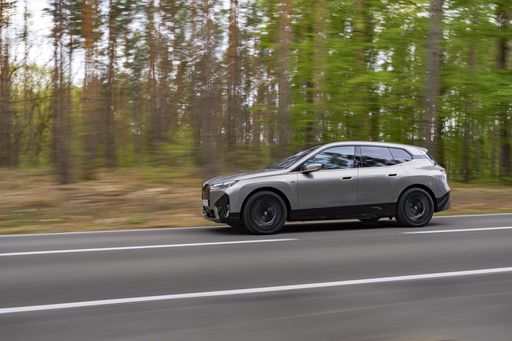
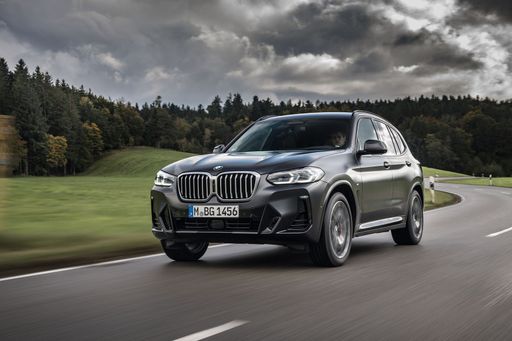
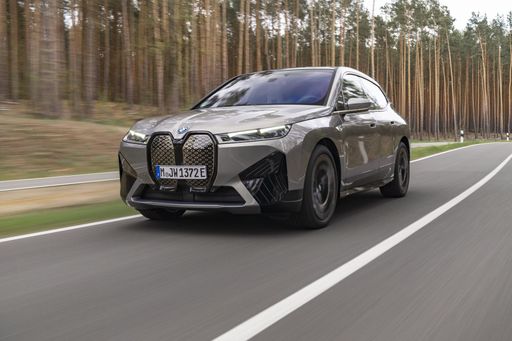
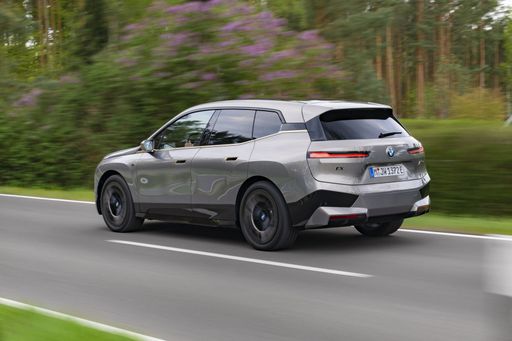
The BMW X3 and iX both embody the classic SUV silhouette but cater to different preferences regarding size and form. The X3, with a length range of 4708 to 4755 mm, offers a more compact and traditional appearance. The iX, on the other hand, extends to 4953 mm, embodying a broader and more futuristic design language with an expansive width of 1970 mm compared to the X3's 1920 mm.

iX

Performance and Engine Options

BMW X3: The X3 offers diverse powertrain options, including diesel, petrol, mild hybrids, and plug-in hybrids. The horsepower ranges from a modest 184 HP in the petrol variant to a formidable 510 HP in high-performance models. Acceleration varies as well, with 0 to 100 km/h achieved in as little as 3.8 seconds for the highest-powered variant. The diesel and hybrid engines deliver excellent fuel efficiency, consuming as low as 6 L/100km.

BMW iX: In contrast, the BMW iX relies solely on electric power, with its engine options delivering between 326 and 659 HP. The iX can sprint from 0 to 100 km/h in a notable 3.8 seconds for its most robust trim. It boasts an electric range of up to 701 km, thanks to its advanced battery options ranging up to 109.6 kWh. Its torque peaks at 1015 Nm, promising impressive on-road performance.

X3

Technological Innovations

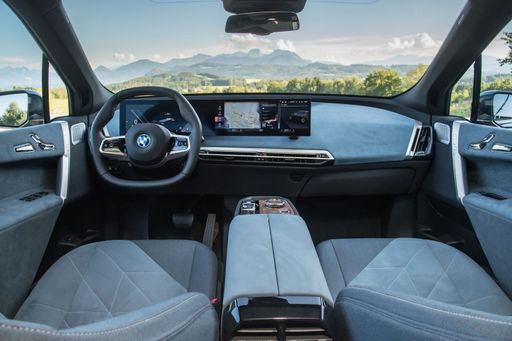
The latest iterations of both the X3 and iX integrate state-of-the-art technology. The iX stands out as BMW's showcase of electric innovation, equipped with an advanced infotainment system and the latest driver assistance features designed to provide a seamless driving experience.

Meanwhile, the X3, although more traditionally powered, does not lag far behind. It employs BMW's latest connectivity solutions and adaptive driving aids, blending comfort with cutting-edge technology. Hybrid models of the X3 especially emphasize efficiency, offering an electric range of up to 90 km powered by a 19.7 kWh battery.

iX

Environmental Impact

The BMW iX leads in terms of eco-friendliness, with a CO2 efficiency class of A, reflecting its zero-emissions electric drivetrain. The X3, while offering hybrid variants, has a wide range of CO2 outputs, with a minimum of 21 g/km. Both models signify BMW's commitment to reducing their carbon footprint, albeit in different manners.

X3

Conclusion: Traditional Versatility vs. Electric Innovation

The BMW X3 and iX demonstrate BMW's ability to cater to diverse automotive needs. The X3 remains a versatile choice with flexible engine options and traditional appeal. Meanwhile, the iX is an emblem of electric future, offering sustainability without compromising on performance. Your selection between these luxury SUVs hinges on your preference for traditional versatility or a bold step into the electric age. Both promise the quintessential BMW driving pleasure, each in its own unique way.

Here’s where it gets real: The technical differences in detail

iX

Costs and Efficiency:

Looking at overall running costs, both models reveal some interesting differences in everyday economy.

BMW X3 is noticeably cheaper – starting at 51,300 £ , while the BMW iX costs 71,600 £ . That’s a price difference of around 20,314 £.

As for electric range, the BMW iX offers significantly more range – reaching up to 701 km, about 613 km more than the BMW X3.

X3

Engine and Performance:

Power, torque and acceleration say a lot about how a car feels on the road. This is where you see which model delivers more driving dynamics.

When it comes to engine power, the BMW iX offers markedly more power – delivering 659 HP compared to 398 HP. That’s roughly 261 HP more horsepower.

When accelerating from 0 to 100 km/h, the BMW iX is markedly quicker – completing the sprint in 3.8 s, while the BMW X3 takes 4.6 s. That’s about 0.8 s quicker.

There’s also a difference in torque: the BMW iX delivers markedly more torque with 1,015 Nm compared to 670 Nm. That’s about 345 Nm more.

iX

Space and Everyday Use:

Whether family car or daily driver – which one offers more room, flexibility and comfort?

Both vehicles offer seating for 5 people.

In terms of curb weight, BMW X3 is noticeably lighter – 1,930 kg compared to 2,525 kg. The difference is around 595 kg.

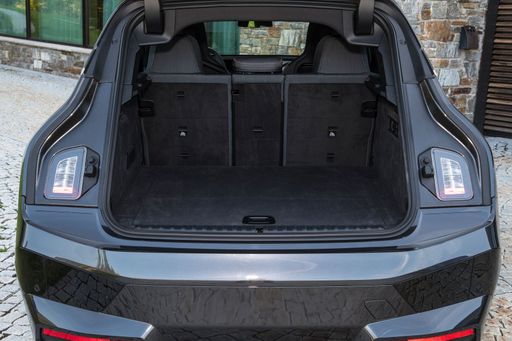
Looking at boot space, the BMW X3 offers slightly more boot space – 570 L compared to 500 L. That’s a difference of about 70 L.

When it comes to payload, the BMW iX carries barely more – 575 kg compared to 570 kg. That’s a difference of about 5 kg.

Who wins the race in the data check?

The BMW iX holds a decisive overall lead in the objective data comparison.
This result only shows which model scores more points on paper – not which of the two cars feels right for you.

from £71,600
iX

BMW iX

  • Engine Type : Electric
  • Transmission : Automatic
  • Drive Type : All-Wheel Drive
  • Power HP : 408 - 659 HP
  • Consumption kWh/100km : 17.8 - 20.6 kWh/100km
  • Electric Range : 600 - 701 km
BMW iX
BMW X3

Costs and Consumption

View detailed analysis

Engine and Performance

View detailed analysis

Dimensions and Body

View detailed analysis

BMW iX

The BMW iX arrives like a tech-rich luxury SUV that refuses to shout, offering a serene yet authoritative road presence that suits both city commutes and long-distance cruising. Inside, its minimalist cabin wraps high-quality materials and clever interfaces around a driver-focused layout, making it feel more like a forward-thinking lounge than just another electric appliance — and yes, it still delivers the dynamic driving character you'd expect from a BMW.

details

BMW X3

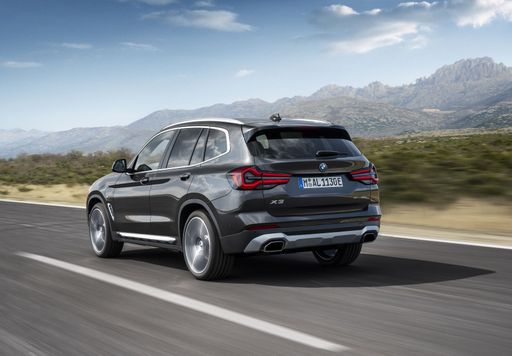
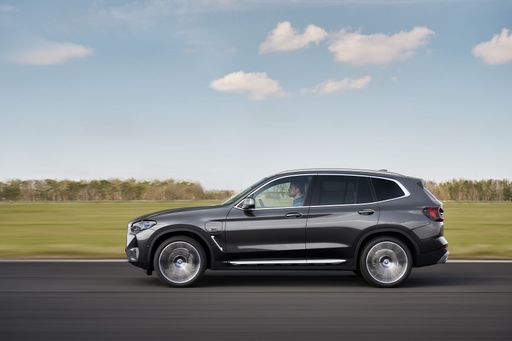
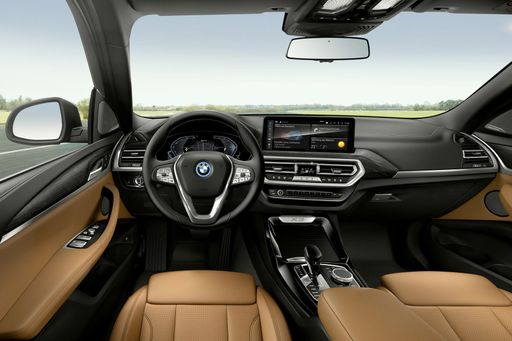
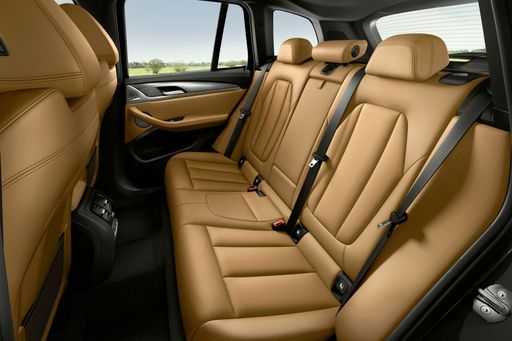
The BMW X3 mixes Bavarian poise with everyday practicality, delivering a composed ride and a cabin that feels both premium and lived-in. It’s the sort of SUV that lets you enjoy sporty handling without sacrificing family-friendly space, so you get fun and sense in one neat package.

details
BMW iX
BMW X3

Costs and Consumption

Price
71,600 - 108,400 £
Price
51,300 - 72,400 £
Consumption L/100km
-
Consumption L/100km
2.8 - 7.7 L/100km
Consumption kWh/100km
17.8 - 20.6 kWh/100km
Consumption kWh/100km
-
Electric Range
600 - 701 km
Electric Range
88 km
Battery Capacity
-
Battery Capacity
-
co2
0 g/km
co2
64 - 175 g/km
Fuel tank capacity
-
Fuel tank capacity
60 - 65 L

Dimensions and Body

Body Type
SUV
Body Type
SUV
Seats
5
Seats
5
Doors
-
Doors
5
Curb weight
2,525 - 2,655 kg
Curb weight
1,930 - 2,140 kg
Trunk capacity
500 L
Trunk capacity
460 - 570 L
Length
-
Length
4,755 mm
Width
1,970 mm
Width
1,920 mm
Height
-
Height
1,660 mm
Max trunk capacity
-
Max trunk capacity
1,700 L
Payload
505 - 575 kg
Payload
570 kg

Engine and Performance

Engine Type
Electric
Engine Type
Petrol MHEV, Diesel MHEV, Plugin Hybrid
Transmission
Automatic
Transmission
Automatic
Transmission Detail
Reduction Gearbox
Transmission Detail
Automatic Gearbox
Drive Type
All-Wheel Drive
Drive Type
All-Wheel Drive
Power HP
408 - 659 HP
Power HP
197 - 398 HP
Acceleration 0-100km/h
3.8 - 5.1 s
Acceleration 0-100km/h
4.6 - 7.8 s
Max Speed
-
Max Speed
215 - 250 km/h
Torque
700 - 1,015 Nm
Torque
330 - 670 Nm
Number of Cylinders
-
Number of Cylinders
4 - 6
Power kW
300 - 485 kW
Power kW
145 - 293 kW
Engine capacity
-
Engine capacity
1,995 - 2,998 cm3

General

Model Year
2,025
Model Year
2,024 - 2,025
CO2 Efficiency Class
A
CO2 Efficiency Class
F, E, B
Brand
BMW
Brand
BMW
DriveDuel uses data analysis and artificial intelligence to evaluate vehicle data and create content. Content is regularly reviewed and improved. The displayed prices are estimates based on German list prices, adjusted to the respective country’s VAT. Country-specific registration taxes are not included. This information is not legally binding.