VS

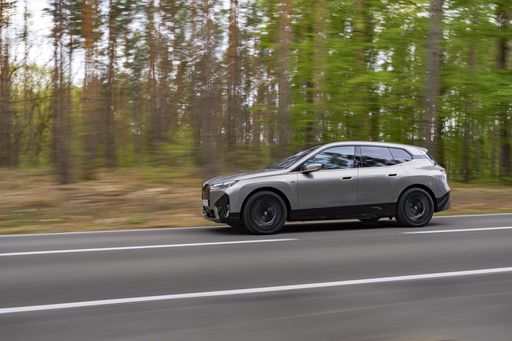
BMW iX vs CUPRA Tavascan comparison

Compare performance (659 HP vs 340 HP), boot space and price (71,600 £ vs 45,700 £ ) at a glance. Find out which car is the better choice for you – BMW iX or CUPRA Tavascan?

BMW iX vs CUPRA Tavascan: Key differences

BMW iX

3.9 (1 Reviews)
rate
  • considerably more power
  • clearly more electric range
  • significantly quicker 0–100 km/h

CUPRA Tavascan

4.9 (1 Reviews)
rate
  • substantially cheaper
  • a bit more efficient
  • slightly lighter
  • very slightly more trunk space

All details on performance, efficiency, range and trunk space can be found in the technical comparison below – including user reviews for both models.

iX

BMW iX vs. CUPRA Tavascan: A Battle of Electric Titans

As the automotive industry continues its electrified evolution, the race among electric SUVs grows fiercer. Two formidable contenders have emerged in the arena: the BMW iX and the CUPRA Tavascan. Both represent the pinnacle of electric performance and innovation. Delve into this comparison to discover which electric marvel might just be the right fit for you.
Tavascan

Power and Performance

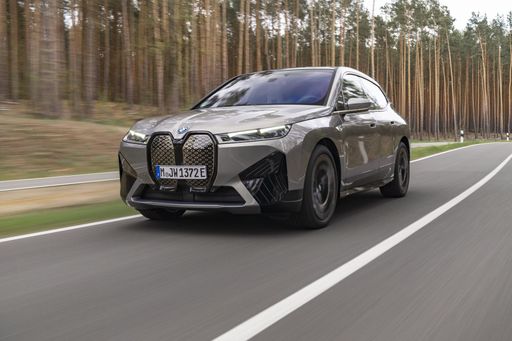
The BMW iX, with its all-wheel-drive capability, presents a spectrum of power options ranging from 326 HP to an exhilarating 659 HP. This versatile range caters to different driving preferences, offering a 0-100 km/h acceleration from as rapid as 3.8 seconds. Meanwhile, CUPRA's Tavascan offers a blend of 286 HP and 340 HP in its rear-wheel and all-wheel-drive variants, delivering a respectable acceleration time of 5.5 seconds at its peak model.

While both vehicles provide automatic transmission via reduction gearboxes, the iX provides higher torque, peaking at 1015 Nm. In comparison, the Tavascan showcases a commendable torque of 679 Nm. This results in the iX offering a higher top speed of up to 250 km/h compared to the Tavascan's 180 km/h ceiling.

iX

Efficiency and Range

Efficiency is the key in the world of electric cars, and both these SUVs impress. The BMW iX has a consumption rate ranging from 17.8 to 20.6 kWh/100km, translating to an impressive electric range from 426 km to an astonishing 701 km for specific models. On the other hand, the Tavascan delivers excellent efficiency, consuming between 15.1 and 16.5 kWh/100km with a range of up to 569 km.

Tavascan

Battery Capacity and Charging

The BMW iX supports its formidable range with battery capacities ranging from 74.1 kWh to 109.6 kWh, offering plenty of juice for any journey. Conversely, the Tavascan holds a 77 kWh battery, balancing efficiency with adequate range for longer hauls. Both models have zero CO2 emissions, categorizing them in the top CO2 efficiency class of 'A'.

iX

Design and Dimensions

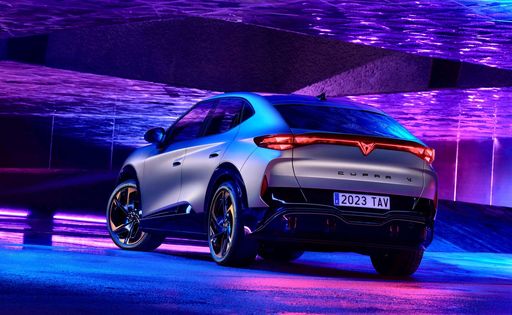
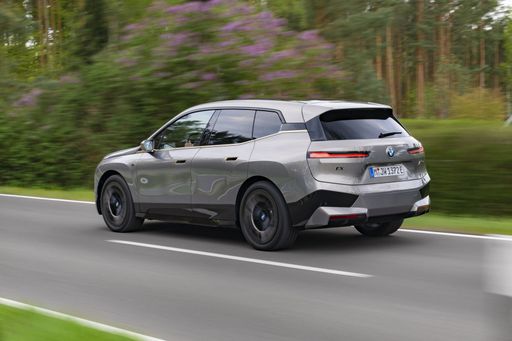
Size and design also play significant roles in defining these electric SUVs. The BMW iX stands slightly taller and wider, with dimensions extending to 4965 mm in length and a height of up to 1696 mm. In contrast, the Tavascan's compact design features a length of 4644 mm and a height of 1597 mm, catering to those desiring a sleek and sporty stance.

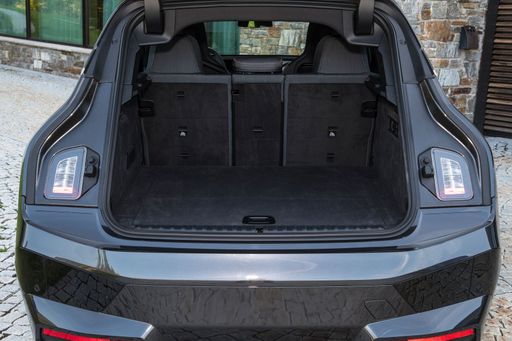
Trunk space echoes this difference, with the iX offering 500 liters compared to the Tavascan's more spacious 540 liters, appealing to families and adventurers alike.

Tavascan

Conclusion

Ultimately, the choice between the BMW iX and the CUPRA Tavascan will boil down to individual preferences in power, range, and design. The iX caters to those yearning for top-tier power and range versatility, while the Tavascan offers a sportier demeanor with admired efficiency. Both vehicles are significant players in the electric SUV market, illustrating the exciting future of automotive innovation.

Here’s where it gets real: The technical differences in detail

iX

Costs and Efficiency:

Price and efficiency are often the first things buyers look at. Here it becomes clear which model has the long-term edge – whether at the pump, the plug, or in purchase price.

CUPRA Tavascan is substantially cheaper – starting at 45,700 £ , while the BMW iX costs 71,600 £ . That’s a price difference of around 25,851 £.

In terms of energy consumption, the CUPRA Tavascan is a bit more efficient: consuming 15.9 kWh/100km compared to 17.8 kWh/100km for the BMW iX. That’s a difference of about 1.9 kWh/100km.

As for electric range, the BMW iX offers clearly more range – reaching up to 701 km, about 148 km more than the CUPRA Tavascan.

Tavascan

Engine and Performance:

Under the bonnet, it becomes clear which model is tuned for sportiness and which one takes the lead when you hit the accelerator.

When it comes to engine power, the BMW iX offers considerably more power – delivering 659 HP compared to 340 HP. That’s roughly 319 HP more horsepower.

When accelerating from 0 to 100 km/h, the BMW iX is significantly quicker – completing the sprint in 3.8 s, while the CUPRA Tavascan takes 5.5 s. That’s about 1.7 s quicker.

There’s also a difference in torque: the BMW iX delivers noticeably more torque with 1,015 Nm compared to 679 Nm. That’s about 336 Nm more.

iX

Space and Everyday Use:

Cabin size, boot volume and payload all play a role in everyday practicality. Here, comfort and flexibility make the difference.

Both vehicles offer seating for 5 people.

In terms of curb weight, CUPRA Tavascan is slightly lighter – 2,178 kg compared to 2,525 kg. The difference is around 347 kg.

Looking at boot space, the CUPRA Tavascan offers very slightly more boot space – 540 L compared to 500 L. That’s a difference of about 40 L.

When it comes to payload, the BMW iX carries very slightly more – 575 kg compared to 522 kg. That’s a difference of about 53 kg.

Who wins the race in the data check?

The BMW iX holds a decisive overall lead in the objective data comparison.
This result only shows which model scores more points on paper – not which of the two cars feels right for you.

from £71,600
iX

BMW iX

  • Engine Type : Electric
  • Transmission : Automatic
  • Drive Type : All-Wheel Drive
  • Power HP : 408 - 659 HP
  • Consumption kWh/100km : 17.8 - 20.6 kWh/100km
  • Electric Range : 600 - 701 km
BMW iX
CUPRA Tavascan

Costs and Consumption

View detailed analysis

Engine and Performance

View detailed analysis

Dimensions and Body

View detailed analysis

BMW iX

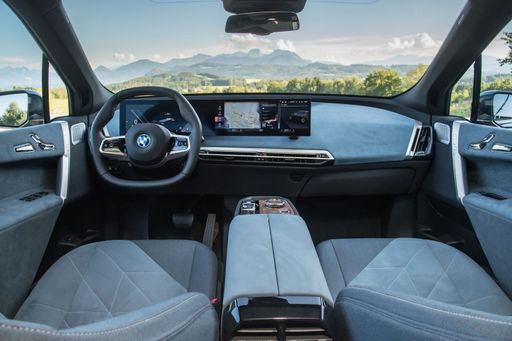
The BMW iX arrives like a tech-rich luxury SUV that refuses to shout, offering a serene yet authoritative road presence that suits both city commutes and long-distance cruising. Inside, its minimalist cabin wraps high-quality materials and clever interfaces around a driver-focused layout, making it feel more like a forward-thinking lounge than just another electric appliance — and yes, it still delivers the dynamic driving character you'd expect from a BMW.

details

CUPRA Tavascan

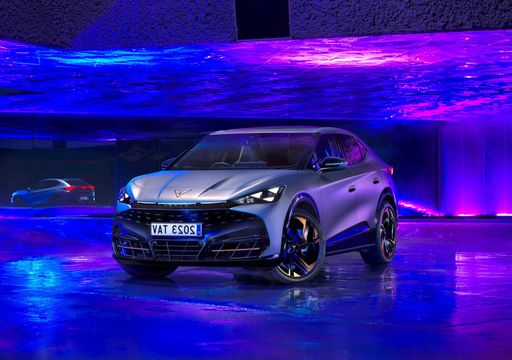
The CUPRA Tavascan is a striking electric crossover that blends aggressive, sporty design with surprising everyday practicality, pairing a coupe-like silhouette with SUV versatility. It feels lively and engaging on the road while offering premium touches inside, making it a compelling choice for buyers who want attitude without sacrificing comfort.

details
BMW iX
CUPRA Tavascan

Costs and Consumption

Price
71,600 - 108,400 £
Price
45,700 - 49,600 £
Consumption L/100km
-
Consumption L/100km
-
Consumption kWh/100km
17.8 - 20.6 kWh/100km
Consumption kWh/100km
15.9 - 17.1 kWh/100km
Electric Range
600 - 701 km
Electric Range
513 - 553 km
Battery Capacity
-
Battery Capacity
77 kWh
co2
0 g/km
co2
0 g/km
Fuel tank capacity
-
Fuel tank capacity
-

Dimensions and Body

Body Type
SUV
Body Type
SUV
Seats
5
Seats
5
Doors
-
Doors
5
Curb weight
2,525 - 2,655 kg
Curb weight
2,178 - 2,273 kg
Trunk capacity
500 L
Trunk capacity
540 L
Length
-
Length
4,644 mm
Width
1,970 mm
Width
1,861 mm
Height
-
Height
1,597 mm
Max trunk capacity
-
Max trunk capacity
-
Payload
505 - 575 kg
Payload
507 - 522 kg

Engine and Performance

Engine Type
Electric
Engine Type
Electric
Transmission
Automatic
Transmission
Automatic
Transmission Detail
Reduction Gearbox
Transmission Detail
Reduction Gearbox
Drive Type
All-Wheel Drive
Drive Type
Rear-Wheel Drive, All-Wheel Drive
Power HP
408 - 659 HP
Power HP
286 - 340 HP
Acceleration 0-100km/h
3.8 - 5.1 s
Acceleration 0-100km/h
5.5 - 6.8 s
Max Speed
-
Max Speed
180 km/h
Torque
700 - 1,015 Nm
Torque
545 - 679 Nm
Number of Cylinders
-
Number of Cylinders
-
Power kW
300 - 485 kW
Power kW
210 - 250 kW
Engine capacity
-
Engine capacity
-

General

Model Year
2,025
Model Year
2,024
CO2 Efficiency Class
A
CO2 Efficiency Class
A
Brand
BMW
Brand
CUPRA
DriveDuel uses data analysis and artificial intelligence to evaluate vehicle data and create content. Content is regularly reviewed and improved. The displayed prices are estimates based on German list prices, adjusted to the respective country’s VAT. Country-specific registration taxes are not included. This information is not legally binding.