@ BMW Group Press
@ Kia Corporation
VS

BMW iX1 vs Kia EV6 – Differences & prices compared

Compare performance, boot capacity, efficiency and price at a glance.
Find out which car is the better choice for you – BMW iX1 or Kia EV6?

iX1 @ BMW Group Press

Astonishing Electric Rivals: BMW iX1 vs. Kia EV6

As the automotive industry continues to shift towards electrification, both BMW and Kia have made significant strides in the EV segment with the introduction of the all-new BMW iX1 and the dynamic Kia EV6. These two electric SUVs not only showcase advancing technologies but also appeal to a growing audience prioritizing sustainability without compromising on performance. This article will delve into a comprehensive comparison of these noteworthy models, highlighting their technical aspects and innovations.
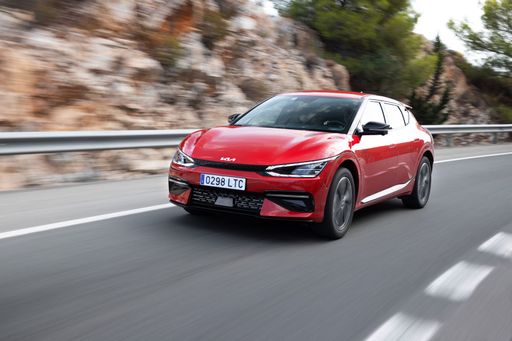
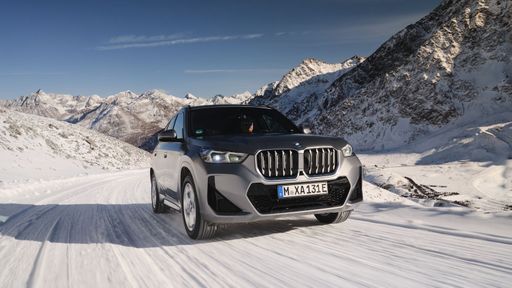
EV6 @ Kia Corporation

Design and Dimensions

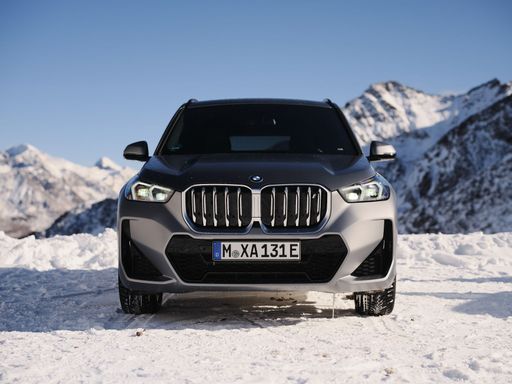
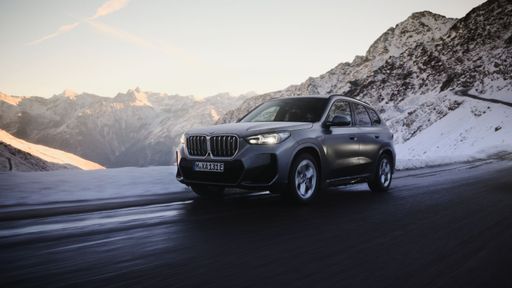
Both the BMW iX1 and Kia EV6 offer striking designs that reflect their brand identities. The BMW iX1 stands at 4500 mm in length, 1845 mm in width, and 1616 mm in height, providing a compact yet spacious SUV profile. With a trunk capacity of 490 liters, it delivers practicality for everyday use.

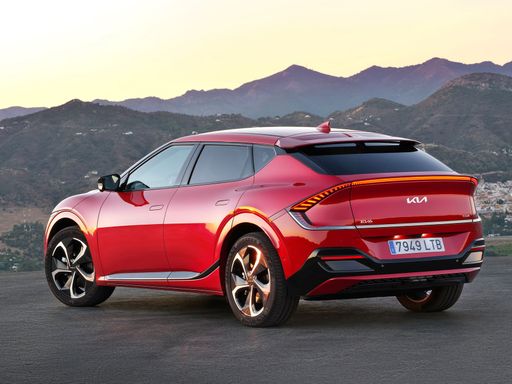
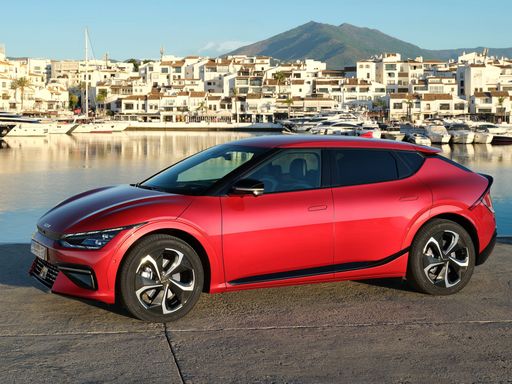
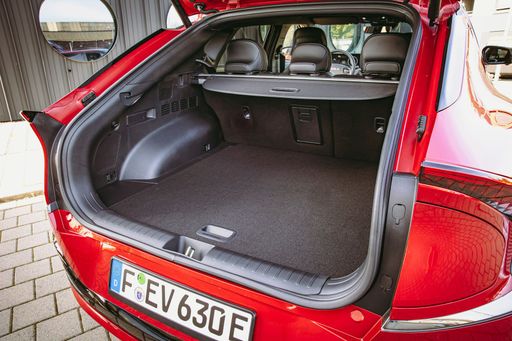
In contrast, the Kia EV6 is slightly larger, measuring 4695 mm long and available in two width variations: 1880 mm and 1890 mm. Its height ranges from 1545 mm to 1550 mm, giving it a sportier stance. Despite its taller silhouette, the EV6 offers a trunk capacity of 480 liters, nearly matching that of the iX1.

iX1 @ BMW Group Press

Powertrains and Performance

The performance metrics of both models highlight significant advancements in EV technology. The BMW iX1 offers two powertrain options: a 204 HP front-wheel drive variant and a more powerful 313 HP all-wheel drive version, with torque figures of 250 Nm and 494 Nm, respectively. It can achieve acceleration from 0 to 100 km/h in 8.6 seconds (for the 204 HP version) and a lightning-fast 5.6 seconds for the 313 HP model.

On the other hand, the Kia EV6 packs a robust lineup with options ranging from 170 HP to a high-performance 609 HP model. The higher trims boast torque figures reaching up to 770 Nm, enabling blistering acceleration of just 3.5 seconds for the top-tier variant. The EV6's maximum speed also surpasses the iX1, reaching up to 260 km/h in the performance-focused versions.

EV6 @ Kia Corporation

Range and Efficiency

When it comes to electric range, both vehicles perform commendably. The iX1 delivers an impressive electric range of 463 km for the 204 HP version and 436 km for the more potent variant. Its power consumption rates range from 15.8 to 17.1 kWh/100 km, making it efficient for city and highway driving alike.

The Kia EV6 offers a slightly broader range of options with electric ranges from approximately 428 km in the base trim to an impressive 582 km in the larger battery variant. Its consumption ranges from 15.9 to 20.9 kWh/100 km, a testament to its advanced engineering and aerodynamics.

iX1 @ BMW Group Press

Innovative Features and Technology

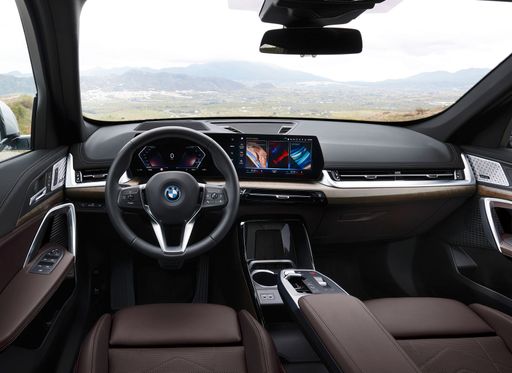
Both manufacturers have infused cutting-edge technologies into their electric SUVs. The BMW iX1 comes equipped with the latest iDrive system, providing a seamless interface for navigation, drive settings, and infotainment. The vehicle also includes advanced driver-assistance systems that enhance safety and driving convenience.

In parallel, the Kia EV6 offers a futuristic interior with dual 12.3-inch curved displays for the driver and infotainment system, complemented by over-the-air updates to ensure the latest features are always available. The EV6 also boasts 800V charging technology, allowing for rapid charging capabilities that can significantly reduce downtime on long journeys.

EV6 @ Kia Corporation

Conclusion: Choosing the Right Electric SUV

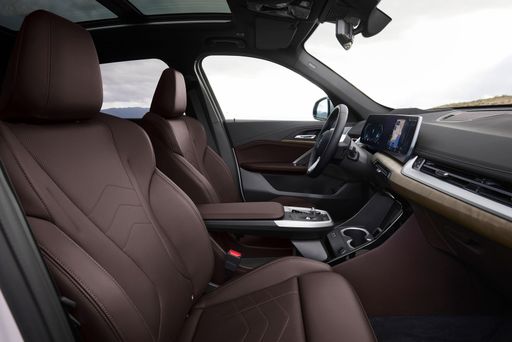
Ultimately, the decision between the BMW iX1 and Kia EV6 boils down to personal preferences and requirements. The iX1 caters to buyers seeking a premium feel with BMW's hallmark driving dynamics and luxurious interior. In contrast, the Kia EV6 offers impressive range, versatility, and cutting-edge technology, making it a compelling choice for tech-savvy consumers.

Each of these electric SUVs contributes to the automotive landscape's transformation, affirming that innovation and sustainability are at the forefront of modern vehicle design. Whether it’s the distinctly sporty Kia EV6 or the upscale BMW iX1, drivers are sure to enjoy an electrifying experience with either model.

Here’s where it gets real: The technical differences in detail

iX1 @ BMW Group Press

Costs and Efficiency:

Price and efficiency are often the first things buyers look at. Here it becomes clear which model has the long-term edge – whether at the pump, the plug, or in purchase price.

Kia EV6 has a slight advantage in terms of price – it starts at 38600 £, while the BMW iX1 costs 41800 £. That’s a price difference of around 3266 £.

In terms of energy consumption, the advantage goes to the BMW iX1: with 15.80 kWh per 100 km, it’s barely noticeable more efficient than the Kia EV6 with 15.90 kWh. That’s a difference of about 0.10 kWh.

As for range, the Kia EV6 performs distinct better – achieving up to 582 km, about 119 km more than the BMW iX1.

EV6 @ Kia Corporation

Engine and Performance:

Power, torque and acceleration say a lot about how a car feels on the road. This is where you see which model delivers more driving dynamics.

When it comes to engine power, the Kia EV6 has a clearly edge – offering 609 HP compared to 313 HP. That’s roughly 296 HP more horsepower.

In acceleration from 0 to 100 km/h, the Kia EV6 is significantly quicker – completing the sprint in 3.50 s, while the BMW iX1 takes 5.60 s. That’s about 2.10 s faster.

In terms of top speed, the Kia EV6 performs evident better – reaching 260 km/h, while the BMW iX1 tops out at 180 km/h. The difference is around 80 km/h.

There’s also a difference in torque: Kia EV6 pulls evident stronger with 770 Nm compared to 494 Nm. That’s about 276 Nm difference.

iX1 @ BMW Group Press

Space and Everyday Use:

Whether family car or daily driver – which one offers more room, flexibility and comfort?

Both vehicles offer seating for 5 people.

In curb weight, BMW iX1 is slight lighter – 1940 kg compared to 1955 kg. The difference is around 15 kg.

Boot capacity is identical – both offer 490 L of storage.

In maximum load capacity, the BMW iX1 performs to a small extent better – up to 1495 L, which is about 205 L more than the Kia EV6.

When it comes to payload, BMW iX1 hardly perceptible takes the win – 495 kg compared to 450 kg. That’s a difference of about 45 kg.

Who comes out on top?

Overall, the Kia EV6 shows itself to be outperforms in nearly all aspects and secures the title of DriveDuel Champion.
It convinces with the more balanced overall package and proves to be the more versatile choice for everyday use.

from about £38,600
EV6 @ Kia Corporation

Kia EV6

  • Engine Type : Electric
  • Transmission : Automatic
  • Drive Type : Rear-Wheel Drive, All-Wheel Drive
  • Power HP : 170 - 609 HP
  • Consumption kWh/100km : 15.9 - 20.9 kWh
  • Electric Range : 428 - 582 km

BMW iX1

5 (2)
rate

The BMW iX1 wraps BMW's electric ambition into a compact SUV package that feels unexpectedly premium, with sharp handling and a crisp, modern cabin that keeps the driver in charge. It's ideal for buyers who want a stylish, quiet daily driver with useful practicality and tech-savvy touches — plus enough character to make the commute feel less like a chore and more like a short joyride.

details

Kia EV6

5 (1)
rate

The Kia EV6 looks like it sprinted off a concept stage, its bold, futuristic lines wrapping a surprisingly spacious and grown-up cabin. On the road it delivers crisp, immediate thrust and composed handling, with enough everyday practicality and slick tech to make ditching petrol feel like an upgrade rather than a compromise.

details
BMW iX1
Kia EV6
iX1 @ BMW Group Press
EV6 @ Kia Corporation

Costs and Consumption

Price
41800 - 54600 £
Price
38600 - 60000 £
Consumption L/100km
-
Consumption L/100km
-
Consumption kWh/100km
15.8 - 17.1 kWh
Consumption kWh/100km
15.9 - 20.9 kWh
Electric Range
436 - 463 km
Electric Range
428 - 582 km
Battery Capacity
64.80 kWh
Battery Capacity
63 - 84 kWh
co2
0 g/km
co2
0 g/km
Fuel tank capacity
-
Fuel tank capacity
-

Dimensions and Body

Body Type
SUV
Body Type
SUV
Seats
5
Seats
5
Doors
5
Doors
5
Curb weight
1940 - 2085 kg
Curb weight
1955 - 2220 kg
Trunk capacity
490 L
Trunk capacity
480 - 490 L
Length
4500 mm
Length
4695 mm
Width
1845 mm
Width
1880 - 1890 mm
Height
1616 mm
Height
1545 - 1550 mm
Max trunk capacity
1495 L
Max trunk capacity
1250 - 1290 L
Payload
495 kg
Payload
440 - 450 kg

Engine and Performance

Engine Type
Electric
Engine Type
Electric
Transmission
Automatic
Transmission
Automatic
Transmission Detail
Reduction Gearbox
Transmission Detail
Reduction Gearbox
Drive Type
Front-Wheel Drive, All-Wheel Drive
Drive Type
Rear-Wheel Drive, All-Wheel Drive
Power HP
204 - 313 HP
Power HP
170 - 609 HP
Acceleration 0-100km/h
5.6 - 8.6 s
Acceleration 0-100km/h
3.5 - 8.7 s
Max Speed
170 - 180 km/h
Max Speed
185 - 260 km/h
Torque
250 - 494 Nm
Torque
350 - 770 Nm
Number of Cylinders
-
Number of Cylinders
-
Power kW
150 - 230 kW
Power kW
125 - 448 kW
Engine capacity
-
Engine capacity
-

General

Model Year
2022 - 2023
Model Year
2024 - 2025
CO2 Efficiency Class
A
CO2 Efficiency Class
A
Brand
BMW
Brand
Kia
Is the BMW iX1 offered with different drivetrains?

The BMW iX1 is available as Front-Wheel Drive or All-Wheel Drive.

The prices and data displayed are estimates based on German list prices and may vary by country. This information is not legally binding.