VS

BMW iX3 vs Audi Q4 e-tron comparison

Compare performance (469 HP vs 340 HP), boot space and price (54,300 £ vs 40,700 £ ) at a glance. Find out which car is the better choice for you – BMW iX3 or Audi Q4 e-tron?

BMW iX3 vs Audi Q4 e-tron: Key differences

BMW iX3

4.6 (4 Reviews)
rate
  • markedly more power
  • marginally more efficient
  • noticeably more electric range
  • moderately quicker 0–100 km/h
details

Audi Q4 e-tron

4.6 (3 Reviews)
rate
  • markedly cheaper
  • somewhat lighter
details

All details on performance, efficiency, range and trunk space can be found in the technical comparison below – including user reviews for both models.

By Achim Sedelmaier

iX3

City slicker or road commander?

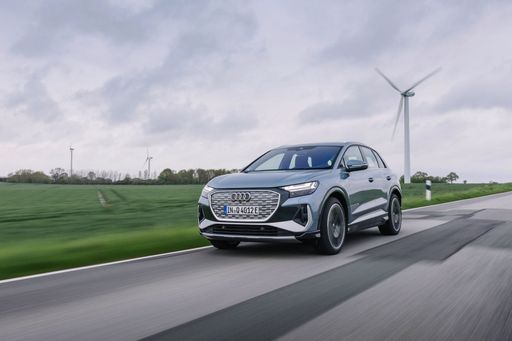
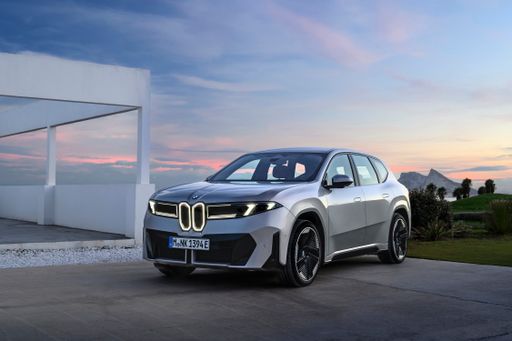
The Audi Q4 e-tron arrives with an air of measured refinement, looking and feeling like the sensible choice for city life and weekend escapes, while the BMW iX3 projects a more assertive, athletic presence that promises to cover long distances with confidence. Audi’s softer demeanour makes it easy to live with day-to-day, whereas the BMW’s stance signals intent and a sportier personality when you want to push on. Both have distinct characters, so your mood and driving style will likely decide which one resonates.
Q4 e-tron

What it’s like behind the wheel

Get moving and the Q4 settles into a composed, reassuring rhythm that rewards calm inputs and smooth progress, giving a sense of effortless ease around town. The iX3, by contrast, feels more taut and focused — steering and responses are sharper and invite a brisker pace without feeling nervous. If you value serenity over edge, the Audi soothes; if you want engagement with a dose of motorway confidence, the BMW answers the brief.

iX3

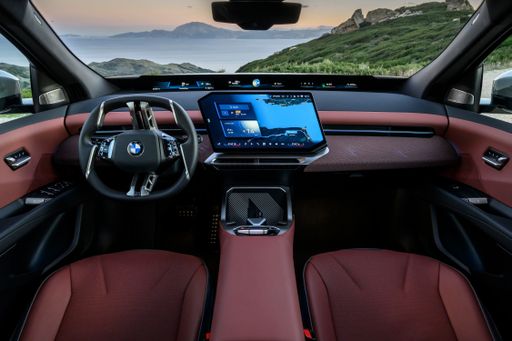
Cabin mood and usability

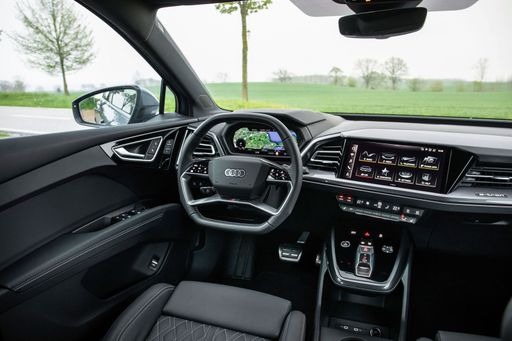
Step inside the Audi and you’re greeted by a minimalist, well-dressed environment where materials and layout play it classy rather than flashy, which makes everyday use pleasantly straightforward. The BMW leans into a driver-focused cockpit with a firmer, sportier ambience that emphasizes control and ergonomics for those who like everything to feel within reach. Both interiors are thoughtfully engineered, but they speak to different tastes: subtle luxury versus athletic purposeful design.

Q4 e-tron

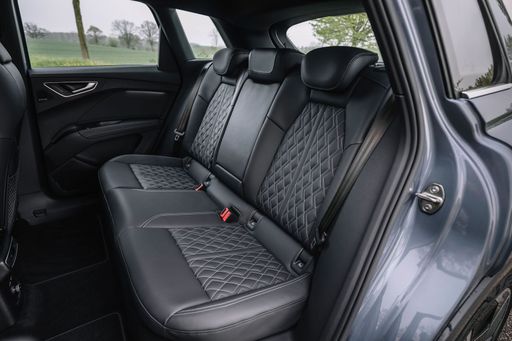
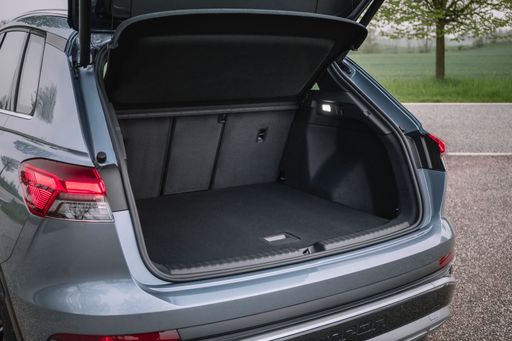
Family life and practical thinking

For families, the Q4’s approach feels pragmatic — easy access, sensible storage points and a user-friendly layout that reduces friction in everyday routines. The iX3 brings a slightly more planted, substantial feel to the rear seat and load area that reassures on longer journeys and when you’re fully loaded with luggage or kids’ gear. Neither is impractical, but your priorities — day-to-day convenience or steady long-distance composure — will shape which one fits into family life better.

iX3

Ownership mood: daily cost and long trips

Living with the Audi tends to feel straightforward and cost-conscious, with a personality that welcomes routine charging and urban chores without fuss. The BMW often rewards motorway work and longer hauls with a composure that can make extended trips feel less tiring, appealing to buyers who spend more time beyond the city limits. Both are credible ownership propositions; your mileage pattern and tastes will steer you toward the one that suits your calendar.

Q4 e-tron

Decide by feeling — then read on

Choosing between these two comes down to temperament more than spec sheets: the Q4 is the urbane, user-friendly choice while the iX3 is the assured, athlete-like alternative. If you’re torn, think about where you spend most of your miles and which cabin vibe you’ll tire of least. Stay tuned — the DriveDuel Champion will be revealed afterwards, so read on to see which one takes the crown.

Here’s where it gets real: The technical differences in detail

iX3

Costs and Efficiency:

Looking at overall running costs, both models reveal some interesting differences in everyday economy.

Audi Q4 e-tron is markedly cheaper – starting at 40,700 £ , while the BMW iX3 costs 54,300 £ . That’s a price difference of around 13,628 £.

In terms of energy consumption, the BMW iX3 is marginally more efficient: consuming 14.6 kWh/100km compared to 14.8 kWh/100km for the Audi Q4 e-tron. That’s a difference of about 0.2 kWh/100km.

As for electric range, the BMW iX3 offers noticeably more range – reaching up to 805 km, about 213 km more than the Audi Q4 e-tron.

Q4 e-tron

Engine and Performance:

Power, torque and acceleration are the classic benchmarks for car enthusiasts – and here, some clear differences start to show.

When it comes to engine power, the BMW iX3 offers markedly more power – delivering 469 HP compared to 340 HP. That’s roughly 129 HP more horsepower.

When accelerating from 0 to 100 km/h, the BMW iX3 is moderately quicker – completing the sprint in 4.9 s, while the Audi Q4 e-tron takes 5.4 s. That’s about 0.5 s quicker.

There’s also a difference in torque: the Audi Q4 e-tron delivers barely more torque with 679 Nm compared to 645 Nm. That’s about 34 Nm more.

iX3

Space and Everyday Use:

Cabin size, boot volume and payload all play a role in everyday practicality. Here, comfort and flexibility make the difference.

Both vehicles offer seating for 5 people.

In terms of curb weight, Audi Q4 e-tron is somewhat lighter – 2,035 kg compared to 2,360 kg. The difference is around 325 kg.

When it comes to payload, the Audi Q4 e-tron carries only slightly more – 515 kg compared to 465 kg. That’s a difference of about 50 kg.

Who wins the race in the data check?

The BMW iX3 shows a few small advantages in the objective data comparison.
This result only shows which model scores more points on paper – not which of the two cars feels right for you.

from £54,300
iX3

BMW iX3

  • Engine Type Electric
  • Transmission Automatic
  • Drive Type All-Wheel Drive, Rear-Wheel Drive
  • Power HP 320 - 469 HP
  • Consumption kWh/100km 14.6 - 15.1 kWh/100km
  • Electric Range 635 - 805 km
BMW iX3
Audi Q4 e-tron

Costs and Consumption

View detailed analysis

Engine and Performance

View detailed analysis

Dimensions and Body

View detailed analysis

BMW iX3

The BMW iX3 is an electric SUV that delivers the composed, premium driving experience BMW buyers expect. With a calm, refined cabin and practical everyday usability, it’s a strong choice for those who want electric motoring without giving up luxury and comfort.

details

Audi Q4 e-tron

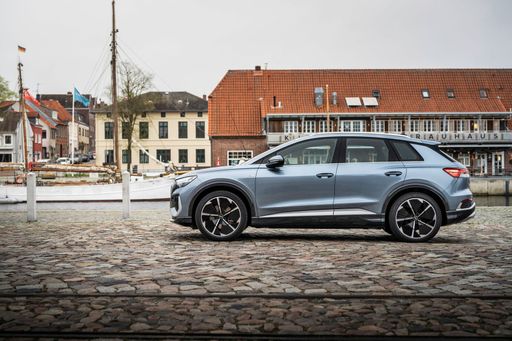
The Audi Q4 e-tron blends Audi’s clean, modern styling with a practical, well-built interior, making it a refined option for buyers who want a premium electric compact SUV. It offers a quiet, composed ride and intuitive tech, so it’s well suited to daily commuting and family duties while keeping the switch to electric straightforward.

details
BMW iX3
Audi Q4 e-tron

Costs and Consumption

Price
54,300 - 66,300 £
Price
40,700 - 53,100 £
Consumption L/100km
-
Consumption L/100km
-
Consumption kWh/100km
14.6 - 15.1 kWh/100km
Consumption kWh/100km
14.8 - 16.2 kWh/100km
Electric Range
635 - 805 km
Electric Range
440 - 592 km
Battery Capacity
-
Battery Capacity
-
co2
0 g/km
co2
0 g/km
Fuel tank capacity
-
Fuel tank capacity
-

Dimensions and Body

Body Type
SUV
Body Type
SUV
Seats
5
Seats
5
Doors
-
Doors
-
Curb weight
2,360 kg
Curb weight
2,035 - 2,235 kg
Trunk capacity
-
Trunk capacity
515 - 535 L
Length
-
Length
-
Width
1,895 mm
Width
1,865 mm
Height
-
Height
-
Max trunk capacity
-
Max trunk capacity
-
Payload
465 kg
Payload
505 - 515 kg

Engine and Performance

Engine Type
Electric
Engine Type
Electric
Transmission
Automatic
Transmission
Automatic
Transmission Detail
Reduction Gearbox
Transmission Detail
Reduction Gearbox
Drive Type
All-Wheel Drive, Rear-Wheel Drive
Drive Type
Rear-Wheel Drive, All-Wheel Drive
Power HP
320 - 469 HP
Power HP
204 - 340 HP
Acceleration 0-100km/h
4.9 - 5.9 s
Acceleration 0-100km/h
5.4 - 8.1 s
Max Speed
-
Max Speed
-
Torque
500 - 645 Nm
Torque
350 - 679 Nm
Number of Cylinders
-
Number of Cylinders
-
Power kW
235 - 345 kW
Power kW
150 - 250 kW
Engine capacity
-
Engine capacity
-

General

Model Year
2026
Model Year
2026
CO2 Efficiency Class
A
CO2 Efficiency Class
A
Brand
BMW
Brand
Audi
DriveDuel uses data analysis and artificial intelligence to evaluate vehicle data and create content. Content is regularly reviewed and improved. The displayed prices are estimates based on German list prices, adjusted to the respective country’s VAT. Country-specific registration taxes are not included. This information is not legally binding.