VS

BMW X2 vs Suzuki Vitara comparison

Compare performance (300 HP vs 184 HP), boot space and price (41,700 £ vs 23,600 £ ) at a glance. Find out which car is the better choice for you – BMW X2 or Suzuki Vitara?

BMW X2 vs Suzuki Vitara: Key differences

BMW X2

4.6 (1 Reviews)
rate
  • visibly more power
  • somewhat more efficient
  • markedly quicker 0–100 km/h
  • markedly more trunk space
details

Suzuki Vitara

4.5 (9 Reviews)
rate
  • substantially cheaper
  • clearly lighter
details

All details on performance, efficiency, range and trunk space can be found in the technical comparison below – including user reviews for both models.

By Achim Sedelmaier

X2

BMW X2 vs Suzuki Vitara: A Comparative Analysis of Urban SUVs

In the rapidly evolving world of urban SUVs, two contenders stand out for their unique blend of style, performance, and innovation: the BMW X2 and the Suzuki Vitara. As more drivers seek versatile vehicles that comfortably transition from city streets to open roads, these models offer a tantalizing glimpse into the future of SUV design. Let's delve into their technical aspects and innovations to discover which might be the right choice for you.
Vitara

Performance and Power

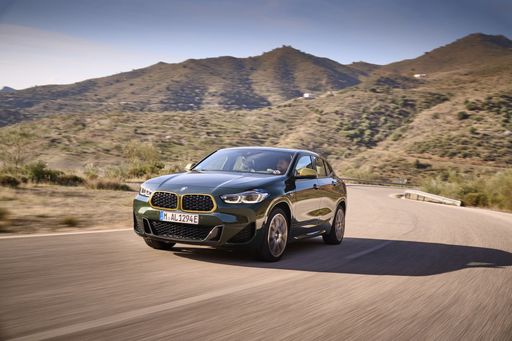
The BMW X2 emerges as a powerhouse with a variety of engine types, including diesel, petrol, and mild hybrid electric vehicle (MHEV) options. Its most robust engine muster’s an impressive 300 horsepower (HP), sprinting from 0 to 100 km/h in just 5.4 seconds. For those prioritizing efficiency, the X2's diesel MHEV variant offers a consumption of as low as 4.6 L/100km.

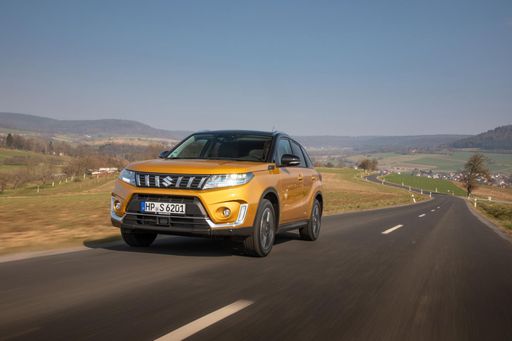
In contrast, the Suzuki Vitara focuses on economical performance with petrol MHEV and full hybrid options. Its engine, producing up to 129 HP, offers a balanced drive with a leading consumption of 5 L/100km on its most efficient model. Although it takes longer to reach 100 km/h, with times ranging from 9.5 to 12.7 seconds, the Vitara shines with its practical fuel efficiency.

X2

Transmission and Drive Dynamics

The BMW X2 features a sophisticated dual-clutch automatic transmission, ensuring smooth gear shifts and improved fuel efficiency. It presents drivers with both front-wheel drive and all-wheel drive options, catering to varied driving preferences from city commutes to rugged terrains.

The Suzuki Vitara offers flexibility with both manual and automated manual transmission options. Its adaptable drive train provides both front-wheel and all-wheel drive configurations, offering seamless versatility across diverse driving conditions.

Vitara

Technical Specifications and Innovation

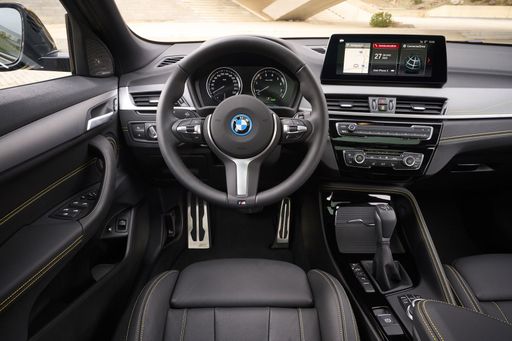
Both SUVs stand at the forefront of innovation, albeit with different emphases. The X2 prioritizes peak performance and luxury features, boasting a high maximum speed of 250 km/h and advanced torque levels up to 400 Nm. Its comprehensive inclusion of sensors and digital interface increases driver connectivity and control.

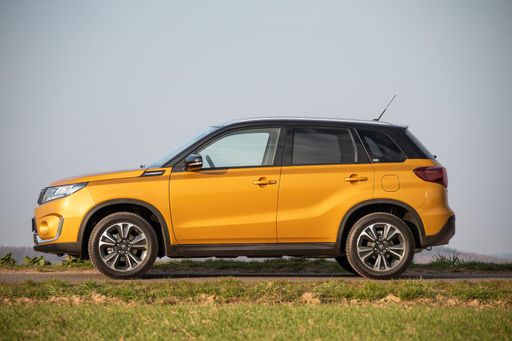
The Vitara emphasizes compactness and utility. Its dimensions (180 mm less in length than the X2) make it a preferred choice for urban navigation and parking ease. The Vitara’s commendable CO2 efficiency class, achieving up to level C, is another feather in its cap, highlighting its commitment to environmental responsibility.

X2

Space and Comfort

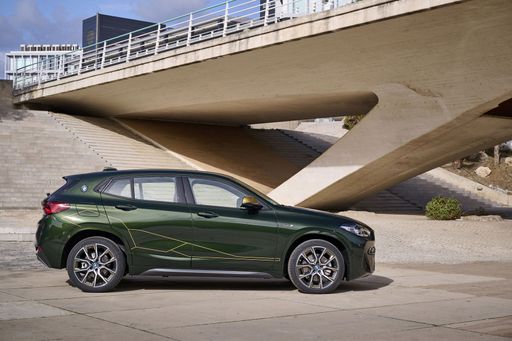
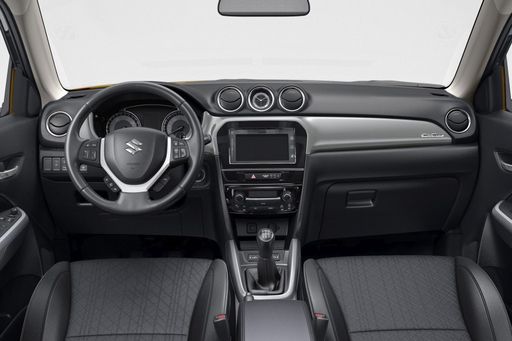
The BMW X2 offers a roomy cargo hold with a trunk capacity expanding up to 560 liters, complemented by a luxurious interior that can comfortably seat five. The selection of high-quality materials and ergonomic design enhances the driving experience considerably.

Meanwhile, the Suzuki Vitara provides a slightly smaller trunk space maxing out at 375 liters but compensates with a well-designed cabin that focuses on passenger comfort and practical storage solutions, making it an excellent choice for longer road trips.

Vitara

Conclusion

The decision between the BMW X2 and the Suzuki Vitara hinges on a driver's priorities. For those seeking dynamic performance, a touch of luxury, and robust driving capabilities, the BMW X2 defines the segment with its power and sophistication. Conversely, the Suzuki Vitara caters to those who value economic efficiency, environmental consciousness, and a straightforward driving experience. Both models embody the essence of modern SUVs, making them worthy contenders for any driver seeking that ideal balance of style, performance, and innovation.

Here’s where it gets real: The technical differences in detail

X2

Costs and Efficiency:

Price and efficiency are key factors when choosing a car – and this is often where the real differences emerge.

Suzuki Vitara is substantially cheaper – starting at 23,600 £ , while the BMW X2 costs 41,700 £ . That’s a price difference of around 18,086 £.

Fuel consumption also shows a difference: the BMW X2 uses 4.5 L/100km and is somewhat more efficient than the Suzuki Vitara with 5.3 L/100km. The difference is about 0.8 L/100km.

Vitara

Engine and Performance:

Power, torque and acceleration are the classic benchmarks for car enthusiasts – and here, some clear differences start to show.

When it comes to engine power, the BMW X2 offers visibly more power – delivering 300 HP compared to 184 HP. That’s roughly 116 HP more horsepower.

When accelerating from 0 to 100 km/h, the BMW X2 is markedly quicker – completing the sprint in 5.4 s, while the Suzuki Vitara takes 7.4 s. That’s about 2 s quicker.

There’s also a difference in torque: the BMW X2 delivers noticeably more torque with 400 Nm compared to 307 Nm. That’s about 93 Nm more.

X2

Space and Everyday Use:

Whether family car or daily driver – which one offers more room, flexibility and comfort?

Both vehicles offer seating for 5 people.

In terms of curb weight, Suzuki Vitara is clearly lighter – 1,255 kg compared to 1,645 kg. The difference is around 390 kg.

Looking at boot space, the BMW X2 offers markedly more boot space – 560 L compared to 375 L. That’s a difference of about 185 L.

When it comes to payload, the BMW X2 carries slightly more – 510 kg compared to 425 kg. That’s a difference of about 85 kg.

Who wins the race in the data check?

The BMW X2 has the upper hand in the objective data comparison.
This result only shows which model scores more points on paper – not which of the two cars feels right for you.

from £41,700
X2

BMW X2

  • Engine Type Diesel MHEV, Petrol MHEV, Diesel, Petrol
  • Transmission Automatic
  • Drive Type Front-Wheel Drive, All-Wheel Drive
  • Power HP 150 - 300 HP
  • Consumption L/100km 4.5 - 7.7 L/100km
BMW X2
Suzuki Vitara

Costs and Consumption

View detailed analysis

Engine and Performance

View detailed analysis

Dimensions and Body

View detailed analysis

BMW X2

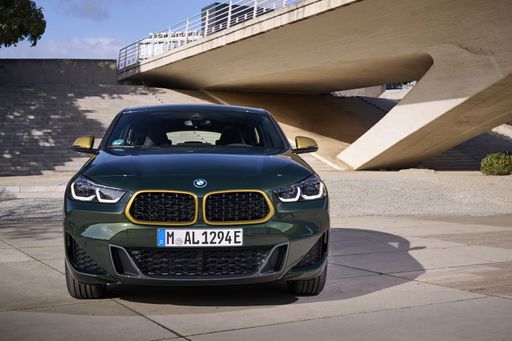
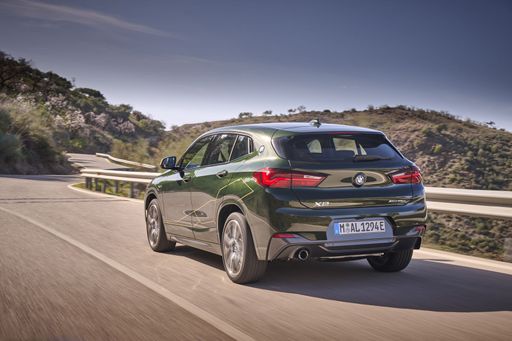
The BMW X2 feels like a sporty coupe dressed as an SUV, with sharp styling and a cheeky, youthful attitude that stands out in traffic. Inside it's driver-focused and compact but smartly packaged, perfect for city life and buyers who want BMW flair without the usual SUV bulk.

details

Suzuki Vitara

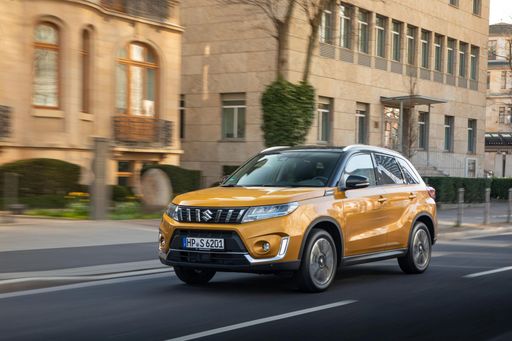
The Suzuki Vitara is a practical compact SUV that balances a comfortable, composed ride with easy-to-live-with interior space, making it well suited for daily driving and weekend getaways. It's widely praised for reliable engineering and sensible running costs, offering straightforward value to buyers who want a no-nonsense, economical crossover.

details
BMW X2
Suzuki Vitara

Costs and Consumption

Price
41,700 - 59,600 £
Price
23,600 - 36,800 £
Consumption L/100km
4.5 - 7.7 L/100km
Consumption L/100km
5.3 - 5.8 L/100km
Consumption kWh/100km
-
Consumption kWh/100km
14.9 - 16.6 kWh/100km
Electric Range
-
Electric Range
344 - 426 km
Battery Capacity
-
Battery Capacity
-
co2
118 - 174 g/km
co2
0 - 137 g/km
Fuel tank capacity
-
Fuel tank capacity
-

Dimensions and Body

Body Type
SUV
Body Type
SUV
Seats
5
Seats
5
Doors
-
Doors
-
Curb weight
1,645 - 1,780 kg
Curb weight
1,255 - 1,935 kg
Trunk capacity
515 - 560 L
Trunk capacity
310 - 375 L
Length
-
Length
-
Width
1,845 mm
Width
1,775 - 1,800 mm
Height
-
Height
-
Max trunk capacity
-
Max trunk capacity
-
Payload
495 - 510 kg
Payload
395 - 425 kg

Engine and Performance

Engine Type
Diesel MHEV, Petrol MHEV, Diesel, Petrol
Engine Type
Petrol MHEV, Electric
Transmission
Automatic
Transmission
Automatic, Manuel
Transmission Detail
Dual-Clutch Automatic
Transmission Detail
Automatic Gearbox, Reduction Gearbox, Manual Gearbox
Drive Type
Front-Wheel Drive, All-Wheel Drive
Drive Type
Front-Wheel Drive, All-Wheel Drive
Power HP
150 - 300 HP
Power HP
110 - 184 HP
Acceleration 0-100km/h
5.4 - 8.9 s
Acceleration 0-100km/h
7.4 - 9.6 s
Max Speed
-
Max Speed
-
Torque
280 - 400 Nm
Torque
193 - 307 Nm
Number of Cylinders
3 - 4
Number of Cylinders
4
Power kW
110 - 221 kW
Power kW
81 - 135 kW
Engine capacity
1,499 - 1,998 cm3
Engine capacity
1,373 cm3

General

Model Year
2024
Model Year
2,025 - 2,026
CO2 Efficiency Class
D, F
CO2 Efficiency Class
D, E, A
Brand
BMW
Brand
Suzuki
DriveDuel uses data analysis and artificial intelligence to evaluate vehicle data and create content. Content is regularly reviewed and improved. The displayed prices are estimates based on German list prices, adjusted to the respective country’s VAT. Country-specific registration taxes are not included. This information is not legally binding.