VS

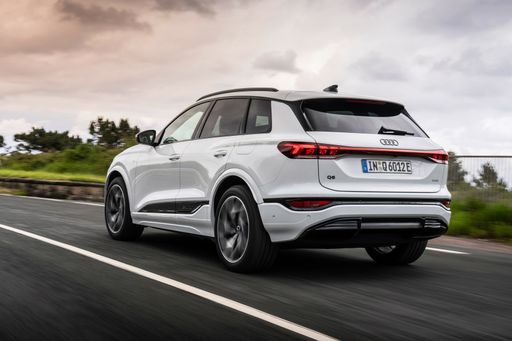
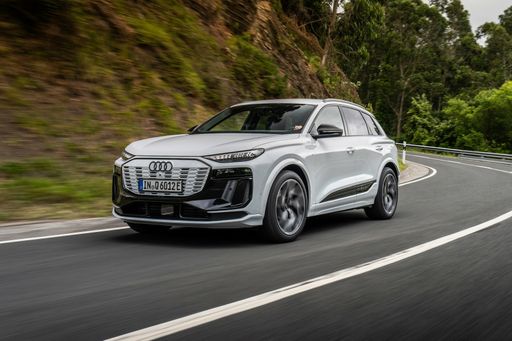
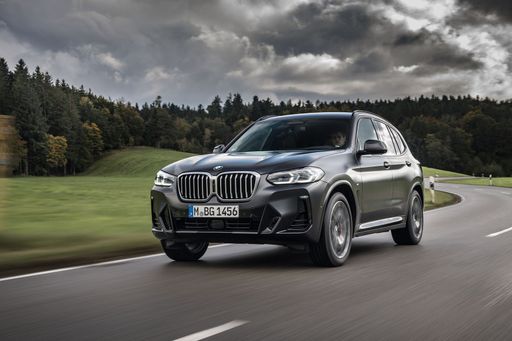
BMW X3 vs Audi Q6 e-tron comparison

Compare performance (398 HP vs 490 HP), boot space and price (51,300 £ vs 54,400 £ ) at a glance. Find out which car is the better choice for you – BMW X3 or Audi Q6 e-tron?

BMW X3 vs Audi Q6 e-tron: Key differences

BMW X3

4.6 (1 Reviews)
rate
  • only slightly cheaper
  • a bit lighter
  • only slightly more trunk space

Audi Q6 e-tron

4.9 (3 Reviews)
rate
  • a bit more power
  • clearly more electric range
  • very slightly quicker 0–100 km/h

All details on performance, efficiency, range and trunk space can be found in the technical comparison below – including user reviews for both models.

X3

The automotive market is rapidly evolving, especially in the SUV segment. With a surge in electric vehicle (EV) technology, the competition is fierce between renowned brands like Audi and BMW. This article delves into a detailed comparison between the Audi Q6 e-tron and the BMW X3, two prominent models that symbolize the union of performance, luxury, and innovation in the electric SUV landscape.
Q6 e-tron

Power and Performance

The Audi Q6 e-tron boasts impressive power outputs ranging from 292 to 516 HP, complemented by a maximum torque of 855 Nm on higher-end models. With multiple drivetrain options, including rear-wheel and all-wheel drive, the Q6 e-tron can accelerate from 0-100 km/h in just 4.3 seconds, making it a compelling choice for speed enthusiasts.

In contrast, the BMW X3 shakes the performance landscape with its range of engine options, including diesel, petrol MHEV, and plug-in hybrid configurations. The X3's most powerful variant offers up to 510 HP, while its 0-100 km/h sprint capability peaks at an impressive 3.8 seconds. Both vehicles excel in acceleration and power delivery, appealing to a diverse range of driving preferences.

X3

Electric Range and Efficiency

One of the key selling points of electric vehicles is their efficiency and range. The Audi Q6 e-tron offers an electric range of up to 637 km, supported by battery capacities of 75.8 kWh and 94.9 kWh. With a consumption rate as low as 15.6 kWh/100 km, the Q6 e-tron stands out for those who prioritize long-distance travel without frequent charging stops.

On the other hand, the BMW X3 provides a more traditional hybrid experience with its petrol and diesel options, alongside plug-in hybrid variants offering an electric range of up to 90 km. Although its fuel consumption varies greatly, the X3 achieves impressive efficiency with some models as low as 2.1 L/100 km. However, for those seeking a fully electric experience, the Q6 e-tron clearly outshines with its longer range capabilities.

Q6 e-tron

Interior Comfort and Technology

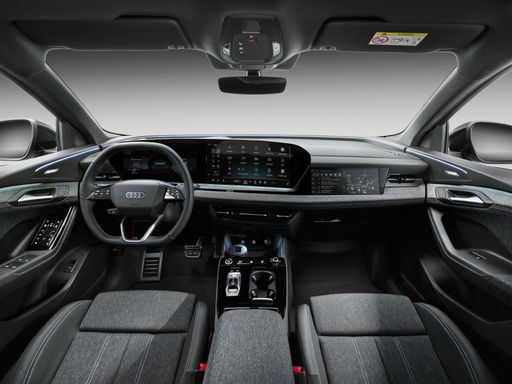
Both models promise a luxurious interior experience, complete with high-quality materials and advanced technology. The Audi Q6 e-tron features a spacious cabin designed for maximum comfort, along with a cutting-edge infotainment system featuring dual touchscreens, voice recognition, and an array of connectivity options.

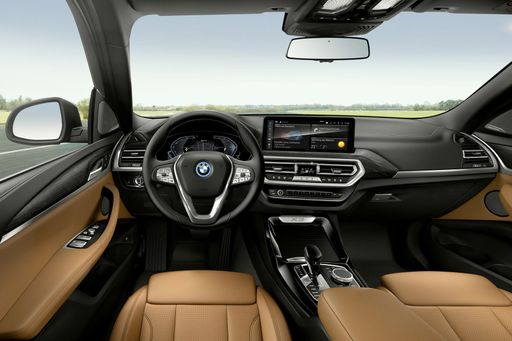
The BMW X3, renowned for its driver-oriented design, offers a similar level of sophistication. It is equipped with the latest iDrive system, enhanced by a stunning digital instrument cluster and various smart tech integrations. Both vehicles comfortably seat five, ensuring ample room for passengers and luggage on long journeys.

X3

Safety Features and Innovations

Safety is paramount in modern SUVs, and both the Q6 e-tron and X3 incorporate advanced safety technologies. The Q6 e-tron comes standard with a comprehensive suite of driver assistance features, including adaptive cruise control, lane-keeping assist, and enhanced automatic emergency braking systems.

The BMW X3, known for its robust safety credentials, offers a similar package. BMW's Active Guard and Parking Assistant features further enhance safety and convenience. Both SUVs showcase a dedication to passenger safety, ensuring peace of mind for drivers and their families.

Q6 e-tron

Conclusion: Which SUV Reigns Supreme?

Choosing between the Audi Q6 e-tron and the BMW X3 ultimately depends on consumer priorities. The Q6 e-tron shines in electric performance, range, and innovative technology, making it an ideal choice for EV enthusiasts. In contrast, the BMW X3 presents a versatile platform with various engine options and proven driving dynamics, appealing to those who appreciate traditional performance blended with modern technology.

In this fierce competition, both brands exemplify the epitome of luxury and innovation in the SUV segment. As the automotive landscape continues to transform, potential buyers can rest assured that they are choosing among the very best offerings available.

Here’s where it gets real: The technical differences in detail

X3

Costs and Efficiency:

Price and efficiency are often the first things buyers look at. Here it becomes clear which model has the long-term edge – whether at the pump, the plug, or in purchase price.

BMW X3 is only slightly cheaper – starting at 51,300 £ , while the Audi Q6 e-tron costs 54,400 £ . That’s a price difference of around 3,171 £.

As for electric range, the Audi Q6 e-tron offers clearly more range – reaching up to 656 km, about 568 km more than the BMW X3.

Q6 e-tron

Engine and Performance:

Power, torque and acceleration say a lot about how a car feels on the road. This is where you see which model delivers more driving dynamics.

When it comes to engine power, the Audi Q6 e-tron offers a bit more power – delivering 490 HP compared to 398 HP. That’s roughly 92 HP more horsepower.

When accelerating from 0 to 100 km/h, the Audi Q6 e-tron is very slightly quicker – completing the sprint in 4.4 s, while the BMW X3 takes 4.6 s. That’s about 0.2 s quicker.

Looking at top speed, the BMW X3 is marginally faster – reaching 250 km/h, while the Audi Q6 e-tron tops out at 230 km/h. The difference is around 20 km/h.

There’s also a difference in torque: the Audi Q6 e-tron delivers noticeably more torque with 855 Nm compared to 670 Nm. That’s about 185 Nm more.

X3

Space and Everyday Use:

Cabin size, boot volume and payload all play a role in everyday practicality. Here, comfort and flexibility make the difference.

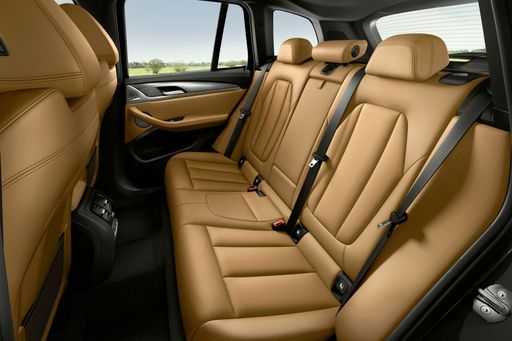
Both vehicles offer seating for 5 people.

In terms of curb weight, BMW X3 is a bit lighter – 1,930 kg compared to 2,200 kg. The difference is around 270 kg.

Looking at boot space, the BMW X3 offers only slightly more boot space – 570 L compared to 526 L. That’s a difference of about 44 L.

For maximum load capacity, the BMW X3 offers somewhat more capacity – up to 1,700 L, about 171 L more than the Audi Q6 e-tron.

When it comes to payload, the BMW X3 carries barely more – 570 kg compared to 540 kg. That’s a difference of about 30 kg.

Who wins the race in the data check?

The Audi Q6 e-tron is far ahead overall in the objective data comparison.
This result only shows which model scores more points on paper – not which of the two cars feels right for you.

from £54,400
Q6 e-tron

Audi Q6 e-tron

  • Engine Type : Electric
  • Transmission : Automatic
  • Drive Type : Rear-Wheel Drive, All-Wheel Drive
  • Power HP : 252 - 490 HP
  • Consumption kWh/100km : 15.6 - 18.4 kWh/100km
  • Electric Range : 529 - 656 km
BMW X3
Audi Q6 e-tron

Costs and Consumption

View detailed analysis

Engine and Performance

View detailed analysis

Dimensions and Body

View detailed analysis

BMW X3

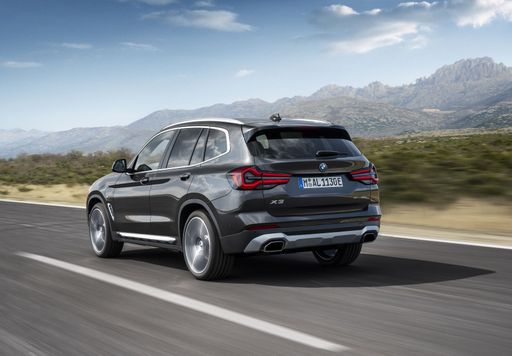
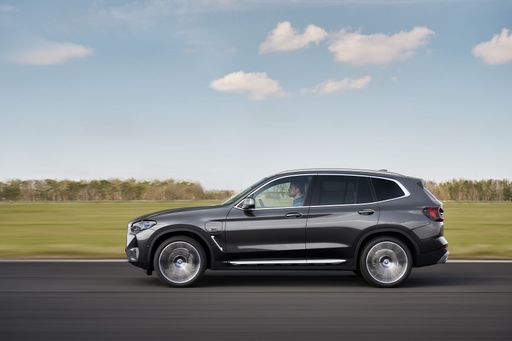
The BMW X3 mixes Bavarian poise with everyday practicality, delivering a composed ride and a cabin that feels both premium and lived-in. It’s the sort of SUV that lets you enjoy sporty handling without sacrificing family-friendly space, so you get fun and sense in one neat package.

details

Audi Q6 e-tron

The Audi Q6 e-tron balances sleek, coupe-like styling with a roomy, upscale interior that feels modern without being showy. It delivers refined electric performance and smart tech that make daily driving effortless — the sort of EV that might make petrolheads grudgingly admit they fancy the future.

details
BMW X3
Audi Q6 e-tron

Costs and Consumption

Price
51,300 - 72,400 £
Price
54,400 - 82,500 £
Consumption L/100km
2.8 - 7.7 L/100km
Consumption L/100km
-
Consumption kWh/100km
-
Consumption kWh/100km
15.6 - 18.4 kWh/100km
Electric Range
88 km
Electric Range
529 - 656 km
Battery Capacity
-
Battery Capacity
75.8 - 94.9 kWh
co2
64 - 175 g/km
co2
0 g/km
Fuel tank capacity
60 - 65 L
Fuel tank capacity
-

Dimensions and Body

Body Type
SUV
Body Type
SUV
Seats
5
Seats
5
Doors
5
Doors
5
Curb weight
1,930 - 2,140 kg
Curb weight
2,200 - 2,425 kg
Trunk capacity
460 - 570 L
Trunk capacity
499 - 526 L
Length
4,755 mm
Length
4,771 mm
Width
1,920 mm
Width
1,939 - 1,965 mm
Height
1,660 mm
Height
1,665 - 1,685 mm
Max trunk capacity
1,700 L
Max trunk capacity
1,361 - 1,529 L
Payload
570 kg
Payload
540 kg

Engine and Performance

Engine Type
Petrol MHEV, Diesel MHEV, Plugin Hybrid
Engine Type
Electric
Transmission
Automatic
Transmission
Automatic
Transmission Detail
Automatic Gearbox
Transmission Detail
Reduction Gearbox
Drive Type
All-Wheel Drive
Drive Type
Rear-Wheel Drive, All-Wheel Drive
Power HP
197 - 398 HP
Power HP
252 - 490 HP
Acceleration 0-100km/h
4.6 - 7.8 s
Acceleration 0-100km/h
4.4 - 7.6 s
Max Speed
215 - 250 km/h
Max Speed
210 - 230 km/h
Torque
330 - 670 Nm
Torque
450 - 855 Nm
Number of Cylinders
4 - 6
Number of Cylinders
-
Power kW
145 - 293 kW
Power kW
185 - 360 kW
Engine capacity
1,995 - 2,998 cm3
Engine capacity
-

General

Model Year
2,024 - 2,025
Model Year
2,024 - 2,025
CO2 Efficiency Class
F, E, B
CO2 Efficiency Class
A
Brand
BMW
Brand
Audi
DriveDuel uses data analysis and artificial intelligence to evaluate vehicle data and create content. Content is regularly reviewed and improved. The displayed prices are estimates based on German list prices, adjusted to the respective country’s VAT. Country-specific registration taxes are not included. This information is not legally binding.