VS

Dacia Bigster vs Hyundai Tucson comparison

Compare performance (158 HP vs 288 HP), boot space and price (20,600 £ vs 31,300 £ ) at a glance. Find out which car is the better choice for you – Dacia Bigster or Hyundai Tucson?

Dacia Bigster vs Hyundai Tucson: Key differences

Dacia Bigster

4.6 (10 Reviews)
rate
  • clearly cheaper
  • only slightly lighter
  • barely more trunk space
details

Hyundai Tucson

4.8 (6 Reviews)
rate
  • considerably more power
  • considerably more efficient
  • noticeably quicker 0–100 km/h
details

All details on performance, efficiency, range and trunk space can be found in the technical comparison below – including user reviews for both models.

By Achim Sedelmaier

Bigster

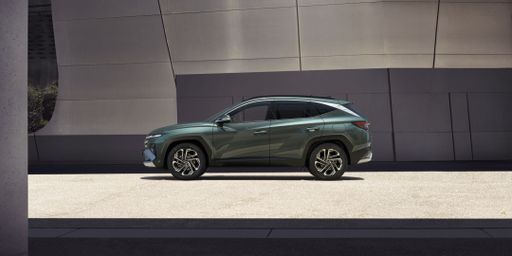
Hyundai Tucson VS Dacia Bigster — a first look

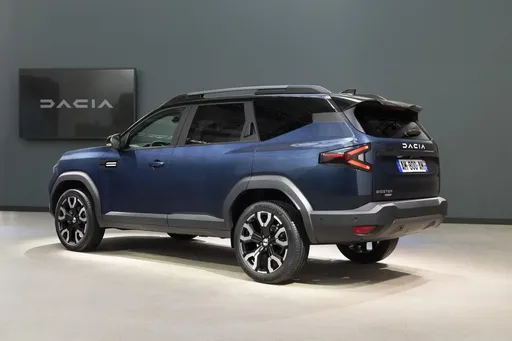
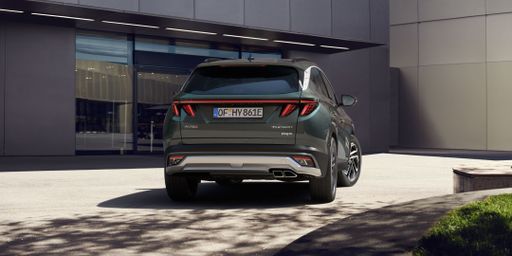
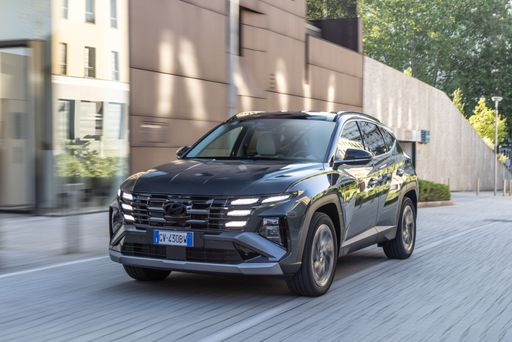
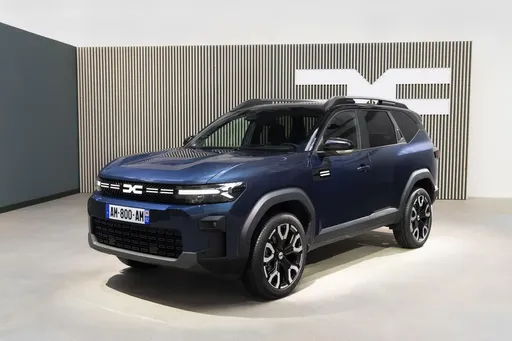
Hyundai Tucson VS Dacia Bigster puts a refinement-minded compact SUV against a purpose-built, no-nonsense space hauler. The Tucson presents itself as a calm, well-damped companion for long runs and family life, while the Bigster trades subtlety for sheer volume and straightforward utility. Buyers choosing the Tucson will notice a more polished cabin and quieter motorway behavior; those who pick the Bigster get a larger, more flexible load area and a much lower entry price. This comparison focuses on how those character differences translate to everyday life rather than spec sheets.
Tucson

Driving character: relaxed refinement versus pragmatic guts

The Hyundai Tucson drives like a car designed to make motorway miles easy — it soaks up speed and keeps noise low so conversations stay pleasant at cruising pace. By contrast, the Dacia Bigster feels more utilitarian on fast roads; it is competent and stable but shows wind and engine noise sooner, which makes long high-speed runs feel more work. In town the Tucson’s lighter steering and hybrid options give a quiet, composed feel, whereas the Bigster’s straightforward controls and hybrid efficiency make it an efficient, honest runner for everyday errands. Choosing between them means deciding whether you value serene long-distance comfort (Tucson) or rugged, economical utility with a louder personality (Bigster).

Bigster

Cabin feel and comfort: polished ergonomics against honest practicality

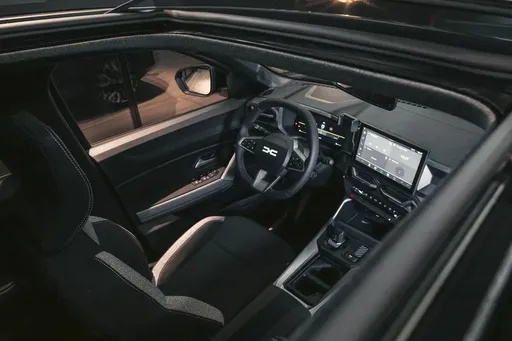
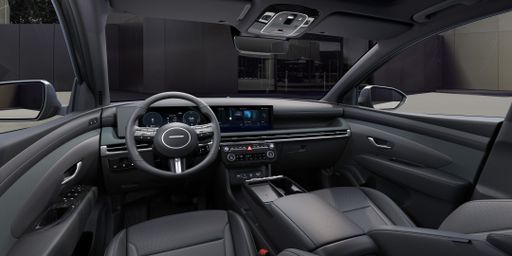
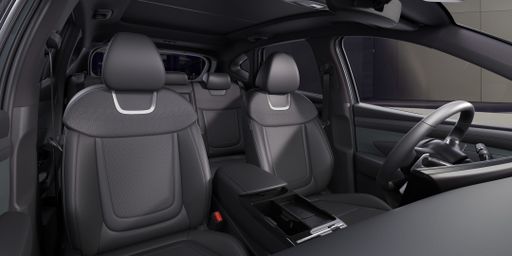
Inside, the Hyundai Tucson aims higher on materials and tactile quality — the recent updates brought better switches and a more cohesive layout that feels a step up when you touch it. The Dacia Bigster’s interior is plainly built and focused on durability: controls are easy to use and hard plastics dominate, which keeps costs down but never feels luxurious. Seats in the Tucson tend to support longer legs better and the whole ambience leans toward composure; Bigster seats are softer and inviting at first but can be less supportive on extended trips. The trade-off is simple: Tucson rewards people who spend lots of time on the road and care about perceived quality, while Bigster rewards buyers who want maximum space and straightforward functionality for less money.

Tucson

Practicality and family use: volume and versatility versus refinement and ergonomics

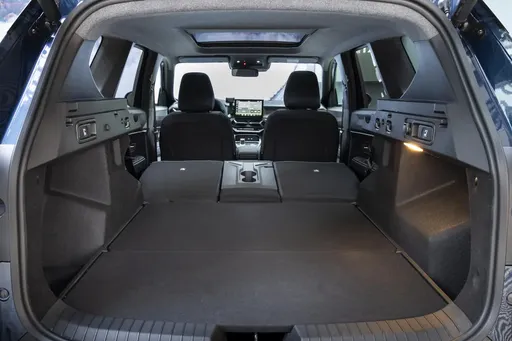
For hauling people and kit the Dacia Bigster is the headline act — its cargo space and clever load-floor options make it the better choice for bulky weekend gear, DIY runs or camping kit. The Hyundai Tucson also offers a very usable boot and family-friendly features like split-fold rear seats and organized storage, but it packages that utility inside a more refined ergonomic experience with easier access to tech and creature comforts. Families who regularly load awkward items or prioritize cargo will prefer the Bigster’s openness; families who want easier day-to-day ergonomics, quieter journeys and a slightly more polished boot experience will lean toward the Tucson. Both are family-capable, but they get there by different routes: rugged capacity versus civilized usability.

Bigster

Everyday usability: tech, safety and city manners

The Tucson brings more advanced driver assistance and a tidier infotainment implementation that reduce friction in daily driving and give a greater sense of safety technology working in the background. The Bigster takes a different route with simpler, physical controls and pragmatic features like the YouClip system and user-friendly storage, which make life easier without flashy tech — but it also has a more modest safety kit and a lower crash-test headline. In tight urban environments the Tucson’s lighter steering and quieter hybrid modes feel more refined, whereas the Bigster’s upright seating and simple interfaces make parking and loading straightforward and stress-free. Your choice here depends on whether you prefer more automated reassurance and refinement (Tucson) or a robust, straightforward toolset that keeps purchase and running costs low (Bigster).

Tucson

Who should buy which: matching the car to the buyer

If you’re the kind of buyer who values quiet long-distance cruising, a polished cabin and the reassurance of broader active safety features, the Hyundai Tucson fits better into that life. If your priority is maximum interior volume, low purchase price and practical features for outdoor or heavy-duty family use, the Dacia Bigster delivers more of what you need for less money. Both cars work as family SUVs, but Tucson skews toward comfort and perceived quality while Bigster skews toward value and cargo-first practicality. With those trade-offs clear, the technical comparison that follows will help you decide which engineering choices back up the lifestyle that matters to you.

Here’s where it gets real: The technical differences in detail

Bigster

Costs and Efficiency:

Looking at overall running costs, both models reveal some interesting differences in everyday economy.

Dacia Bigster is clearly cheaper – starting at 20,600 £ , while the Hyundai Tucson costs 31,300 £ . That’s a price difference of around 10,715 £.

Fuel consumption also shows a difference: the Hyundai Tucson uses 2.7 L/100km and is considerably more efficient than the Dacia Bigster with 4.7 L/100km. The difference is about 2 L/100km.

Tucson

Engine and Performance:

Under the bonnet, it becomes clear which model is tuned for sportiness and which one takes the lead when you hit the accelerator.

When it comes to engine power, the Hyundai Tucson offers considerably more power – delivering 288 HP compared to 158 HP. That’s roughly 130 HP more horsepower.

When accelerating from 0 to 100 km/h, the Hyundai Tucson is noticeably quicker – completing the sprint in 7.5 s, while the Dacia Bigster takes 9.7 s. That’s about 2.2 s quicker.

There’s also a difference in torque: the Hyundai Tucson delivers markedly more torque with 379 Nm compared to 230 Nm. That’s about 149 Nm more.

Bigster

Space and Everyday Use:

Whether family car or daily driver – which one offers more room, flexibility and comfort?

Both vehicles offer seating for 5 people.

In terms of curb weight, Dacia Bigster is only slightly lighter – 1,425 kg compared to 1,542 kg. The difference is around 117 kg.

Looking at boot space, the Dacia Bigster offers barely more boot space – 667 L compared to 620 L. That’s a difference of about 47 L.

When it comes to payload, the Hyundai Tucson carries somewhat more – 545 kg compared to 465 kg. That’s a difference of about 80 kg.

Who wins the race in the data check?

The Hyundai Tucson stands well ahead of its rival in the objective data comparison.
This result only shows which model scores more points on paper – not which of the two cars feels right for you.

from £31,300
Tucson

Hyundai Tucson

  • Engine Type Petrol, Full Hybrid, Plugin Hybrid, Diesel MHEV
  • Transmission Manuel, Automatic
  • Drive Type Front-Wheel Drive, All-Wheel Drive
  • Power HP 136 - 288 HP
  • Consumption L/100km 2.7 - 7.6 L/100km
  • Electric Range 63 - 70 km
Dacia Bigster
Hyundai Tucson

Costs and Consumption

View detailed analysis

Engine and Performance

View detailed analysis

Dimensions and Body

View detailed analysis

Dacia Bigster

The Dacia Bigster is a straightforward, value-driven SUV that emphasizes space, practicality and low running costs rather than flashy tech. It’s a sensible choice for buyers who want a roomy, well-built family car with rugged styling and easy-to-use features at an affordable price.

details

Hyundai Tucson

The Hyundai Tucson is a well-rounded compact SUV that blends modern styling with a comfortable, thoughtfully laid-out interior, making it appealing for daily driving and family use. It delivers a calm ride, a generous level of equipment for the price, and sensible practicality, so it's a smart choice if you want a straightforward, dependable crossover without fuss.

details
Dacia Bigster
Hyundai Tucson

Costs and Consumption

Price
20,600 - 28,100 £
Price
31,300 - 48,800 £
Consumption L/100km
4.7 - 7.2 L/100km
Consumption L/100km
2.7 - 7.6 L/100km
Consumption kWh/100km
-
Consumption kWh/100km
-
Electric Range
-
Electric Range
63 - 70 km
Battery Capacity
-
Battery Capacity
-
co2
106 - 134 g/km
co2
62 - 172 g/km
Fuel tank capacity
-
Fuel tank capacity
-

Dimensions and Body

Body Type
SUV
Body Type
SUV
Seats
5
Seats
5
Doors
-
Doors
-
Curb weight
1,425 - 1,611 kg
Curb weight
1,542 - 1,893 kg
Trunk capacity
444 - 667 L
Trunk capacity
546 - 620 L
Length
-
Length
-
Width
1,813 mm
Width
1,865 mm
Height
-
Height
-
Max trunk capacity
-
Max trunk capacity
-
Payload
434 - 465 kg
Payload
518 - 545 kg

Engine and Performance

Engine Type
Petrol MHEV, Full Hybrid, LPG
Engine Type
Petrol, Full Hybrid, Plugin Hybrid, Diesel MHEV
Transmission
Manuel, Automatic
Transmission
Manuel, Automatic
Transmission Detail
Manual Gearbox, Automated Manual, Dual-Clutch Automatic
Transmission Detail
Manual Gearbox, Dual-Clutch Automatic, Automatic Gearbox
Drive Type
Front-Wheel Drive, All-Wheel Drive
Drive Type
Front-Wheel Drive, All-Wheel Drive
Power HP
140 - 158 HP
Power HP
136 - 288 HP
Acceleration 0-100km/h
9.7 - 10.5 s
Acceleration 0-100km/h
7.5 - 11.6 s
Max Speed
-
Max Speed
-
Torque
230 Nm
Torque
250 - 379 Nm
Number of Cylinders
3 - 4
Number of Cylinders
4
Power kW
103 - 116 kW
Power kW
100 - 212 kW
Engine capacity
1,199 - 1,789 cm3
Engine capacity
1,598 cm3

General

Model Year
2025
Model Year
2025
CO2 Efficiency Class
D, C
CO2 Efficiency Class
F, D, E, B
Brand
Dacia
Brand
Hyundai
DriveDuel uses data analysis and artificial intelligence to evaluate vehicle data and create content. Content is regularly reviewed and improved. The displayed prices are estimates based on German list prices, adjusted to the respective country’s VAT. Country-specific registration taxes are not included. This information is not legally binding.