VS

Dacia Jogger vs Dacia Duster comparison

Compare performance (158 HP vs 158 HP), boot space and price (15,400 £ vs 16,300 £ ) at a glance. Find out which car is the better choice for you – Dacia Jogger or Dacia Duster?

Dacia Jogger vs Dacia Duster: Key differences

Dacia Jogger

4.4 (2 Reviews)
rate
  • marginally cheaper
  • barely more efficient
  • very slightly quicker 0–100 km/h
  • very slightly lighter
  • somewhat more trunk space
details

Dacia Duster

4.8 (3 Reviews)
rate
details

All details on performance, efficiency, range and trunk space can be found in the technical comparison below – including user reviews for both models.

By Achim Sedelmaier

Jogger

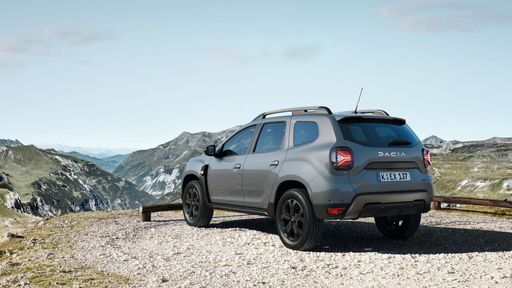
Dacia Duster VS Dacia Jogger: rugged SUV or seven-seat family tool?

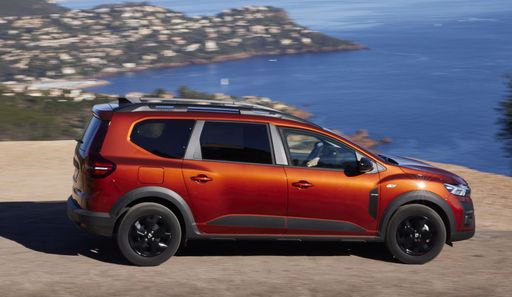
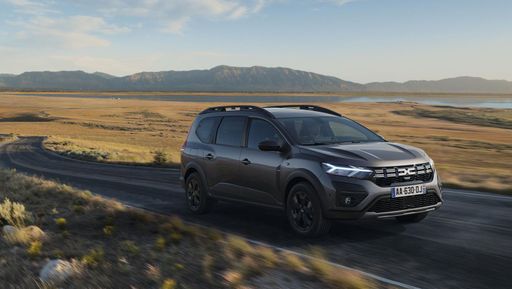
The Dacia Duster and Dacia Jogger chase value from two very different angles. The Duster is a compact SUV with a chunky stance and genuine rough‑road confidence, while the Jogger is a long, low wagon‑MPV that prioritizes people and luggage over posture. In everyday use that means adventure‑leaning character and ground clearance from the Duster versus school‑run calm and glassy visibility from the Jogger. The Jogger typically undercuts the Duster to buy and sip a touch less fuel, but the Duster counters with a tougher brief and available traction tech. Your shortlist should start with one simple question: do you need seven seats, or do you want SUV ability?
Duster

Space, seats and everyday practicality

The Jogger’s calling card is its 7 seats, with a third row that folds or lifts out entirely when you need van‑like cargo space. Access to that rear pair is still a squeeze, and those chairs suit kids best, but the flexibility is unmatched at this price. The Duster sticks to five seats; it’s roomy enough for four adults, yet the rear middle perch is firm and less pleasant on longer trips. The Jogger’s low loading lip and big hatch make pushchairs and bikes feel easy, while the Duster’s boot is square and useful but sits higher off the ground. If weekends mean camping or muddy dogs, the Duster’s accessories and wipe‑clean vibe appeal; if your life is people‑moving Tetris, the Jogger wins on sheer configurability.

Jogger

Ride comfort and long‑distance manners

The Duster is tuned for relaxed progress, rounding off poor surfaces with a soft, steady gait that suits broken B‑roads. The Jogger rides simply and honestly too, but you feel a bit more of the road through the cabin on coarse tarmac. On motorways, both are stable yet noisier than pricier rivals; the Duster tends to pick up more wind rustle from its taller shape, the Jogger more tyre roar from its long, light body. Seats in both are comfortable rather than plush, so posture matters on long days. If you chase serenity at 130 km/h, neither is the quiet choice, but for mixed driving the Duster feels more cushioned, while the Jogger trades a tad of plushness for cabin airiness.

Duster

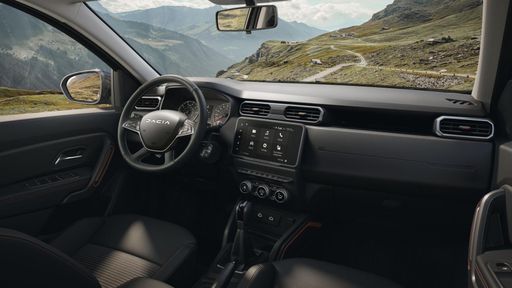
City ease, visibility and tech

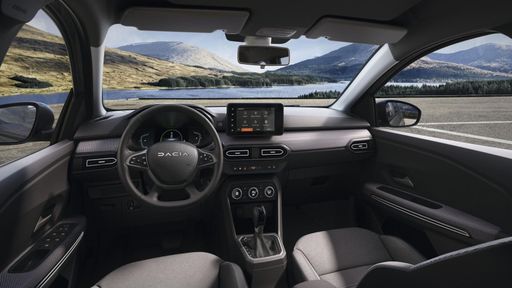
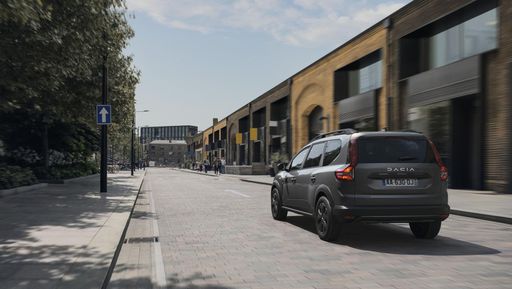
The Jogger is a city natural: a low scuttle, big windows and straightforward controls make it easy to place and thread through tight streets. Its long wheelbase doesn’t love U‑turns, yet day‑to‑day visibility and parking remain stress‑free. The Duster gives you that commanding SUV viewpoint and light steering, but thick rear pillars and a shallow back window make a camera pack a wise option. Infotainment in both is simple and pragmatic, with higher trims bringing a proper screen; the Duster’s camera clarity is merely okay and base phones‑as‑nav setups feel no‑frills in either car. If you value an airy feel and seeing all four corners, the Jogger edges it; if you prefer sitting high and shrugging off kerbs and potholes, the Duster feels right at home.

Jogger

Powertrains, traction and efficiency

Both lineups center on small turbo petrol units and efficient hybrids that shine in stop‑start traffic. The Jogger leans into low running costs and smooth hybrid creep, making errands calm and cheap; loaded up, its entry petrol can feel stretched on steep climbs. The Duster offers more low‑rev shove and, crucially, a proper 4x4 option with off‑road modes and hill‑descent control for those who stray beyond gravel car parks. Its hybrid brings automatic ease and frugal city use, but towing capacity and all‑wheel drive availability don’t overlap neatly, so match engine to task carefully. If poor tracks, winter lanes or a muddy field are part of your routine, the Duster’s traction advantage is decisive; if your miles are urban and family‑heavy, the Jogger’s efficiency and smoothness pay off daily.

Duster

Which suits you?

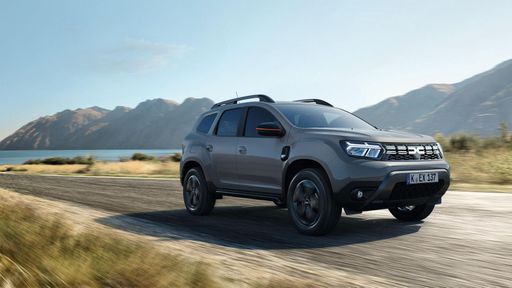
Choose the Dacia Duster if you want a compact SUV that feels tough, sits you high and doesn’t flinch at rough lanes, with enough comfort to commute and the option to kit it for outdoorsy weekends. Pick the Dacia Jogger if you regularly juggle five to seven people, value a low loading lip and brilliant visibility, and want the most space per pound. Budget‑watchers will note the Jogger often costs a bit less to buy and run, while the Duster gives you capability you won’t find at this price elsewhere. For long trips, both will do the distance, but neither majors on hush; try them back‑to‑back to see which seat shape and road feel you prefer. Keep those priorities in mind as you dive into the detailed specs that follow, and the right fit between seven‑seat versatility and SUV ability becomes clear.

Here’s where it gets real: The technical differences in detail

Jogger

Costs and Efficiency:

Price and efficiency are key factors when choosing a car – and this is often where the real differences emerge.

Dacia Jogger is marginally cheaper – starting at 15,400 £ , while the Dacia Duster costs 16,300 £ . That’s a price difference of around 857 £.

Fuel consumption also shows a difference: the Dacia Jogger uses 4.5 L/100km and is barely more efficient than the Dacia Duster with 4.7 L/100km. The difference is about 0.2 L/100km.

Duster

Engine and Performance:

Under the bonnet, it becomes clear which model is tuned for sportiness and which one takes the lead when you hit the accelerator.

Both models deliver identical power – 158 HP each.

When accelerating from 0 to 100 km/h, the Dacia Jogger is very slightly quicker – completing the sprint in 8.9 s, while the Dacia Duster takes 9.4 s. That’s about 0.5 s quicker.

There’s also a difference in torque: the Dacia Duster delivers somewhat more torque with 230 Nm compared to 200 Nm. That’s about 30 Nm more.

Jogger

Space and Everyday Use:

Cabin size, boot volume and payload all play a role in everyday practicality. Here, comfort and flexibility make the difference.

Seats: Dacia Jogger offers more seats – 7 vs 5.

In terms of curb weight, Dacia Jogger is very slightly lighter – 1,268 kg compared to 1,377 kg. The difference is around 109 kg.

Looking at boot space, the Dacia Jogger offers somewhat more boot space – 607 L compared to 517 L. That’s a difference of about 90 L.

When it comes to payload, the Dacia Jogger carries a bit more – 559 kg compared to 453 kg. That’s a difference of about 106 kg.

Who wins the race in the data check?

The Dacia Jogger is clearly superior overall in the objective data comparison.
This result only shows which model scores more points on paper – not which of the two cars feels right for you.

from £15,400
Jogger

Dacia Jogger

  • Engine Type : Petrol, Full Hybrid, LPG
  • Transmission : Manuel, Automatic
  • Drive Type : Front-Wheel Drive
  • Power HP : 110 - 158 HP
  • Consumption L/100km : 4.5 - 7.6 L/100km
Dacia Jogger
Dacia Duster

Costs and Consumption

View detailed analysis

Engine and Performance

View detailed analysis

Dimensions and Body

View detailed analysis

Dacia Jogger

The Dacia Jogger is a no-nonsense family mover that stretches the idea of value with cavernous practicality and flexible space, perfect for buyers who need a sensible, everyday Swiss Army knife on wheels. It doesn’t try to be glamorous — instead it wins hearts with cheerful thrift, durable materials and honest engineering, giving you useful transport without the pretence.

details

Dacia Duster

The Dacia Duster is a straightforward, budget-friendly SUV that prioritizes practicality and value over flashy features. Its rugged styling and simple, roomy interior make it a sensible choice for buyers who want capable everyday transport without paying for extras they won’t use.

details
Dacia Jogger
Dacia Duster

Costs and Consumption

Price
15,400 - 23,500 £
Price
16,300 - 24,900 £
Consumption L/100km
4.5 - 7.6 L/100km
Consumption L/100km
4.7 - 7.6 L/100km
Consumption kWh/100km
-
Consumption kWh/100km
-
Electric Range
-
Electric Range
-
Battery Capacity
-
Battery Capacity
-
co2
103 - 138 g/km
co2
107 - 140 g/km
Fuel tank capacity
-
Fuel tank capacity
-

Dimensions and Body

Body Type
MPV
Body Type
SUV
Seats
5 - 7
Seats
5
Doors
-
Doors
-
Curb weight
1,268 - 1,463 kg
Curb weight
1,377 - 1,559 kg
Trunk capacity
160 - 607 L
Trunk capacity
348 - 517 L
Length
-
Length
-
Width
1,784 mm
Width
1,813 mm
Height
-
Height
-
Max trunk capacity
-
Max trunk capacity
-
Payload
384 - 559 kg
Payload
402 - 453 kg

Engine and Performance

Engine Type
Petrol, Full Hybrid, LPG
Engine Type
Petrol MHEV, Full Hybrid, LPG
Transmission
Manuel, Automatic
Transmission
Manuel, Automatic
Transmission Detail
Manual Gearbox, Automatic Gearbox, Dual-Clutch Automatic
Transmission Detail
Manual Gearbox, Automated Manual, Dual-Clutch Automatic
Drive Type
Front-Wheel Drive
Drive Type
Front-Wheel Drive, All-Wheel Drive
Power HP
110 - 158 HP
Power HP
115 - 158 HP
Acceleration 0-100km/h
8.9 - 12 s
Acceleration 0-100km/h
9.4 - 11.7 s
Max Speed
-
Max Speed
-
Torque
190 - 200 Nm
Torque
190 - 230 Nm
Number of Cylinders
3 - 4
Number of Cylinders
3 - 4
Power kW
81 - 116 kW
Power kW
84 - 116 kW
Engine capacity
999 - 1,789 cm3
Engine capacity
1,199 - 1,789 cm3

General

Model Year
2025
Model Year
2,025 - 2,026
CO2 Efficiency Class
D, E, C
CO2 Efficiency Class
D, C
Brand
Dacia
Brand
Dacia
DriveDuel uses data analysis and artificial intelligence to evaluate vehicle data and create content. Content is regularly reviewed and improved. The displayed prices are estimates based on German list prices, adjusted to the respective country’s VAT. Country-specific registration taxes are not included. This information is not legally binding.