VS

Dacia Spring vs Micro Microlino comparison

Compare performance (100 HP vs 17 HP), boot space and price (14,500 £ vs 15,400 £ ) at a glance. Find out which car is the better choice for you – Dacia Spring or Micro Microlino?

Dacia Spring vs Micro Microlino: Key differences

Dacia Spring

4.8 (3 Reviews)
rate
  • marginally cheaper
  • clearly more power
  • clearly more trunk space

Micro Microlino

  • only slightly more electric range
  • considerably lighter

All details on performance, efficiency, range and trunk space can be found in the technical comparison below – including user reviews for both models.

Spring

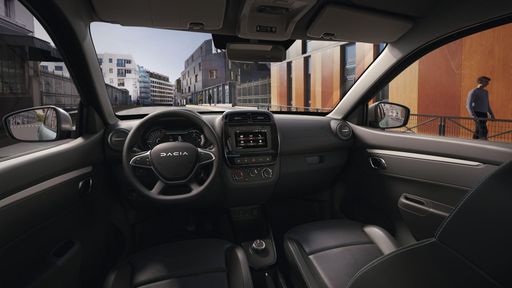
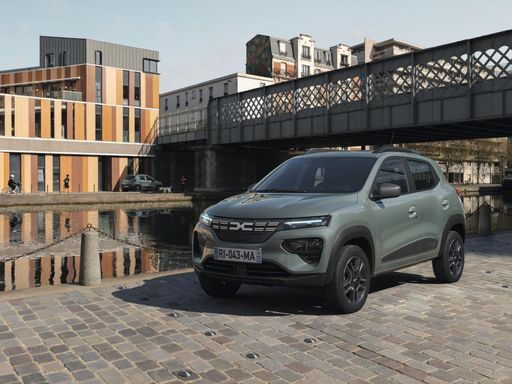
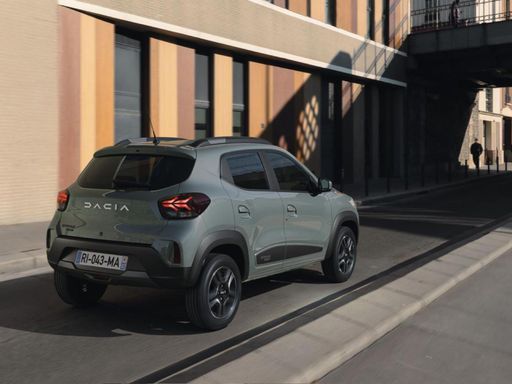
The Compact Crossover: Dacia Spring

The Dacia Spring is an SUV that defies expectations with its eco-friendly electric engine and practical design suited for urban and suburban adventures. Introduced in the 2024 model year, it comes equipped with a compact yet efficient electric setup. The Spring features a front-wheel-drive system powered by a modest 44 to 65 HP motor, offering an electric range up to 228 km depending on the usage.

Under the hood, the Dacia Spring utilizes a reduction gearbox which perfectly complements its automatic transmission. It's optimized for city commuting with a manageable 125 km/h top speed and an acceleration of 0-100 km/h in 13.7 to 19.1 seconds. The SUV also boasts a substantial 125 to 113 Nm of torque, providing adequate power for its size.
Microlino

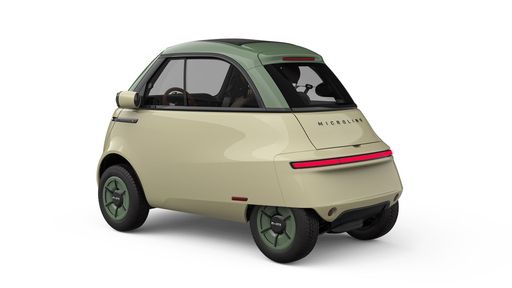
The Elegant Urban Cruiser: Micro Microlino

Putting a fun spin on city driving, the Micro Microlino presents itself as a gallant hatchback that brings innovation to the forefront of urban mobility. Also a 2024 entry, this vehicle prides itself on rear-wheel-drive capabilities, sporting a powertrain that generates between 8 to 17 HP. Its design is streamlined for efficiency with an appreciable electric range extending from 93 km up to an impressive 228 km.

The Microlino is engineered for the modern city dweller, achieving a top speed of 90 km/h. With a torque output of 89 Nm, its performance might not break records but promises a smooth ride through congested city streets. The hatchback's automatic transmission ensures that those rides are relaxed and comfortable.

Spring

Space and Practicality: Head-to-Head

Space is one of the main differentiators between these two electric vehicles. The Dacia Spring, with its SUV body type, offers greater flexibility with five doors and seating for four passengers. It provides a trunk capacity of 308 liters, making it ideal for small families and those who appreciate extra room for luggage or groceries.

Conversely, the Micro Microlino caters to minimalist urban travelers. Its compact two-door design is complemented by seating for two. While its 230-liter trunk capacity is less than the Spring, the Microlino focuses on superior maneuverability and easier parking in tight city spaces.

Weighing the Environmental Benefits

Both the Dacia Spring and the Micro Microlino excel in sustainability, boasting a CO2 efficiency class of A. Crucially, their electric motors emit zero CO2 emissions, advancing the shift to green urban transportation. The Spring's battery capacity stands at 26.8 kWh, balancing range and weight effectively with curb weights between 1030 to 1050 kg.

The lighter Microlino turns heads with an ultra-light construction, tipping the scales at around 513 to 530 kg, making it one of the lightest vehicles in its class. This reduced weight contributes favorably to its agility and energy efficiency, which is an attractive proposition for eco-conscious consumers.

The Verdict: Innovation and Purpose

The choice between the Dacia Spring and the Micro Microlino depends largely on individual needs. For those seeking a broader utility with room for the family or weekend adventures, the Spring stands out as a practical yet efficient choice. For city enthusiasts who prioritize maneuverability, style, and a minimalist approach, the Microlino offers a unique driving experience that encapsulates these ideals beautifully.

Both vehicles symbolize the future of urban transport, showcasing what can be achieved when function meets an environmentally-forward design philosophy. The Spring and Microlino provide excellent examples of how electric vehicles can be tailored to meet diverse lifestyles without compromising on green credentials.

Here’s where it gets real: The technical differences in detail

Spring

Costs and Efficiency:

Looking at overall running costs, both models reveal some interesting differences in everyday economy.

Dacia Spring is marginally cheaper – starting at 14,500 £ , while the Micro Microlino costs 15,400 £ . That’s a price difference of around 935 £.

As for electric range, the Micro Microlino offers only slightly more range – reaching up to 228 km, about 3 km more than the Dacia Spring.

Microlino

Engine and Performance:

Under the bonnet, it becomes clear which model is tuned for sportiness and which one takes the lead when you hit the accelerator.

When it comes to engine power, the Dacia Spring offers clearly more power – delivering 100 HP compared to 17 HP. That’s roughly 83 HP more horsepower.

There’s also a difference in torque: the Dacia Spring delivers markedly more torque with 137 Nm compared to 89 Nm. That’s about 48 Nm more.

Spring

Space and Everyday Use:

Beyond pure performance, interior space and usability matter most in daily life. This is where you see which car is more practical and versatile.

Seats: Dacia Spring offers more seats – 4 vs 2.

In terms of curb weight, Micro Microlino is considerably lighter – 596 kg compared to 1,070 kg. The difference is around 474 kg.

Looking at boot space, the Dacia Spring offers clearly more boot space – 308 L compared to 230 L. That’s a difference of about 78 L.

When it comes to payload, the Dacia Spring carries clearly more – 274 kg compared to 154 kg. That’s a difference of about 120 kg.

Who wins the race in the data check?

The Dacia Spring is far ahead overall in the objective data comparison.
This result only shows which model scores more points on paper – not which of the two cars feels right for you.

from £14,500
Spring

Dacia Spring

  • Engine Type : Electric
  • Transmission : Automatic
  • Drive Type : Front-Wheel Drive
  • Power HP : 70 - 100 HP
  • Consumption kWh/100km : 12.4 - 12.7 kWh/100km
  • Electric Range : 221 - 225 km
Dacia Spring
Micro Microlino

Costs and Consumption

View detailed analysis

Engine and Performance

View detailed analysis

Dimensions and Body

View detailed analysis

Dacia Spring

The Dacia Spring is an unpretentious city electric that strips EV ownership down to the essentials, offering clean, fuss-free transport for daily urban life. It won't impress luxury-seekers, but its cheerful practicality and rock-bottom running costs make it a clever, no-nonsense choice for anyone who wants electric mobility without the drama.

details

Micro Microlino

The Micro Microlino is a delightful retro-styled city runabout that feels like a modern reinterpretation of a classic bubble car, perfect for threading through tight streets and turning heads at every junction. It’s unabashedly charming and ideal for urban life, but buyers should embrace the playful simplicity over family-hauler practicality.

details
Dacia Spring
Micro Microlino

Costs and Consumption

Price
14,500 - 16,900 £
Price
15,400 - 22,300 £
Consumption L/100km
-
Consumption L/100km
-
Consumption kWh/100km
12.4 - 12.7 kWh/100km
Consumption kWh/100km
-
Electric Range
221 - 225 km
Electric Range
93 - 228 km
Battery Capacity
-
Battery Capacity
-
co2
0 g/km
co2
0 g/km
Fuel tank capacity
-
Fuel tank capacity
-

Dimensions and Body

Body Type
SUV
Body Type
Hatchback, Convertible
Seats
4
Seats
2
Doors
-
Doors
-
Curb weight
1,070 kg
Curb weight
596 - 630 kg
Trunk capacity
308 L
Trunk capacity
230 L
Length
-
Length
-
Width
1,583 mm
Width
1,473 mm
Height
-
Height
-
Max trunk capacity
-
Max trunk capacity
-
Payload
274 kg
Payload
120 - 154 kg

Engine and Performance

Engine Type
Electric
Engine Type
Electric
Transmission
Automatic
Transmission
Automatic
Transmission Detail
Reduction Gearbox
Transmission Detail
Reduction Gearbox
Drive Type
Front-Wheel Drive
Drive Type
Rear-Wheel Drive
Power HP
70 - 100 HP
Power HP
8 - 17 HP
Acceleration 0-100km/h
9.6 - 12.3 s
Acceleration 0-100km/h
-
Max Speed
-
Max Speed
-
Torque
137 Nm
Torque
89 Nm
Number of Cylinders
-
Number of Cylinders
-
Power kW
52 - 75 kW
Power kW
6 - 12 kW
Engine capacity
-
Engine capacity
-

General

Model Year
2,025
Model Year
2,024 - 2,025
CO2 Efficiency Class
A
CO2 Efficiency Class
A
Brand
Dacia
Brand
Micro
DriveDuel uses data analysis and artificial intelligence to evaluate vehicle data and create content. Content is regularly reviewed and improved. The displayed prices are estimates based on German list prices, adjusted to the respective country’s VAT. Country-specific registration taxes are not included. This information is not legally binding.