VS

DS Automobiles DS 7 vs Dacia Bigster comparison

Compare performance (130 HP vs 158 HP), boot space and price (41,900 £ vs 20,600 £ ) at a glance. Find out which car is the better choice for you – DS Automobiles DS 7 or Dacia Bigster?

DS Automobiles DS 7 vs Dacia Bigster: Key differences

DS Automobiles DS 7

5 (1 Reviews)
rate
details

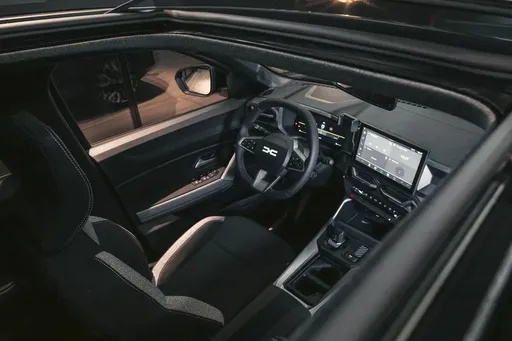
Dacia Bigster

4.6 (7 Reviews)
rate
  • considerably cheaper
  • a bit more power
  • somewhat more efficient
  • visibly quicker 0–100 km/h
  • slightly lighter
  • slightly more trunk space
details

All details on performance, efficiency, range and trunk space can be found in the technical comparison below – including user reviews for both models.

By Achim Sedelmaier

DS 7

DS 7 Crossback vs Dacia Bigster: A Clash of SUVs

As the automotive world continues to evolve, the demand for SUVs remains strong, offering consumers the perfect balance of space, power, and modern comforts. Today, we compare two intriguing models: the elegant DS 7 Crossback from DS Automobiles and the rugged yet efficient Dacia Bigster. Each brings its unique blend of features, catering to different segments of the market.
Bigster

Design and Dimensions

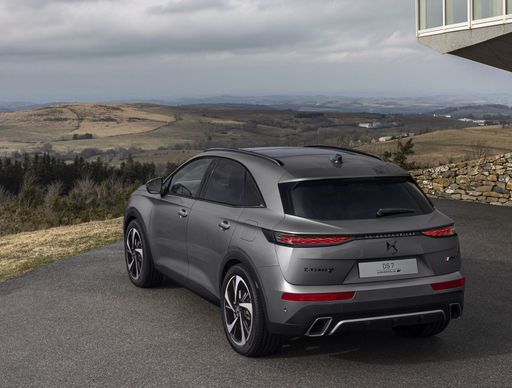
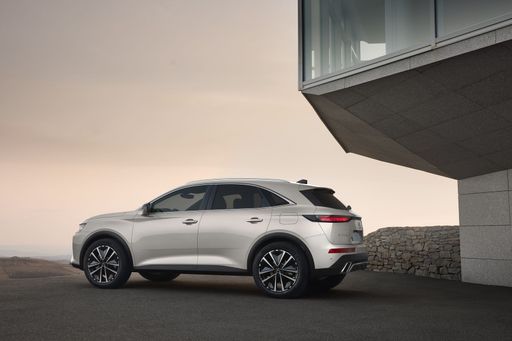
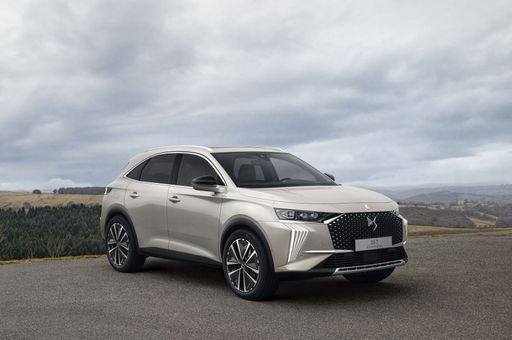
The DS 7 Crossback exudes French sophistication, featuring a sleek profile and a high-quality finish. With dimensions of 4593 mm in length, 1891 mm in width, and 1625 mm in height, it strikes an imposing presence on the road.

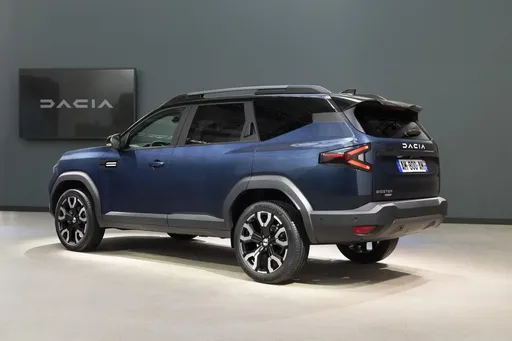
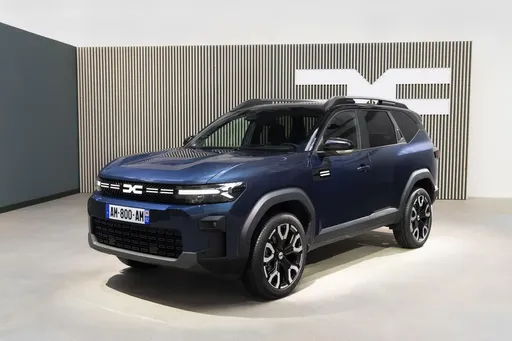
The Dacia Bigster, on the other hand, is built for practicality and durability. Slightly shorter at 4570 mm in length, it stands taller than the DS 7 at 1705 mm, showcasing its off-road capabilities with a robust build.

DS 7

Under the Hood

The DS 7 Crossback offers a variety of powertrains, including diesel and a plug-in hybrid. Its hybrid configurations promise impressive power outputs ranging from 225 to 360 HP, complemented by a battery capacity of 12.9 kWh, offering an electric range of up to 65 km. This translates to efficient fuel consumption rates as low as 1.3 L/100km and rapid acceleration of 0-100 km/h in 5.7 seconds.

The Bigster offers more traditional powertrains with options for Petrol MHEV, Full Hybrid, and LPG engines. The power output ranges from 130 to 155 HP, offering a straightforward approach to performance with a best consumption rate of 4.7 L/100km. Despite its focus on fuel economy, it manages a respectable 0-100 km/h sprint in 9.7 seconds.

Bigster

Performance and Drive Types

Both SUVs provide a varied driving experience. The DS 7 Crossback is available in both front-wheel and all-wheel drive, catering to those seeking enhanced traction and control. It delivers impressive torque figures up to 520 Nm, ensuring a responsive driving experience.

The Bigster, primarily envisioned for adventurous undertakings, features both all-wheel and front-wheel drive options. It generates torque of up to 230 Nm, offering practical performance for everyday use and occasional off-road adventures.

DS 7

Interior Comfort and Capacity

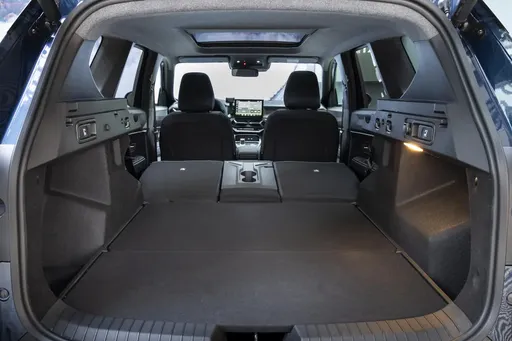
Both vehicles comfortably accommodate five passengers, mixing practicality with comfort. The DS 7 Crossback prioritizes luxury with a trunk capacity of 555 liters, providing a spacious environment combined with premium materials.

The Dacia Bigster, emphasizing utility, maximizes cargo space with a flexible trunk capacity reaching up to 667 liters. Its design reflects Dacia's reputation for reliable, cost-effective vehicles, catering to adventure-seekers and families alike.

Bigster

Efficiency and Environmental Concerns

In an era where environmental considerations are paramount, the DS 7 Crossback leads with lower CO2 emissions as low as 30 g/km in its hybrid variants. It presents a compelling choice for eco-conscious drivers.

The Bigster doesn't fall far behind, with emissions beginning at 106 g/km, positioning itself as a viable and greener option in the non-luxury segment.

DS 7

Conclusion

The choice between the DS 7 Crossback and Dacia Bigster ultimately depends on the buyer's priorities. The DS 7 Crossback charms with luxury, performance, and cutting-edge hybrid technology, appealing to those who crave elegance and innovation. Meanwhile, the Bigster offers practicality, ruggedness, and affordability, catering to those who seek a capable and economical SUV.

As the market continues to diversify, both models exemplify the exciting directions in which modern SUVs are heading, each carving its niche with distinctive characteristics and standout advantages.

Here’s where it gets real: The technical differences in detail

DS 7

Costs and Efficiency:

Price and efficiency are key factors when choosing a car – and this is often where the real differences emerge.

Dacia Bigster is considerably cheaper – starting at 20,600 £ , while the DS Automobiles DS 7 costs 41,900 £ . That’s a price difference of around 21,360 £.

Fuel consumption also shows a difference: the Dacia Bigster uses 4.7 L/100km and is somewhat more efficient than the DS Automobiles DS 7 with 5.5 L/100km. The difference is about 0.8 L/100km.

Bigster

Engine and Performance:

Under the bonnet, it becomes clear which model is tuned for sportiness and which one takes the lead when you hit the accelerator.

When it comes to engine power, the Dacia Bigster offers a bit more power – delivering 158 HP compared to 130 HP. That’s roughly 28 HP more horsepower.

When accelerating from 0 to 100 km/h, the Dacia Bigster is visibly quicker – completing the sprint in 9.7 s, while the DS Automobiles DS 7 takes 11.9 s. That’s about 2.2 s quicker.

There’s also a difference in torque: the DS Automobiles DS 7 delivers clearly more torque with 300 Nm compared to 230 Nm. That’s about 70 Nm more.

DS 7

Space and Everyday Use:

Whether family car or daily driver – which one offers more room, flexibility and comfort?

Both vehicles offer seating for 5 people.

In terms of curb weight, Dacia Bigster is slightly lighter – 1,425 kg compared to 1,651 kg. The difference is around 226 kg.

Looking at boot space, the Dacia Bigster offers slightly more boot space – 667 L compared to 555 L. That’s a difference of about 112 L.

When it comes to payload, the Dacia Bigster carries slightly more – 465 kg compared to 399 kg. That’s a difference of about 66 kg.

Who wins the race in the data check?

The Dacia Bigster is clearly superior overall in the objective data comparison.
This result only shows which model scores more points on paper – not which of the two cars feels right for you.

from £20,600
Bigster

Dacia Bigster

  • Engine Type : Petrol MHEV, Full Hybrid, LPG
  • Transmission : Manuel, Automatic
  • Drive Type : Front-Wheel Drive, All-Wheel Drive
  • Power HP : 140 - 158 HP
  • Consumption L/100km : 4.7 - 7.2 L/100km
DS Automobiles DS 7
Dacia Bigster

Costs and Consumption

View detailed analysis

Engine and Performance

View detailed analysis

Dimensions and Body

View detailed analysis

DS Automobiles DS 7

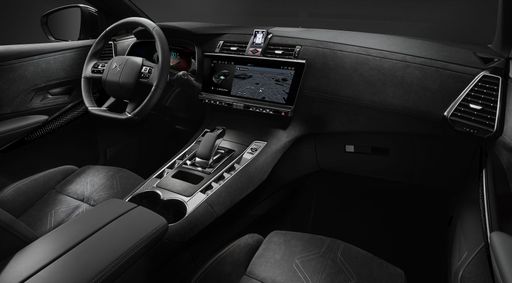
The DS 7 wraps Parisian elegance into SUV practicality, with sculpted surfaces, a jewel-like grille and an interior that feels more boutique lounge than family transporter. It appeals to buyers who want style and comfort without shouting, delivering a refined ride and clever tech that make daily driving feel a little more special — and yes, it’ll turn heads in the school run.

details

Dacia Bigster

The Bigster is poised to redefine the SUV segment with its bold design and spacious interior, catering to the needs of both families and adventure seekers alike. Emphasizing sustainability and practicality, this model reflects a modern approach to automotive engineering, making it a compelling choice for environmentally conscious drivers. With its striking presence on the road, the Bigster not only captures attention but also embodies a new era of versatile mobility.

details
DS Automobiles DS 7
Dacia Bigster

Costs and Consumption

Price
41,900 - 46,100 £
Price
20,600 - 28,100 £
Consumption L/100km
5.5 L/100km
Consumption L/100km
4.7 - 7.2 L/100km
Consumption kWh/100km
-
Consumption kWh/100km
-
Electric Range
-
Electric Range
-
Battery Capacity
-
Battery Capacity
-
co2
145 g/km
co2
106 - 134 g/km
Fuel tank capacity
-
Fuel tank capacity
-

Dimensions and Body

Body Type
SUV
Body Type
SUV
Seats
5
Seats
5
Doors
-
Doors
-
Curb weight
1,651 kg
Curb weight
1,425 - 1,611 kg
Trunk capacity
555 L
Trunk capacity
546 - 667 L
Length
-
Length
-
Width
1,891 mm
Width
1,813 mm
Height
-
Height
-
Max trunk capacity
-
Max trunk capacity
-
Payload
399 kg
Payload
434 - 465 kg

Engine and Performance

Engine Type
Diesel
Engine Type
Petrol MHEV, Full Hybrid, LPG
Transmission
Automatic
Transmission
Manuel, Automatic
Transmission Detail
Automatic Gearbox
Transmission Detail
Manual Gearbox, Automated Manual, Dual-Clutch Automatic
Drive Type
Front-Wheel Drive
Drive Type
Front-Wheel Drive, All-Wheel Drive
Power HP
130 HP
Power HP
140 - 158 HP
Acceleration 0-100km/h
11.9 s
Acceleration 0-100km/h
9.7 - 10.5 s
Max Speed
-
Max Speed
-
Torque
300 Nm
Torque
230 Nm
Number of Cylinders
4
Number of Cylinders
3 - 4
Power kW
96 kW
Power kW
103 - 116 kW
Engine capacity
1,499 cm3
Engine capacity
1,199 - 1,799 cm3

General

Model Year
2025
Model Year
2025
CO2 Efficiency Class
E
CO2 Efficiency Class
D, C
Brand
DS Automobiles
Brand
Dacia
DriveDuel uses data analysis and artificial intelligence to evaluate vehicle data and create content. Content is regularly reviewed and improved. The displayed prices are estimates based on German list prices, adjusted to the respective country’s VAT. Country-specific registration taxes are not included. This information is not legally binding.