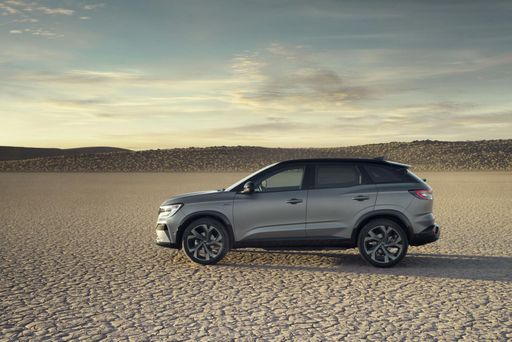
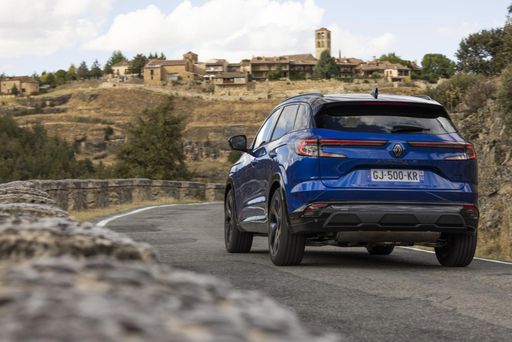
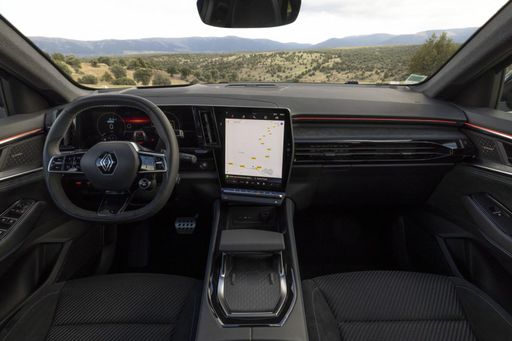
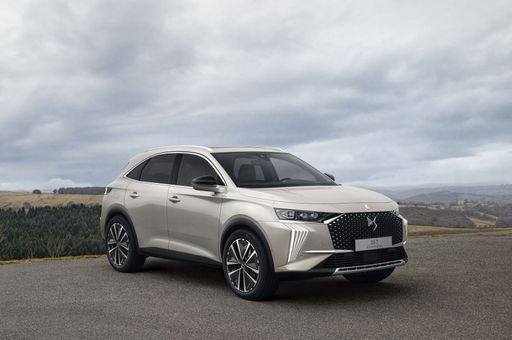
@ DS Automobiles / Stellantis Media
@ Renault Group Media
VS

DS Automobiles DS 7 vs Renault Austral – Which model is better for everyday use?

Everyday use, family trips or long-distance drives – here’s where the differences show.
Discover whether DS Automobiles DS 7 or Renault Austral fits your lifestyle better.

DS 7 @ DS Automobiles / Stellantis Media

In the competitive landscape of compact SUVs, the DS Automobiles DS 7 Crossback and Renault Austral stand out as formidable offerings from two iconic French brands. With their distinctive styles, advanced technologies, and a commitment to performance, both cars cater to those seeking a blend of comfort, innovation, and driving pleasure. This comparison delves into the technical aspects and innovations of these models, helping potential buyers make an informed decision.
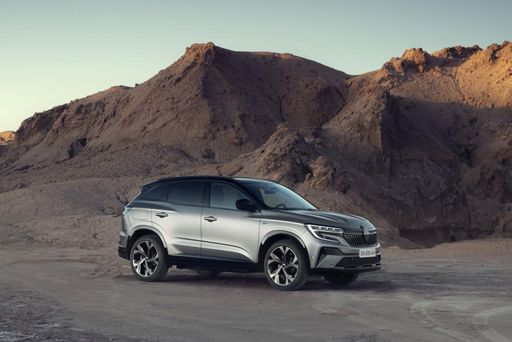
Austral @ Renault Group Media

Design and Dimensions

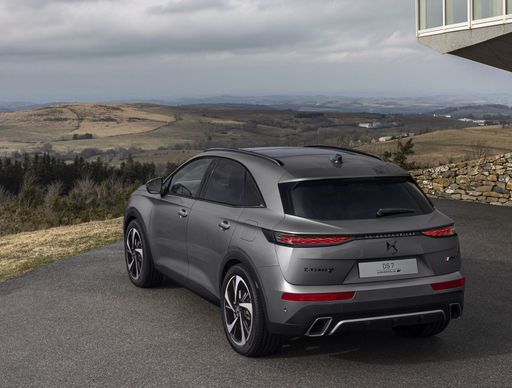
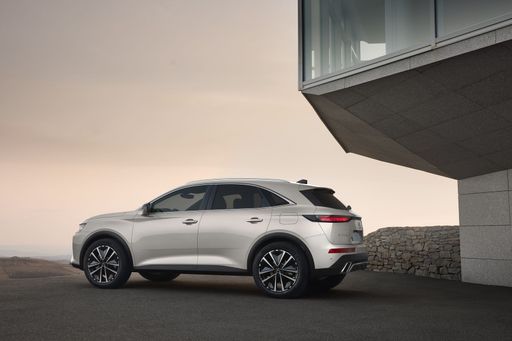
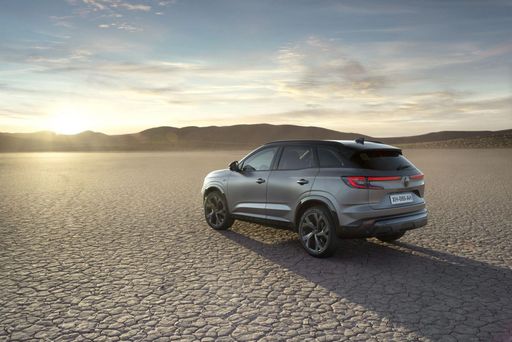
The DS 7 Crossback exemplifies French luxury with its elegant lines and bold stance. Measuring 4593 mm in length, 1891 mm in width, and 1625 mm in height, it presents a robust but sophisticated aesthetic. In contrast, the Renault Austral, although compact at 4510 mm long, 1825 mm wide, and 1618 mm high, boasts a contemporary design that encapsulates the brand’s modern vision. The sleek contours and distinctive front grille give it a sporty appeal, aiming to attract a younger demographic.

DS 7 @ DS Automobiles / Stellantis Media

Performance Overview

Under the hood, both SUVs offer a range of engine options tailored to different driving preferences. The DS 7 Crossback shines with its choice of powertrains, including diesel, plug-in hybrid, and high-performance variants producing up to 360 HP. Acceleration figures are impressive, with the quickest variant reaching 100 km/h in just 5.7 seconds, highlighting its sporty credentials. The fuel consumption varies from 1.3 L/100 km for the hybrid models to 5.5 L/100 km for diesel, striking a balance between performance and efficiency.

On the other hand, the Renault Austral is more streamlined in its offerings, featuring petrol MHEV and full hybrid powertrains, peaking at 200 HP. Its acceleration to 100 km/h takes 8.4 seconds for the most potent model, which is commendable for the segment, while maintaining competitive fuel efficiency figures ranging from 4.7 to 6.1 L/100 km.

Austral @ Renault Group Media

Technological Innovations

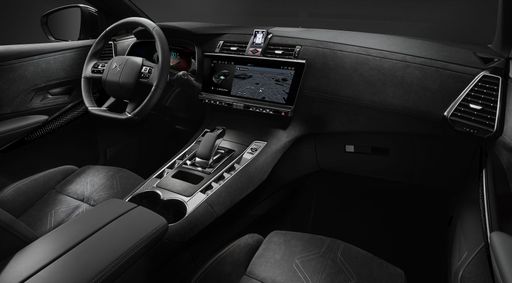
Innovation plays a central role in both vehicles, enhancing driver convenience and safety. The DS 7 Crossback comes equipped with an array of advanced technology, including a sophisticated infotainment system that integrates seamlessly with smartphones, offering navigation and multimedia functionalities. Its driver assistance features incorporate adaptive cruise control, lane-keeping assist, and a robust automatic gearbox that enhances the driving experience.

Meanwhile, the Renault Austral emphasizes sustainability without compromising technology. Its hybrid systems not only improve efficiency but also incorporate regenerative braking technology, capturing energy during deceleration. The Austral also features an intuitive infotainment setup and essential driver aids, providing a safe and enjoyable driving experience.

DS 7 @ DS Automobiles / Stellantis Media

Interior Comfort and Space

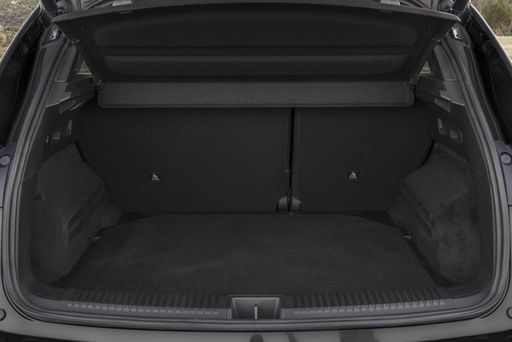
Stepping inside, the DS 7 Crossback invites occupants into a luxurious cabin adorned with high-quality materials and ergonomic design. The SUV comfortably seats five and offers a generous trunk capacity of 555 liters, ensuring ample space for luggage and everyday essentials.

In contrast, the Renault Austral offers a slightly smaller trunk at 500 liters, and a well-appointed interior that prioritizes practicality and comfort. With seating for five, it balances space efficiency with modern flair, designed for a versatile urban lifestyle.

Austral @ Renault Group Media

Conclusion: Which SUV is Right for You?

Choosing between the DS Automobiles DS 7 Crossback and Renault Austral ultimately depends on personal preferences and priorities. For those who seek luxurious comfort, high performance, and a suite of advanced features, the DS 7 Crossback delivers superbly. Conversely, if you are in search of a more sustainable hybrid solution with contemporary designs and efficient performance, the Renault Austral stands out as a strong contender.

Both models embody the charm of French automotive engineering, offering quality and innovation that cater to a diverse range of drivers. Whichever you choose, both the DS 7 Crossback and Renault Austral are positioned to enrich your driving experience.

Here’s where it gets real: The technical differences in detail

DS 7 @ DS Automobiles / Stellantis Media

Costs and Efficiency:

Looking at overall running costs, both models reveal some interesting differences in everyday economy.

Renault Austral has a convincingly advantage in terms of price – it starts at 29700 £, while the DS Automobiles DS 7 costs 41900 £. That’s a price difference of around 12138 £.

Fuel consumption also shows a difference: DS Automobiles DS 7 manages with 1.30 L and is therefore decisively more efficient than the Renault Austral with 4.80 L. The difference is about 3.50 L per 100 km.

Austral @ Renault Group Media

Engine and Performance:

Under the bonnet, it becomes clear which model is tuned for sportiness and which one takes the lead when you hit the accelerator.

When it comes to engine power, the DS Automobiles DS 7 has a clearly edge – offering 360 HP compared to 200 HP. That’s roughly 160 HP more horsepower.

In acceleration from 0 to 100 km/h, the DS Automobiles DS 7 is significantly quicker – completing the sprint in 5.70 s, while the Renault Austral takes 8.40 s. That’s about 2.70 s faster.

In terms of top speed, the DS Automobiles DS 7 performs clearly perceptible better – reaching 235 km/h, while the Renault Austral tops out at 180 km/h. The difference is around 55 km/h.

There’s also a difference in torque: DS Automobiles DS 7 pulls decisively stronger with 520 Nm compared to 270 Nm. That’s about 250 Nm difference.

Space and Everyday Use:

Beyond pure performance, interior space and usability matter most in daily life. This is where you see which car is more practical and versatile.

Both vehicles offer seating for 5 people.

In curb weight, Renault Austral is slight lighter – 1539 kg compared to 1651 kg. The difference is around 112 kg.

Boot capacity is identical – both offer 555 L of storage.

In maximum load capacity, the Renault Austral performs hardly perceptible better – up to 1761 L, which is about 11 L more than the DS Automobiles DS 7.

When it comes to payload, Renault Austral slightly takes the win – 477 kg compared to 424 kg. That’s a difference of about 53 kg.

Who wins the race?

The DS Automobiles DS 7 proves to be wins the duel decisively and therefore becomes our DriveDuel Champion!
DS Automobiles DS 7 is the better all-rounder in this comparison.

from about £41,900
DS 7 @ DS Automobiles / Stellantis Media

DS Automobiles DS 7

  • Engine Type : Diesel, Plugin Hybrid
  • Transmission : Automatic
  • Drive Type : Front-Wheel Drive, All-Wheel Drive
  • Power HP : 130 - 360 HP
  • Consumption L/100km : 1.3 - 5.5 L
  • Electric Range : 50 - 65 km

DS Automobiles DS 7

5 (1)
rate

The DS 7 wraps Parisian elegance into SUV practicality, with sculpted surfaces, a jewel-like grille and an interior that feels more boutique lounge than family transporter. It appeals to buyers who want style and comfort without shouting, delivering a refined ride and clever tech that make daily driving feel a little more special — and yes, it’ll turn heads in the school run.

details

Renault Austral

5 (2)
rate

The Renault Austral dresses the family SUV in elegant modern looks and a surprisingly grown-up cabin that feels thoughtful and livable. It balances comfort and clever technology with a relaxed road presence—an appealing choice for buyers who want style and everyday sense without fuss.

details
DS Automobiles DS 7
Renault Austral
DS 7 @ DS Automobiles / Stellantis Media
Austral @ Renault Group Media

Costs and Consumption

Price
41900 - 59300 £
Price
29700 - 37800 £
Consumption L/100km
1.3 - 5.5 L
Consumption L/100km
4.8 - 6.5 L
Consumption kWh/100km
-
Consumption kWh/100km
-
Electric Range
50 - 65 km
Electric Range
-
Battery Capacity
12.90 kWh
Battery Capacity
-
co2
30 - 145 g/km
co2
109 - 148 g/km
Fuel tank capacity
43 - 55 L
Fuel tank capacity
55 L

Dimensions and Body

Body Type
SUV
Body Type
SUV
Seats
5
Seats
5
Doors
5
Doors
5
Curb weight
1651 - 2002 kg
Curb weight
1539 - 1613 kg
Trunk capacity
555 L
Trunk capacity
527 - 555 L
Length
4593 mm
Length
4533 mm
Width
1891 mm
Width
1825 mm
Height
1625 mm
Height
1645 mm
Max trunk capacity
1750 L
Max trunk capacity
1736 - 1761 L
Payload
398 - 424 kg
Payload
464 - 477 kg

Engine and Performance

Engine Type
Diesel, Plugin Hybrid
Engine Type
Petrol MHEV, Full Hybrid
Transmission
Automatic
Transmission
Automatic
Transmission Detail
Automatic Gearbox
Transmission Detail
CVT, Automatic Gearbox
Drive Type
Front-Wheel Drive, All-Wheel Drive
Drive Type
Front-Wheel Drive
Power HP
130 - 360 HP
Power HP
158 - 200 HP
Acceleration 0-100km/h
5.7 - 11.9 s
Acceleration 0-100km/h
8.4 - 9.7 s
Max Speed
195 - 235 km/h
Max Speed
180 km/h
Torque
300 - 520 Nm
Torque
270 Nm
Number of Cylinders
4
Number of Cylinders
3 - 4
Power kW
96 - 265 kW
Power kW
116 - 147 kW
Engine capacity
1499 - 1598 cm3
Engine capacity
1199 - 1332 cm3

General

Model Year
2024 - 2025
Model Year
2025
CO2 Efficiency Class
E, B
CO2 Efficiency Class
E, C
Brand
DS Automobiles
Brand
Renault
What drive types are available for the DS Automobiles DS 7?

The DS Automobiles DS 7 is available as Front-Wheel Drive or All-Wheel Drive.

The prices and data displayed are estimates based on German list prices and may vary by country. This information is not legally binding.