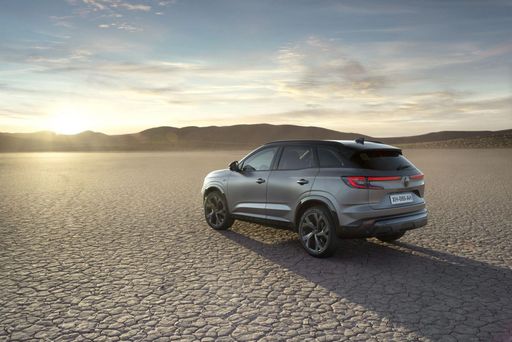
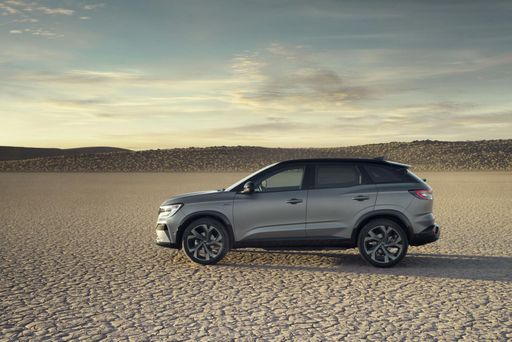
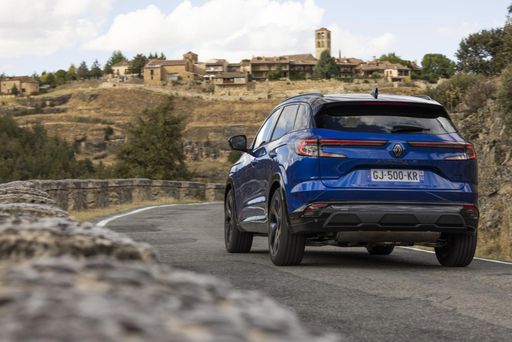
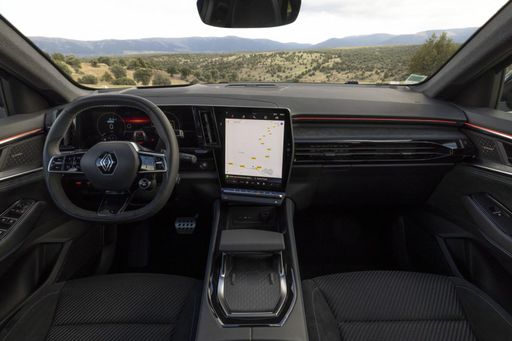
VS

Renault Austral vs Renault Captur comparison

Compare performance (148 HP vs 158 HP), boot space and price (29,900 £ vs 21,400 £ ) at a glance. Find out which car is the better choice for you – Renault Austral or Renault Captur?

Renault Austral vs Renault Captur: Key differences

Renault Austral

4.9 (5 Reviews)
rate
  • visibly more trunk space
details

Renault Captur

4.8 (7 Reviews)
rate
  • noticeably cheaper
  • only slightly more power
  • clearly more efficient
  • a bit quicker 0–100 km/h
  • a bit lighter
details

All details on performance, efficiency, range and trunk space can be found in the technical comparison below – including user reviews for both models.

By Achim Sedelmaier

Austral

Renault Austral vs Renault Captur: A Comprehensive Comparison

In the competitive landscape of compact SUVs, the Renault Austral and Renault Captur stand out with their unique offerings. Both models boast modern aesthetics, advanced technology, and efficient engine options, making them popular choices among consumers. But how do these two contenders fare against each other? Let's delve into a detailed comparison of their technical aspects and innovations.
Captur

Design and Dimensions

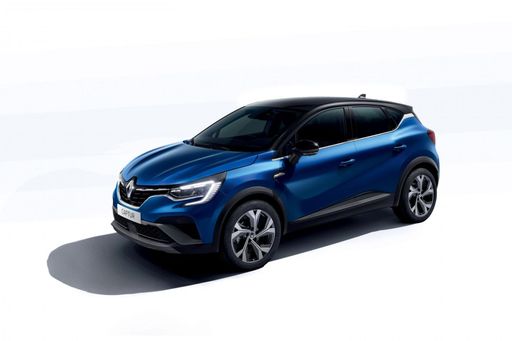
The Renault Austral is a larger SUV, measuring 4510 mm in length, 1825 mm in width, and 1618 mm in height. Its bold design exudes a robust and dynamic character, making it ideal for both urban and off-road adventures. The Captur, on the other hand, measures 4239 mm in length, 1797 mm in width, and 1575 mm in height, offering a more compact profile that makes city driving and parking easy.

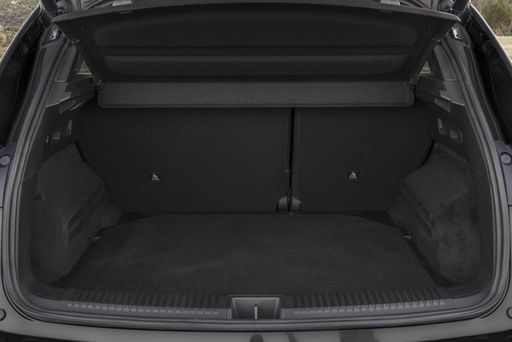
Both SUVs feature five doors and comfortable seating for up to five passengers, although the Austral provides more trunk space at 500 liters compared to the Captur's maximum of 422 liters. This added capacity makes the Austral a better option for families or those who require extra cargo space.

Austral

Powertrain Options

The Renault Austral is available with two innovative powertrain options: a Petrol MHEV (Mild Hybrid Electric Vehicle) offering 158 HP and a Full Hybrid variant that delivers 200 HP. Both engines are paired with an automatic CVT gearbox and provide efficient fuel consumption, ranging from 4.7 to 6.1 L/100km, making them a smart choice for those conscious of their environmental footprint.

Conversely, the Captur features a diverse lineup of engines, including Full Hybrid, Petrol MHEV, LPG, and standard petrol options, with power outputs ranging from 91 HP to 158 HP. The available transmissions include both manual and automatic gearboxes, catering to a wider range of driving preferences. Fuel consumption in the Captur varies significantly, from as low as 4.7 L/100km to 7.8 L/100km, depending on the engine variant.

Captur

Performance and Handling

When it comes to performance, the Renault Austral boasts impressive acceleration figures, reaching 0-100 km/h in just 8.4 seconds for the Full Hybrid model, while its top speed is rated at 174 km/h. The combination of a robust turbo engine and a well-tuned suspension provides an engaging driving experience suitable for both city commuting and weekend getaways.

The Captur also demonstrates commendable performance, with its quickest variant achieving 0-100 km/h in 8.5 seconds and a top speed of up to 180 km/h. However, it is worth noting that some of the less powerful engine options may result in slower acceleration, making the Austral a more performance-oriented choice overall.

Austral

Environmental Impact and Efficiency

Environmental considerations are crucial in today's automotive market. In this regard, the Renault Austral excels with lower CO2 emissions ranging from 105 to 139 g/km, particularly with the Full Hybrid model. This positions it favorably in terms of CO2 efficiency class, achieving an impressive 'C' rating for lower emissions.

The Captur offers competitive CO2 emissions as well, with ratings from 106 g/km up to 139 g/km across its various engine options. However, its higher emissions for some configurations may deter eco-conscious consumers.

Captur

Conclusion: Which SUV Should You Choose?

Ultimately, the choice between the Renault Austral and Renault Captur boils down to individual preferences and needs. If you prioritize space, performance, and advanced hybrid technology, the Austral shines as a strong contender. Its innovative features, larger trunk capacity, and robust powertrain options make it a compelling choice for buyers looking for a versatile SUV.

On the other hand, if you desire a compact SUV that offers variety in engine choices and is practical for urban environments, the Captur provides an engaging driving experience with its nimbleness and efficient fuel consumption. Both vehicles encapsulate Renault's commitment to quality engineering and innovative design, ensuring you can't go wrong with either option.

Here’s where it gets real: The technical differences in detail

Austral

Costs and Efficiency:

Price and efficiency are often the first things buyers look at. Here it becomes clear which model has the long-term edge – whether at the pump, the plug, or in purchase price.

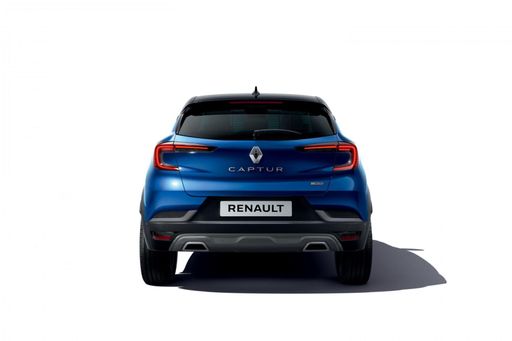
Renault Captur is noticeably cheaper – starting at 21,400 £ , while the Renault Austral costs 29,900 £ . That’s a price difference of around 8,529 £.

Fuel consumption also shows a difference: the Renault Captur uses 4.4 L/100km and is clearly more efficient than the Renault Austral with 6.4 L/100km. The difference is about 2 L/100km.

Captur

Engine and Performance:

Power, torque and acceleration say a lot about how a car feels on the road. This is where you see which model delivers more driving dynamics.

When it comes to engine power, the Renault Captur offers only slightly more power – delivering 158 HP compared to 148 HP. That’s roughly 10 HP more horsepower.

When accelerating from 0 to 100 km/h, the Renault Captur is a bit quicker – completing the sprint in 8.9 s, while the Renault Austral takes 9.9 s. That’s about 1 s quicker.

There’s also a difference in torque: the Renault Austral delivers marginally more torque with 270 Nm compared to 265 Nm. That’s about 5 Nm more.

Austral

Space and Everyday Use:

Cabin size, boot volume and payload all play a role in everyday practicality. Here, comfort and flexibility make the difference.

Both vehicles offer seating for 5 people.

In terms of curb weight, Renault Captur is a bit lighter – 1,323 kg compared to 1,548 kg. The difference is around 225 kg.

Looking at boot space, the Renault Austral offers visibly more boot space – 555 L compared to 422 L. That’s a difference of about 133 L.

When it comes to payload, the Renault Austral carries very slightly more – 455 kg compared to 453 kg. That’s a difference of about 2 kg.

Who wins the race in the data check?

The Renault Captur is far ahead overall in the objective data comparison.
This result only shows which model scores more points on paper – not which of the two cars feels right for you.

from £21,400
Captur

Renault Captur

  • Engine Type Full Hybrid, Petrol, Petrol MHEV
  • Transmission Automatic, Manuel
  • Drive Type Front-Wheel Drive
  • Power HP 115 - 158 HP
  • Consumption L/100km 4.4 - 6 L/100km
Renault Austral
Renault Captur

Costs and Consumption

View detailed analysis

Engine and Performance

View detailed analysis

Dimensions and Body

View detailed analysis

Renault Austral

The Renault Austral is a stylish, well-built crossover that blends a comfortable ride with a spacious, modern cabin. It combines everyday-friendly refinement and contemporary technology with a focus on safety and practicality, making it a sensible choice for drivers who want an all-round family car.

details

Renault Captur

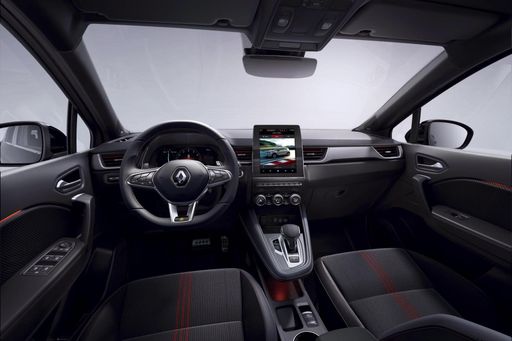
The Renault Captur is a stylish and practical compact crossover that combines a high seating position and easy manoeuvrability with a comfortable, well‑equipped cabin. Its flexible interior layout and modern infotainment make it a sensible, polished choice for city drivers and small families.

details
Renault Austral
Renault Captur

Costs and Consumption

Price
29,900 - 34,100 £
Price
21,400 - 28,600 £
Consumption L/100km
6.4 L/100km
Consumption L/100km
4.4 - 6 L/100km
Consumption kWh/100km
-
Consumption kWh/100km
-
Electric Range
-
Electric Range
-
Battery Capacity
-
Battery Capacity
-
co2
145 g/km
co2
100 - 137 g/km
Fuel tank capacity
-
Fuel tank capacity
-

Dimensions and Body

Body Type
SUV
Body Type
SUV
Seats
5
Seats
5
Doors
-
Doors
-
Curb weight
1,548 kg
Curb weight
1,323 - 1,441 kg
Trunk capacity
555 L
Trunk capacity
326 - 422 L
Length
-
Length
-
Width
1,825 mm
Width
1,797 mm
Height
-
Height
-
Max trunk capacity
-
Max trunk capacity
-
Payload
455 kg
Payload
447 - 453 kg

Engine and Performance

Engine Type
Petrol MHEV
Engine Type
Full Hybrid, Petrol, Petrol MHEV
Transmission
Automatic
Transmission
Automatic, Manuel
Transmission Detail
CVT
Transmission Detail
Automatic Gearbox, Manual Gearbox, Dual-Clutch Automatic
Drive Type
Front-Wheel Drive
Drive Type
Front-Wheel Drive
Power HP
148 HP
Power HP
115 - 158 HP
Acceleration 0-100km/h
9.9 s
Acceleration 0-100km/h
8.9 - 12.3 s
Max Speed
-
Max Speed
-
Torque
270 Nm
Torque
160 - 265 Nm
Number of Cylinders
4
Number of Cylinders
3 - 4
Power kW
109 kW
Power kW
84 - 116 kW
Engine capacity
1,332 cm3
Engine capacity
1,199 - 1,789 cm3

General

Model Year
2025
Model Year
2025
CO2 Efficiency Class
E
CO2 Efficiency Class
C, D, E
Brand
Renault
Brand
Renault
DriveDuel uses data analysis and artificial intelligence to evaluate vehicle data and create content. Content is regularly reviewed and improved. The displayed prices are estimates based on German list prices, adjusted to the respective country’s VAT. Country-specific registration taxes are not included. This information is not legally binding.