
 Deutschland
 France
 Nederland
 Great Britain
 Sverige
 Norge
Norge Danmark
 Suomi
Suomi Italia
 Polska
 España
VS
DS Automobiles DS 7 vs Volvo EC40 – Differences & prices compared
DS 7
@ DS Automobiles / Stellantis Media
Costs and Efficiency:
Price and efficiency are key factors when choosing a car – and this is often where the real differences emerge.
DS Automobiles DS 7 has a to a small extent advantage in terms of price – it starts at 41900 £, while the Volvo EC40 costs 46600 £. That’s a price difference of around 4740 £.
As for range, the Volvo EC40 performs clearly better – achieving up to 584 km, about 519 km more than the DS Automobiles DS 7.
EC40
@ Volvo Cars
Engine and Performance:
Power, torque and acceleration say a lot about how a car feels on the road. This is where you see which model delivers more driving dynamics.
When it comes to engine power, the Volvo EC40 has a to a small extent edge – offering 442 HP compared to 360 HP. That’s roughly 82 HP more horsepower.
In acceleration from 0 to 100 km/h, the Volvo EC40 is distinct quicker – completing the sprint in 4.60 s, while the DS Automobiles DS 7 takes 5.70 s. That’s about 1.10 s faster.
In terms of top speed, the DS Automobiles DS 7 performs evident better – reaching 235 km/h, while the Volvo EC40 tops out at 180 km/h. The difference is around 55 km/h.
There’s also a difference in torque: Volvo EC40 pulls noticeable stronger with 670 Nm compared to 520 Nm. That’s about 150 Nm difference.
DS 7
@ DS Automobiles / Stellantis Media
Space and Everyday Use:
Cabin size, boot volume and payload all play a role in everyday practicality. Here, comfort and flexibility make the difference.
Both vehicles offer seating for 5 people.
In curb weight, DS Automobiles DS 7 is distinct lighter – 1651 kg compared to 2065 kg. The difference is around 414 kg.
In terms of boot space, the DS Automobiles DS 7 offers noticeable more room – 555 L compared to 404 L. That’s a difference of about 151 L.
In maximum load capacity, the DS Automobiles DS 7 performs distinct better – up to 1750 L, which is about 554 L more than the Volvo EC40.
When it comes to payload, Volvo EC40 hardly perceptible takes the win – 435 kg compared to 424 kg. That’s a difference of about 11 kg.
Who wins the race?
The Volvo EC40 proves to be outperforms in nearly all aspects and therefore becomes our DriveDuel Champion!
Volvo EC40 is the better all-rounder in this comparison.
DS Automobiles DS 7
Volvo EC40
Costs and Consumption
View detailed analysis
View detailed analysis
Engine and Performance
View detailed analysis
View detailed analysis
Dimensions and Body
View detailed analysis
View detailed analysis
from about £46,600
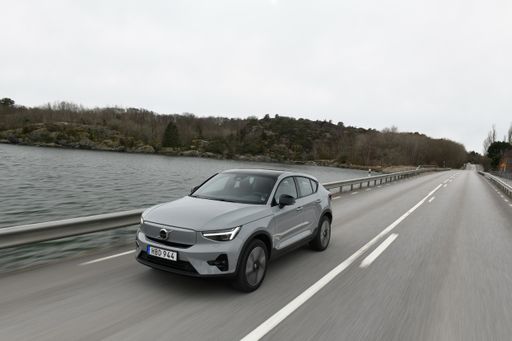 @ Volvo Cars
Volvo EC40
DS Automobiles DS 7
5 (1 Reviews)
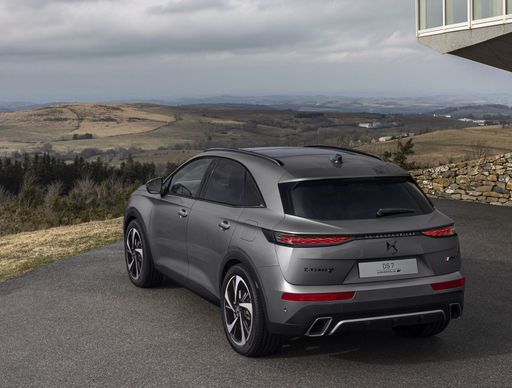
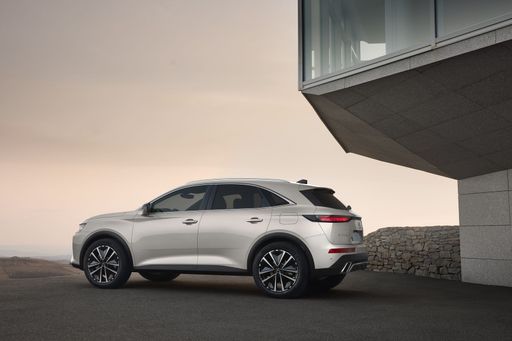
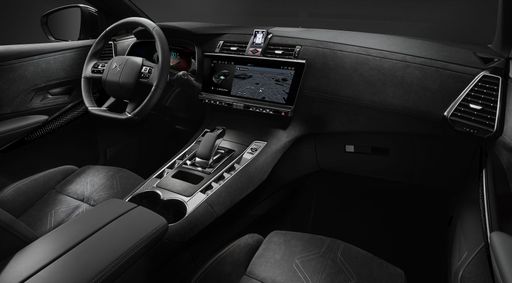
The DS 7 wraps Parisian elegance into SUV practicality, with sculpted surfaces, a jewel-like grille and an interior that feels more boutique lounge than family transporter. It appeals to buyers who want style and comfort without shouting, delivering a refined ride and clever tech that make daily driving feel a little more special — and yes, it’ll turn heads in the school run.
details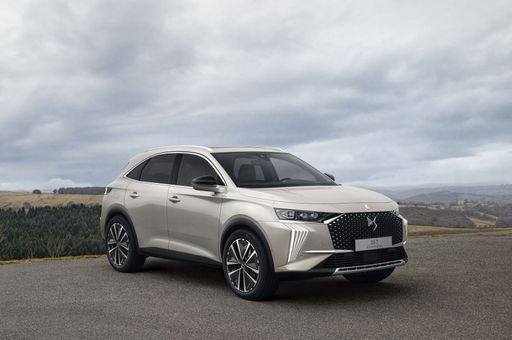 @ DS Automobiles / Stellantis Media
 @ DS Automobiles / Stellantis Media
 @ DS Automobiles / Stellantis Media
 @ DS Automobiles / Stellantis Media
Volvo EC40
The Volvo EC40 feels like a polished slice of Scandinavian calm on wheels, blending minimalist design with a cocoon-like interior that makes everyday driving surprisingly serene. It’s an electric compact that puts safety and comfort front and center, while still injecting enough personality and tech-savvy charm to keep city buyers smiling.
details
@ Volvo Cars
DS Automobiles DS 7
Volvo EC40
|
@ DS Automobiles / Stellantis Media
|
@ Volvo Cars
|
|
|
|
Costs and Consumption |
|
|---|---|
|
Price
41900 - 59300 £
|
Price
46600 - 59000 £
|
|
Consumption L/100km
1.3 - 5.5 L
|
Consumption L/100km
-
|
|
Consumption kWh/100km
-
|
Consumption kWh/100km
16.2 - 17.3 kWh
|
|
Electric Range
50 - 65 km
|
Electric Range
488 - 584 km
|
|
Battery Capacity
12.90 kWh
|
Battery Capacity
67 - 79 kWh
|
|
co2
30 - 145 g/km
|
co2
0 g/km
|
|
Fuel tank capacity
43 - 55 L
|
Fuel tank capacity
-
|
Dimensions and Body |
|
|---|---|
|
Body Type
SUV
|
Body Type
SUV
|
|
Seats
5
|
Seats
5
|
|
Doors
5
|
Doors
5
|
|
Curb weight
1651 - 2002 kg
|
Curb weight
2065 - 2185 kg
|
|
Trunk capacity
555 L
|
Trunk capacity
404 L
|
|
Length
4593 mm
|
Length
4440 mm
|
|
Width
1891 mm
|
Width
1873 mm
|
|
Height
1625 mm
|
Height
1591 mm
|
|
Max trunk capacity
1750 L
|
Max trunk capacity
1196 L
|
|
Payload
398 - 424 kg
|
Payload
395 - 435 kg
|
Engine and Performance |
|
|---|---|
|
Engine Type
Diesel, Plugin Hybrid
|
Engine Type
Electric
|
|
Transmission
Automatic
|
Transmission
Automatic
|
|
Transmission Detail
Automatic Gearbox
|
Transmission Detail
Reduction Gearbox
|
|
Drive Type
Front-Wheel Drive, All-Wheel Drive
|
Drive Type
Rear-Wheel Drive, All-Wheel Drive
|
|
Power HP
130 - 360 HP
|
Power HP
238 - 442 HP
|
|
Acceleration 0-100km/h
5.7 - 11.9 s
|
Acceleration 0-100km/h
4.6 - 7.3 s
|
|
Max Speed
195 - 235 km/h
|
Max Speed
180 km/h
|
|
Torque
300 - 520 Nm
|
Torque
420 - 670 Nm
|
|
Number of Cylinders
4
|
Number of Cylinders
-
|
|
Power kW
96 - 265 kW
|
Power kW
175 - 325 kW
|
|
Engine capacity
1499 - 1598 cm3
|
Engine capacity
-
|
General |
|
|---|---|
|
Model Year
2024 - 2025
|
Model Year
2024
|
|
CO2 Efficiency Class
E, B
|
CO2 Efficiency Class
A
|
|
Brand
DS Automobiles
|
Brand
Volvo
|
What drive types are available for the DS Automobiles DS 7?
The DS Automobiles DS 7 is available as Front-Wheel Drive or All-Wheel Drive.
The prices and data displayed are estimates based on German list prices and may vary by country. This information is not legally binding.