VS

Ford Capri vs Tesla Model 3 comparison

Compare performance (340 HP vs 460 HP), boot space and price (36,300 £ vs 31,700 £ ) at a glance. Find out which car is the better choice for you – Ford Capri or Tesla Model 3?

Ford Capri vs Tesla Model 3: Key differences

Ford Capri

5 (3 Reviews)
rate

Tesla Model 3

3.8 (4 Reviews)
rate
  • somewhat cheaper
  • clearly more power
  • very slightly more efficient
  • slightly more electric range
  • considerably quicker 0–100 km/h
  • moderately lighter
  • very slightly more trunk space

All details on performance, efficiency, range and trunk space can be found in the technical comparison below – including user reviews for both models.

By Achim Sedelmaier

Capri

Ford Capri vs. Tesla Model 3: A Clash of Electric Titans

In the rapidly evolving world of electric cars, few matchups illustrate the balance of tradition and innovation as perfectly as the comparison between the Ford Capri and the Tesla Model 3. The Capri, not to be mistaken with its classic gas-powered namesake, now joins the futuristic fold as an all-electric SUV. Meanwhile, the Tesla Model 3 maintains its hold as a definitive force in the electric sedan market. Here, we dive deep into their technical specifications and innovations to see how these two exceptional vehicles compare.
Model 3

Engineering and Design: A Study in Modern Aesthetics

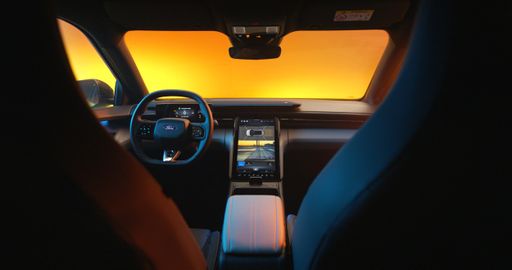
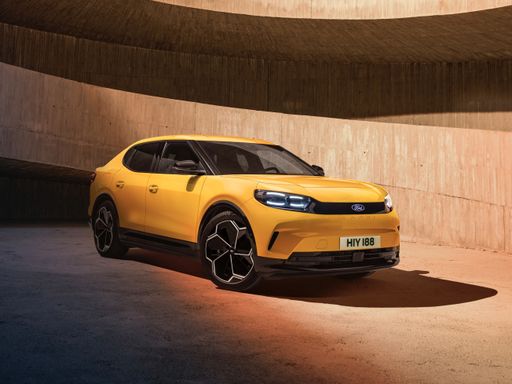
The Ford Capri enters the competition with the bold styling cue of an SUV. With its length of 4634 mm, width of 1872 mm, and height of 1626 mm, it boasts considerable presence on the road. Inside, it comfortably seats five passengers, offering practicality alongside modern design touches.

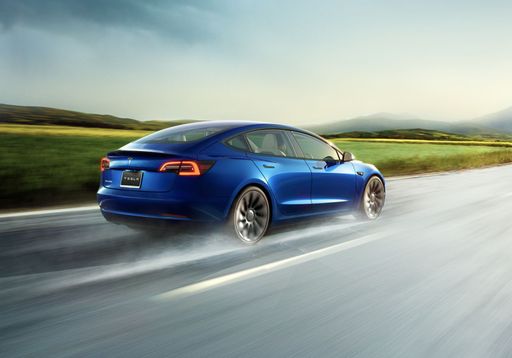
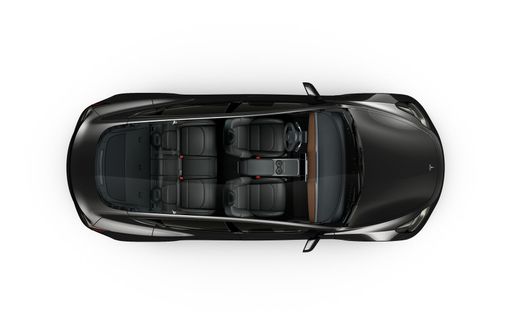
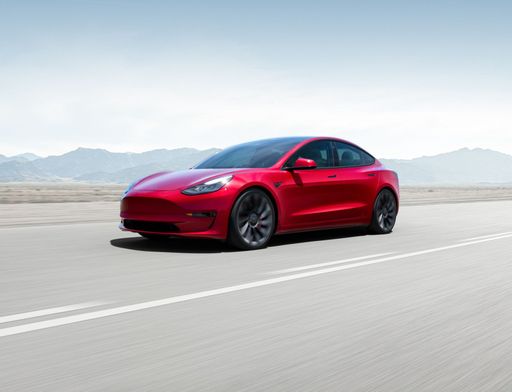
On the other hand, the Tesla Model 3 is a sleek hatchback, sporting dimensions of 4720 mm in length, 1850 mm in width, and a notably lower height ranging between 1440 mm and 1441 mm. This compact stature contributes to its aerodynamic efficiency and nimble handling, making it equally suitable for urban and highway drives.

Capri

Performance: Power and Range Meet Efficiency

When it comes to performance, both cars shine in their respective rights. The Ford Capri offers two driving configurations—Rear-Wheel Drive and All-Wheel Drive—powering up with a range of 286 to 340 HP. It achieves 0-100 km/h in 5.3 to 6.4 seconds, with an electric range stretching up to 627 km thanks to its sizable battery capacities of up to 79 kWh.

Meanwhile, Tesla's Model 3 demonstrates staggering figures with power output between 283 and 460 HP, also benefiting from both Rear-Wheel and All-Wheel Drive options. With acceleration from 0-100 km/h taking as little as 3.1 seconds in the top configurations, it's no surprise that the Model 3 is a favorite among speed enthusiasts. Additionally, the Model 3 provides an impressive range of up to 702 km, supported by a 79 kWh battery in its advanced trims.

Model 3

Innovation and Technology: Future-Ready Features

In terms of technology, the Ford Capri and Tesla Model 3 incorporate the latest electric vehicle innovations. The Capri embraces new-age engineering with its reduction gearbox transmission, fostering seamless, automatic transitions. Its CO2 efficiency class rating of 'A' underscores its commitment to sustainable motoring.

Tesla, known for leading the tech frontier, arms the Model 3 with an advanced array of features, including the hallmark Tesla Autopilot, and continuous over-the-air updates, ensuring that the vehicle remains cutting-edge long after purchase. The lower curb weight of the Model 3, starting from 1822 kg, enhances its efficiency, allowing quick acceleration and extended range.

Conclusion: A Battle of Choice

Deciding between the Ford Capri and Tesla Model 3 ultimately hinges on what a potential buyer values most. The Capri presents a compelling case with its robust SUV dimensions, extensive range, and classic Ford reliability. On the flip side, the Model 3 offers standout speed, state-of-the-art technology, and the unrivaled Tesla innovation factor. Whichever model one leans toward, both represent the thrilling vanguard of electric vehicle advancement, promising more than just a drive, but a true automotive experience.

Here’s where it gets real: The technical differences in detail

Capri

Costs and Efficiency:

Price and efficiency are key factors when choosing a car – and this is often where the real differences emerge.

Tesla Model 3 is somewhat cheaper – starting at 31,700 £ , while the Ford Capri costs 36,300 £ . That’s a price difference of around 4,637 £.

In terms of energy consumption, the Tesla Model 3 is very slightly more efficient: consuming 13 kWh/100km compared to 13.8 kWh/100km for the Ford Capri. That’s a difference of about 0.8 kWh/100km.

As for electric range, the Tesla Model 3 offers slightly more range – reaching up to 750 km, about 123 km more than the Ford Capri.

Model 3

Engine and Performance:

Power, torque and acceleration say a lot about how a car feels on the road. This is where you see which model delivers more driving dynamics.

When it comes to engine power, the Tesla Model 3 offers clearly more power – delivering 460 HP compared to 340 HP. That’s roughly 120 HP more horsepower.

When accelerating from 0 to 100 km/h, the Tesla Model 3 is considerably quicker – completing the sprint in 3.1 s, while the Ford Capri takes 5.3 s. That’s about 2.2 s quicker.

There’s also a difference in torque: the Ford Capri delivers marginally more torque with 679 Nm compared to 660 Nm. That’s about 19 Nm more.

Capri

Space and Everyday Use:

Whether family car or daily driver – which one offers more room, flexibility and comfort?

Both vehicles offer seating for 5 people.

In terms of curb weight, Tesla Model 3 is moderately lighter – 1,772 kg compared to 2,001 kg. The difference is around 229 kg.

Looking at boot space, the Tesla Model 3 offers very slightly more boot space – 594 L compared to 572 L. That’s a difference of about 22 L.

When it comes to payload, the Ford Capri carries visibly more – 587 kg compared to 377 kg. That’s a difference of about 210 kg.

Who wins the race in the data check?

The Tesla Model 3 is clearly superior overall in the objective data comparison.
This result only shows which model scores more points on paper – not which of the two cars feels right for you.

from £31,700
Model 3

Tesla Model 3

  • Engine Type : Electric
  • Transmission : Automatic
  • Drive Type : All-Wheel Drive, Rear-Wheel Drive
  • Power HP : 283 - 460 HP
  • Consumption kWh/100km : 13 - 16.7 kWh/100km
  • Electric Range : 534 - 750 km
Ford Capri
Tesla Model 3

Costs and Consumption

View detailed analysis

Engine and Performance

View detailed analysis

Dimensions and Body

View detailed analysis

Ford Capri

The Ford Capri turned the family car into something cheekily sporty, with a long, rakish profile that still promises fun at a glance. Today it lives on as a lovable classic — easy to tinker with, enjoyable to drive and guaranteed to raise smiles at any meet.

details

Tesla Model 3

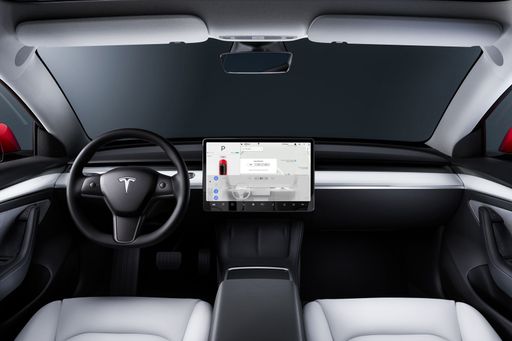
The Tesla Model 3 slices through daily commuting with a silent, confident shove that makes petrolheads reassess their life choices, while its minimalist cabin feels more like a slick gadget gallery than a traditional car interior. For buyers after a fuss-free, tech-forward electric with plenty of grin factor and low running drama, it’s hard to beat—just don't be surprised when the car updates itself overnight.

details
Ford Capri
Tesla Model 3

Costs and Consumption

Price
36,300 - 50,900 £
Price
31,700 - 50,100 £
Consumption L/100km
-
Consumption L/100km
-
Consumption kWh/100km
13.8 - 16.5 kWh/100km
Consumption kWh/100km
13 - 16.7 kWh/100km
Electric Range
439 - 627 km
Electric Range
534 - 750 km
Battery Capacity
-
Battery Capacity
83 kWh
co2
0 g/km
co2
0 g/km
Fuel tank capacity
-
Fuel tank capacity
-

Dimensions and Body

Body Type
SUV
Body Type
Sedan
Seats
5
Seats
5
Doors
-
Doors
4
Curb weight
2,001 - 2,175 kg
Curb weight
1,772 - 1,929 kg
Trunk capacity
572 L
Trunk capacity
594 L
Length
-
Length
4,724 mm
Width
1,872 mm
Width
1,850 mm
Height
-
Height
1,431 mm
Max trunk capacity
-
Max trunk capacity
-
Payload
559 - 587 kg
Payload
303 - 377 kg

Engine and Performance

Engine Type
Electric
Engine Type
Electric
Transmission
Automatic
Transmission
Automatic
Transmission Detail
Reduction Gearbox
Transmission Detail
Reduction Gearbox
Drive Type
Rear-Wheel Drive, All-Wheel Drive
Drive Type
All-Wheel Drive, Rear-Wheel Drive
Power HP
190 - 340 HP
Power HP
283 - 460 HP
Acceleration 0-100km/h
5.3 - 8 s
Acceleration 0-100km/h
3.1 - 6.2 s
Max Speed
-
Max Speed
262 km/h
Torque
350 - 679 Nm
Torque
420 - 660 Nm
Number of Cylinders
-
Number of Cylinders
-
Power kW
140 - 250 kW
Power kW
208 - 338 kW
Engine capacity
-
Engine capacity
-

General

Model Year
2,026
Model Year
2,025
CO2 Efficiency Class
A
CO2 Efficiency Class
A
Brand
Ford
Brand
Tesla
DriveDuel uses data analysis and artificial intelligence to evaluate vehicle data and create content. Content is regularly reviewed and improved. The displayed prices are estimates based on German list prices, adjusted to the respective country’s VAT. Country-specific registration taxes are not included. This information is not legally binding.