VS

Ford Explorer EV vs Mercedes EQB - Differences and prices compared

Compare performance (340 HP vs 292 HP), boot space and price (34200 £ vs 45900 £ ) at a glance. Find out which car is the better choice for you – Ford Explorer EV or Mercedes EQB?

Explorer EV

The Battle of Electric SUVs: Ford Explorer EV vs. Mercedes EQB

As electric vehicles continue to revolutionize the automotive industry, two contenders have stepped onto the stage to capture attention: the Ford Explorer EV and the Mercedes EQB. These SUVs are not only making waves with their eco-friendly credentials but also with their technological innovations and performance capabilities. Let's dive into the details and discover what distinguishes these two models.
EQB

Design and Dimensions: Crafting a Modern SUV

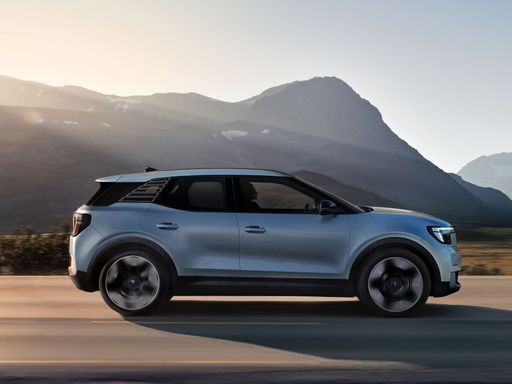
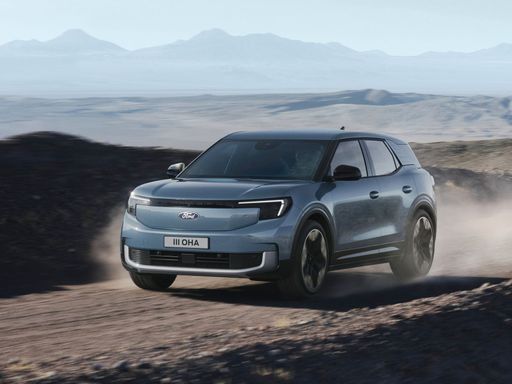
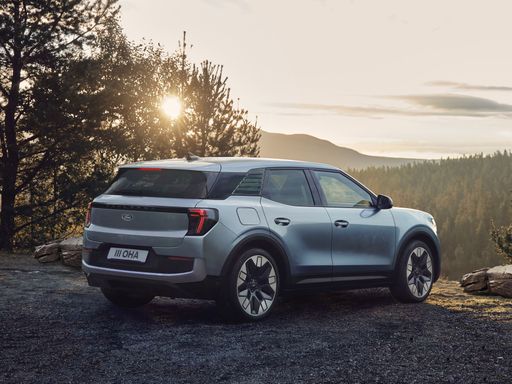
The Ford Explorer EV showcases a sleek design with dimensions measuring 4468mm in length, 1871mm in width, and up to 1639mm in height. It embodies a contemporary aesthetic that Ford enthusiasts will find appealing, combined with impressive aerodynamic efficiency.

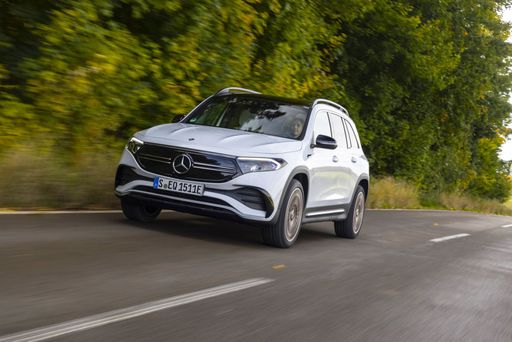
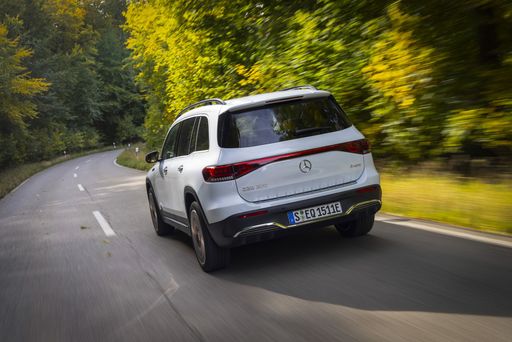
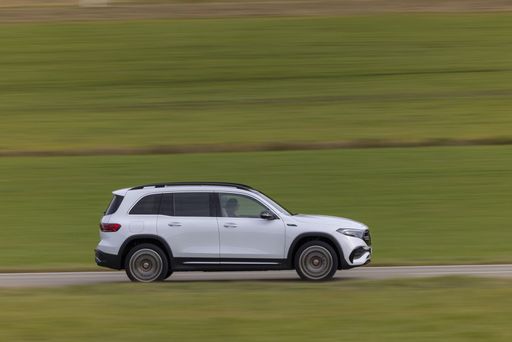
In comparison, the Mercedes EQB extends slightly longer at 4684mm and features a more traditional SUV styling, with a width of 1834mm and a height reaching up to 1689mm. Its design philosophy caters to those who appreciate the blend of classic and modern elements.

Explorer EV

Performance and Power: Under the Hood

Performance-wise, the Explorer EV offers versatility with its rear-wheel and all-wheel drive options. Its powertrain delivers up to 340 HP and a torque of 679 Nm, propelling the SUV from 0-100 km/h in a swift 5.3 seconds. With a top speed of 180 km/h, it promises an exhilarating yet efficient drive.

On the other hand, the Mercedes EQB provides both front-wheel and all-wheel drive capabilities. It achieves up to 292 HP, with a maximum torque of 520 Nm. It accelerates from 0-100 km/h in 6.2 seconds, which is notably brisk for its class, but falls slightly behind the Explorer EV in performance metrics.

EQB

Range and Efficiency: Going the Distance

For those concerned with range, the Explorer EV excels with an impressive electric range of up to 602 km, courtesy of its robust 79 kWh battery. Its consumption is efficient, achieving figures as low as 13.9 kWh/100km, highlighting its efficiency in long-distance electric travel.

Mercedes EQB offers a respectable range, with its figures stretching to 533 km on a 70.5 kWh battery. Its consumption rates range from 15.2 to 17.3 kWh/100km, showing its balance between performance and energy use.

Explorer EV

Interior and Capacity: Space and Comfort

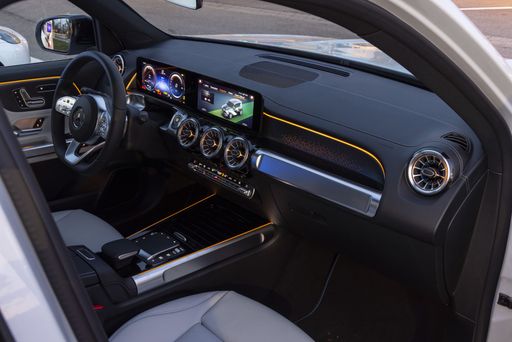
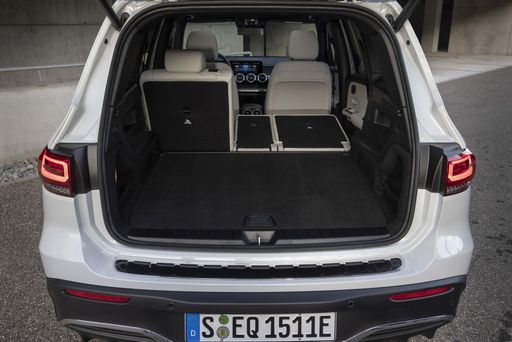
Both SUVs are designed to accommodate five passengers comfortably. The Explorer EV features a trunk capacity of up to 450 L, slightly smaller compared to the EQB's 495 L, offering a bit more space for luggage and cargo. The interiors of both vehicles are laden with the latest technologies to enhance driver and passenger experience.

EQB

The Verdict

The choice between the Ford Explorer EV and the Mercedes EQB narrows down to what you prioritize in an SUV. If maximum range and performance are your goals, the Explorer EV stands out with its leading specifications. However, if you are inclined towards a more premium interior experience with a classic design, the Mercedes EQB makes a compelling case.

Ultimately, both vehicles exemplify the strides being made in electric vehicle technology, catering to distinct tastes and needs within the EV segment. As we move forward, these models will surely inspire other innovations in the electric SUV arena.

Ford Explorer EV

4.9 (3 Reviews)
rate

Mercedes EQB

4.3 (3 Reviews)
rate

You can find all user reviews further down on this page.

Here’s where it gets real: The technical differences in detail

Costs and Efficiency:

When it comes to price and running costs, the biggest differences usually appear. This is often where you see which car fits your budget better in the long run.

Ford Explorer EV has a evident advantage in terms of price – it starts at 34200 £ , while the Mercedes EQB costs 45900 £ . That’s a price difference of around 11669 £.

In terms of energy consumption, the advantage goes to the Ford Explorer EV: with 14.50 kWh per 100 km, it’s barely noticeable more efficient than the Mercedes EQB with 15.20 kWh. That’s a difference of about 0.70 kWh.

As for electric range, the Ford Explorer EV performs to a small extent better – achieving up to 602 km, about 67 km more than the Mercedes EQB.

Engine and Performance:

Under the bonnet, it becomes clear which model is tuned for sportiness and which one takes the lead when you hit the accelerator.

When it comes to engine power, the Ford Explorer EV has a to a small extent edge – offering 340 HP compared to 292 HP. That’s roughly 48 HP more horsepower.

In acceleration from 0 to 100 km/h, the Ford Explorer EV is somewhat quicker – completing the sprint in 5.30 s, while the Mercedes EQB takes 6.20 s. That’s about 0.90 s faster.

In terms of top speed, the Ford Explorer EV performs slightly better – reaching 180 km/h, while the Mercedes EQB tops out at 160 km/h. The difference is around 20 km/h.

There’s also a difference in torque: Ford Explorer EV pulls distinct stronger with 679 Nm compared to 520 Nm. That’s about 159 Nm difference.

Space and Everyday Use:

Beyond pure performance, interior space and usability matter most in daily life. This is where you see which car is more practical and versatile.

Both vehicles offer seating for 5 people.

In curb weight, Ford Explorer EV is a bit lighter – 1908 kg compared to 2105 kg. The difference is around 197 kg.

In terms of boot space, the Mercedes EQB offers hardly perceptible more room – 495 L compared to 450 L. That’s a difference of about 45 L.

In maximum load capacity, the Mercedes EQB performs slightly better – up to 1710 L, which is about 288 L more than the Ford Explorer EV.

When it comes to payload, Ford Explorer EV noticeable takes the win – 585 kg compared to 435 kg. That’s a difference of about 150 kg.

Who wins the race in the data check?

The Ford Explorer EV holds a decisive overall lead in the objective data comparison.
This result only shows which model scores more points on paper – not which of the two cars feels right for you.

Ford Explorer EV
Mercedes EQB

Costs and Consumption

View detailed analysis

Engine and Performance

View detailed analysis

Dimensions and Body

View detailed analysis
from about £34,200
Explorer EV

Ford Explorer EV

  • Engine Type : Electric
  • Transmission : Automatic
  • Drive Type : Rear-Wheel Drive, All-Wheel Drive
  • Power HP : 170 - 340 HP
  • Consumption kWh/100km : 14.5 - 17.2 kWh
  • Electric Range : 360 - 602 km

Ford Explorer EV

4.9 (3 Reviews)
rate

The Ford Explorer EV translates the familiar big‑American SUV presence into whisper‑quiet electric motoring, offering roomy seating and a tech‑forward cabin that will please families and road‑trippers alike. It drives with more composure than its boxy looks suggest, blending a comfortable ride and eager acceleration while undercutting the guilt of gas stops — a practical, modern alternative for buyers who want Explorer space with electric charm.

details

Mercedes EQB

4.3 (3 Reviews)
rate

The Mercedes EQB is an electric compact SUV that dresses Mercedes' premium feel in practical clothing, with flexible seating and a serene, composed ride that turns everyday errands into a small luxury. It won't thrill the enthusiast, but for buyers who want a smart, spacious and well-made EV with tasteful tech and real-world usability, the EQB is a sensible, slightly buttoned-up choice that impresses without shouting.

details
Ford Explorer EV
Mercedes EQB

Costs and Consumption

Price
34200 - 48800 £
Price
45900 - 58900 £
Consumption L/100km
-
Consumption L/100km
-
Consumption kWh/100km
14.5 - 17.2 kWh
Consumption kWh/100km
15.2 - 17.2 kWh
Electric Range
360 - 602 km
Electric Range
468 - 535 km
Battery Capacity
52 - 79 kWh
Battery Capacity
70.50 kWh
co2
0 g/km
co2
0 g/km
Fuel tank capacity
-
Fuel tank capacity
-

Dimensions and Body

Body Type
SUV
Body Type
SUV
Seats
5
Seats
5
Doors
5
Doors
5
Curb weight
1908 - 2179 kg
Curb weight
2105 - 2170 kg
Trunk capacity
445 - 450 L
Trunk capacity
495 L
Length
4468 mm
Length
4684 mm
Width
1871 mm
Width
1834 mm
Height
1630 - 1639 mm
Height
1654 - 1689 mm
Max trunk capacity
1417 - 1422 L
Max trunk capacity
1710 L
Payload
561 - 585 kg
Payload
435 kg

Engine and Performance

Engine Type
Electric
Engine Type
Electric
Transmission
Automatic
Transmission
Automatic
Transmission Detail
Reduction Gearbox
Transmission Detail
Reduction Gearbox
Drive Type
Rear-Wheel Drive, All-Wheel Drive
Drive Type
Front-Wheel Drive, All-Wheel Drive
Power HP
170 - 340 HP
Power HP
190 - 292 HP
Acceleration 0-100km/h
5.3 - 8.7 s
Acceleration 0-100km/h
6.2 - 8.9 s
Max Speed
160 - 180 km/h
Max Speed
160 km/h
Torque
310 - 679 Nm
Torque
385 - 520 Nm
Number of Cylinders
-
Number of Cylinders
-
Power kW
125 - 250 kW
Power kW
140 - 215 kW
Engine capacity
-
Engine capacity
-

General

Model Year
2024 - 2025
Model Year
2024 - 2025
CO2 Efficiency Class
A
CO2 Efficiency Class
A
Brand
Ford
Brand
Mercedes-Benz
What drive types are available for the Ford Explorer EV?

The Ford Explorer EV is available as Rear-Wheel Drive or All-Wheel Drive.

The prices shown are estimates based on German list prices, adjusted for local VAT. Local registration taxes (e.g. NoVA, BPM or CO2 malus) are not included. This information is not legally binding.