
 Deutschland
 France
 Nederland
 Great Britain
 Sverige
 Norge
Norge Danmark
 Suomi
Suomi Italia
 Polska
 España
VS
Ford Explorer EV vs Mercedes EQE SUV - Differences and prices compared
Explorer EV
@ Ford Motor Company / Ford Media Center
Costs and Efficiency:
Price and efficiency are often the first things buyers look at. Here it becomes clear which model has the long-term edge – whether at the pump, the plug, or in purchase price.
Ford Explorer EV has a clearly advantage in terms of price – it starts at 34200 £, while the Mercedes EQE SUV costs 71600 £. That’s a price difference of around 37353 £.
In terms of energy consumption, the advantage goes to the Ford Explorer EV: with 14.50 kWh per 100 km, it’s distinct more efficient than the Mercedes EQE SUV with 18.30 kWh. That’s a difference of about 3.80 kWh.
As for range, the Mercedes EQE SUV performs barely noticeable better – achieving up to 611 km, about 9 km more than the Ford Explorer EV.
EQE SUV
@ Mercedes-Benz Group Media
Engine and Performance:
Power, torque and acceleration are the classic benchmarks for car enthusiasts – and here, some clear differences start to show.
When it comes to engine power, the Mercedes EQE SUV has a significantly edge – offering 625 HP compared to 340 HP. That’s roughly 285 HP more horsepower.
In acceleration from 0 to 100 km/h, the Mercedes EQE SUV is convincingly quicker – completing the sprint in 3.70 s, while the Ford Explorer EV takes 5.30 s. That’s about 1.60 s faster.
In terms of top speed, the Mercedes EQE SUV performs evident better – reaching 240 km/h, while the Ford Explorer EV tops out at 180 km/h. The difference is around 60 km/h.
There’s also a difference in torque: Mercedes EQE SUV pulls noticeable stronger with 950 Nm compared to 679 Nm. That’s about 271 Nm difference.
Explorer EV
@ Ford Motor Company / Ford Media Center
Space and Everyday Use:
Whether family car or daily driver – which one offers more room, flexibility and comfort?
Seats: offers more seating capacity – vs .
In curb weight, Ford Explorer EV is evident lighter – 1908 kg compared to 2440 kg. The difference is around 532 kg.
In terms of boot space, the Mercedes EQE SUV offers somewhat more room – 520 L compared to 450 L. That’s a difference of about 70 L.
In maximum load capacity, the Mercedes EQE SUV performs a bit better – up to 1675 L, which is about 253 L more than the Ford Explorer EV.
When it comes to payload, Ford Explorer EV slight takes the win – 585 kg compared to 580 kg. That’s a difference of about 5 kg.
Who comes out on top?
Overall, the Mercedes EQE SUV shows itself to be is largely superior and secures the title of DriveDuel Champion.
It convinces with the more balanced overall package and proves to be the more versatile choice for everyday use.
from about £71,600
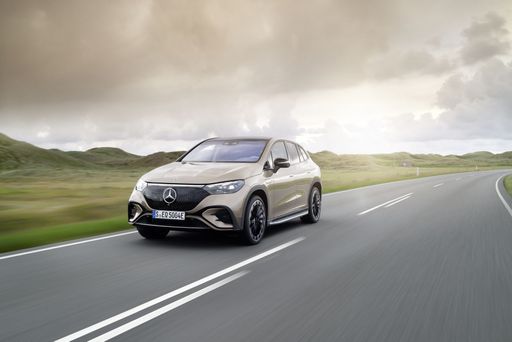 @ Mercedes-Benz Group Media
Mercedes EQE SUV
Ford Explorer EV
Mercedes EQE SUV
Costs and Consumption
View detailed analysis
View detailed analysis
Engine and Performance
View detailed analysis
View detailed analysis
Dimensions and Body
View detailed analysis
View detailed analysis
Ford Explorer EV
5 (2 Reviews)
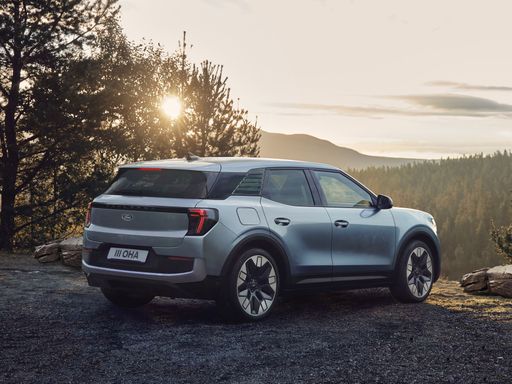
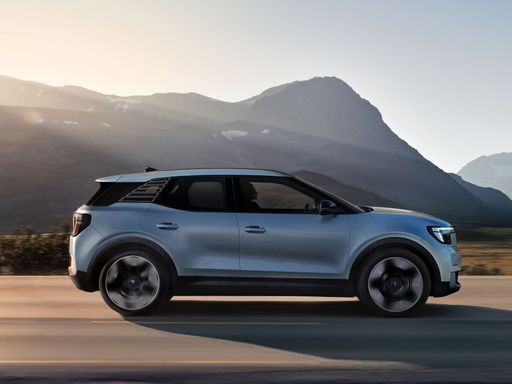
The Ford Explorer EV translates the familiar big‑American SUV presence into whisper‑quiet electric motoring, offering roomy seating and a tech‑forward cabin that will please families and road‑trippers alike. It drives with more composure than its boxy looks suggest, blending a comfortable ride and eager acceleration while undercutting the guilt of gas stops — a practical, modern alternative for buyers who want Explorer space with electric charm.
details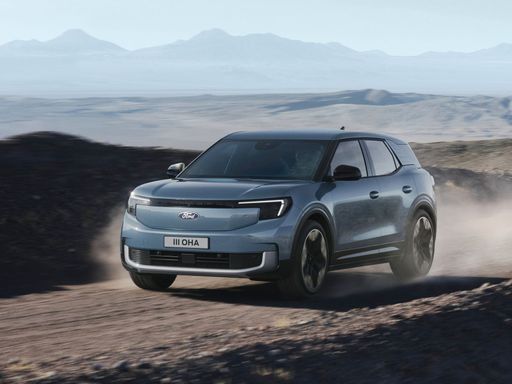 @ Ford Motor Company / Ford Media Center
 @ Ford Motor Company / Ford Media Center
 @ Ford Motor Company / Ford Media Center
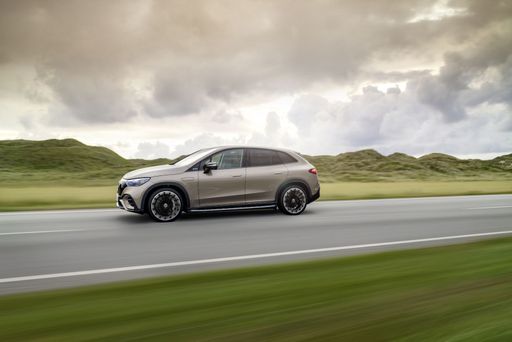
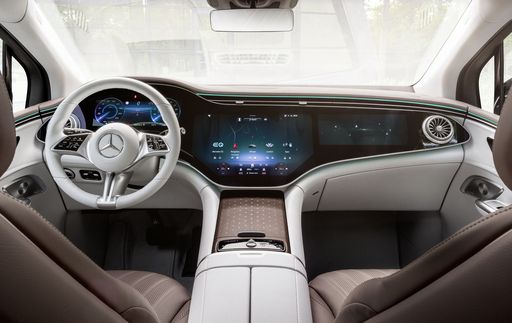
Mercedes EQE SUV
The Mercedes EQE SUV wraps silent electric power in a sumptuous, tech-filled shell, offering a cocoon-like cabin that makes long journeys feel indulgent. It’s not a driver's toy but a sophisticated cruiser for buyers who want luxury, space and futuristic gadgetry without shouting for attention.
details
@ Mercedes-Benz Group Media
 @ Mercedes-Benz Group Media
 @ Mercedes-Benz Group Media
 @ Mercedes-Benz Group Media
Ford Explorer EV
Mercedes EQE SUV
|
@ Ford Motor Company / Ford Media Center
|
@ Mercedes-Benz Group Media
|
|
|
|
Costs and Consumption |
|
|---|---|
|
Price
34200 - 48800 £
|
Price
71600 - 125100 £
|
|
Consumption L/100km
-
|
Consumption L/100km
-
|
|
Consumption kWh/100km
14.5 - 17.2 kWh
|
Consumption kWh/100km
18.3 - 23.1 kWh
|
|
Electric Range
360 - 602 km
|
Electric Range
453 - 611 km
|
|
Battery Capacity
52 - 79 kWh
|
Battery Capacity
90.5 - 96 kWh
|
|
co2
0 g/km
|
co2
0 g/km
|
|
Fuel tank capacity
-
|
Fuel tank capacity
-
|
Dimensions and Body |
|
|---|---|
|
Body Type
SUV
|
Body Type
SUV
|
|
Seats
5
|
Seats
5
|
|
Doors
5
|
Doors
4
|
|
Curb weight
1908 - 2179 kg
|
Curb weight
2440 - 2615 kg
|
|
Trunk capacity
445 - 450 L
|
Trunk capacity
520 L
|
|
Length
4468 mm
|
Length
4863 - 4879 mm
|
|
Width
1871 mm
|
Width
1940 mm
|
|
Height
1630 - 1639 mm
|
Height
1672 - 1685 mm
|
|
Max trunk capacity
1417 - 1422 L
|
Max trunk capacity
1675 L
|
|
Payload
561 - 585 kg
|
Payload
505 - 580 kg
|
Engine and Performance |
|
|---|---|
|
Engine Type
Electric
|
Engine Type
Electric
|
|
Transmission
Automatic
|
Transmission
Automatic
|
|
Transmission Detail
Reduction Gearbox
|
Transmission Detail
Reduction Gearbox
|
|
Drive Type
Rear-Wheel Drive, All-Wheel Drive
|
Drive Type
All-Wheel Drive, Rear-Wheel Drive
|
|
Power HP
170 - 340 HP
|
Power HP
265 - 625 HP
|
|
Acceleration 0-100km/h
5.3 - 8.7 s
|
Acceleration 0-100km/h
3.7 - 7.1 s
|
|
Max Speed
160 - 180 km/h
|
Max Speed
210 - 240 km/h
|
|
Torque
310 - 679 Nm
|
Torque
550 - 950 Nm
|
|
Number of Cylinders
-
|
Number of Cylinders
-
|
|
Power kW
125 - 250 kW
|
Power kW
195 - 460 kW
|
|
Engine capacity
-
|
Engine capacity
-
|
General |
|
|---|---|
|
Model Year
2024 - 2025
|
Model Year
2023 - 2025
|
|
CO2 Efficiency Class
A
|
CO2 Efficiency Class
A
|
|
Brand
Ford
|
Brand
Mercedes-Benz
|
What drive types are available for the Ford Explorer EV?
The Ford Explorer EV is available as Rear-Wheel Drive or All-Wheel Drive.
The prices and data displayed are estimates based on German list prices and may vary by country. This information is not legally binding.