
 Deutschland
 France
 Nederland
 Great Britain
 Sverige
 Norge
Norge Danmark
 Suomi
Suomi Italia
 Polska
 España
VS
Ford Explorer EV vs Mercedes EQV – Which model is better for everyday use?
Both models have their strengths – but which one suits you more?
Compare performance, efficiency, price and space directly: Ford Explorer EV or Mercedes EQV?
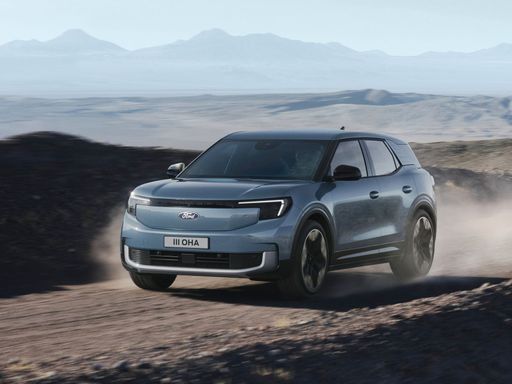
Explorer EV
@ Ford Motor Company / Ford Media Center
Costs and Efficiency:
When it comes to price and running costs, the biggest differences usually appear. This is often where you see which car fits your budget better in the long run.
Ford Explorer EV has a significantly advantage in terms of price – it starts at 34200 £, while the Mercedes EQV costs 50700 £. That’s a price difference of around 16547 £.
In terms of energy consumption, the advantage goes to the Ford Explorer EV: with 14.50 kWh per 100 km, it’s clearly more efficient than the Mercedes EQV with 27.10 kWh. That’s a difference of about 12.60 kWh.
As for range, the Ford Explorer EV performs evident better – achieving up to 602 km, about 238 km more than the Mercedes EQV.
EQV
@ Mercedes-Benz Group Media
Engine and Performance:
Power, torque and acceleration say a lot about how a car feels on the road. This is where you see which model delivers more driving dynamics.
When it comes to engine power, the Ford Explorer EV has a clearly perceptible edge – offering 340 HP compared to 204 HP. That’s roughly 136 HP more horsepower.
In acceleration from 0 to 100 km/h, the Ford Explorer EV is significantly quicker – completing the sprint in 5.30 s, while the Mercedes EQV takes 10.30 s. That’s about 5 s faster.
In terms of top speed, the Ford Explorer EV performs evident better – reaching 180 km/h, while the Mercedes EQV tops out at 140 km/h. The difference is around 40 km/h.
There’s also a difference in torque: Ford Explorer EV pulls clearly stronger with 679 Nm compared to 365 Nm. That’s about 314 Nm difference.
Explorer EV
@ Ford Motor Company / Ford Media Center
Space and Everyday Use:
Beyond pure performance, interior space and usability matter most in daily life. This is where you see which car is more practical and versatile.
Seats: Mercedes EQV offers slightly more seating capacity – 6 vs 5.
In curb weight, Ford Explorer EV is clearly perceptible lighter – 1908 kg compared to 2666 kg. The difference is around 758 kg.
In terms of boot space, the Mercedes EQV offers convincingly more room – 1410 L compared to 450 L. That’s a difference of about 960 L.
In maximum load capacity, the Mercedes EQV performs significantly better – up to 5010 L, which is about 3588 L more than the Ford Explorer EV.
When it comes to payload, Mercedes EQV evident takes the win – 834 kg compared to 585 kg. That’s a difference of about 249 kg.
Who comes out on top?
Overall, the Ford Explorer EV shows itself to be is largely superior and secures the title of DriveDuel Champion.
It convinces with the more balanced overall package and proves to be the more versatile choice for everyday use.
from about £34,200
 @ Ford Motor Company / Ford Media Center
Ford Explorer EV
Ford Explorer EV
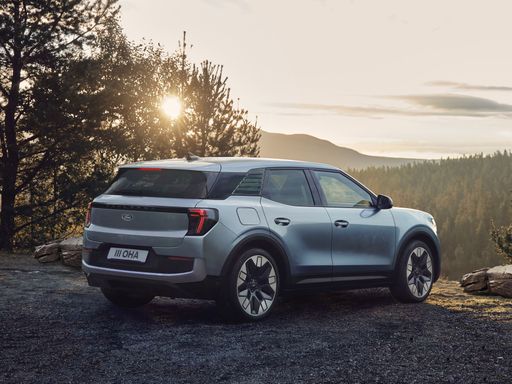
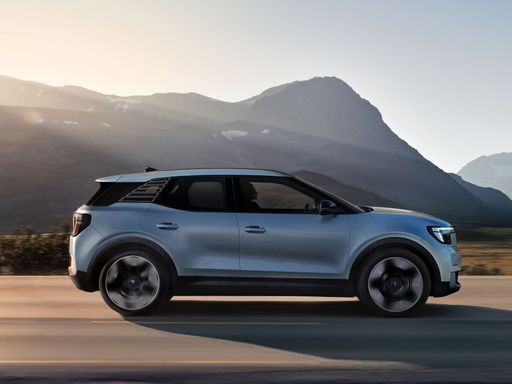
The Ford Explorer EV translates the familiar big‑American SUV presence into whisper‑quiet electric motoring, offering roomy seating and a tech‑forward cabin that will please families and road‑trippers alike. It drives with more composure than its boxy looks suggest, blending a comfortable ride and eager acceleration while undercutting the guilt of gas stops — a practical, modern alternative for buyers who want Explorer space with electric charm.
details
@ Ford Motor Company / Ford Media Center
 @ Ford Motor Company / Ford Media Center
 @ Ford Motor Company / Ford Media Center
Mercedes EQV
The Mercedes-Benz EQV stands out as a versatile electric vehicle combining luxury with practicality, making it an ideal choice for environmentally conscious families. With its spacious interior and sleek design, it offers a premium driving experience that aligns with the brand's reputation for quality and innovation. As a sustainable option in the realm of people carriers, it exhibits the perfect balance between cutting-edge technology and everyday usability.
details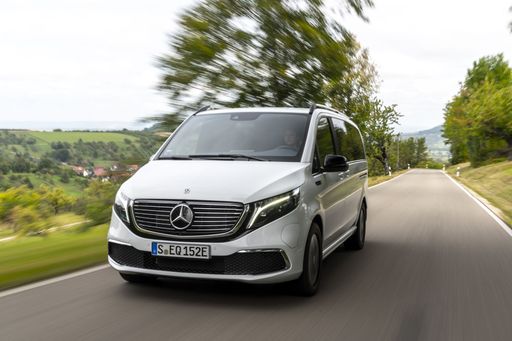 @ Mercedes-Benz Group Media
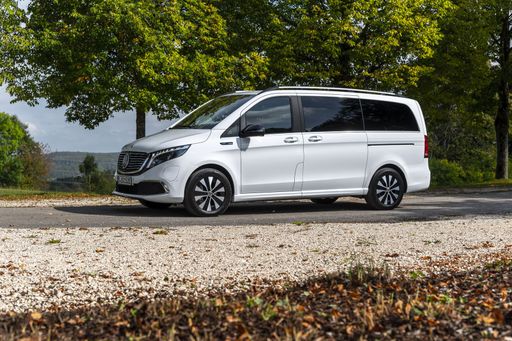 @ Mercedes-Benz Group Media
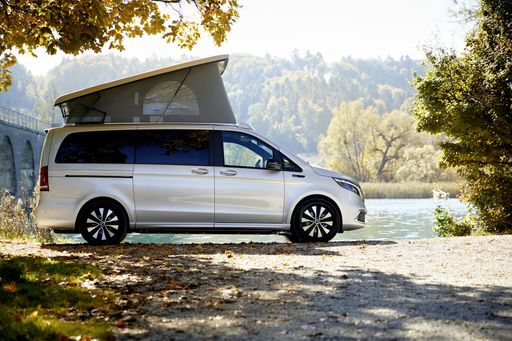 @ Mercedes-Benz Group Media
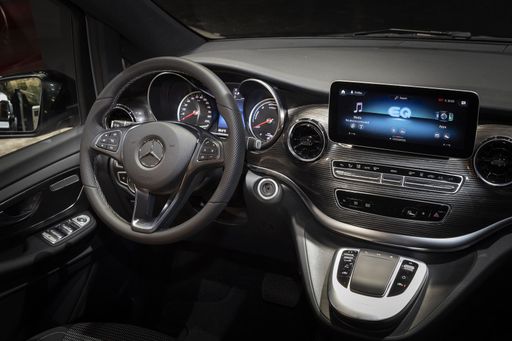 @ Mercedes-Benz Group Media
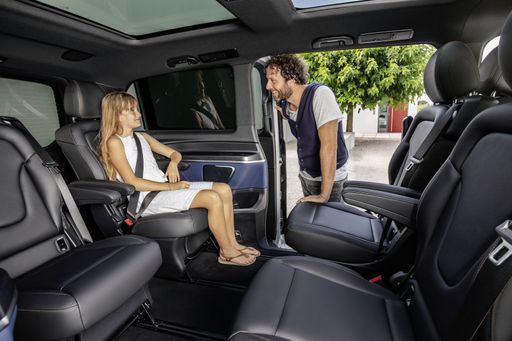 @ Mercedes-Benz Group Media
Ford Explorer EV
Mercedes EQV
|
@ Ford Motor Company / Ford Media Center
|
@ Mercedes-Benz Group Media
|
|
|
|
Costs and Consumption |
|
|---|---|
|
Price
34200 - 48800 £
|
Price
50700 - 54400 £
|
|
Consumption L/100km
-
|
Consumption L/100km
-
|
|
Consumption kWh/100km
14.5 - 17.2 kWh
|
Consumption kWh/100km
27.1 - 27.5 kWh
|
|
Electric Range
360 - 602 km
|
Electric Range
244 - 364 km
|
|
Battery Capacity
52 - 79 kWh
|
Battery Capacity
60 - 90 kWh
|
|
co2
0 g/km
|
co2
0 g/km
|
|
Fuel tank capacity
-
|
Fuel tank capacity
-
|
Dimensions and Body |
|
|---|---|
|
Body Type
SUV
|
Body Type
Bus
|
|
Seats
5
|
Seats
6
|
|
Doors
5
|
Doors
5
|
|
Curb weight
1908 - 2179 kg
|
Curb weight
2666 - 2863 kg
|
|
Trunk capacity
445 - 450 L
|
Trunk capacity
1030 - 1410 L
|
|
Length
4468 mm
|
Length
5140 - 5370 mm
|
|
Width
1871 mm
|
Width
1928 mm
|
|
Height
1630 - 1639 mm
|
Height
1920 - 1923 mm
|
|
Max trunk capacity
1417 - 1422 L
|
Max trunk capacity
4630 - 5010 L
|
|
Payload
561 - 585 kg
|
Payload
637 - 834 kg
|
Engine and Performance |
|
|---|---|
|
Engine Type
Electric
|
Engine Type
Electric
|
|
Transmission
Automatic
|
Transmission
Automatic
|
|
Transmission Detail
Reduction Gearbox
|
Transmission Detail
Reduction Gearbox
|
|
Drive Type
Rear-Wheel Drive, All-Wheel Drive
|
Drive Type
Front-Wheel Drive
|
|
Power HP
170 - 340 HP
|
Power HP
204 HP
|
|
Acceleration 0-100km/h
5.3 - 8.7 s
|
Acceleration 0-100km/h
10.3 - 12.1 s
|
|
Max Speed
160 - 180 km/h
|
Max Speed
140 km/h
|
|
Torque
310 - 679 Nm
|
Torque
365 Nm
|
|
Number of Cylinders
-
|
Number of Cylinders
-
|
|
Power kW
125 - 250 kW
|
Power kW
150 kW
|
|
Engine capacity
-
|
Engine capacity
-
|
General |
|
|---|---|
|
Model Year
2024 - 2025
|
Model Year
2024
|
|
CO2 Efficiency Class
A
|
CO2 Efficiency Class
A
|
|
Brand
Ford
|
Brand
Mercedes-Benz
|
What drive types are available for the Ford Explorer EV?
The Ford Explorer EV is available as Rear-Wheel Drive or All-Wheel Drive.
The prices and data displayed are estimates based on German list prices and may vary by country. This information is not legally binding.