@ Ford Motor Company / Ford Media Center
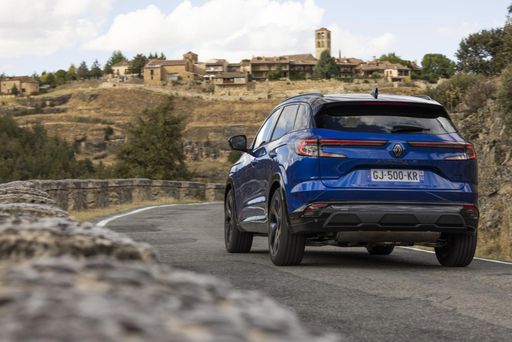
@ Renault Group Media
VS

Ford Explorer EV vs Renault Austral – Which car suits you better?

Both models have their strengths – but which one suits you more?
Compare performance, efficiency, price and space directly: Ford Explorer EV or Renault Austral?

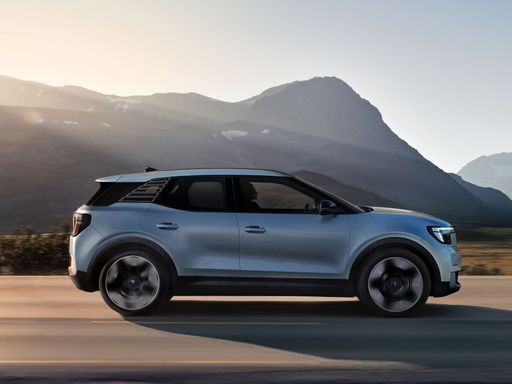
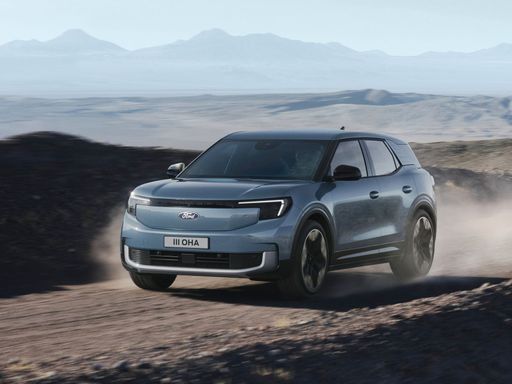
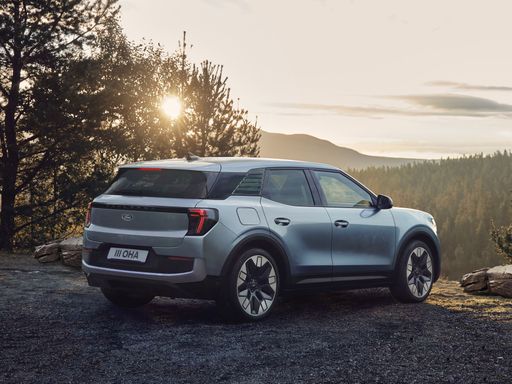
Explorer EV @ Ford Motor Company / Ford Media Center

Unveiling the Future: Ford Explorer EV vs. Renault Austral

In an era where innovation meets necessity, two distinct paths of automotive evolution converge at the crossroads. The Ford Explorer EV and Renault Austral represent the present and future of automotive technology, each embodying unique visions of environmental responsibility and driving pleasure. Let’s dive into the dynamics of these SUVs to understand what sets them apart.
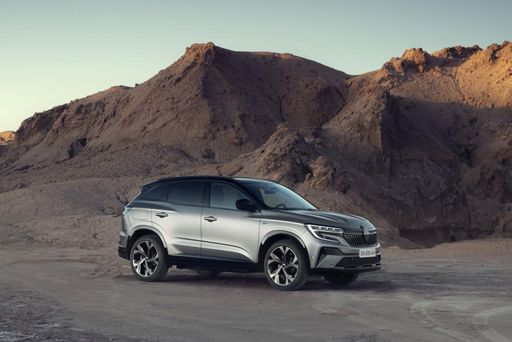
Austral @ Renault Group Media

Powertrain and Performance

The Ford Explorer EV flaunts its electric prowess with multiple motor configurations, delivering power outputs ranging from 170 to 340 horsepower. The electric SUV offers a choice between rear-wheel and all-wheel drive, catering to diverse driving preferences. Accelerating from 0 to 100 km/h in just 5.3 seconds, the Explorer EV places emphasis on swift performance, all while ensuring zero emissions—thanks to its fully electric powertrain.

Conversely, the Renault Austral opts for a blend of traditional and modern with its petrol mild-hybrid and full hybrid engines. Available with power outputs of 158 to 200 horsepower, the Austral employs a front-wheel-drive layout. Its faster variant accelerates from 0 to 100 km/h in 8.4 seconds. Though slightly outpaced by its electric competitor, the Austral's hybrid systems emphasize fuel efficiency without sacrificing versatility.

Explorer EV @ Ford Motor Company / Ford Media Center

Efficiency and Range

The Ford Explorer EV showcases a compelling electric range, extending up to 602 kilometers—masters a perfect balance between performance and efficiency. With consumption figures between 13.9-16.6 kWh/100km, it is designed to cater to long-range explorers. Its zero CO2 emissions are the hallmark of its eco-friendly design, underscoring the brand's commitment to sustainability.

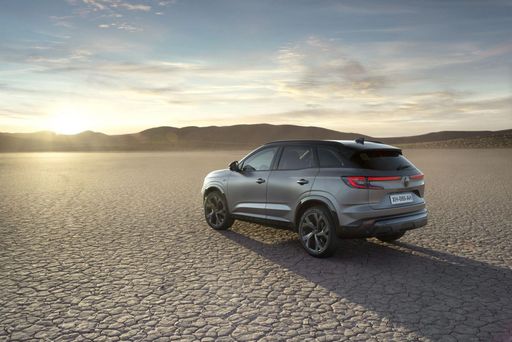
On the other hand, the Renault Austral focuses on a hybrid solution, offering average consumption as low as 4.7 L/100km with the full hybrid version. However, with CO2 emissions ranging from 105-139 g/km, it still contrasts against the EV’s zero-emission stance. The Austral compensates with an extensive fuel tank capacity that ensures fewer stops on longer journeys.

Austral @ Renault Group Media

Dimensions and Practicality

Both SUVs offer seating for five, but the Ford Explorer EV takes the lead with its sleek yet robust design, measuring 4468 mm in length and providing ample space with a trunk capacity reaching up to 450 liters. Though slightly heavier with a curb weight of 2090-2167 kg, its payload capacity peaks at 585 kg, emphasizing its practical utility.

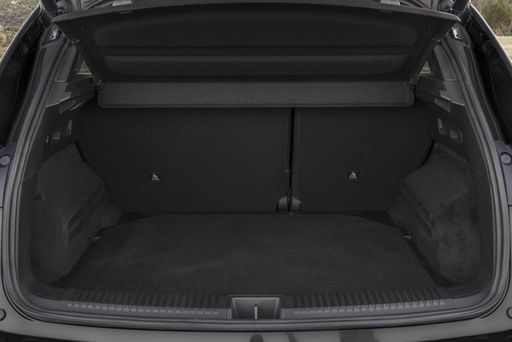
The Renault Austral, standing a bit taller and longer, offers a trunk capacity between 430-500 liters, utilizing its dimensions of 4510 mm in length effectively. Although lighter at 1539-1592 kg, the Austral maintains a payload capability up to 509 kg.

Explorer EV @ Ford Motor Company / Ford Media Center

Technological Innovations

Ford leads in driving innovation with the Explorer EV’s advanced electric systems and cutting-edge reduction gearbox, highlighting its intellectual drive toward electrification. The smooth delivery of power and responsive steering add sophistication to its technological arsenal.

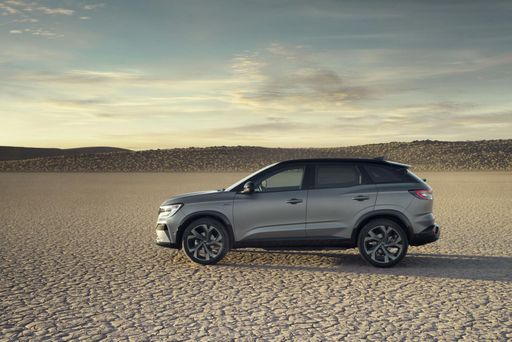
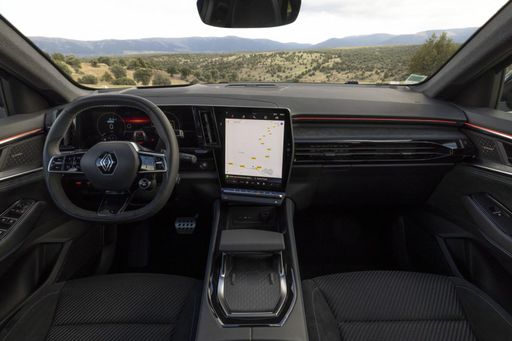
Renault counters with the Austral’s adaptive hybrid technology and user-centric infotainment systems, blending tradition with modern gadgetry. While perhaps more conventional, its hybrid approach ensures a balanced technological leap catering to a broader audience.

Austral @ Renault Group Media

Conclusion

While the Ford Explorer EV and Renault Austral cater to two different end goals—one towards complete electrification and the other towards a hybrid harmony—they stand as flagbearers of an evolving industry narrative. Both models showcase the ingenuity and drive toward sustainable automotive excellence, beckoning enthusiasts to a future where choice translates into a gift rather than a challenge.

Here’s where it gets real: The technical differences in detail

Costs and Efficiency:

Price and efficiency are often the first things buyers look at. Here it becomes clear which model has the long-term edge – whether at the pump, the plug, or in purchase price.

Renault Austral has a slightly advantage in terms of price – it starts at 29700 £, while the Ford Explorer EV costs 34200 £. That’s a price difference of around 4458 £.

Engine and Performance:

Power, torque and acceleration say a lot about how a car feels on the road. This is where you see which model delivers more driving dynamics.

When it comes to engine power, the Ford Explorer EV has a decisively edge – offering 340 HP compared to 200 HP. That’s roughly 140 HP more horsepower.

In acceleration from 0 to 100 km/h, the Ford Explorer EV is clearly quicker – completing the sprint in 5.30 s, while the Renault Austral takes 8.40 s. That’s about 3.10 s faster.

There’s no difference in top speed – both reach 180 km/h.

There’s also a difference in torque: Ford Explorer EV pulls decisively stronger with 679 Nm compared to 270 Nm. That’s about 409 Nm difference.

Space and Everyday Use:

Cabin size, boot volume and payload all play a role in everyday practicality. Here, comfort and flexibility make the difference.

Both vehicles offer seating for 5 people.

In curb weight, Renault Austral is distinct lighter – 1539 kg compared to 1908 kg. The difference is around 369 kg.

In terms of boot space, the Renault Austral offers to a small extent more room – 555 L compared to 450 L. That’s a difference of about 105 L.

In maximum load capacity, the Renault Austral performs to a small extent better – up to 1761 L, which is about 339 L more than the Ford Explorer EV.

When it comes to payload, Ford Explorer EV somewhat takes the win – 585 kg compared to 477 kg. That’s a difference of about 108 kg.

Who comes out on top?

Overall, the Ford Explorer EV shows itself to be wins the duel decisively and secures the title of DriveDuel Champion.
It convinces with the more balanced overall package and proves to be the more versatile choice for everyday use.

from about £34,200
Explorer EV @ Ford Motor Company / Ford Media Center

Ford Explorer EV

  • Engine Type : Electric
  • Transmission : Automatic
  • Drive Type : Rear-Wheel Drive, All-Wheel Drive
  • Power HP : 170 - 340 HP
  • Consumption kWh/100km : 14.5 - 17.2 kWh
  • Electric Range : 360 - 602 km

Ford Explorer EV

5 (2)
rate

The Ford Explorer EV translates the familiar big‑American SUV presence into whisper‑quiet electric motoring, offering roomy seating and a tech‑forward cabin that will please families and road‑trippers alike. It drives with more composure than its boxy looks suggest, blending a comfortable ride and eager acceleration while undercutting the guilt of gas stops — a practical, modern alternative for buyers who want Explorer space with electric charm.

details

Renault Austral

5 (2)
rate

The Renault Austral dresses the family SUV in elegant modern looks and a surprisingly grown-up cabin that feels thoughtful and livable. It balances comfort and clever technology with a relaxed road presence—an appealing choice for buyers who want style and everyday sense without fuss.

details
Ford Explorer EV
Renault Austral
Explorer EV @ Ford Motor Company / Ford Media Center
Austral @ Renault Group Media

Costs and Consumption

Price
34200 - 48800 £
Price
29700 - 37800 £
Consumption L/100km
-
Consumption L/100km
4.8 - 6.5 L
Consumption kWh/100km
14.5 - 17.2 kWh
Consumption kWh/100km
-
Electric Range
360 - 602 km
Electric Range
-
Battery Capacity
52 - 79 kWh
Battery Capacity
-
co2
0 g/km
co2
109 - 148 g/km
Fuel tank capacity
-
Fuel tank capacity
55 L

Dimensions and Body

Body Type
SUV
Body Type
SUV
Seats
5
Seats
5
Doors
5
Doors
5
Curb weight
1908 - 2179 kg
Curb weight
1539 - 1613 kg
Trunk capacity
445 - 450 L
Trunk capacity
527 - 555 L
Length
4468 mm
Length
4533 mm
Width
1871 mm
Width
1825 mm
Height
1630 - 1639 mm
Height
1645 mm
Max trunk capacity
1417 - 1422 L
Max trunk capacity
1736 - 1761 L
Payload
561 - 585 kg
Payload
464 - 477 kg

Engine and Performance

Engine Type
Electric
Engine Type
Petrol MHEV, Full Hybrid
Transmission
Automatic
Transmission
Automatic
Transmission Detail
Reduction Gearbox
Transmission Detail
CVT, Automatic Gearbox
Drive Type
Rear-Wheel Drive, All-Wheel Drive
Drive Type
Front-Wheel Drive
Power HP
170 - 340 HP
Power HP
158 - 200 HP
Acceleration 0-100km/h
5.3 - 8.7 s
Acceleration 0-100km/h
8.4 - 9.7 s
Max Speed
160 - 180 km/h
Max Speed
180 km/h
Torque
310 - 679 Nm
Torque
270 Nm
Number of Cylinders
-
Number of Cylinders
3 - 4
Power kW
125 - 250 kW
Power kW
116 - 147 kW
Engine capacity
-
Engine capacity
1199 - 1332 cm3

General

Model Year
2024 - 2025
Model Year
2025
CO2 Efficiency Class
A
CO2 Efficiency Class
E, C
Brand
Ford
Brand
Renault
What drive types are available for the Ford Explorer EV?

The Ford Explorer EV is available as Rear-Wheel Drive or All-Wheel Drive.

The prices and data displayed are estimates based on German list prices and may vary by country. This information is not legally binding.