VS

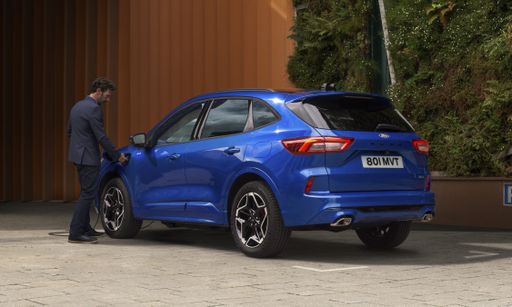
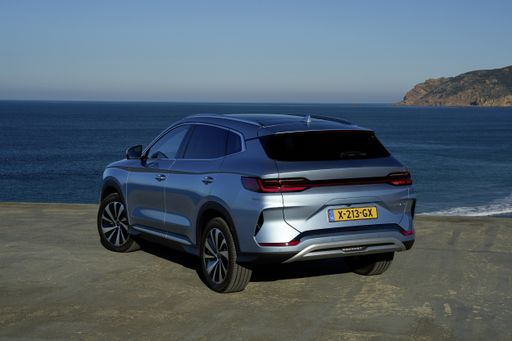
Ford Kuga vs BYD Seal U comparison

Compare performance (243 HP vs 324 HP), boot space and price (34,200 £ vs 34,300 £ ) at a glance. Find out which car is the better choice for you – Ford Kuga or BYD Seal U?

Ford Kuga vs BYD Seal U: Key differences

Ford Kuga

4.2 (6 Reviews)
rate
  • barely cheaper
  • noticeably lighter

BYD Seal U

4.1 (7 Reviews)
rate
  • clearly more power
  • clearly more electric range
  • clearly quicker 0–100 km/h

All details on performance, efficiency, range and trunk space can be found in the technical comparison below – including user reviews for both models.

Kuga

BYD Seal U vs. Ford Kuga: A Battle of Modern SUVs

In the ever-evolving automotive market, the SUV segment is experiencing fierce competition, as automakers strive to achieve the perfect balance of performance, efficiency, and innovation. The BYD Seal U and Ford Kuga are two such contenders trying to carve out their niche by offering advanced technology and versatile capabilities. Join us as we dive into the technical aspects and innovations of these modern SUVs to help you understand what sets them apart.

Seal U

Performance and Power: A Comparative Look

The BYD Seal U offers a variety of options with its Plugin Hybrid and Electric engine types, featuring power outputs ranging from 218 HP to 324 HP. In comparison, the Ford Kuga provides petrol, full hybrid, and plugin hybrid options, with horsepower levels between 150 HP and 243 HP.

When acceleration is considered, the Seal U's top-performing model accelerates from 0-100 km/h in 5.9 seconds, showcasing its electric prowess. The Kuga is not far behind, with its best variant achieving the same feat in 7.3 seconds. However, the Kuga manages a slight edge in terms of maximum speed, reaching 200 km/h compared to the 180 km/h of the Seal U.

Kuga

Efficiency and Range: The Quest for Excellence

Efficiency remains a critical talking point for both SUVs. The BYD Seal U shines with a commendable electric range of up to 500 km, supported by its minimal fuel consumption of 0.9 L/100km in its plugin hybrid model. The Ford Kuga's plugin hybrid also delivers a competitive electric range of 69 km with a similar fuel economy.

In terms of CO2 emissions, the Seal U maintains an eco-friendly edge, with emissions as low as 0 g/km, ensuring a clean and sustainable drive. Meanwhile, the Kuga offers flexibility with emissions ranging from 20 g/km to 145 g/km, depending on the chosen engine variant.

Seal U

Design and Practicality

Both the BYD Seal U and Ford Kuga are five-door SUVs offering ample space for up to five passengers. The Seal U extends its practicality with a generous trunk capacity of up to 552 liters, slightly more than the Kuga's 412 liters.

Their dimensions reflect their position in the midsize SUV category. The Seal U's length ranges between 4775 mm and 4785 mm, while the Kuga is slightly shorter, with lengths from 4604 mm to 4645 mm. Despite their similarities in height and width, the Seal U offers a more substantial curb weight, contributing to its stable ride experience.

Kuga

Innovations and Technology: Leading the Way

In terms of innovation, both models offer automatic transmission options, but the Seal U emphasizes efficiency with its CVT and reduction gearbox options. The Kuga also provides versatility with both manual and automatic transmissions across its variants.

The advancements in the plugin hybrid sector are a focal point for these SUVs. However, the BYD Seal U takes a slight forward leap with its superior electric and plugin hybrid synergy, delivering comprehensive driving experiences between urban and long-distance travel.

Seal U

Conclusion: Finding the Right Fit

The decision between the BYD Seal U and the Ford Kuga comes down to personal preference and priorities. The Seal U stands out with its remarkable electric range, power options, and extended trunk capacity. Meanwhile, the Kuga offers a broader choice of engine types, paired with the flexibility of manual and automatic transmissions.

Ultimately, both SUVs represent the future of automotive design, combining modern technology with the practicality demanded by today's drivers. Whether your focus is on zero-emissions driving or a varied palette of powertrains, both the BYD Seal U and Ford Kuga illustrate that innovation and versatility remain at the heart of the SUV evolution.

Here’s where it gets real: The technical differences in detail

Kuga

Costs and Efficiency:

When it comes to price and running costs, the biggest differences usually appear. This is often where you see which car fits your budget better in the long run.

Ford Kuga is barely cheaper – starting at 34,200 £ , while the BYD Seal U costs 34,300 £ . That’s a price difference of around 35 £.

As for electric range, the BYD Seal U offers clearly more range – reaching up to 500 km, about 432 km more than the Ford Kuga.

Seal U

Engine and Performance:

Power, torque and acceleration are the classic benchmarks for car enthusiasts – and here, some clear differences start to show.

When it comes to engine power, the BYD Seal U offers clearly more power – delivering 324 HP compared to 243 HP. That’s roughly 81 HP more horsepower.

When accelerating from 0 to 100 km/h, the BYD Seal U is clearly quicker – completing the sprint in 5.9 s, while the Ford Kuga takes 7.3 s. That’s about 1.4 s quicker.

There’s also a difference in torque: the BYD Seal U delivers considerably more torque with 550 Nm compared to 240 Nm. That’s about 310 Nm more.

Kuga

Space and Everyday Use:

Beyond pure performance, interior space and usability matter most in daily life. This is where you see which car is more practical and versatile.

Both vehicles offer seating for 5 people.

In terms of curb weight, Ford Kuga is noticeably lighter – 1,526 kg compared to 1,940 kg. The difference is around 414 kg.

When it comes to payload, the Ford Kuga carries clearly more – 550 kg compared to 410 kg. That’s a difference of about 140 kg.

Who wins the race in the data check?

The BYD Seal U is clearly superior overall in the objective data comparison.
This result only shows which model scores more points on paper – not which of the two cars feels right for you.

from £34,300
Seal U

BYD Seal U

  • Engine Type : Electric, Plugin Hybrid
  • Transmission : Automatic
  • Drive Type : Front-Wheel Drive, All-Wheel Drive
  • Power HP : 218 - 324 HP
  • Consumption kWh/100km : 12.1 - 20.5 kWh/100km
  • Electric Range : 70 - 500 km
Ford Kuga
BYD Seal U

Costs and Consumption

View detailed analysis

Engine and Performance

View detailed analysis

Dimensions and Body

View detailed analysis

Ford Kuga

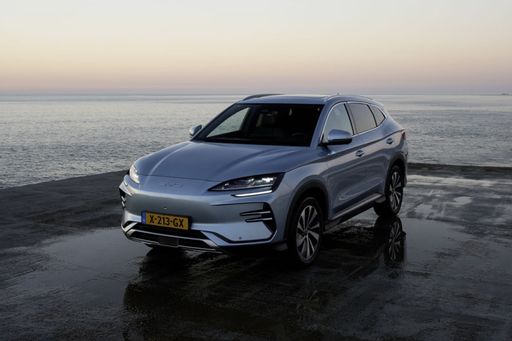
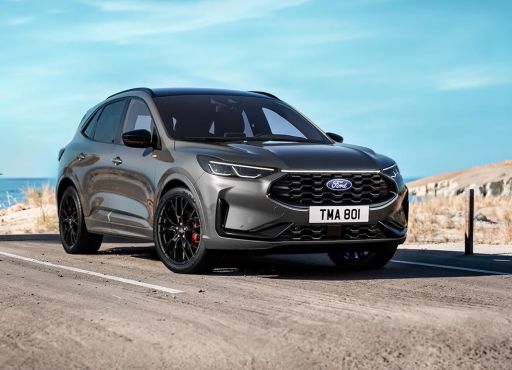
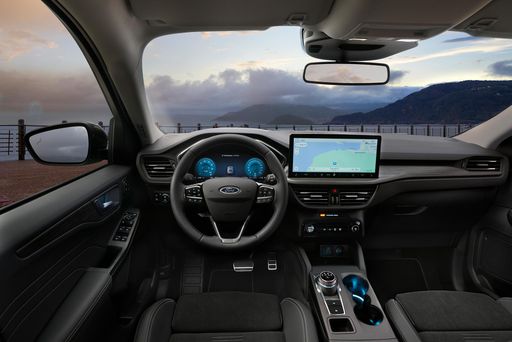
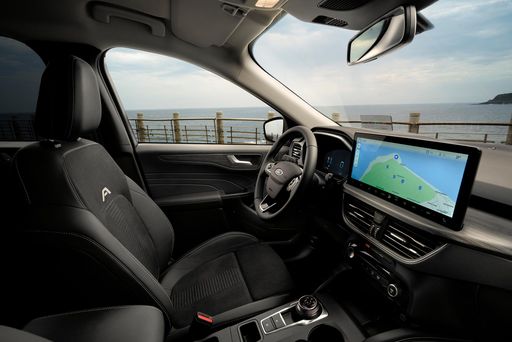
The Kuga is Ford’s adaptable family SUV that blends usable space with a surprisingly lively driving character, making daily commutes and weekend escapes equally enjoyable. With smart interior packaging, an easy-to-use infotainment setup and composed road manners, it’s a sensible choice for buyers who want a bit of fun without the fuss.

details

BYD Seal U

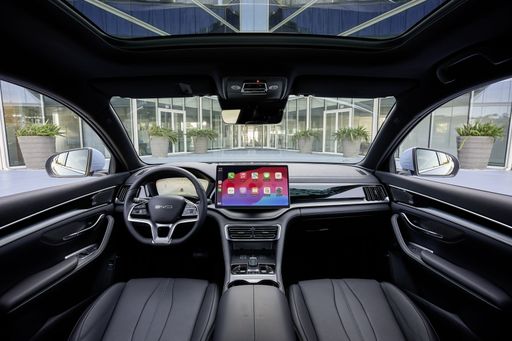
The BYD Seal U pairs a sleek fastback silhouette with a surprisingly roomy, tech-rich cabin, giving electric chic without the showroom pretension. It's a smart pick for buyers after confident handling, sensible practicality and standout value — all wrapped up with a cheeky grin when you put your foot down.

details
Ford Kuga
BYD Seal U

Costs and Consumption

Price
34,200 - 46,300 £
Price
34,300 - 39,800 £
Consumption L/100km
2.8 - 6.8 L/100km
Consumption L/100km
-
Consumption kWh/100km
-
Consumption kWh/100km
12.1 - 20.5 kWh/100km
Electric Range
68 km
Electric Range
70 - 500 km
Battery Capacity
-
Battery Capacity
-
co2
55 - 154 g/km
co2
0 - 71 g/km
Fuel tank capacity
-
Fuel tank capacity
-

Dimensions and Body

Body Type
SUV
Body Type
SUV
Seats
5
Seats
5
Doors
-
Doors
5
Curb weight
1,526 - 1,859 kg
Curb weight
1,940 - 2,147 kg
Trunk capacity
-
Trunk capacity
425 - 552 L
Length
-
Length
4,785 mm
Width
1,882 mm
Width
1,890 mm
Height
-
Height
1,668 mm
Max trunk capacity
-
Max trunk capacity
1,440 L
Payload
541 - 550 kg
Payload
410 kg

Engine and Performance

Engine Type
Petrol, Full Hybrid, Plugin Hybrid
Engine Type
Electric, Plugin Hybrid
Transmission
Manuel, Automatic
Transmission
Automatic
Transmission Detail
Manual Gearbox, CVT, Automatic Gearbox
Transmission Detail
Reduction Gearbox, Automatic Gearbox
Drive Type
Front-Wheel Drive, All-Wheel Drive
Drive Type
Front-Wheel Drive, All-Wheel Drive
Power HP
150 - 243 HP
Power HP
218 - 324 HP
Acceleration 0-100km/h
7.3 - 9.9 s
Acceleration 0-100km/h
5.9 - 9.6 s
Max Speed
-
Max Speed
175 km/h
Torque
240 Nm
Torque
300 - 550 Nm
Number of Cylinders
3 - 4
Number of Cylinders
4
Power kW
111 - 178 kW
Power kW
160 - 238 kW
Engine capacity
1,496 - 2,488 cm3
Engine capacity
1,497 - 1,498 cm3

General

Model Year
2,025
Model Year
2,024 - 2,026
CO2 Efficiency Class
E, D, B
CO2 Efficiency Class
A, B
Brand
Ford
Brand
BYD
DriveDuel uses data analysis and artificial intelligence to evaluate vehicle data and create content. Content is regularly reviewed and improved. The displayed prices are estimates based on German list prices, adjusted to the respective country’s VAT. Country-specific registration taxes are not included. This information is not legally binding.