VS

Ford Kuga vs Suzuki Vitara - Differences and prices compared

Compare performance (243 HP vs 129 HP), boot space and price (34200 £ vs 23600 £ ) at a glance. Find out which car is the better choice for you – Ford Kuga or Suzuki Vitara?

Ford Kuga

4.1 (4 Reviews)
rate

Suzuki Vitara

4.6 (2 Reviews)
rate

Here’s where it gets real: The technical differences in detail

Kuga

Costs and Efficiency:

Looking at overall running costs, both models reveal some interesting differences in everyday economy.

Suzuki Vitara has a convincingly advantage in terms of price – it starts at 23600 £ , while the Ford Kuga costs 34200 £ . That’s a price difference of around 10671 £.

Fuel consumption also shows a difference: Ford Kuga manages with 2.80 L and is therefore clearly more efficient than the Suzuki Vitara with 5 L. The difference is about 2.20 L per 100 km.

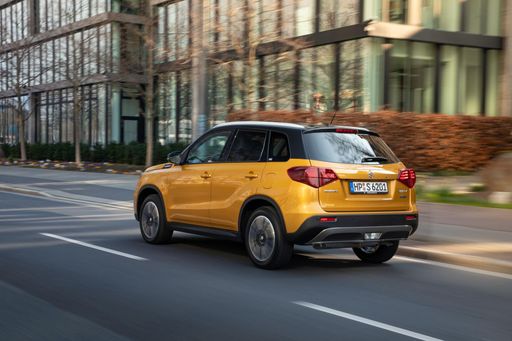
Vitara

Engine and Performance:

Power, torque and acceleration are the classic benchmarks for car enthusiasts – and here, some clear differences start to show.

When it comes to engine power, the Ford Kuga has a decisively edge – offering 243 HP compared to 129 HP. That’s roughly 114 HP more horsepower.

In acceleration from 0 to 100 km/h, the Ford Kuga is clearly perceptible quicker – completing the sprint in 7.30 s, while the Suzuki Vitara takes 9.50 s. That’s about 2.20 s faster.

In terms of top speed, the Ford Kuga performs hardly perceptible better – reaching 200 km/h, while the Suzuki Vitara tops out at 190 km/h. The difference is around 10 km/h.

There’s also a difference in torque: Ford Kuga pulls barely noticeable stronger with 240 Nm compared to 235 Nm. That’s about 5 Nm difference.

Kuga

Space and Everyday Use:

Whether family car or daily driver – which one offers more room, flexibility and comfort?

Both vehicles offer seating for 5 people.

In curb weight, Suzuki Vitara is clearly perceptible lighter – 1255 kg compared to 1526 kg. The difference is around 271 kg.

In terms of boot space, the Ford Kuga offers barely noticeable more room – 412 L compared to 375 L. That’s a difference of about 37 L.

In maximum load capacity, the Ford Kuga performs noticeable better – up to 1534 L, which is about 414 L more than the Suzuki Vitara.

When it comes to payload, Ford Kuga noticeable takes the win – 550 kg compared to 400 kg. That’s a difference of about 150 kg.

Who wins the race in the data check?

The Ford Kuga is far ahead overall in the objective data comparison.
This result only shows which model scores more points on paper – not which of the two cars feels right for you.

Ford Kuga
Suzuki Vitara

Costs and Consumption

View detailed analysis

Engine and Performance

View detailed analysis

Dimensions and Body

View detailed analysis
from about £34,200
Kuga

Ford Kuga

  • Engine Type : Petrol, Full Hybrid, Plugin Hybrid
  • Transmission : Manuel, Automatic
  • Drive Type : Front-Wheel Drive, All-Wheel Drive
  • Power HP : 150 - 243 HP
  • Consumption L/100km : 2.8 - 6.8 L
  • Electric Range : 68 km

Ford Kuga

4.1 (4 Reviews)
rate

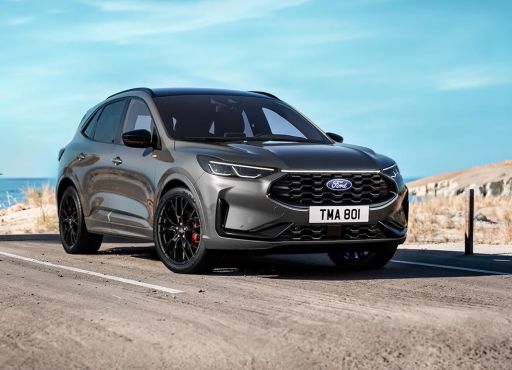
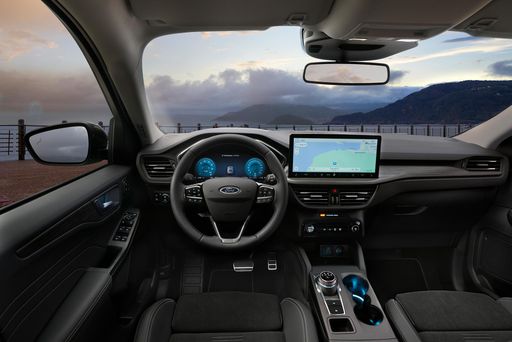
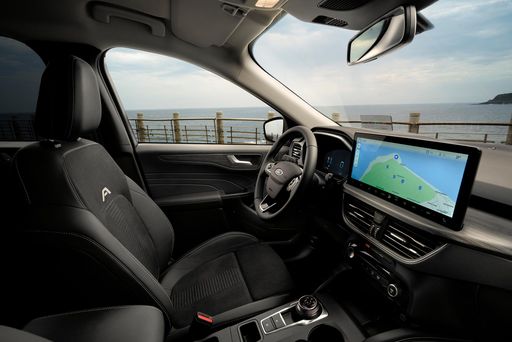
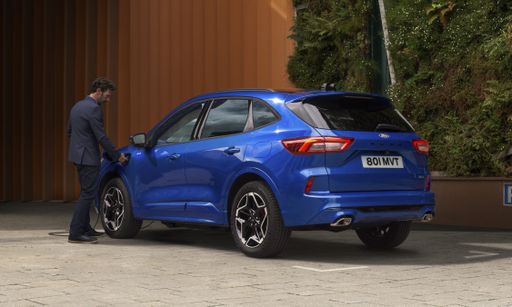
The Kuga is Ford’s adaptable family SUV that blends usable space with a surprisingly lively driving character, making daily commutes and weekend escapes equally enjoyable. With smart interior packaging, an easy-to-use infotainment setup and composed road manners, it’s a sensible choice for buyers who want a bit of fun without the fuss.

details

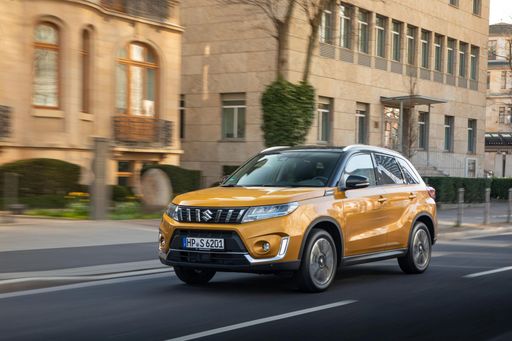
Suzuki Vitara

4.6 (2 Reviews)
rate

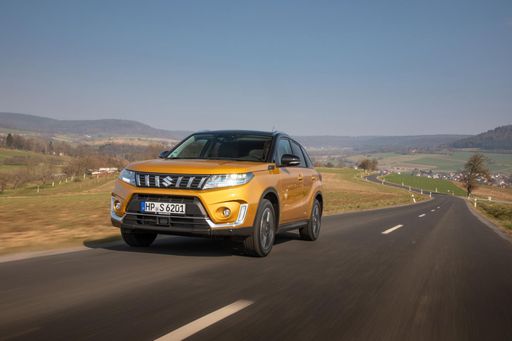
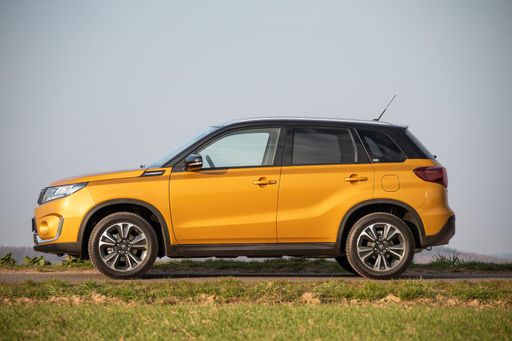
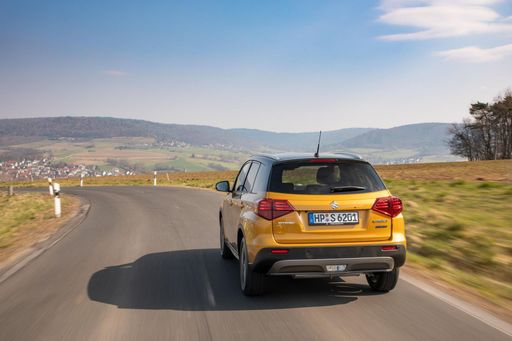
The Vitara is a city-smart SUV with a cheeky streak of off-road promise, perfect for drivers who want practicality without pretense. It’s honest, easy to live with and surprisingly likeable, a sensible companion for everyday adventures and weekend escapes.

details
Ford Kuga
Suzuki Vitara

Costs and Consumption

Price
34200 - 46300 £
Price
23600 - 30900 £
Consumption L/100km
2.8 - 6.8 L
Consumption L/100km
5 - 5.9 L
Consumption kWh/100km
-
Consumption kWh/100km
-
Electric Range
68 km
Electric Range
-
Battery Capacity
1.1 - 14.4 kWh
Battery Capacity
-
co2
55 - 154 g/km
co2
113 - 138 g/km
Fuel tank capacity
42 - 54 L
Fuel tank capacity
47 L

Dimensions and Body

Body Type
SUV
Body Type
SUV
Seats
5
Seats
5
Doors
5
Doors
5
Curb weight
1526 - 1859 kg
Curb weight
1255 - 1395 kg
Trunk capacity
412 L
Trunk capacity
289 - 375 L
Length
4604 - 4645 mm
Length
4185 mm
Width
1882 mm
Width
1775 mm
Height
1673 - 1681 mm
Height
1595 mm
Max trunk capacity
1534 L
Max trunk capacity
1046 - 1120 L
Payload
541 - 550 kg
Payload
375 - 400 kg

Engine and Performance

Engine Type
Petrol, Full Hybrid, Plugin Hybrid
Engine Type
Petrol MHEV, Full Hybrid
Transmission
Manuel, Automatic
Transmission
Manuel, Automatic
Transmission Detail
Manual Gearbox, CVT, Automatic Gearbox
Transmission Detail
Manual Gearbox, Automated Manual, Automatic Gearbox
Drive Type
Front-Wheel Drive, All-Wheel Drive
Drive Type
Front-Wheel Drive, All-Wheel Drive
Power HP
150 - 243 HP
Power HP
110 - 129 HP
Acceleration 0-100km/h
7.3 - 9.9 s
Acceleration 0-100km/h
9.5 - 12.7 s
Max Speed
195 - 200 km/h
Max Speed
180 - 190 km/h
Torque
240 Nm
Torque
235 Nm
Number of Cylinders
3 - 4
Number of Cylinders
4
Power kW
111 - 178 kW
Power kW
81 - 95 kW
Engine capacity
1496 - 2488 cm3
Engine capacity
1373 - 1462 cm3

General

Model Year
2025
Model Year
2024 - 2025
CO2 Efficiency Class
E, D, B
CO2 Efficiency Class
D, C, E
Brand
Ford
Brand
Suzuki
What drivetrain options does the Ford Kuga have?

The Ford Kuga is available as Front-Wheel Drive or All-Wheel Drive.

The prices shown are estimates based on German list prices, adjusted for local VAT. Local registration taxes (e.g. NoVA, BPM or CO2 malus) are not included. This information is not legally binding.