VS

Ford Tourneo Custom vs Suzuki Vitara comparison

Compare performance (286 HP vs 184 HP), boot space and price (52,900 £ vs 23,600 £ ) at a glance. Find out which car is the better choice for you – Ford Tourneo Custom or Suzuki Vitara?

Ford Tourneo Custom vs Suzuki Vitara: Key differences

Ford Tourneo Custom

3.9 (1 Reviews)
rate
  • clearly more power
  • substantially more trunk space
details

Suzuki Vitara

4.5 (3 Reviews)
rate
  • considerably cheaper
  • significantly more efficient
  • clearly more electric range
  • considerably lighter
details

All details on performance, efficiency, range and trunk space can be found in the technical comparison below – including user reviews for both models.

By Achim Sedelmaier

Tourneo Custom

Exploring the Ford Tourneo Custom and Suzuki Vitara: A Comprehensive Comparison

In the dynamic world of automobiles, both utility and efficiency often define a vehicle's appeal. We delve into the specifics of two popular vehicles: the Ford Tourneo Custom and the Suzuki Vitara. Each offers distinct advantages across different categories, making the choice between them a matter of preference and necessity.
Vitara

Performance and Powertrain

The Ford Tourneo Custom shines with its diverse engine options, including diesel, plugin hybrid, and electric varieties, presenting a range of horsepower from 136 to 286 HP. This flexibility offers drivers the choice between front-wheel, rear-wheel, and all-wheel drive transmissions. Notably, the all-electric version boasts a maximum range of up to 306 km, powered by a robust 64 kWh battery.

On the other hand, the Suzuki Vitara embraces its identity as a compact SUV with petrol mild-hybrid and full hybrid engines producing between 116 to 129 HP. Despite its relatively lower power output compared to the Ford, the Vitara maintains efficiency with fuel consumption figures as low as 5.3L/100km, underlining its economic design.

Tourneo Custom

Interior and Comfort

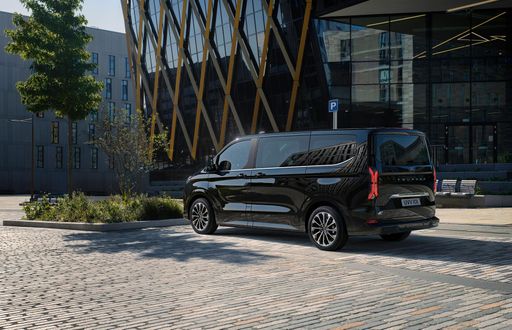
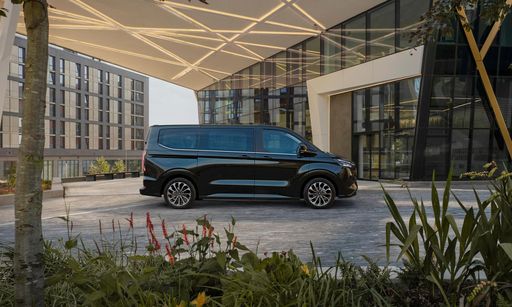
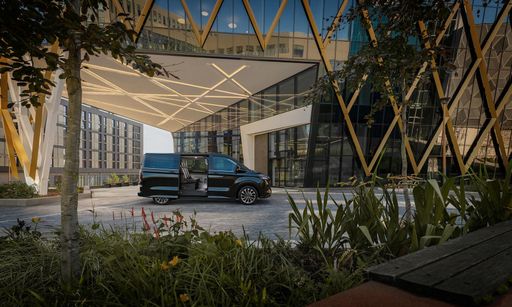
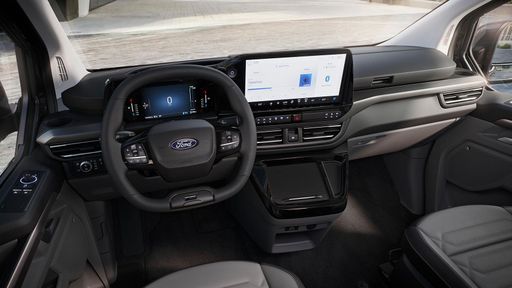
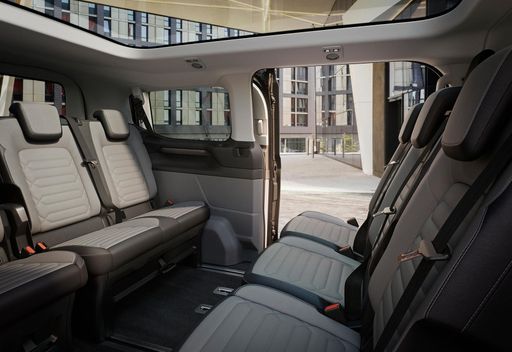
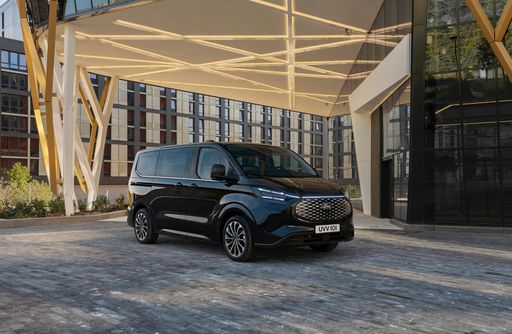
Inside, the Ford Tourneo Custom is crafted for spaciousness, accommodating up to eight passengers comfortably. Its generous trunk capacity of up to 819 liters underscores its utility, making it ideal for larger families or those who require significant cargo space. The model's interior focuses on versatility, with ample room to configure seating arrangements to maximize utility.

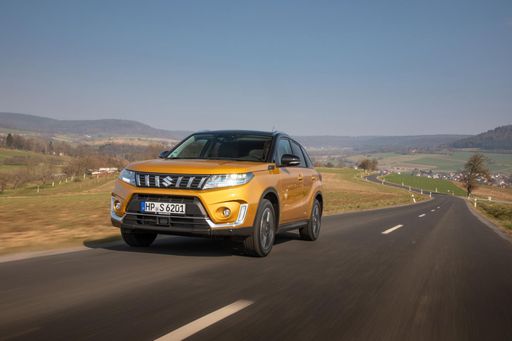
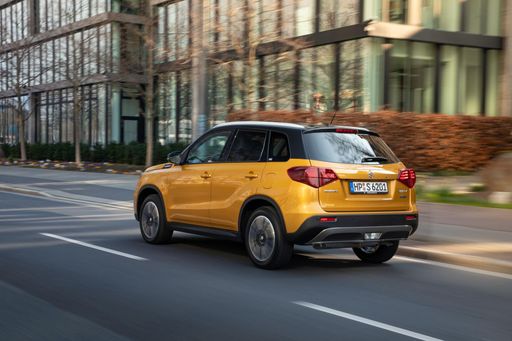
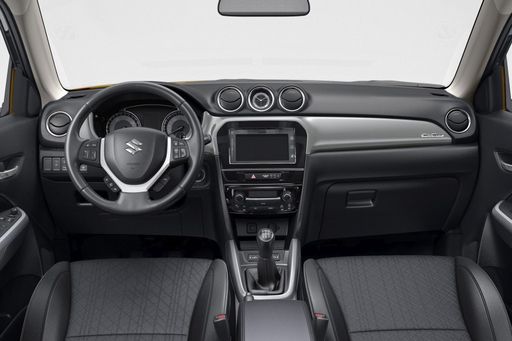
The Vitara, contrastingly, seats five and offers a trunk capacity ranging from 289 to 375 liters. While not as spacious as the Ford, its compact design ensures ease of navigation, particularly in urban environments. This makes it suitable for small families or individuals seeking a vehicle that blends functionality with maneuverability.

Vitara

Dimensions and Design

The Tourneo Custom has a substantial presence with lengths ranging from 5050 mm to 5450 mm, and a height of up to 1959 mm. Its robust design aligns with its purpose of transporting more passengers and cargo, firmly establishing its domain in the family or commercial transport sectors.

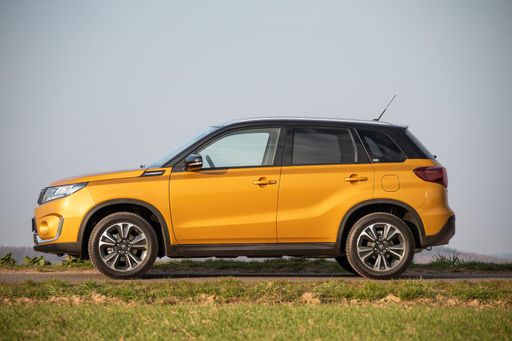
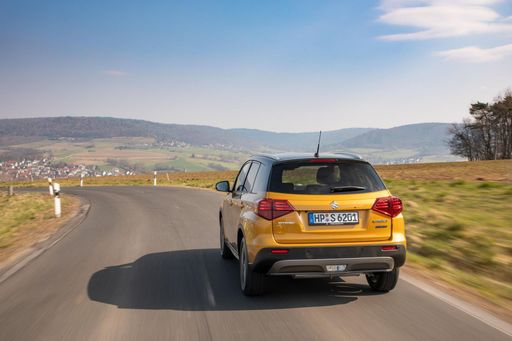
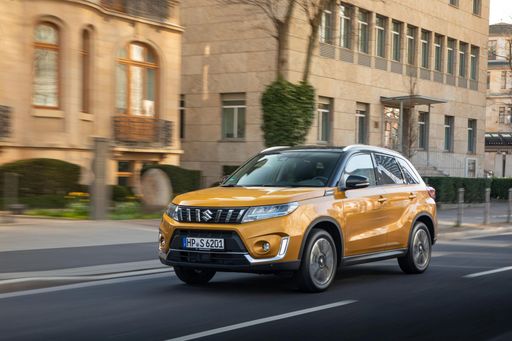
Suzuki Vitara opt for a more compact form, measuring 4185 mm in length and 1595 mm in height. Its smaller footprint, coupled with a stylish SUV design, lends itself to appeal among city dwellers and those seeking a mix of aesthetics and practicality in a compact package.

Tourneo Custom

Fuel Efficiency and Emissions

Fuel efficiency is a key consideration, and both models showcase distinct benefits. The Ford Tourneo Custom offers impressive environmental credentials, particularly in its hybrid and electric versions, with CO2 emissions as low as 0 g/km. However, diesel variants see emissions up to 210 g/km, posing considerations for environmental impact conscious buyers.

The Suzuki Vitara, whilst not electrically powered, still offers commendable emission rates, ranging from 113 to 127 g/km thanks to its efficient hybrid technology. This makes the Vitara a balanced choice for those prioritizing lower emissions within traditional fuel parameters.

Vitara

Conclusion

In conclusion, choosing between the Ford Tourneo Custom and the Suzuki Vitara hinges on the prospective owner's specific needs. The Tourneo Custom aligns well with those seeking spaciousness, versatility, and longer electric range capabilities, positioned as a leader in the family or commercial transportation arena. Conversely, the Vitara stands firm as a compact and efficient SUV, perfect for those desiring nimbleness and economy, coupled with a robust set of hybrid features.

Ultimately, both vehicles exhibit exemplary traits, reflecting their brands' commitment to innovation and consumer satisfaction. Potential buyers are advised to consider their requirements carefully to determine the optimal choice for their lifestyle.

Here’s where it gets real: The technical differences in detail

Tourneo Custom

Costs and Efficiency:

When it comes to price and running costs, the biggest differences usually appear. This is often where you see which car fits your budget better in the long run.

Suzuki Vitara is considerably cheaper – starting at 23,600 £ , while the Ford Tourneo Custom costs 52,900 £ . That’s a price difference of around 29,316 £.

In terms of energy consumption, the Suzuki Vitara is significantly more efficient: consuming 14.9 kWh/100km compared to 24.1 kWh/100km for the Ford Tourneo Custom. That’s a difference of about 9.2 kWh/100km.

As for electric range, the Suzuki Vitara offers clearly more range – reaching up to 426 km, about 87 km more than the Ford Tourneo Custom.

Vitara

Engine and Performance:

Under the bonnet, it becomes clear which model is tuned for sportiness and which one takes the lead when you hit the accelerator.

When it comes to engine power, the Ford Tourneo Custom offers clearly more power – delivering 286 HP compared to 184 HP. That’s roughly 102 HP more horsepower.

There’s also a difference in torque: the Ford Tourneo Custom delivers substantially more torque with 630 Nm compared to 307 Nm. That’s about 323 Nm more.

Tourneo Custom

Space and Everyday Use:

Whether family car or daily driver – which one offers more room, flexibility and comfort?

Seats: Ford Tourneo Custom offers more seats – 8 vs 5.

In terms of curb weight, Suzuki Vitara is considerably lighter – 1,255 kg compared to 2,660 kg. The difference is around 1,405 kg.

Looking at boot space, the Ford Tourneo Custom offers substantially more boot space – 819 L compared to 375 L. That’s a difference of about 444 L.

When it comes to payload, the Ford Tourneo Custom carries clearly more – 690 kg compared to 425 kg. That’s a difference of about 265 kg.

Who wins the race in the data check?

The Suzuki Vitara is decisively ahead in the objective data comparison.
This result only shows which model scores more points on paper – not which of the two cars feels right for you.

from £23,600
Vitara

Suzuki Vitara

  • Engine Type : Petrol MHEV, Electric
  • Transmission : Automatic, Manuel
  • Drive Type : Front-Wheel Drive, All-Wheel Drive
  • Power HP : 110 - 184 HP
  • Consumption L/100km : 5.3 - 5.9 L/100km
  • Consumption kWh/100km : 14.9 - 16.6 kWh/100km
  • Electric Range : 344 - 426 km
Ford Tourneo Custom
Suzuki Vitara

Costs and Consumption

View detailed analysis

Engine and Performance

View detailed analysis

Dimensions and Body

View detailed analysis

Ford Tourneo Custom

The Ford Tourneo Custom is a practical and polished people‑carrier that turns hauling crew and weekend kit into something surprisingly pleasant, with a composed ride and a cabin built for real life rather than showroom gloss. With clever storage, flexible seating and tech that keeps everyone happy on the road, it’s the sensible choice for families or businesses that want function without sacrificing a bit of style — the van that learnt how to be nice to live with.

details

Suzuki Vitara

The Vitara is a city-smart SUV with a cheeky streak of off-road promise, perfect for drivers who want practicality without pretense. It’s honest, easy to live with and surprisingly likeable, a sensible companion for everyday adventures and weekend escapes.

details
Ford Tourneo Custom
Suzuki Vitara

Costs and Consumption

Price
52,900 - 69,700 £
Price
23,600 - 36,800 £
Consumption L/100km
-
Consumption L/100km
5.3 - 5.9 L/100km
Consumption kWh/100km
24.1 - 26.6 kWh/100km
Consumption kWh/100km
14.9 - 16.6 kWh/100km
Electric Range
310 - 339 km
Electric Range
344 - 426 km
Battery Capacity
-
Battery Capacity
-
co2
0 g/km
co2
0 - 138 g/km
Fuel tank capacity
-
Fuel tank capacity
47 L

Dimensions and Body

Body Type
Bus
Body Type
SUV
Seats
8
Seats
5
Doors
-
Doors
5
Curb weight
2,660 - 2,707 kg
Curb weight
1,255 - 1,935 kg
Trunk capacity
672 - 819 L
Trunk capacity
310 - 375 L
Length
-
Length
4,185 mm
Width
2,032 mm
Width
1,775 - 1,800 mm
Height
-
Height
1,595 mm
Max trunk capacity
-
Max trunk capacity
1,120 L
Payload
620 - 690 kg
Payload
395 - 425 kg

Engine and Performance

Engine Type
Electric
Engine Type
Petrol MHEV, Electric
Transmission
Automatic
Transmission
Automatic, Manuel
Transmission Detail
Reduction Gearbox
Transmission Detail
Automatic Gearbox, Manual Gearbox
Drive Type
Rear-Wheel Drive, All-Wheel Drive
Drive Type
Front-Wheel Drive, All-Wheel Drive
Power HP
218 - 286 HP
Power HP
110 - 184 HP
Acceleration 0-100km/h
-
Acceleration 0-100km/h
7.4 - 9.6 s
Max Speed
-
Max Speed
180 km/h
Torque
415 - 630 Nm
Torque
193 - 307 Nm
Number of Cylinders
-
Number of Cylinders
4
Power kW
160 - 210 kW
Power kW
81 - 135 kW
Engine capacity
-
Engine capacity
1,373 cm3

General

Model Year
2025
Model Year
2,025 - 2,026
CO2 Efficiency Class
A
CO2 Efficiency Class
D, E, A
Brand
Ford
Brand
Suzuki
DriveDuel uses data analysis and artificial intelligence to evaluate vehicle data and create content. Content is regularly reviewed and improved. The displayed prices are estimates based on German list prices, adjusted to the respective country’s VAT. Country-specific registration taxes are not included. This information is not legally binding.