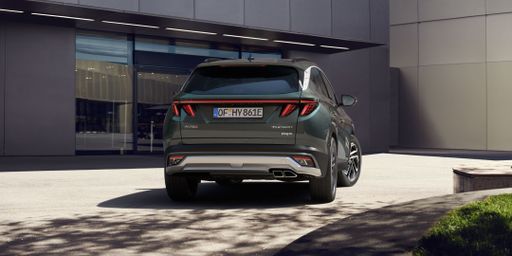
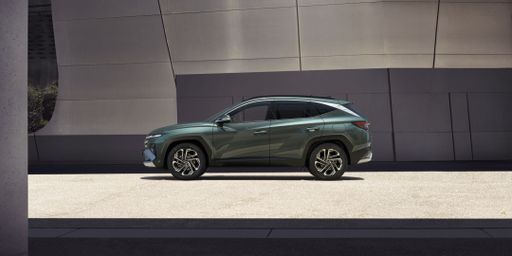
VS

Geely Starray vs Hyundai Tucson comparison

Compare performance (262 HP vs 288 HP), boot space and price (28,300 £ vs 31,300 £ ) at a glance. Find out which car is the better choice for you – Geely Starray or Hyundai Tucson?

Geely Starray vs Hyundai Tucson: Key differences

Geely Starray

5 (2 Reviews)
rate
  • a bit cheaper
  • considerably more electric range
details

Hyundai Tucson

4.7 (8 Reviews)
rate
  • marginally more power
  • barely quicker 0–100 km/h
  • a bit lighter
  • slightly more trunk space
details

All details on performance, efficiency, range and trunk space can be found in the technical comparison below – including user reviews for both models.

By Achim Sedelmaier

Starray

Hyundai Tucson VS Geely Starray — quick take for buyers

Hyundai Tucson VS Geely Starray set up a clear choice: Tucson leans toward refined comfort and usable flexibility, while the Geely Starray trades refinement for longer electric range and aggressive value. The Tucson feels like a settled, slightly upscale compact SUV that masks miles and dampens road noise on long runs. The Starray is the rational pick for buyers who will actually use the battery day-to-day and want more rear legroom for passengers. Read on to see which car suits your routine, because the trade-offs are practical rather than academic.
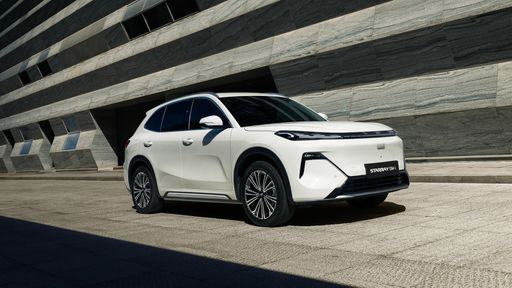
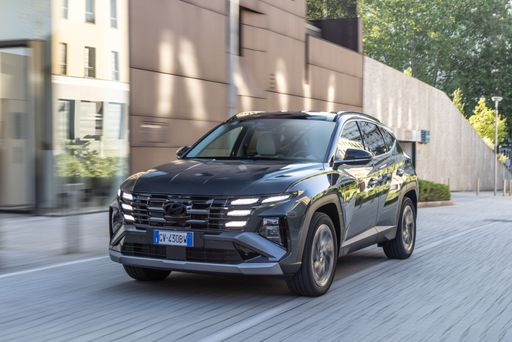
Tucson

Driving character and everyday manners

The Hyundai Tucson drives like a mature, comfort-first SUV — light steering, predictable responses and a calm highway demeanour that rewards relaxed cruising. The Geely Starray feels more tool-like: it’s efficient and steady in EV mode but lacks crispness in steering and can feel blunted when you ask for pace. Tucson trades engagement for composure; drivers who value feedback and fun will find neither car sporty, but Tucson’s suspension tuning gives a smoother sense of control. Starray’s emphasis is efficiency and space, which shows up as measured, safe responses rather than lively road manners.

Comfort and long-distance behavior

On long journeys the Hyundai Tucson’s stronger point is cabin quietness and a settled ride that reduces fatigue over hours on the motorway. The Geely Starray rewards frequent short-to-medium trips by letting you stay in electric mode for much of your commute, but its refinement at speed — wind and tyre noise and a rougher combustion note under load — makes long motorway hauls less serene. Tucson’s seats and insulation are tuned for miles; Starray’s roomy rear and flat floor are kinder to passengers, but the trade-off is a cabin that feels busier on open road stretches. Pick Tucson if long-distance calm matters, pick Starray if minimizing fuel runs at city/commute distances is the priority.

Practicality, space and day-to-day usability

Both cars deliver plenty of rear room, but they parcel it differently: the Geely Starray often wins hands-down for rear legroom and a truly flat rear floor that makes three across easier, whereas the Hyundai Tucson wins on load flexibility with a more clever split rear seat and a larger, better-shaped boot for awkward items. Tucson’s higher loading lip and fiddly mid-seat in some trims are the kind of real-world annoyances you notice on family trips, while Starray’s fixed 60:40 split and menu-dependent controls constrain adaptability. If you value easy luggage stowage and seat-fold versatility, Tucson is the more practical partner; if rear passenger space and a big EV-range for daily shuttles top your list, Starray is the more useful choice.

Cabin feel, tech and perceived quality

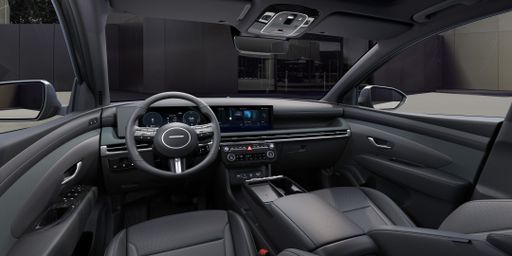
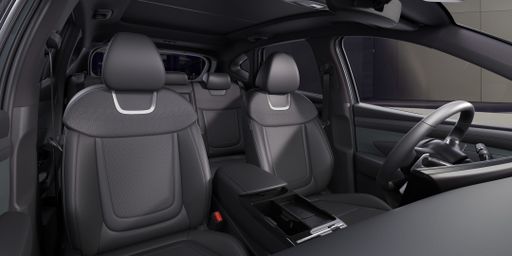
The Hyundai Tucson’s facelifted interior pushes a more refined feel: firmer tactile controls, clearer shortcuts and materials that read upmarket in everyday touchpoints. The Geely Starray gives you a lot of kit for the money and a dominant screen, but the software’s nested menus and touch reliance make the cabin feel more screen-centric and sometimes frustrating to operate on the move. Perceived quality therefore splits: Tucson feels quieter and better finished in use, while Starray impresses on specification and space for the price. Buyers sensitive to buttonless interfaces or cabin noise will notice these differences immediately.

Who each car suits — buyer-fit verdicts

Choose the Hyundai Tucson if you’re a comfort-oriented family or frequent motorway user who values a quieter cabin, smarter-feeling controls and flexible luggage arrangements for holidays and daily life. Opt for the Geely Starray if you’re a cost-conscious commuter or fleet buyer with regular access to charging who wants maximum electric range, exceptional rear legroom and a lower purchase price. Both cars make sense as pragmatic family SUVs, but the Tucson prioritises refinement and usability while the Starray prioritises electric efficiency and value — the right pick depends on whether you want calm refinement or maximised EV kilometres. The technical comparison section that follows will help map those buyer preferences onto the performance and equipment trade-offs in detail.

Here’s where it gets real: The technical differences in detail

Starray

Costs and Efficiency:

Price and efficiency are key factors when choosing a car – and this is often where the real differences emerge.

Geely Starray is a bit cheaper – starting at 28,300 £ , while the Hyundai Tucson costs 31,300 £ . That’s a price difference of around 3,000 £.

As for electric range, the Geely Starray offers considerably more range – reaching up to 136 km, about 66 km more than the Hyundai Tucson.

Tucson

Engine and Performance:

Under the bonnet, it becomes clear which model is tuned for sportiness and which one takes the lead when you hit the accelerator.

When it comes to engine power, the Hyundai Tucson offers marginally more power – delivering 288 HP compared to 262 HP. That’s roughly 26 HP more horsepower.

When accelerating from 0 to 100 km/h, the Hyundai Tucson is barely quicker – completing the sprint in 7.5 s, while the Geely Starray takes 8 s. That’s about 0.5 s quicker.

Space and Everyday Use:

Whether family car or daily driver – which one offers more room, flexibility and comfort?

Both vehicles offer seating for 5 people.

In terms of curb weight, Hyundai Tucson is a bit lighter – 1,542 kg compared to 1,730 kg. The difference is around 188 kg.

Looking at boot space, the Hyundai Tucson offers slightly more boot space – 620 L compared to 528 L. That’s a difference of about 92 L.

When it comes to payload, the Hyundai Tucson carries clearly more – 545 kg compared to 435 kg. That’s a difference of about 110 kg.

Who wins the race in the data check?

The Geely Starray stands well ahead of its rival in the objective data comparison.
This result only shows which model scores more points on paper – not which of the two cars feels right for you.

from £28,300
Starray

Geely Starray

  • Engine Type Plugin Hybrid
  • Transmission Automatic
  • Drive Type Front-Wheel Drive
  • Power HP 262 HP
  • Consumption kWh/100km 14.7 - 18.3 kWh/100km
  • Electric Range 83 - 136 km
Geely Starray
Hyundai Tucson

Costs and Consumption

View detailed analysis

Engine and Performance

View detailed analysis

Dimensions and Body

View detailed analysis

Geely Starray

The Geely Starray blends a sleek, modern exterior with a comfortable, well-appointed cabin that feels more upscale than its price suggests. It offers a composed, user-friendly driving experience with thoughtful tech and space that make it a practical choice for everyday family and city use.

details

Hyundai Tucson

The Hyundai Tucson is a well-rounded compact SUV that blends modern styling with a comfortable, thoughtfully laid-out interior, making it appealing for daily driving and family use. It delivers a calm ride, a generous level of equipment for the price, and sensible practicality, so it's a smart choice if you want a straightforward, dependable crossover without fuss.

details
Geely Starray
Hyundai Tucson

Costs and Consumption

Price
28,300 - 32,600 £
Price
31,300 - 48,800 £
Consumption L/100km
-
Consumption L/100km
2.7 - 7.6 L/100km
Consumption kWh/100km
14.7 - 18.3 kWh/100km
Consumption kWh/100km
-
Electric Range
83 - 136 km
Electric Range
63 - 70 km
Battery Capacity
-
Battery Capacity
-
co2
33 - 54 g/km
co2
62 - 172 g/km
Fuel tank capacity
-
Fuel tank capacity
-

Dimensions and Body

Body Type
SUV
Body Type
SUV
Seats
5
Seats
5
Doors
-
Doors
-
Curb weight
1,730 - 1,815 kg
Curb weight
1,542 - 1,893 kg
Trunk capacity
528 L
Trunk capacity
546 - 620 L
Length
-
Length
-
Width
1,905 mm
Width
1,865 mm
Height
-
Height
-
Max trunk capacity
-
Max trunk capacity
-
Payload
435 kg
Payload
518 - 545 kg

Engine and Performance

Engine Type
Plugin Hybrid
Engine Type
Petrol, Full Hybrid, Plugin Hybrid, Diesel MHEV
Transmission
Automatic
Transmission
Manuel, Automatic
Transmission Detail
Automatic Gearbox
Transmission Detail
Manual Gearbox, Dual-Clutch Automatic, Automatic Gearbox
Drive Type
Front-Wheel Drive
Drive Type
Front-Wheel Drive, All-Wheel Drive
Power HP
262 HP
Power HP
136 - 288 HP
Acceleration 0-100km/h
8 - 8.2 s
Acceleration 0-100km/h
7.5 - 11.6 s
Max Speed
-
Max Speed
-
Torque
-
Torque
250 - 379 Nm
Number of Cylinders
4
Number of Cylinders
4
Power kW
193 kW
Power kW
100 - 212 kW
Engine capacity
1,499 cm3
Engine capacity
1,598 cm3

General

Model Year
2026
Model Year
2025
CO2 Efficiency Class
B
CO2 Efficiency Class
F, D, E, B
Brand
Geely
Brand
Hyundai
DriveDuel uses data analysis and artificial intelligence to evaluate vehicle data and create content. Content is regularly reviewed and improved. The displayed prices are estimates based on German list prices, adjusted to the respective country’s VAT. Country-specific registration taxes are not included. This information is not legally binding.