VS

Geely Starray vs Toyota RAV4 comparison

Compare performance (262 HP vs 309 HP), boot space and price (28,300 £ vs 37,700 £ ) at a glance. Find out which car is the better choice for you – Geely Starray or Toyota RAV4?

Geely Starray vs Toyota RAV4: Key differences

Geely Starray

5 (2 Reviews)
rate
  • visibly cheaper
  • only slightly more trunk space
details

Toyota RAV4

4.7 (12 Reviews)
rate
  • slightly more power
  • barely more electric range
  • noticeably quicker 0–100 km/h
  • very slightly lighter
details

All details on performance, efficiency, range and trunk space can be found in the technical comparison below – including user reviews for both models.

By Achim Sedelmaier

Starray

Quick take: Toyota RAV4 VS Geely Starray

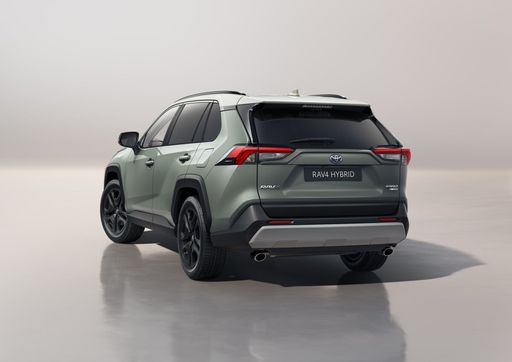
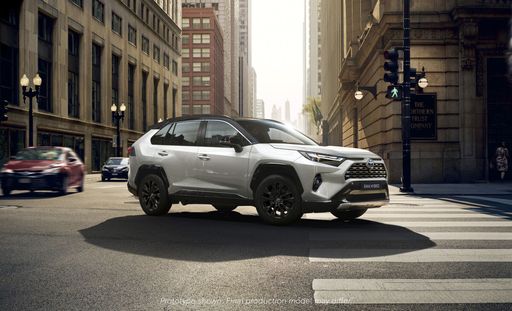
Toyota RAV4 VS Geely Starray pits a familiar, efficiency‑focused family SUV against a value‑packed PHEV that emphasizes electric range and rear‑seat space. The Toyota RAV4 leans on proven hybrid calm, predictable manners and wide everyday usability, while the Geely Starray trades some refinement for a larger battery, lower sticker price and more rear legroom. That means the RAV4 is the steady, low‑stress companion and the Starray is the pragmatic, cost‑conscious choice for those who can exploit its EV strengths. Read on to see how those different priorities play out in daily driving, comfort, practicality and cabin feel.
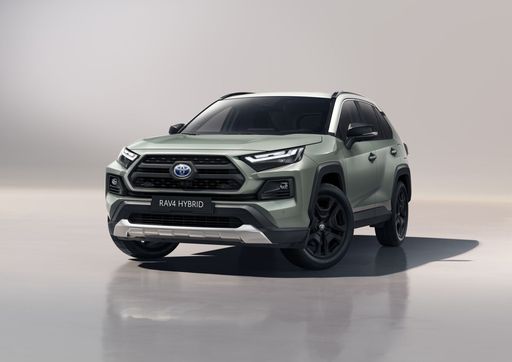
RAV4

Character and driving: calm assurance vs electric‑first pragmatism

The Toyota RAV4 drives with a measured, composed personality — it’s relaxed in town and on the motorway and masks most of the drivetrain’s work until you ask for hard acceleration. The Geely Starray feels more like an EV when you use its battery: quiet and composed in electric mode but noticeably less refined when the petrol engine climbs in, especially under load. In everyday city traffic the Starray rewards regular charging with very low running costs, while the RAV4 rewards drivers who prefer a frictionless hybrid experience without the need to plug in. If you like a confident, drama‑free long‑distance cruiser, the RAV4 leans in that direction; if you prioritise all‑electric miles and a lower purchase price, the Starray makes a persuasive case.

Comfort and long‑distance behavior: settled cruiser versus conditional calm

On long trips the Toyota RAV4 presents a calmer cabin and an overall more settled ride — its suspension and noise insulation favor fatigue‑free miles and predictable high‑speed manners. The Geely Starray is comfortable in many conditions and impresses in EV mode, but testers note occasional high‑frequency movement over certain surfaces and more wind or tyre noise at higher speeds. Rear passengers tend to feel differently: the Starray’s generous legroom is hard to beat for long journeys, while the RAV4’s seats and ergonomics make several hours behind the wheel feel easier. So the RAV4 is the better choice if motorway serenity and consistent refinement matter most, whereas the Starray rewards occupants who plan journeys around charging stops and value extra rear space.

Practicality and everyday usability: cargo logic vs maximum rear space

Practicality is a clear trade‑off here: the Geely Starray aims to deliver the biggest usable boot and a roomy, flat rear floor that families will appreciate for child seats and luggage. The Toyota RAV4 remains highly practical too, with smart, simple loading and an interior designed for easy daily use, though some plug‑in versions sacrifice a bit of cargo depth. Both cars skip certain clever modular tricks like a full 40:20:40 split, so neither is a maximalist in load flexibility — but the Starray wins the space battle while the RAV4 wins for uncomplicated, durable usability. For buyers who regularly carry adults and bulky items, the Starray’s layout will feel immediately advantageous; for those who prize straightforward access and proven luggage ergonomics, the RAV4 stays attractive.

Cabin feel and perceived quality: familiar robustness versus surprising value

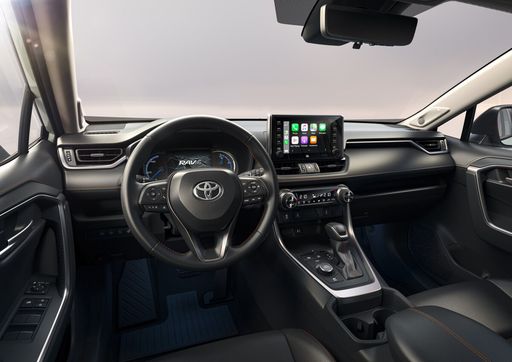
Step inside the Toyota RAV4 and you’ll notice a conservative, functional cabin — materials feel robust and built for longevity but not luxurious, and the updated infotainment is clearer without being class‑leading. The Geely Starray often surprises by offering softer surfaces and a richer spec sheet for the money, yet that promise is undercut by a menu‑heavy infotainment and intrusive assistant behaviour that frustrate some users. In short, the RAV4 trades polish for predictability and ergonomics, whereas the Starray trades some tactile refinement for gadgetry and warranty reassurance. If you value a fussless, durable interior the RAV4 feels sensible; if you want more features and a modern look per pound spent, the Starray delivers—but with compromises in HMI and noise control.

Buyer fit: who should test which car next

If you’re a commuter or family buyer who wants low running costs, easy usability and a composed long‑distance companion, test the Toyota RAV4 first — its hybrid character and straightforward practicality will appeal to those who prioritise reliability and quiet cruising. If you’re focused on minimizing purchase cost, maximizing electric miles and carrying rear passengers in comfort, the Geely Starray is worth a close look thanks to its long PHEV range, larger rear seat space and aggressive equipment levels. Both cars are sensible rather than sporty, so your decision comes down to whether you pay more for a calmed, proven package (RAV4) or save up front for bigger EV capability and space (Starray). With those buyer trade‑offs clear, the technical comparison that follows will show the concrete performance, range and equipment differences to settle which fit is right for you.

Here’s where it gets real: The technical differences in detail

Starray

Costs and Efficiency:

Price and efficiency are key factors when choosing a car – and this is often where the real differences emerge.

Geely Starray is visibly cheaper – starting at 28,300 £ , while the Toyota RAV4 costs 37,700 £ . That’s a price difference of around 9,428 £.

As for electric range, the Toyota RAV4 offers barely more range – reaching up to 137 km, about 1 km more than the Geely Starray.

RAV4

Engine and Performance:

Under the bonnet, it becomes clear which model is tuned for sportiness and which one takes the lead when you hit the accelerator.

When it comes to engine power, the Toyota RAV4 offers slightly more power – delivering 309 HP compared to 262 HP. That’s roughly 47 HP more horsepower.

When accelerating from 0 to 100 km/h, the Toyota RAV4 is noticeably quicker – completing the sprint in 5.8 s, while the Geely Starray takes 8 s. That’s about 2.2 s quicker.

Space and Everyday Use:

Cabin size, boot volume and payload all play a role in everyday practicality. Here, comfort and flexibility make the difference.

Both vehicles offer seating for 5 people.

In terms of curb weight, Toyota RAV4 is very slightly lighter – 1,655 kg compared to 1,730 kg. The difference is around 75 kg.

Looking at boot space, the Geely Starray offers only slightly more boot space – 528 L compared to 514 L. That’s a difference of about 14 L.

When it comes to payload, the Toyota RAV4 carries markedly more – 610 kg compared to 435 kg. That’s a difference of about 175 kg.

Who wins the race in the data check?

The Toyota RAV4 is decisively ahead in the objective data comparison.
This result only shows which model scores more points on paper – not which of the two cars feels right for you.

from £37,700
RAV4

Toyota RAV4

  • Engine Type Full Hybrid, Plugin Hybrid
  • Transmission Automatic
  • Drive Type Front-Wheel Drive, All-Wheel Drive
  • Power HP 185 - 309 HP
  • Consumption L/100km 1.3 - 5.3 L/100km
  • Electric Range 133 - 137 km
Geely Starray
Toyota RAV4

Costs and Consumption

View detailed analysis

Engine and Performance

View detailed analysis

Dimensions and Body

View detailed analysis

Geely Starray

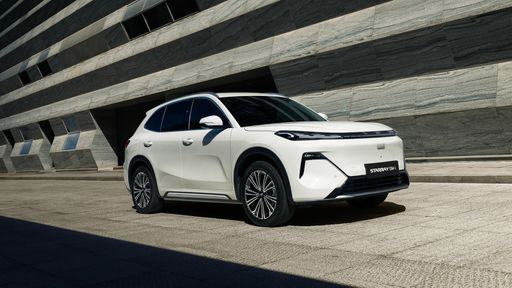
The Geely Starray blends a sleek, modern exterior with a comfortable, well-appointed cabin that feels more upscale than its price suggests. It offers a composed, user-friendly driving experience with thoughtful tech and space that make it a practical choice for everyday family and city use.

details

Toyota RAV4

The Toyota RAV4 is a well-rounded compact SUV that pairs everyday practicality with a comfortable, composed ride and generous cargo space, making it a sensible choice for families and active lifestyles. Its strong reputation for reliability, efficient drivetrains, and straightforward technology gives it wide appeal whether you value economy, comfort, or capability.

details
Geely Starray
Toyota RAV4

Costs and Consumption

Price
28,300 - 32,600 £
Price
37,700 - 54,200 £
Consumption L/100km
-
Consumption L/100km
1.3 - 5.3 L/100km
Consumption kWh/100km
14.7 - 18.3 kWh/100km
Consumption kWh/100km
-
Electric Range
83 - 136 km
Electric Range
133 - 137 km
Battery Capacity
-
Battery Capacity
-
co2
33 - 54 g/km
co2
30 - 121 g/km
Fuel tank capacity
-
Fuel tank capacity
-

Dimensions and Body

Body Type
SUV
Body Type
SUV
Seats
5
Seats
5
Doors
-
Doors
-
Curb weight
1,730 - 1,815 kg
Curb weight
1,655 - 1,960 kg
Trunk capacity
528 L
Trunk capacity
446 - 514 L
Length
-
Length
-
Width
1,905 mm
Width
1,880 mm
Height
-
Height
-
Max trunk capacity
-
Max trunk capacity
-
Payload
435 kg
Payload
515 - 610 kg

Engine and Performance

Engine Type
Plugin Hybrid
Engine Type
Full Hybrid, Plugin Hybrid
Transmission
Automatic
Transmission
Automatic
Transmission Detail
Automatic Gearbox
Transmission Detail
CVT
Drive Type
Front-Wheel Drive
Drive Type
Front-Wheel Drive, All-Wheel Drive
Power HP
262 HP
Power HP
185 - 309 HP
Acceleration 0-100km/h
8 - 8.2 s
Acceleration 0-100km/h
5.8 - 8 s
Max Speed
-
Max Speed
-
Torque
-
Torque
-
Number of Cylinders
4
Number of Cylinders
4
Power kW
193 kW
Power kW
136 - 227 kW
Engine capacity
1,499 cm3
Engine capacity
2,487 cm3

General

Model Year
2026
Model Year
2026
CO2 Efficiency Class
B
CO2 Efficiency Class
C, D, B
Brand
Geely
Brand
Toyota
DriveDuel uses data analysis and artificial intelligence to evaluate vehicle data and create content. Content is regularly reviewed and improved. The displayed prices are estimates based on German list prices, adjusted to the respective country’s VAT. Country-specific registration taxes are not included. This information is not legally binding.